Search
Kazakhstan arrests the navy commander it relieved three days ago over the Caspian deaths
Kanat Niyazbekov, the former commander of Kazakhstan’s navy, has been detained and placed under arrest with a court’s sanction on suspicion of a negligent attitude to service, in the investigation of the 14 deaths at the Caspian landing exercise of 24 September, the interior ministry said on Tuesday. Tokayev relieved him on 3 October. The defence minister’s reform plan is due on Wednesday.

Avaza’s week has a Caspian summit in one portal post and none in the programme
Turkmenistan’s state portal, turkmenistan.gov.tm, gives two accounts of the 3 days that open in Avaza on Wednesday. Its programme has the Caspian ministers on 7 October, the heads of state of Central Asia and Azerbaijan on 8 October and the CIS council on 9 October. Its post on Tokayev’s attendance adds a Caspian Ecological Summit, dated 9 October by an Ashgabat outlet that expects Putin and Pezeshkian.
After the Caspian drill deaths, Kazakhstan’s defence inspection opens 13 criminal cases
The commission Tokayev set up after 14 servicemen died in a Caspian landing exercise on 24 September has produced 13 criminal cases over possible theft of state property and abuse of office in its first stage, Akorda said on Monday, with 5 officials under arrest in the negligence case. On the same day the Higher Audit Chamber reported an audit of 50 defence sites, 48 of them military units.
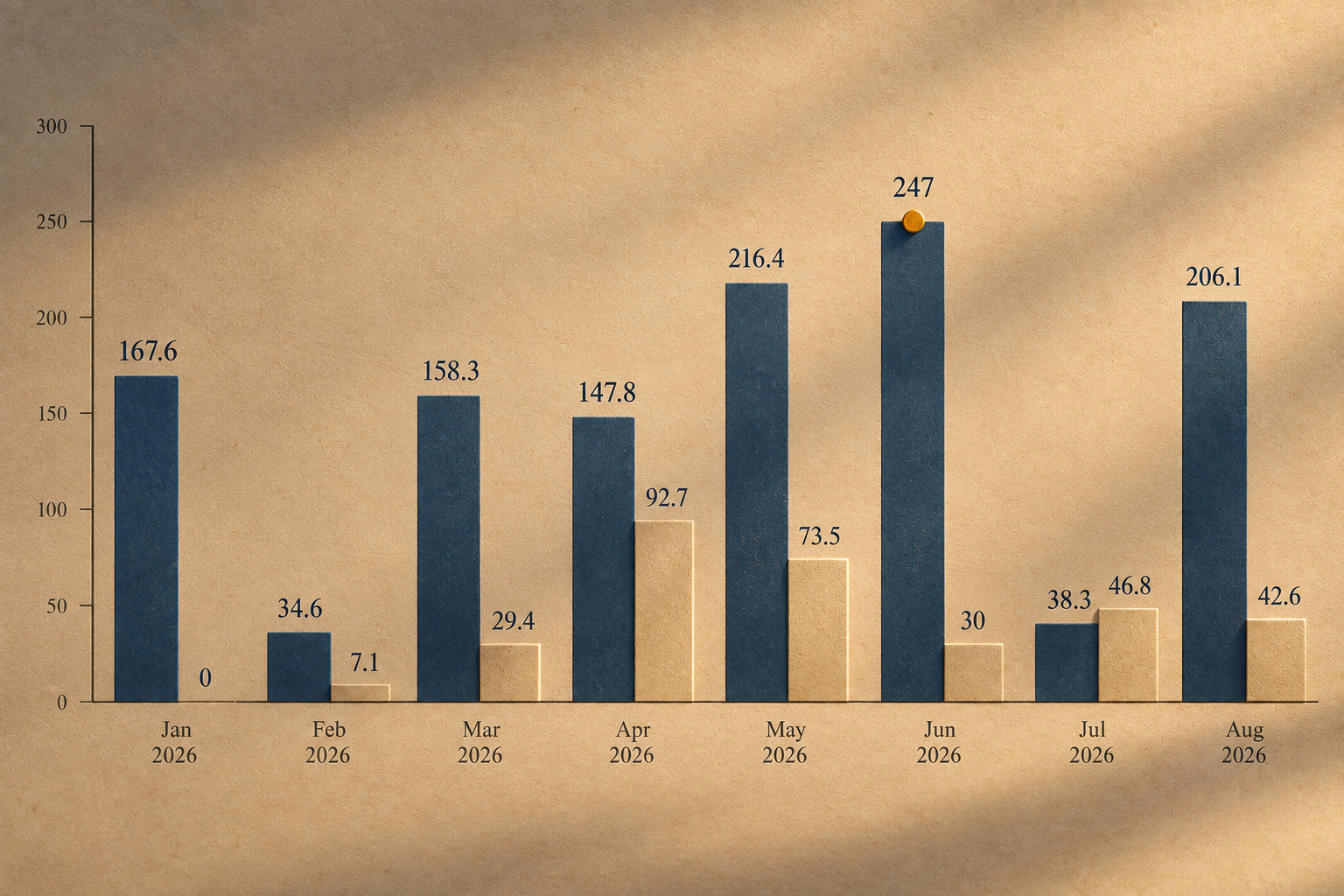
Uzbekistan imported $1.21 billion of gas in 8 months and sold $322 million
Uzbekistan’s gas imports were worth $1.21 billion in January to August, 15.2% more than a year earlier, while its gas exports fell 34.8% to $322.3 million, by National Statistics Committee figures published on 1 October. The bill is almost 4 times the receipts, and on Thursday the US Trade Representative faces its first deadline under the act aimed at the 5 largest importers of Russian gas.

Aliyev puts 9 billion manat on defence and tells his party Azerbaijan joins no camp
At the eighth congress of his New Azerbaijan Party on Friday, President Ilham Aliyev said the 2027 budget sets aside about 9 billion manat, $5.2 billion by Trend’s conversion, for military and security spending, that currency reserves have reached $90 billion, about 20 times the external debt, and that Azerbaijan “does not join any camp and will not”. The speech is a doctrine with a price list attached.

After 14 Caspian deaths, Tokayev picks a chief of staff from his own guard
President Tokayev on Monday made Aitkurman Omarbekov, a major general of the State Guard Service, first deputy defence minister and chief of the General Staff, two days after relieving Kanysh Abubakirov from that post, deputy minister Almaz Dzhumakeev and navy commander Kanat Niyazbekov. Fourteen servicemen died in a Caspian exercise on 24 September, and a reform plan is due from the new defence minister on Wednesday.

At the EAEU council, Lukashenko asks Armenia where its brandy will go if it chooses the EU
The Eurasian Intergovernmental Council met in Minsk on Friday under Kazakhstan’s chairmanship, with Pashinyan on a video link. Bektenov put the union’s first-half growth at 1.1% and its investment at $244.5 billion, Mishustin said mutual trade rose 10% from January to July, and Lukashenko told the heads of delegations that Armenia should work out where its brandy and fruit will go before it hurries to the EU.
Bishkek screens every cash exchange and every crypto firm’s owner as sanctions clocks run
The cabinet approved an anti-laundering strategy to 2030 and rewrote its 2025 rules for virtual-asset firms: beneficial owners vetted by the financial intelligence service, mining licences reported monthly, identification for every cash exchange whatever the sum. The documents name no deadline. Russia’s cash-rouble cap took effect on Tuesday, US sanctions on banks dealing with Russian state banks are due from 18 October, and EU and US lists carry Kyrgyz names.
Afghanistan takes two thirds of Tajik power exports before CASA-1000’s last link is built
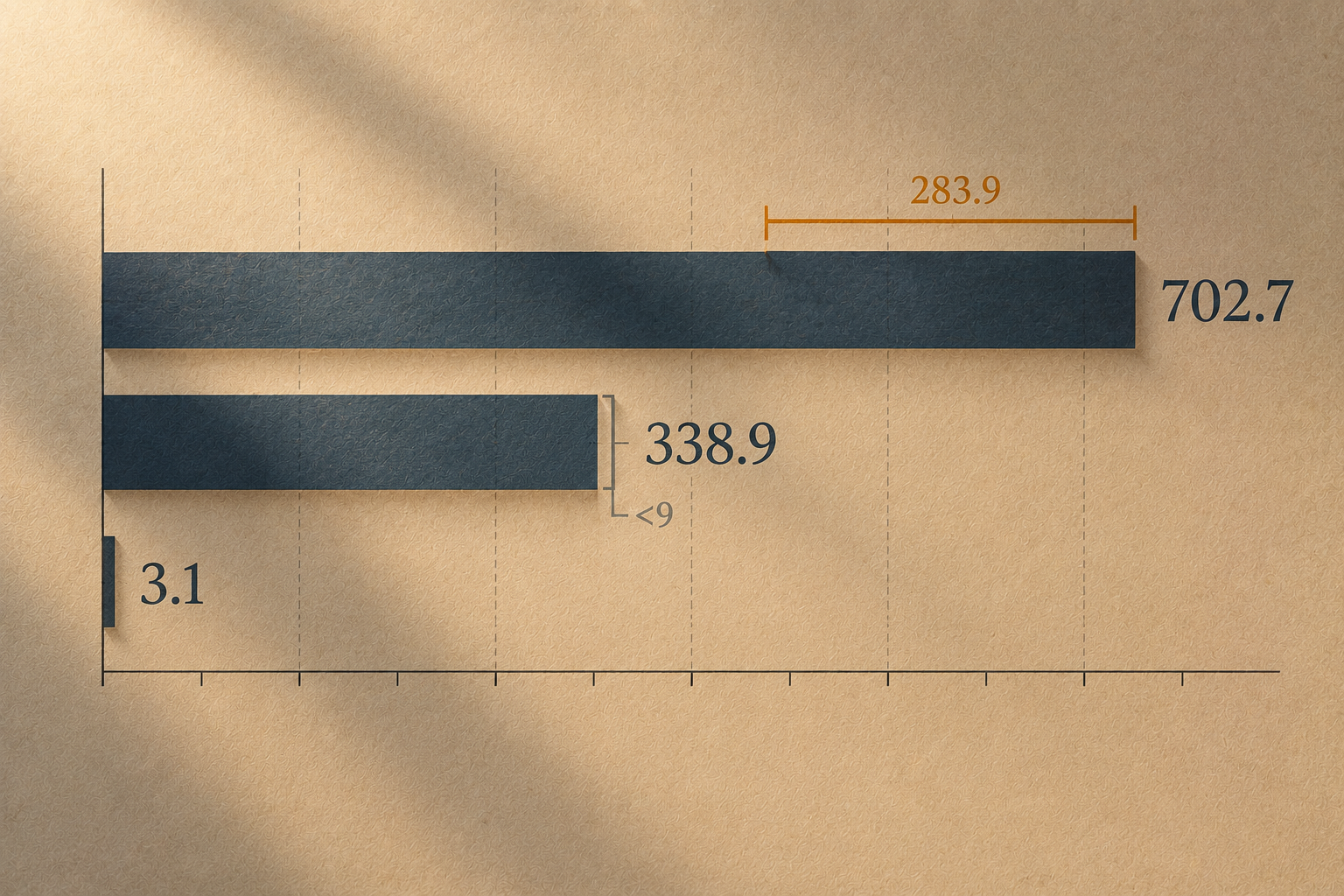
Barqi Tojik told Afghanistan’s grid company in Dushanbe that it plans a 500 kV line and will consider sending more power, the Afghan side said. The energy ministry’s half-year figures show why Kabul is the one asking for more: of 1,045 million kWh exported from January to June, 702.7 million went to Afghanistan, for 283.9 million somoni. CASA-1000’s Afghan section is due by spring 2027.
China's refiners halt fuel exports for October, and Mongolia has 18,000 tonnes on order
Chinese refiners have halted exports of petrol, diesel and jet fuel for October to every destination but Hong Kong and Macau, Reuters reported on Thursday, citing 4 sources. Mongolia has ordered 8,000 tonnes of petrol and more than 10,000 of diesel from China for the month, Kyrgyzstan thanked Beijing last week for stable supplies, and Russia's producers' diesel export ban runs to 31 October.
Georgia's budget annex lists 8 arbitration claims at $4.8 billion, half its 2027 tax plan
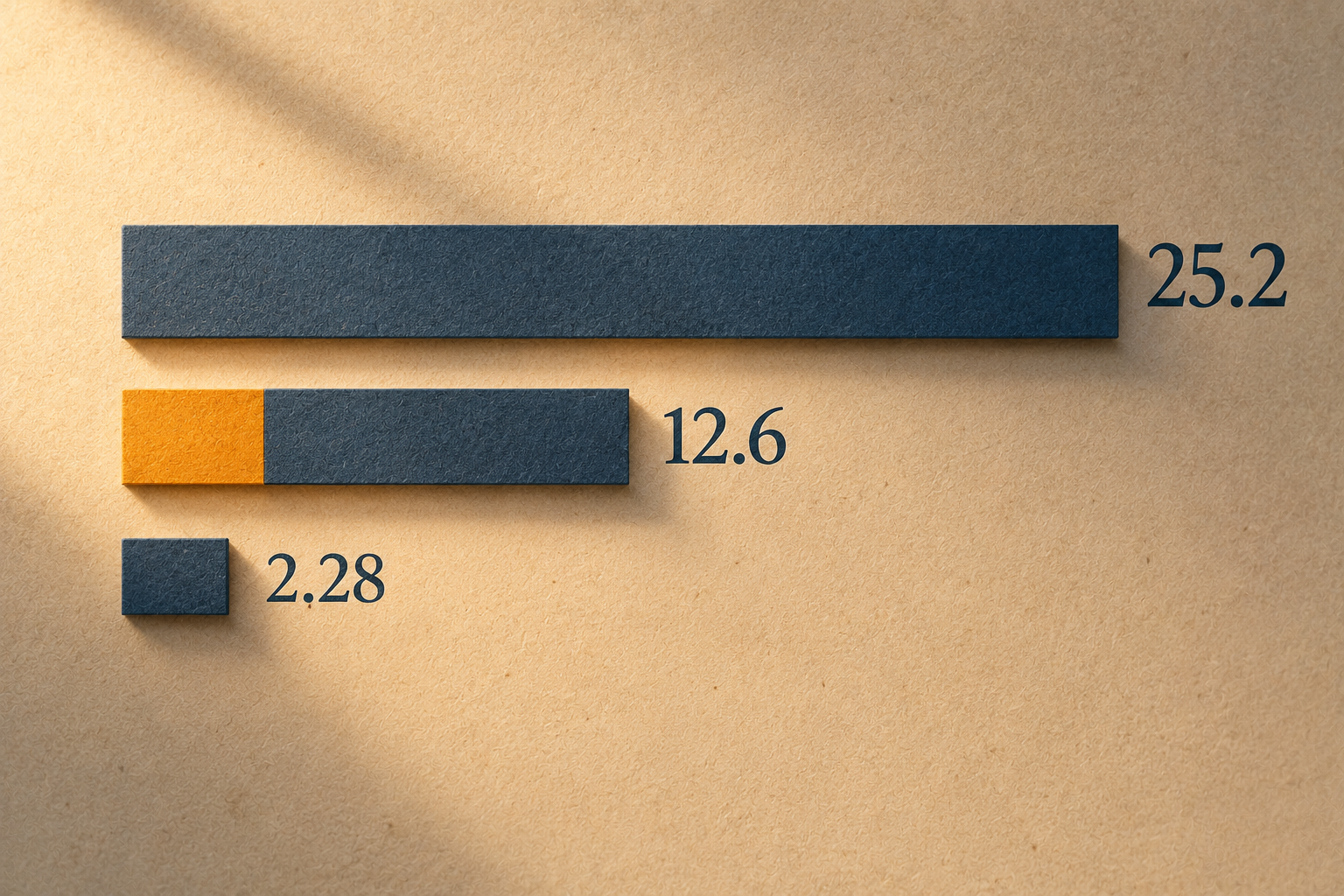
The fiscal-risk analysis attached to Georgia's 2027 draft, published on Thursday, lists 8 pending international arbitrations with claims of $4.8 billion, about 12.6 billion lari and half of the draft's 25.2 billion lari tax plan. Two cases already lost, ENKA's over the Namakhvani dam and Inter RAO's, carry about $582 million between them, and ENKA took its award to a Washington court in September.
Georgia publishes 2027 spending with no revenue line as the central bank curbs credit
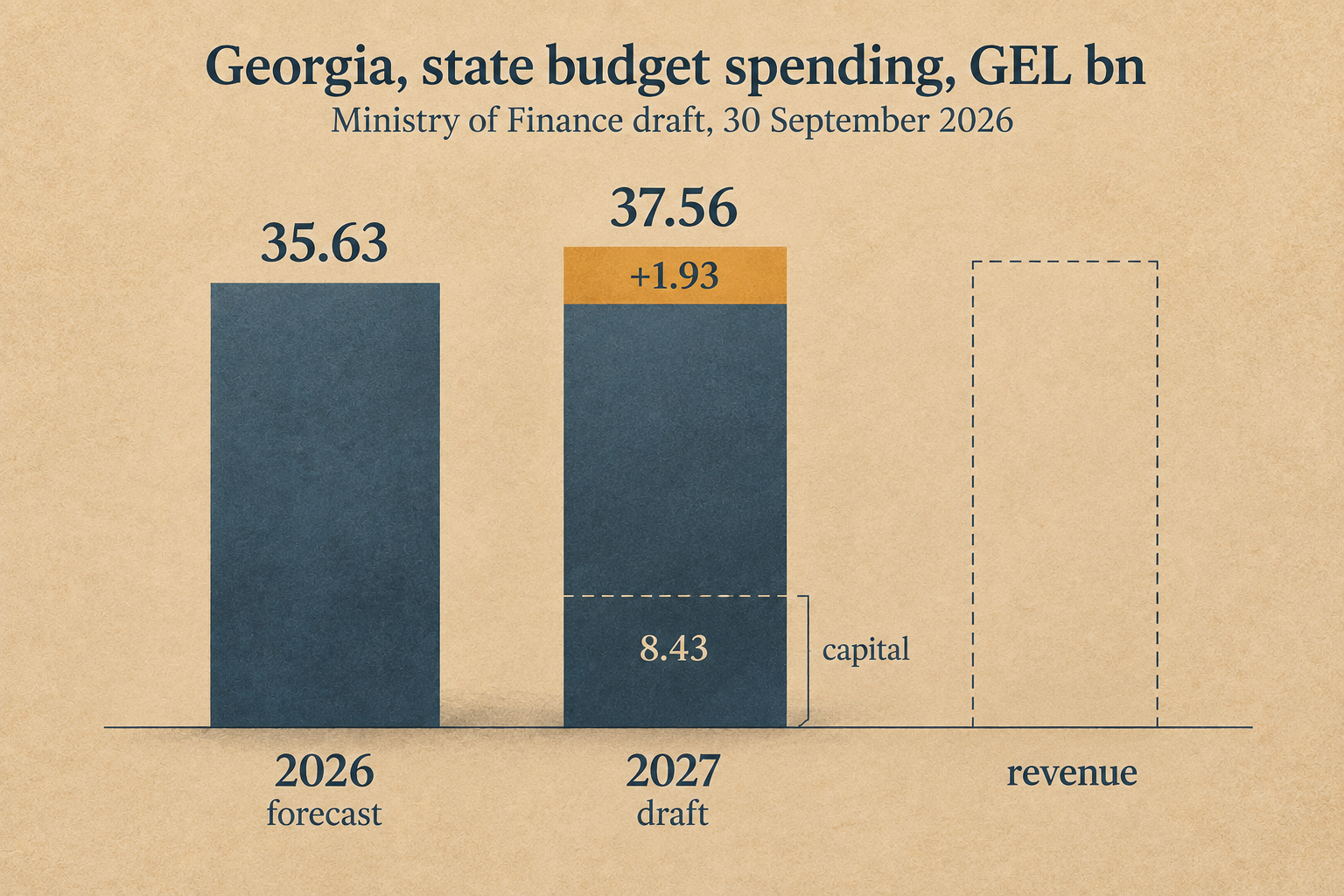
Georgia's finance ministry sent parliament a first 2027 draft on 30 September with spending of GEL 37.56 billion, growth of 5%, GDP of GEL 126.4 billion and GDP per head of $12,000, and its release carried no revenue, deficit or debt figure. On the same afternoon the National Bank announced tighter payment-to-income limits for borrowers earning GEL 1,500 to 2,500 a month.
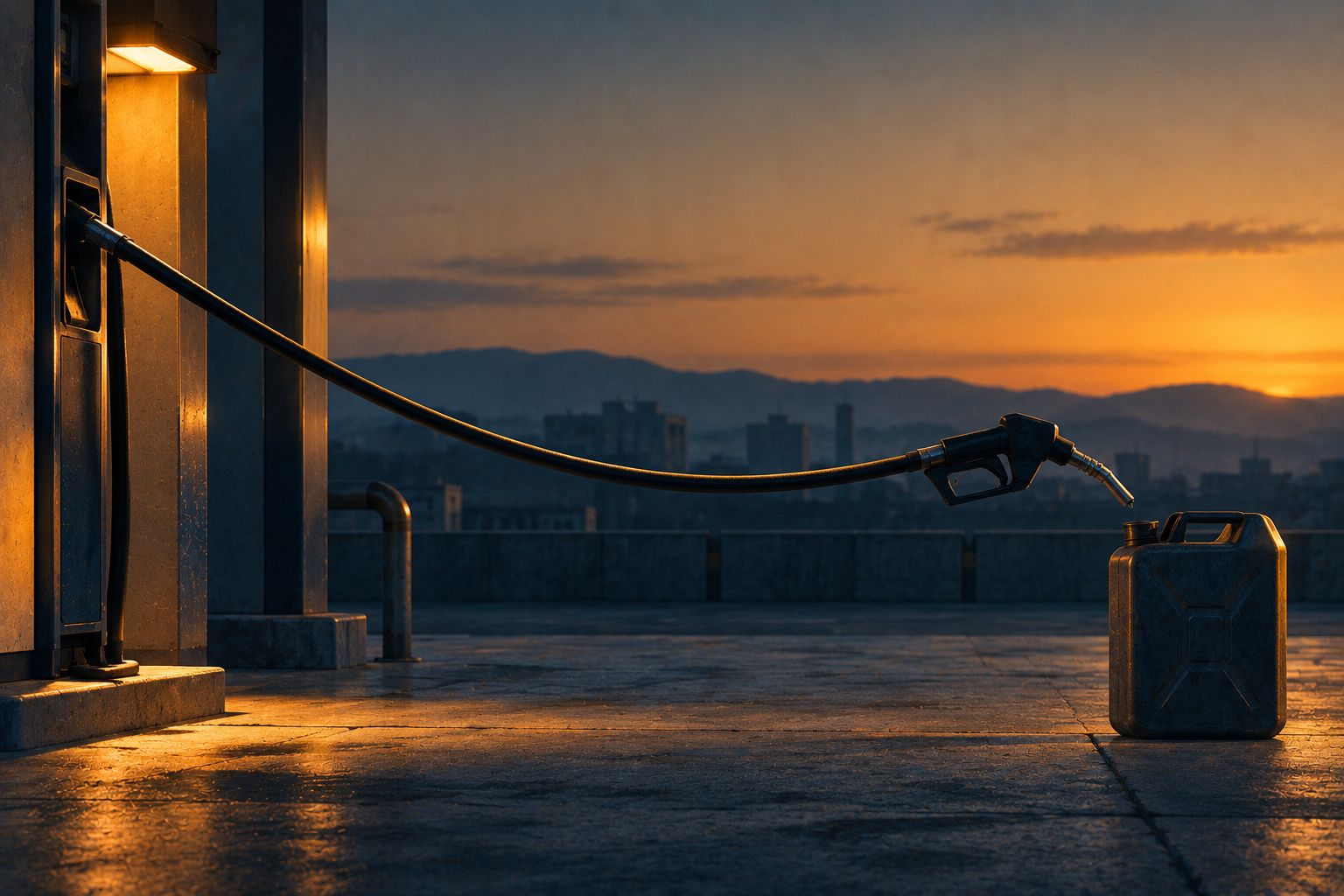
Drivers circle Sukhbaatar Square as Mongolia's opposition moves on the cabinet
Cars circled Ulaanbaatar's central square on 1 October in protest at a petrol shortage that began in July. In parliament, a Democratic Party MP read out the loan ledger behind a ₮500 billion fuel-storage programme and said the whole cabinet must answer, while his party collects signatures to bring down the government. The fuel headquarters and the Khural plenary sit at 14:00 Ulaanbaatar time.
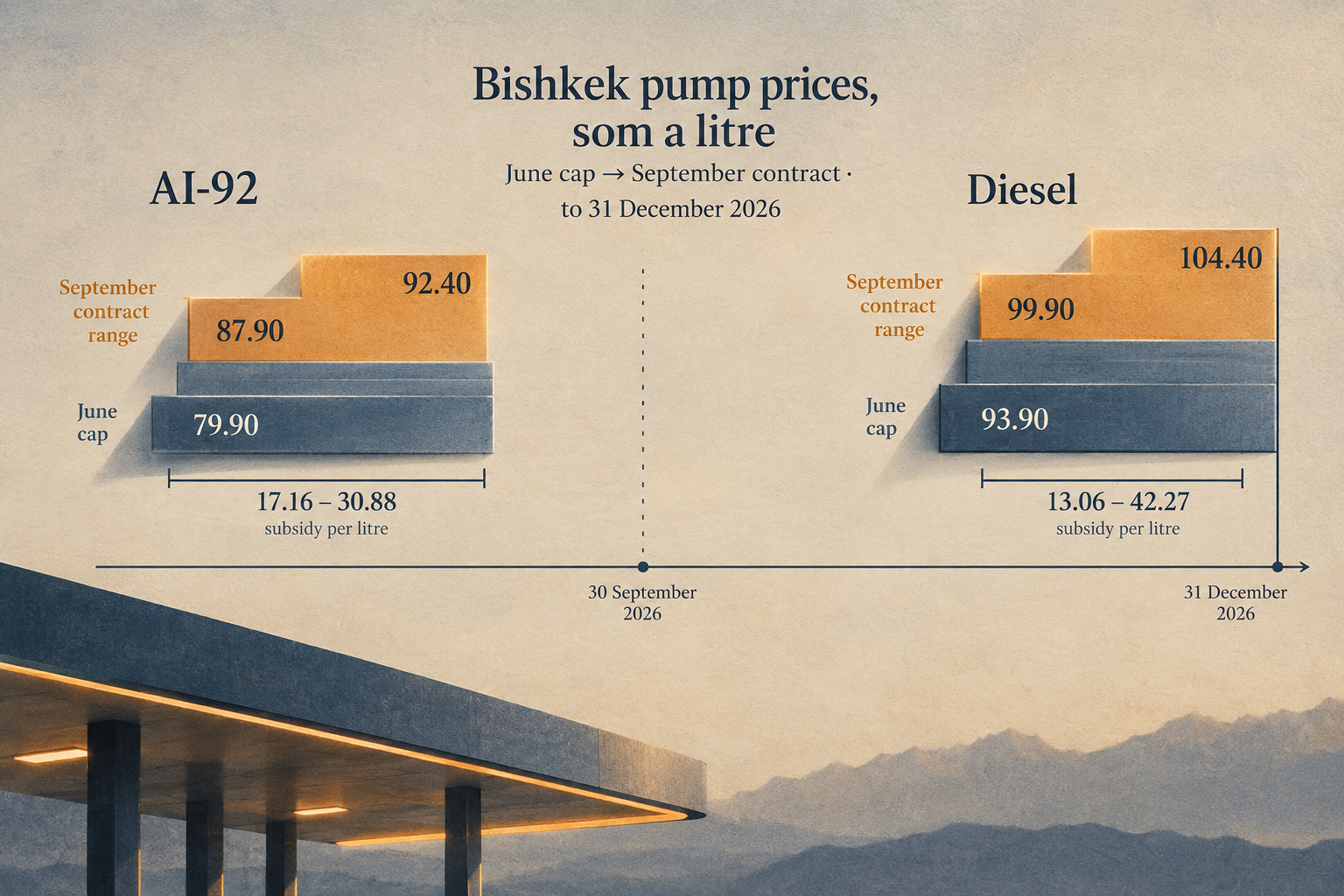
Kyrgyzstan’s fuel cap expires tonight while its subsidised price agreements run to 31 December
The cap on fuel prices that the cabinet set in May runs out tonight, and nothing changes at the pump on Thursday. A second resolution of 7 July moved price-setting to agreements between the antimonopoly service and the sellers, the service printed the agreed ranges on 11 September, and the subsidy that holds them runs to 31 December, the economy ministry says. The cap stopped setting prices 12 weeks ago.

Russia caps cash roubles for 7 neighbours at 1 million a head and bans firms from carrying any
A decree Vladimir Putin signed on Tuesday bans anyone from carrying more than 1 million roubles in cash out of Russia into the other 4 members of the Eurasian Economic Union, Azerbaijan, Tajikistan or Uzbekistan. Companies and sole traders may carry none, with 3 exceptions. The $100,000 ceiling that had applied since April is gone, and cash above the limit is confiscated at the border.
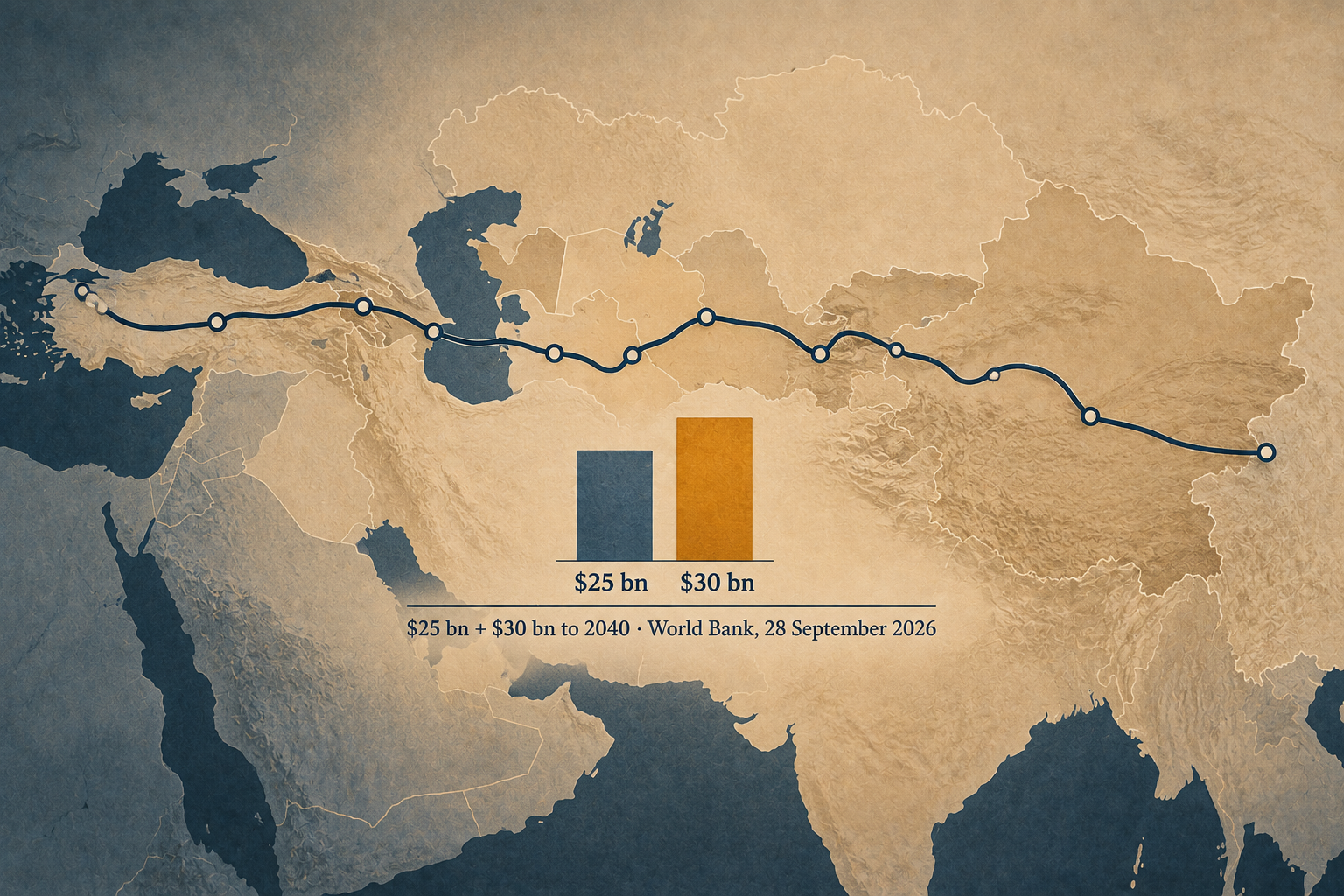
The World Bank prices the corridor at $55 billion to 2040, with $30 billion of it beyond the track
A World Bank report published on Monday says the Trans-Caspian corridor’s development could triple its volumes, halve its travel times, add 3.3% to the 9 countries’ GDP and create 2 million jobs by 2040. The bill it attaches is at least $25 billion of physical infrastructure and an estimated $30 billion of enabling investment. With reforms, the Bank says, the volumes would quadruple.
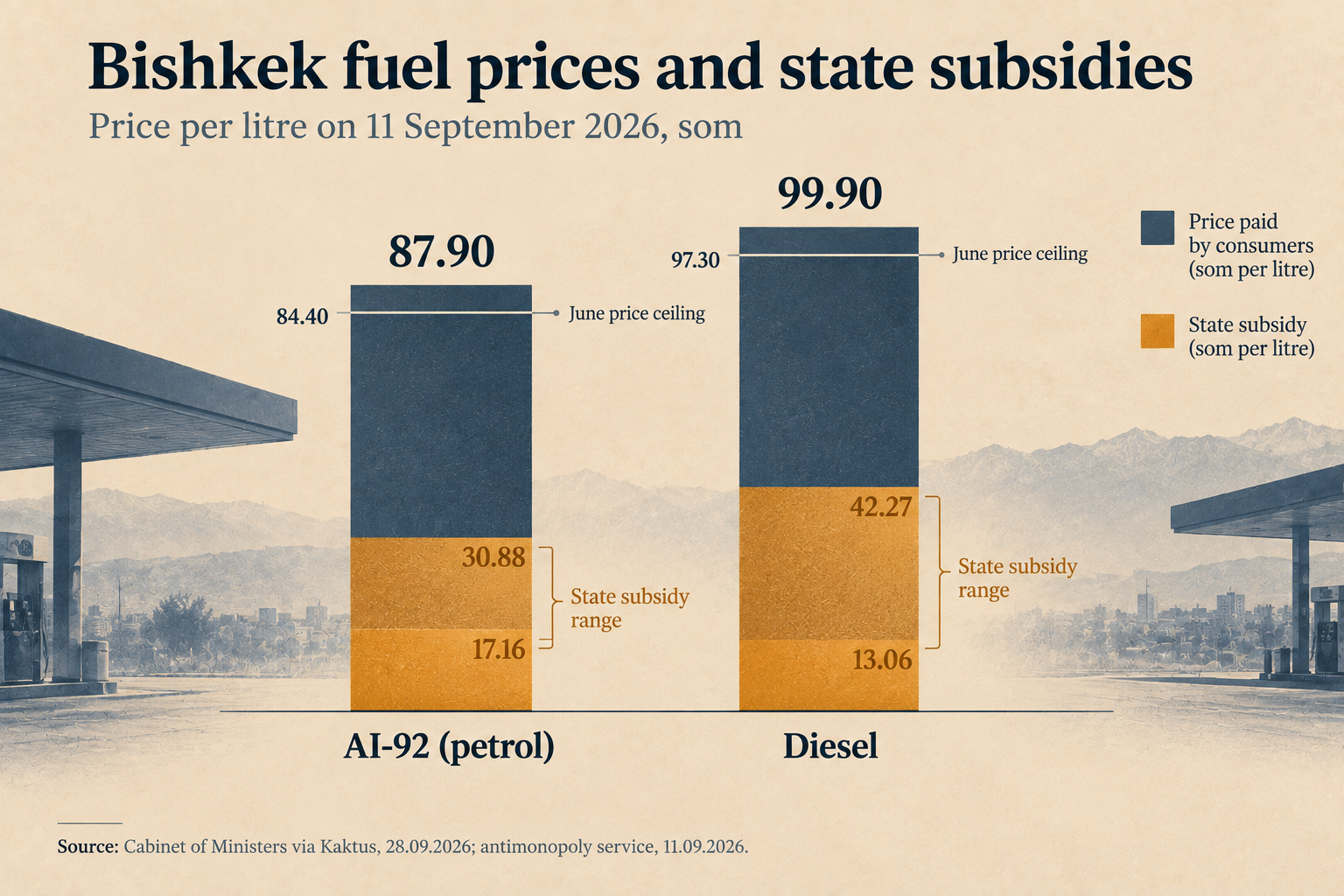
Bishkek's diesel subsidy reaches 42 som a litre with 2 days left on its fuel price ceilings
The Kyrgyz cabinet's readout of Monday's fuel meeting gives the subsidy paid to importers per litre in ranges set by contract: 17.16 to 30.88 som on AI-92 petrol, 13.06 to 42.27 som on diesel, 0.46 to 1.40 som on autogas. The antimonopoly service's price ceilings, in force since 25 May, run to 30 September. It does not mention them.
Russia locks away its fuel export data, and the region loses the numbers behind its diesel
Decree 686, published on Monday, bars anyone in Russia from publishing what its fuel exporters ship, to whom, at what price and through which port, plus refinery output and exchange sales of petrol and diesel. Companies may disclose their own figures; the government has 10 days to list the goods covered. Kazakhstan, Kyrgyzstan, Tajikistan and Mongolia, whose Russian diesel intake doubled in August, lose the exporter's side of the count.
Baku sees a territorial claim in a Georgian church statement, and Tbilisi sees no tension
Azerbaijan’s foreign ministry told the Georgian Patriarchate on Friday that its statement on the church of St George at Kurmukhi, in Gakh district, contained territorial claims and advised it against following the Armenian Church’s example. By Saturday prime minister Irakli Kobakhidze had said there was no tension with Baku, and on Monday an EU-affairs analyst in Tbilisi said everyone had made mistakes.
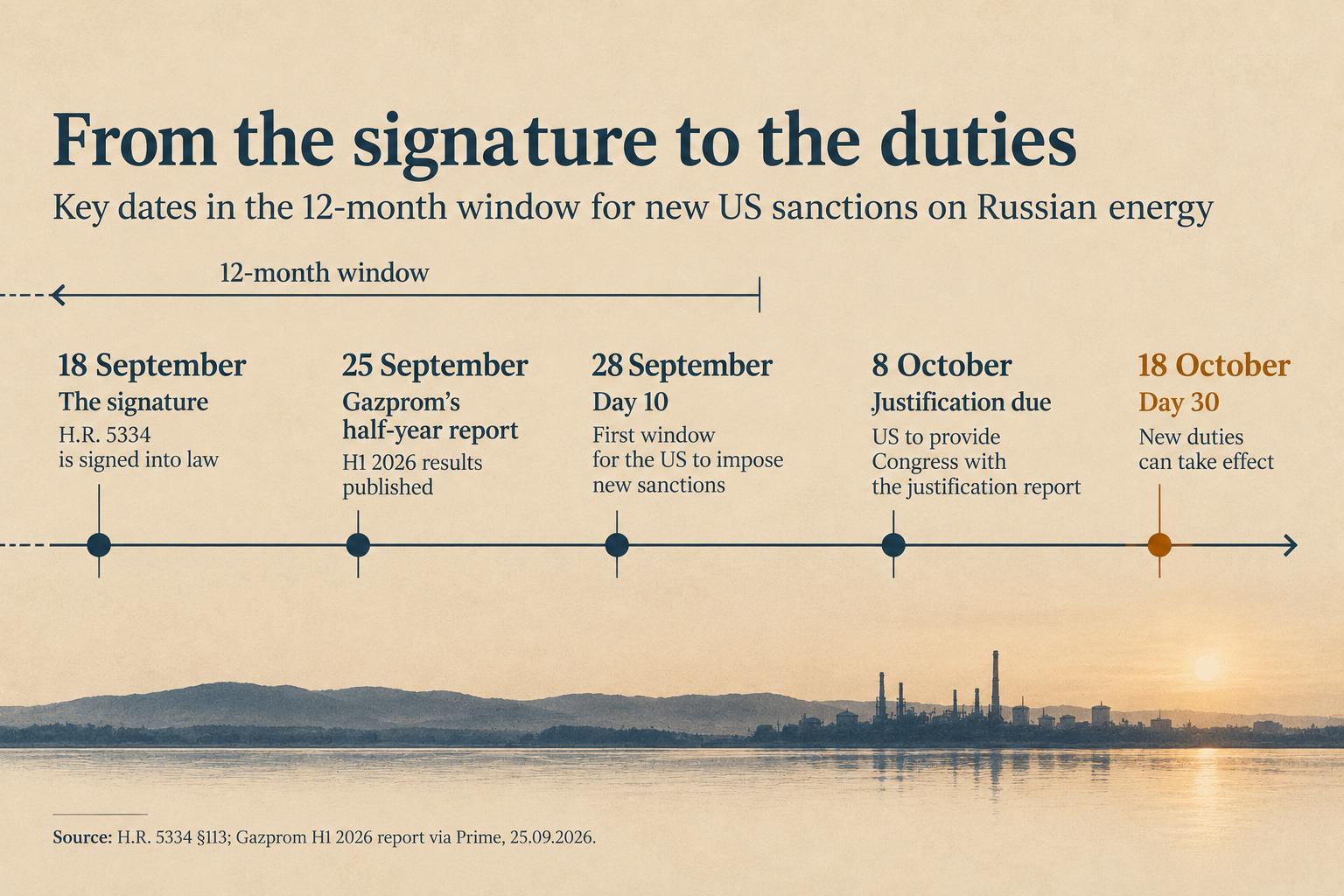
Gazprom says its growth is Kazakhstan, and the USTR has 10 days to show its count
Gazprom’s half-year report, as Prime quoted it on Friday afternoon, says its pipeline sales to the near abroad rose 29% in the first half of 2026 mainly because of Kazakhstan, and prints no volume. Monday is day 10 of the law that ranks Russia’s gas buyers; the US Trade Representative’s written justification is due by 8 October, and its press page through 27 September carries nothing on it.