China
Turkmennebit and CNOOC sign on Caspian blocks among five OGT documents with no sums
After the second day of Oil and Gas of Turkmenistan 2026 on 22 October the state concerns signed five documents: a Turkmennebit memorandum with CNOOC on blocks in the Turkmen sector of the Caspian, a services memorandum with Malaysia’s MPRC and three pipe-supply contracts with plants in Tashkent, Tianjin and Kazakhstan, News Central Asia reported. No values were published.
Tajikistan and Tibet-Everest sign for a non-ferrous metals park in Sughd without a sum
The industry ministry, the China Non-ferrous Metals Industry Association and the company Tibet-Everest signed a memorandum on an industrial park for non-ferrous metallurgy in Sughd region during Li Qiang’s visit of 18 to 20 October, Asia-Plus reported on 22 October citing the ministry. Cost, investment and timetable are not named, and the company’s Istiklol plant opened a second stage on 21 September.
Tokayev launches a $1.8 billion KAZ Minerals copper smelter at Aktogay with China’s NFC
Kassym-Jomart Tokayev started construction of a copper smelter at Aktogay in Abai region by video link on 20 October, Akorda reported. KAZ Minerals is the investor, China’s NFC the engineering partner, the investment about $1.8 billion, the jobs more than 1,000, and the first copper cathode is planned for 2030. The plant will also produce gold, silver and by-products.

SCO governments sign four documents in Dushanbe and hand the council’s chair to Uzbekistan
The 25th Council of Heads of Government signed a joint communiqué, a 2026-2030 trade and economic action plan, a digital freight platform concept and a decision on the regulation of a data bank of investment projects in industry on Tuesday, by the Russian government’s list. Russia’s deputy prime minister Alexei Overchuk said the meeting was “to a greater degree” about a new SCO bank, on whose shares it is “still too early to speak”.
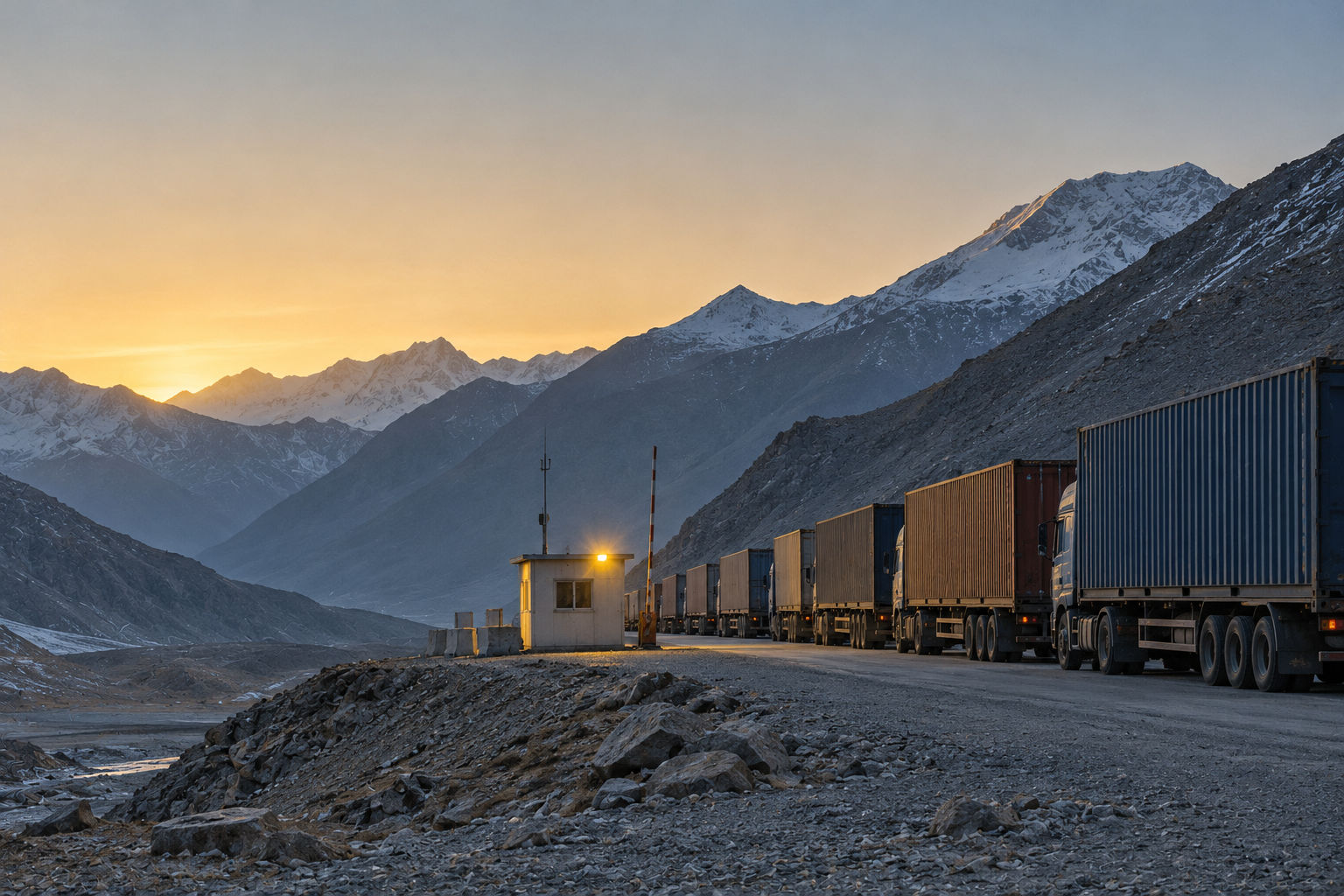
Li Qiang signs five documents with Dushanbe on the eve of the SCO prime ministers’ council
China’s premier met Rahmon on Monday after talks with Rasulzoda the day before, and the two governments signed a development agreement and four memoranda. The Shanghai Cooperation Organisation’s heads of government meet in Dushanbe on Tuesday, with Mishustin already in the city.
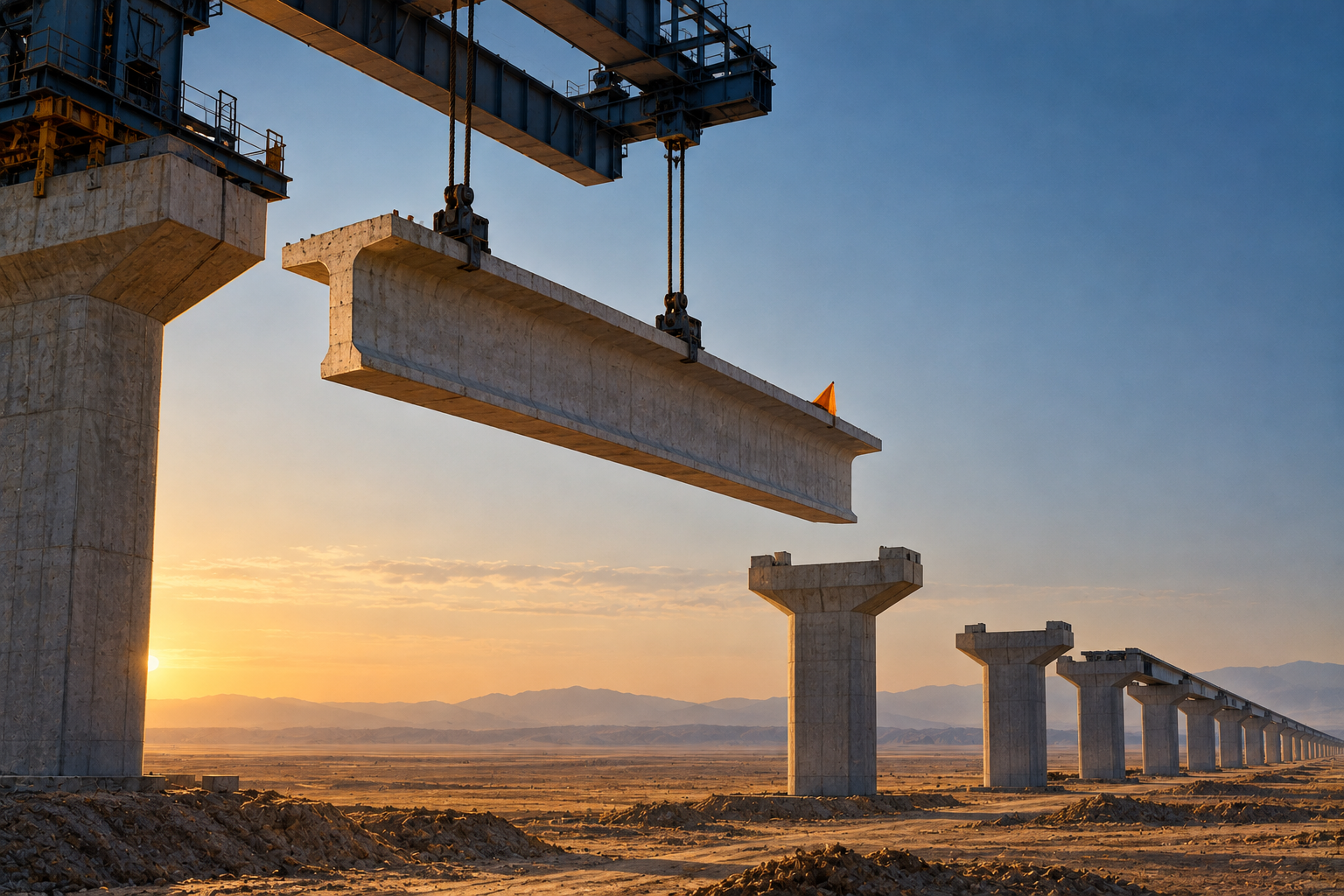
The second China-Mongolia railway has its last beam in place and a 30 million tonne design
The last of 760 prefabricated T-beams was set on Friday 16 October on the Gantsmod-Gashuunsukhait railway, the second cross-border rail link between China and Mongolia after the Erenhot-Zamiin-Uud line of 1956, Xinhua reported from Ulaanbaatar the same day. The 9.91 km route, 6.08 km of it a cross-border bridge, has been under construction since May 2025 and is designed for 30 million tonnes of cargo a year.
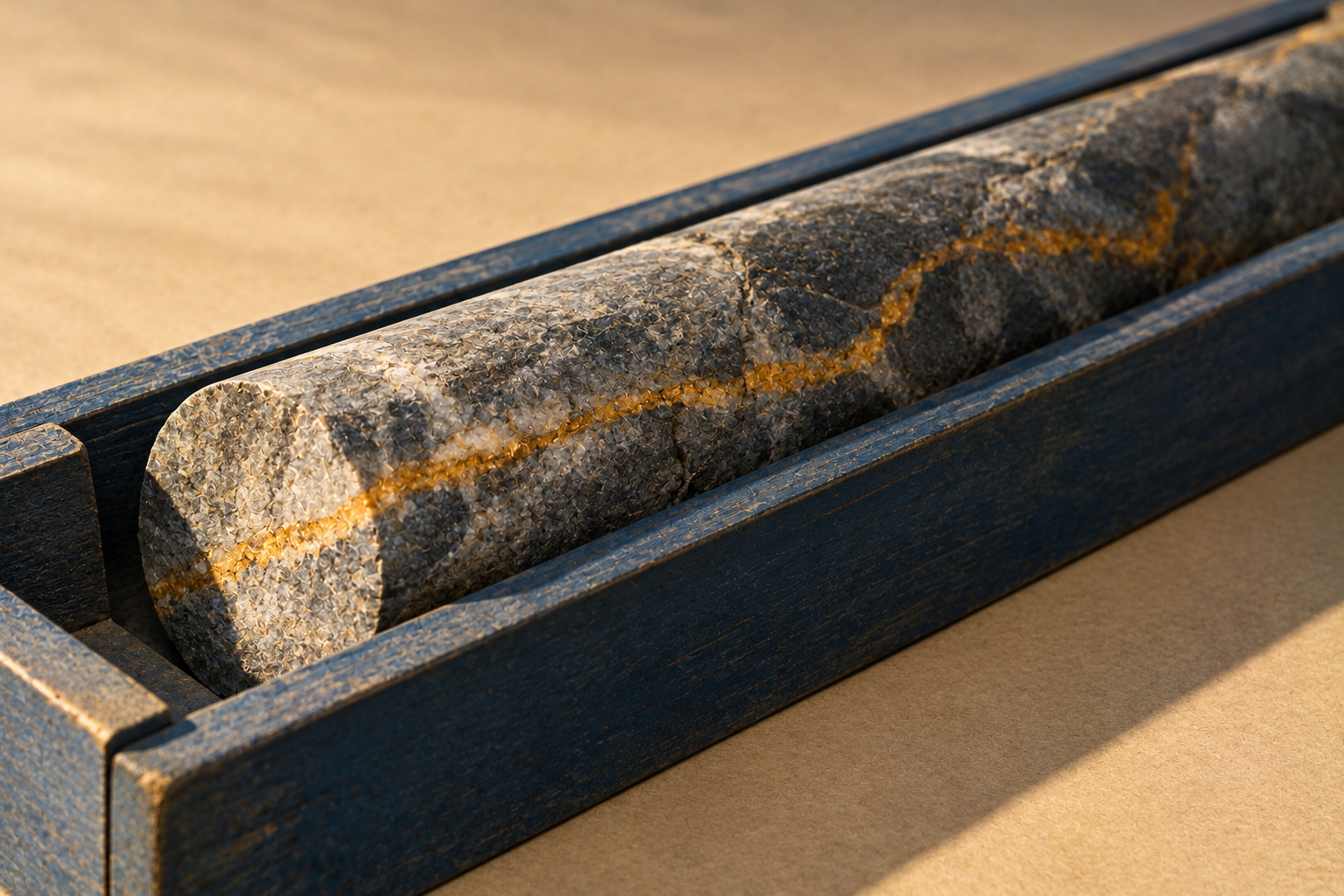
China Nerin’s half-year report prices its Togolok contract with Kumtor at $112.8 million
A Chinese contractor’s filing has put a number on the mine Kumtor is building beside its main pit: China Nerin Engineering Technology signed a $112.8 million engineering, procurement and construction contract with Kumtor Operating Company on 23 April for the Togolok gold plant, tailings facility and infrastructure, Economist.kg reported on 14 October from the company’s first-half report.

Mongolia drops the fuel duty to zero at three Chinese crossings through the end of 2028
The Cabinet approved on Wednesday a resolution setting the customs duty on 92-octane petrol and diesel imported through Zamyn-Üüd, Bulgan and Shiveekhuren at zero from 21 October 2026 to 31 December 2028, by the government’s readout on the public broadcaster MNB. At the same sitting export revenue was reported at $16.6 billion for nine months, up 54%, and reserves at a record $8.9 billion.
China's refiners halt fuel exports for October, and Mongolia has 18,000 tonnes on order
Chinese refiners have halted exports of petrol, diesel and jet fuel for October to every destination but Hong Kong and Macau, Reuters reported on Thursday, citing 4 sources. Mongolia has ordered 8,000 tonnes of petrol and more than 10,000 of diesel from China for the month, Kyrgyzstan thanked Beijing last week for stable supplies, and Russia's producers' diesel export ban runs to 31 October.

Plan, ceremony, tally: how Kazakhstan's investment forums count
In Almaty the plan said "more than 40" documents, the stage showed ten and the evening tally said 50. In Berlin 37 projects became "more than 30" documents and the euros became dollars. Peter Lidovsky on the number every forum produces and nobody audits.

Azerbaijan Investment Holding and China's Silk Road Fund set up a $1 billion joint fund
Azerbaijan Investment Holding and the Silk Road Fund are creating a joint investment fund with capital of 7.5 billion yuan, about $1 billion, the holding said on 30 September at the second Azerbaijan International Investment Forum in Baku. The fund grows out of a framework agreement the two signed in April 2025 and will finance projects in Azerbaijan and in other Belt and Road countries.

Kazakhstan and China sign 10 agreements in Almaty on a day of mourning: Tokayev’s $50 billion of trade, a target of $100 billion, and a morning that had promised 40 documents
The Kazakhstan-China Investment Forum opened in Almaty on Friday with a minute of silence for the servicemen lost in the Caspian and had 10 agreements on its list by mid-afternoon, one of them carrying a number: wind stations of 450 MW in Akmola region with SUNGROW. President Tokayev put last year’s trade at a record of almost $50 billion, the target at $100 billion, China’s investment in Kazakhstan at more than $29 billion and the enterprises with Chinese capital at more than 9,000, and proposed to hold the meeting every September as the Almaty Investment Dialogue. In the morning the organiser, Kazakh Invest, had expected more than 40 commercial documents worth several billion dollars.
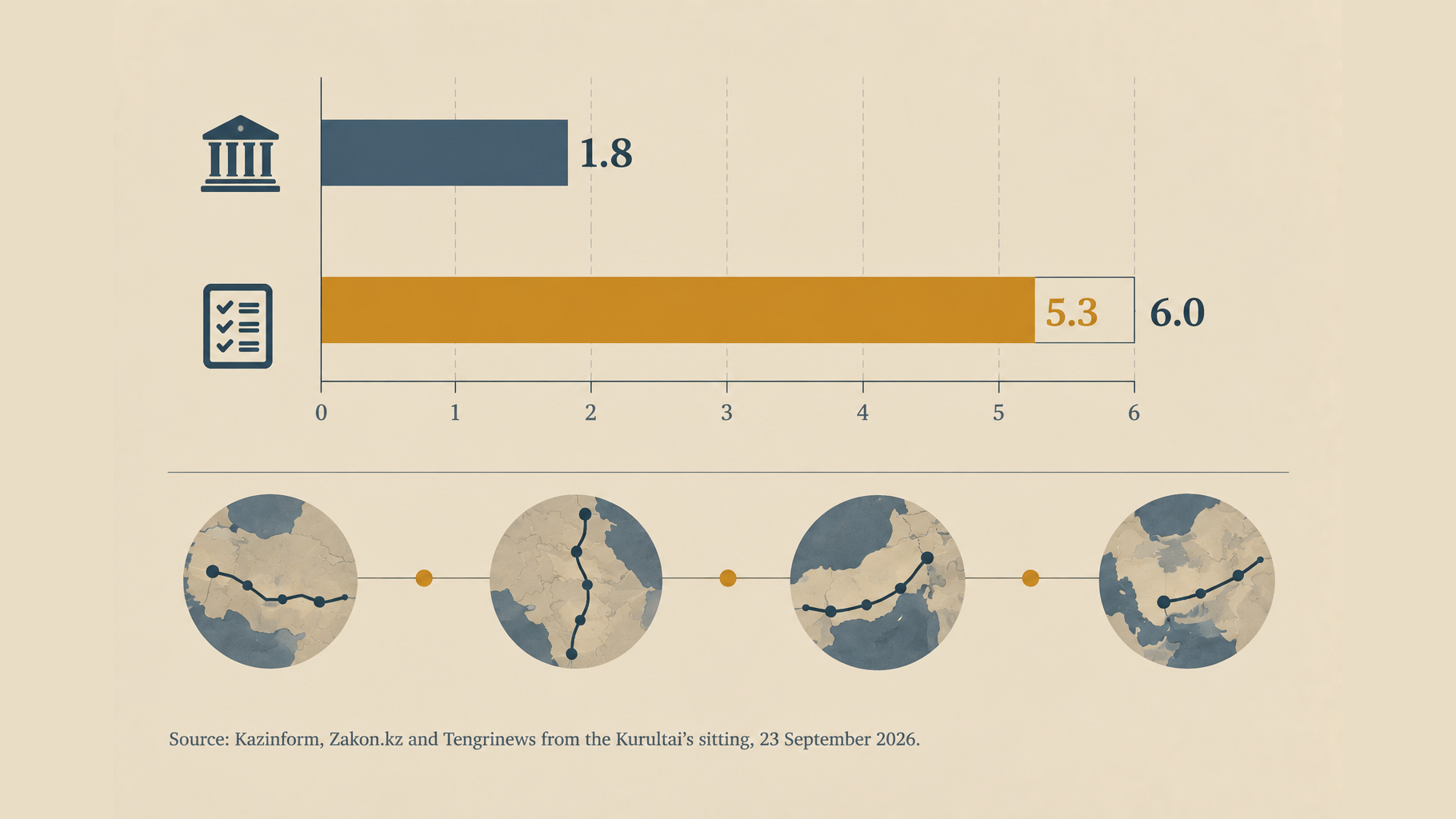
Kazakhstan’s Kurultai ratifies a framework with the AIIB for about $6 billion of concessional money over 5 years, at 1 to 1.5% a year, for 3 roads and a railway
The Kurultai adopted in 2 readings on Wednesday the law ratifying Kazakhstan’s framework partnership agreement with the Asian Infrastructure Investment Bank, signed in February during the visit of the bank’s president Zou Jiayi, Kazinform and Zakon.kz reported. Deputy prime minister and national economy minister Serik Zhumangarin told the deputies the agreement lets the government draw “long money” on concessional terms of about $6 billion in the first 5 years after ratification, at 1 to 1.5% a year, for 17 projects worth $5.3 billion in transport, energy, health and green finance: the Zhezkazgan-Karaganda, Aktobe-Karabutak-Ulgaisyn and Atyrau-Dossor roads and the Moyynty-Kyzylzhar railway among them.

Kyrgyzstan’s parliament sets the presidential election for 27 January 2027 by 86 votes to none, and its prime minister spends the week in Hangzhou with Li Qiang and a trade expo
The Jogorku Kenesh confirmed on Thursday morning that the presidential election will be held on 27 January 2027, by a resolution that 86 deputies voted for and none against, Kabar reported; the law fixes the regular election on the fourth Wednesday of January of the year in which the president’s term expires, and leaves the parliament the confirmation. Speaker Marlen Mamataliyev told the chamber a Wednesday vote is meant to lift turnout and cut vote-buying. On Wednesday the cabinet’s chairman, Adylbek Kasymaliev, was in Hangzhou, where Premier Li Qiang received him on the eve of the Global Digital Trade Expo and named the China-Kyrgyzstan-Uzbekistan railway and “the modernization of ports” as the projects to advance, Xinhua reported.
Georgia and China discuss a joint transport working group with Anaklia as the cornerstone and $7 billion of Georgian infrastructure money to 2032
Economy minister Mariam Kvrivishvili met China’s transport minister Liu Wei to discuss a joint working group across rail, sea, road and civil aviation, with the Anaklia deep-sea port placed “as a cornerstone infrastructure project for the Middle Corridor”, the ministry said in an account bm.ge carried on Wednesday at 13:15. Kvrivishvili put about $7 billion on Georgia’s infrastructure through 2032, and the ministry names the targets: to double the capacity of the maritime and rail networks and to triple airport throughput. The sides discussed direct routes from Tbilisi to Beijing and Guangzhou and cited the initiative adopted at the Global Sustainable Transport Forum in Beijing to raise the capacity, reliability and competitiveness of the Trans-Caspian route.
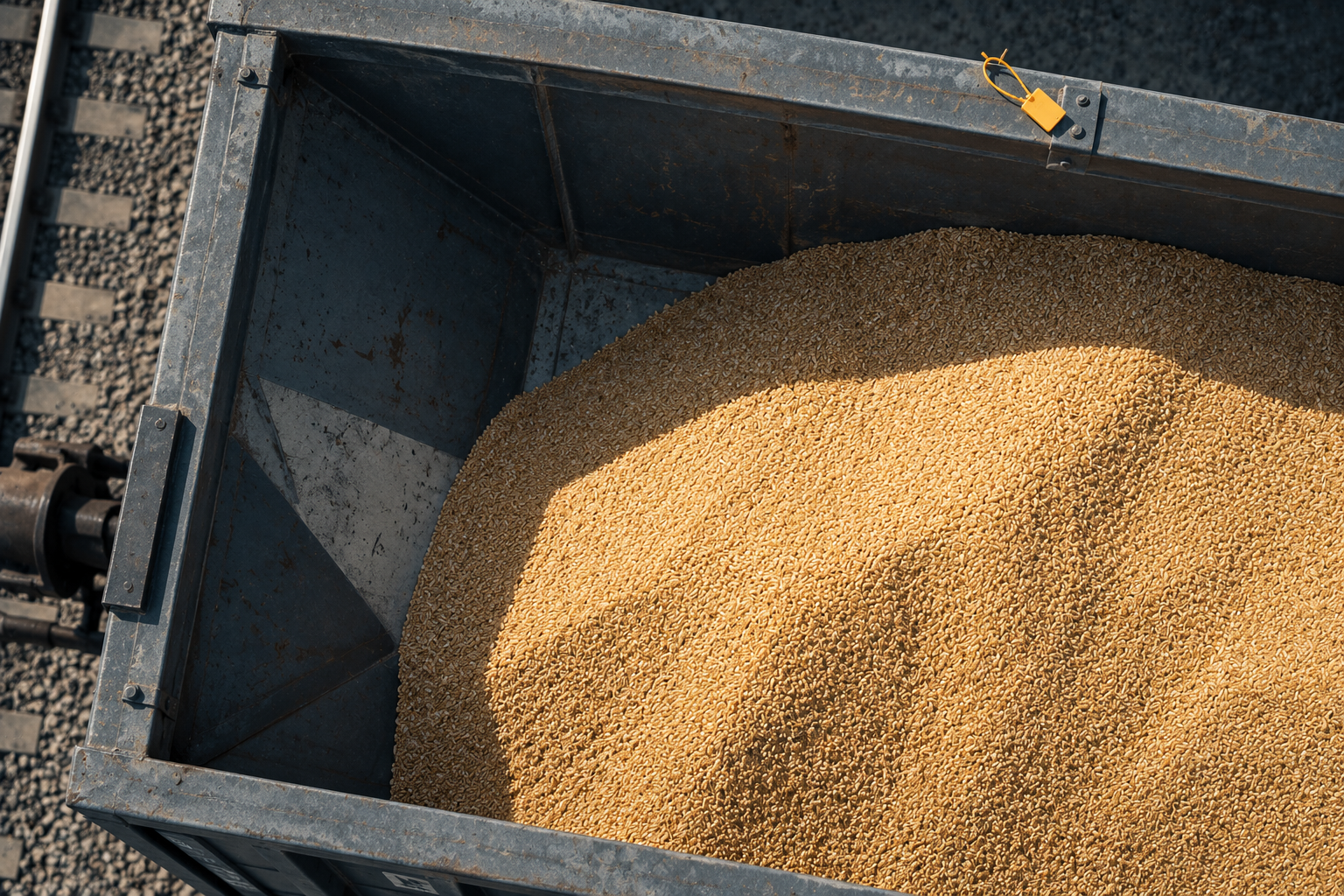
Kyrgyzstan signs 3 export protocols with China’s customs chief and gets Torugart opened to its grain as it thanks Beijing for fuel
Deputy cabinet chairman Erlist Akunbekov and the head of China’s General Administration of Customs, Sun Meijun, signed 3 protocols on quarantine, sanitary and phytosanitary requirements for Kyrgyz exports at a working meeting during Akunbekov’s visit to China, and agreed that Kyrgyz grain will go to China through the Torugart crossing, open.kg reported on Tuesday night in the account 24.kg carried on Wednesday morning. Akunbekov also thanked the Chinese side for its support in keeping fuel supplies from China to Kyrgyzstan stable, and raised longer working hours at Torugart.

A 56-metre bridge and a $940,000 bill: a Kyrgyz committee clears the agreement that puts the Bedel crossing on the road to China
The Jogorku Kenesh committee on international affairs, defence, security and migration on Tuesday approved a draft agreement with China to build a road bridge over the Uzengi-Kuush river at the Bedel crossing: 56 metres long, 12 wide, 28 metres on each side, each side paying for its own half, 24.kg reported. Kyrgyzstan’s half is put at $940,000 before design review. The bridge is a piece of the 161-kilometre Barskoon to Bedel road, due to finish its main works in 2029 and open in 2030.
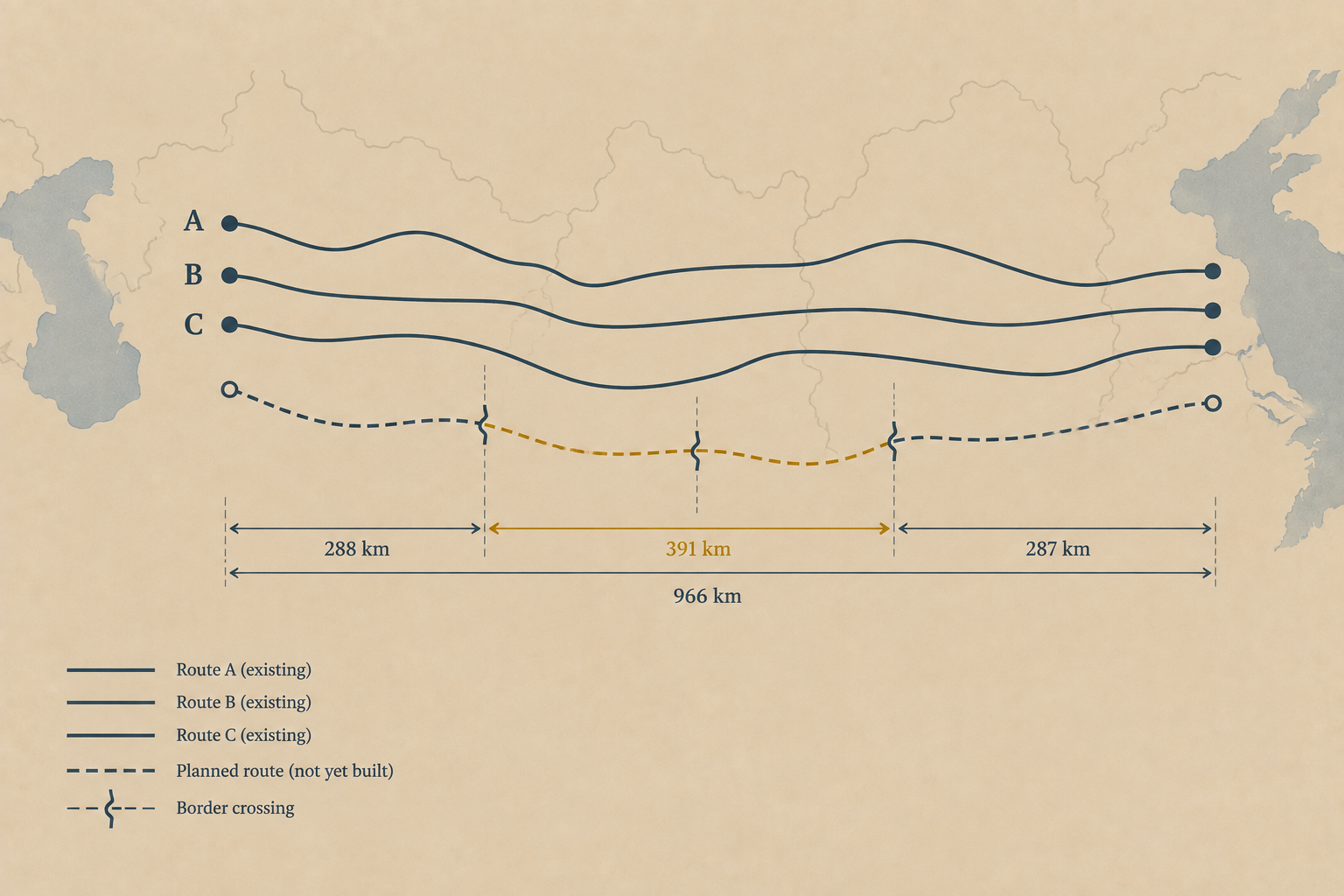
Dushanbe and the CNPC venture discuss the China gas pipeline again, 12 years after its Tajik section broke ground
Energy minister Daler Juma met the management of Trans-Tajik Gas Pipeline Company on 18 September to discuss “the progress of the project, related issues, ways to resolve them and further coordination”, Asia-Plus reported on Tuesday. The company, a joint venture of Tajiktransgaz and CNPC’s Trans-Asia Gas Pipeline, was founded in 2014 with $300 million from each side to build the 391-kilometre Tajik section of Line D of the Central Asia to China pipeline; construction began in September 2014.
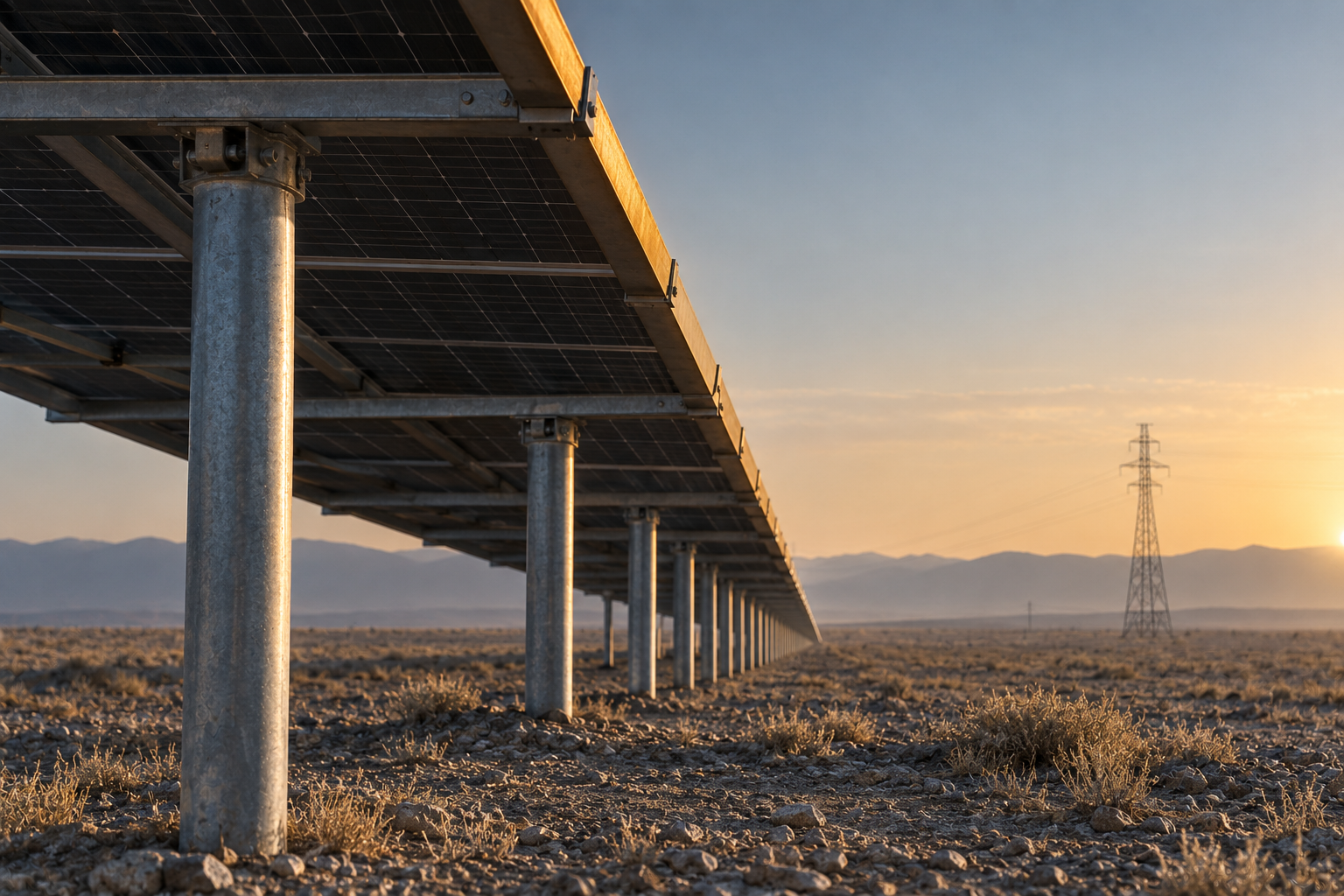
Tajikistan switches on a 250 MW solar plant in Sughd and orders 700 MW more for 2027
President Emomali Rahmon opened the Asht photovoltaic plant on Monday, 10 months after construction began, and told officials to build another 700 MW of solar capacity in the region next year, his press service said. Its account names the developer, Ayon Energy, and gives no cost, lender or tariff.