Tajikistan
ADB grants Tajikistan $63.77 million for health and the pension system’s digital overhaul
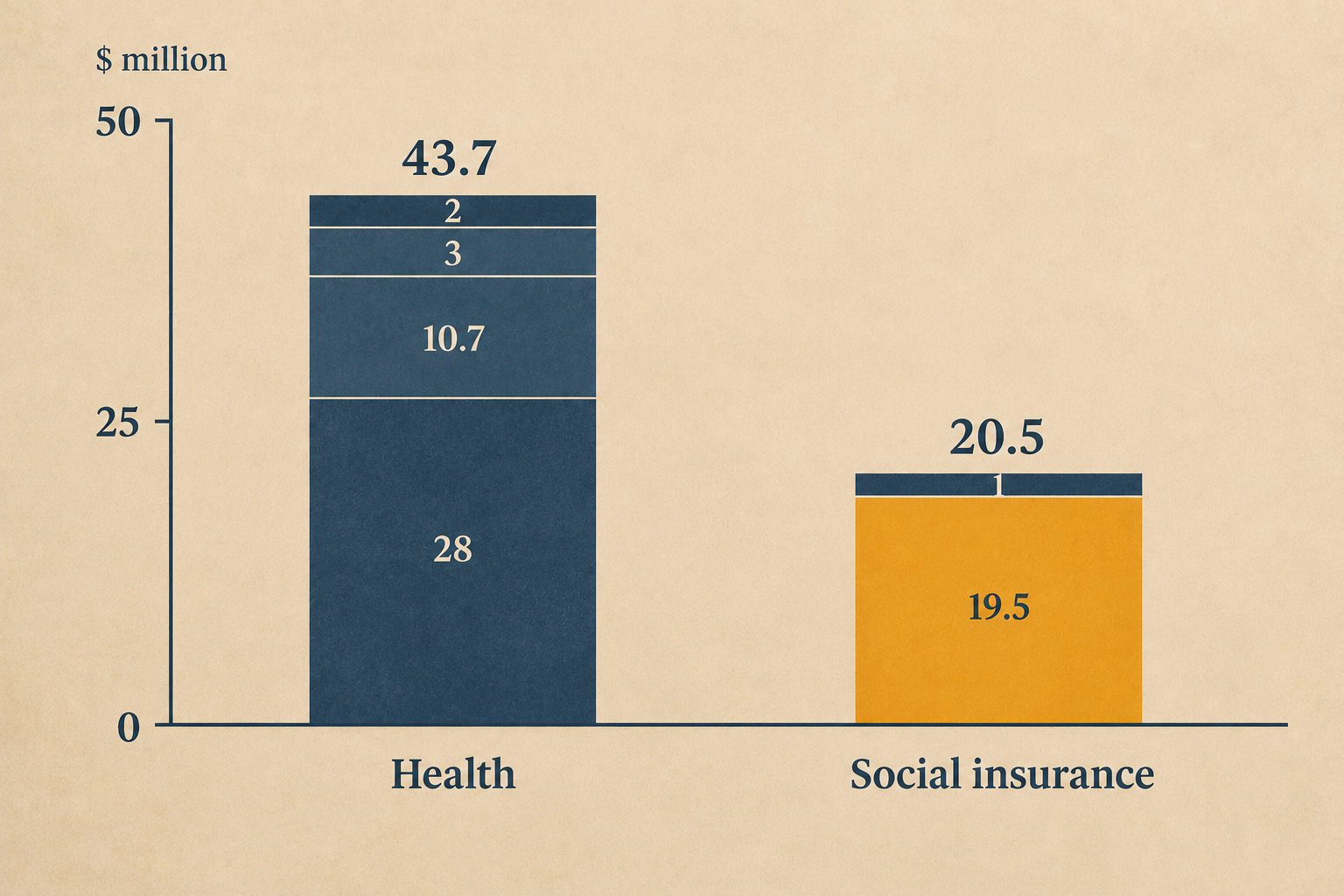
Finance Minister Faiziddin Kahhorzoda and ADB country director Ko Sakamoto signed two grant agreements in Dushanbe on 21 October: $43.7 million for health security and primary care and $20.5 million to digitise social insurance and widen pension coverage, Avesta reported on 22 October citing the bank. The components add up to $64.2 million against the stated total of $63.77 million.

Tajikistan and Tibet-Everest sign for a non-ferrous metals park in Sughd without a sum
The industry ministry, the China Non-ferrous Metals Industry Association and the company Tibet-Everest signed a memorandum on an industrial park for non-ferrous metallurgy in Sughd region during Li Qiang’s visit of 18 to 20 October, Asia-Plus reported on 22 October citing the ministry. Cost, investment and timetable are not named, and the company’s Istiklol plant opened a second stage on 21 September.
ADB study puts two retirement-age options before Tajikistan, 63 for women or 65 for all
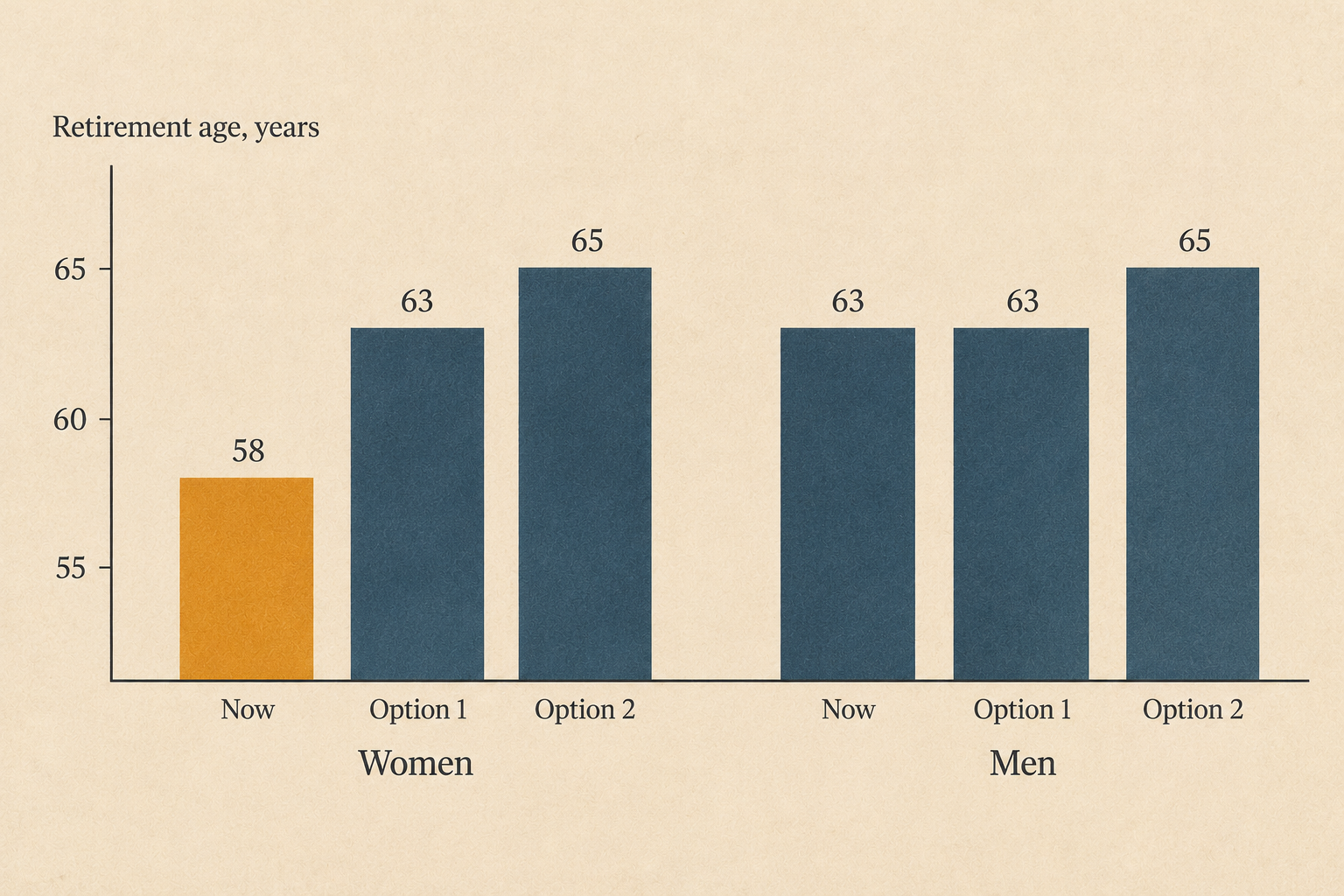
The Asian Development Bank’s country diagnostic study for Tajikistan, dated October 2026, proposes raising women’s retirement age from 58 to 63 or setting 65 for both sexes, and lengthening the minimum contribution period to 30 years. The average old-age pension in 2024 was 22.1% of the average wage. Asia-Plus, which reported the study on 21 October, carried no government response.
Tajikistan’s trade deficit reached $6.31 billion in nine months as imports grew 40.8%
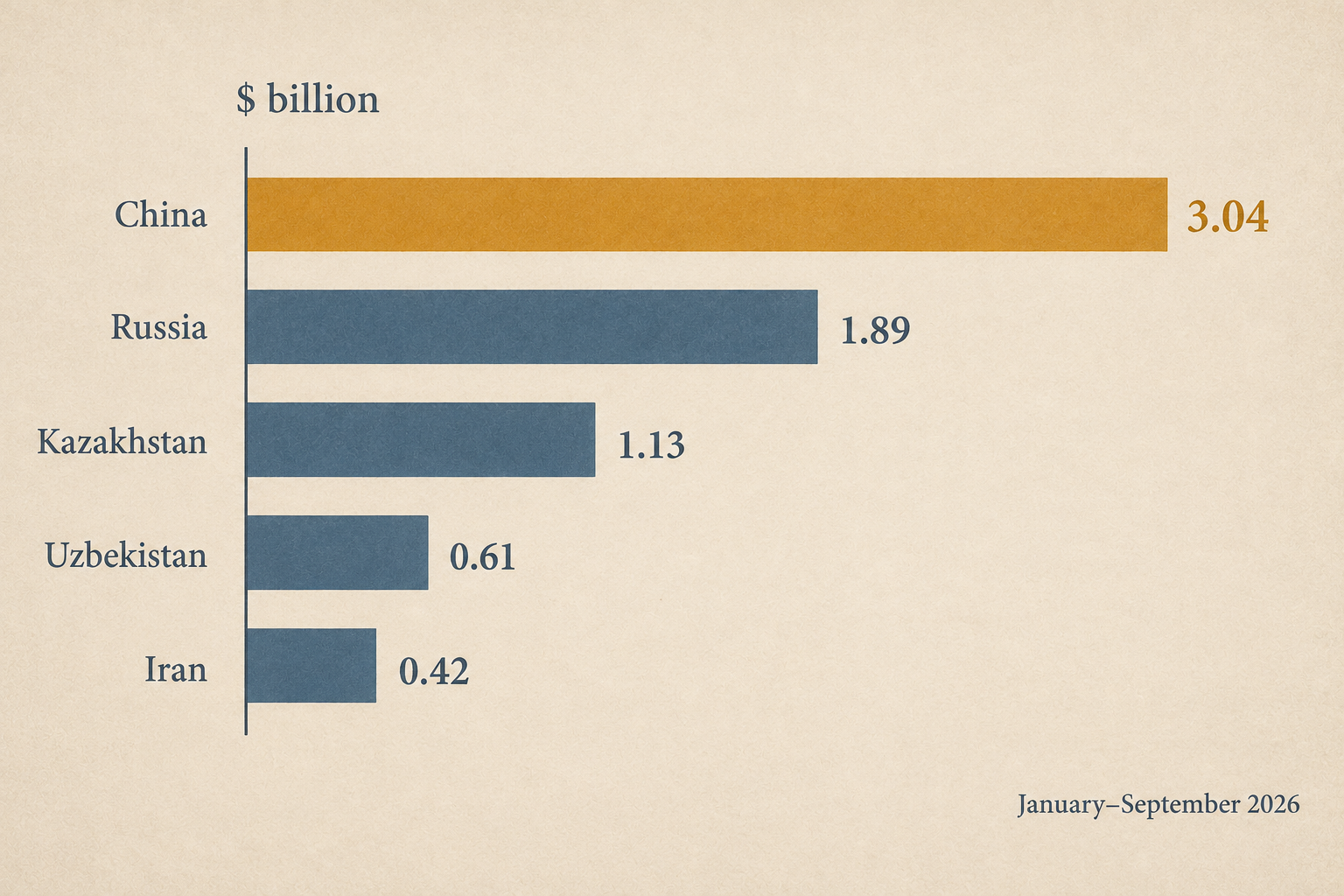
Imports of $8.48 billion ran 3.9 times above exports of $2.17 billion in January-September, by the Statistics Agency’s figures as Asia-Plus presented them on Tuesday, and the deficit widened from about $4.19 billion a year earlier. China took 30.5% of exports and supplied 28% of imports, with Russia, Kazakhstan and Switzerland next.

SCO governments sign four documents in Dushanbe and hand the council’s chair to Uzbekistan
The 25th Council of Heads of Government signed a joint communiqué, a 2026-2030 trade and economic action plan, a digital freight platform concept and a decision on the regulation of a data bank of investment projects in industry on Tuesday, by the Russian government’s list. Russia’s deputy prime minister Alexei Overchuk said the meeting was “to a greater degree” about a new SCO bank, on whose shares it is “still too early to speak”.
Li Qiang signs five documents with Dushanbe on the eve of the SCO prime ministers’ council
China’s premier met Rahmon on Monday after talks with Rasulzoda the day before, and the two governments signed a development agreement and four memoranda. The Shanghai Cooperation Organisation’s heads of government meet in Dushanbe on Tuesday, with Mishustin already in the city.
Dushanbe says the ADB plans $500 million for Rogun as Barqi Tojik owes it $110 million
Tajikistan’s finance ministry came back from Bangkok with a plan for $500 million from the Asian Development Bank, a $200 million grant and a $300 million concessional loan, not yet approved. A day later Rogun’s nine-month report showed the state utility owing the plant 983.2 million somoni, up 21.6 million in September after falling since February.

Samarkand gives the C5+1 a vision without figures as Trump says why the Graham act stays waived
The statement the six foreign ministers adopted in Samarkand on Monday 19 October runs to six visions and names no sum, no sanction and no country outside the format. Tashkent supplied the sums, 54 agreements and initiatives worth about $12 billion by Mirziyoyev’s count, and Washington the reason the Graham act’s duties on Russian energy buyers stay waived: Trump is negotiating with Putin and can impose them at any time.
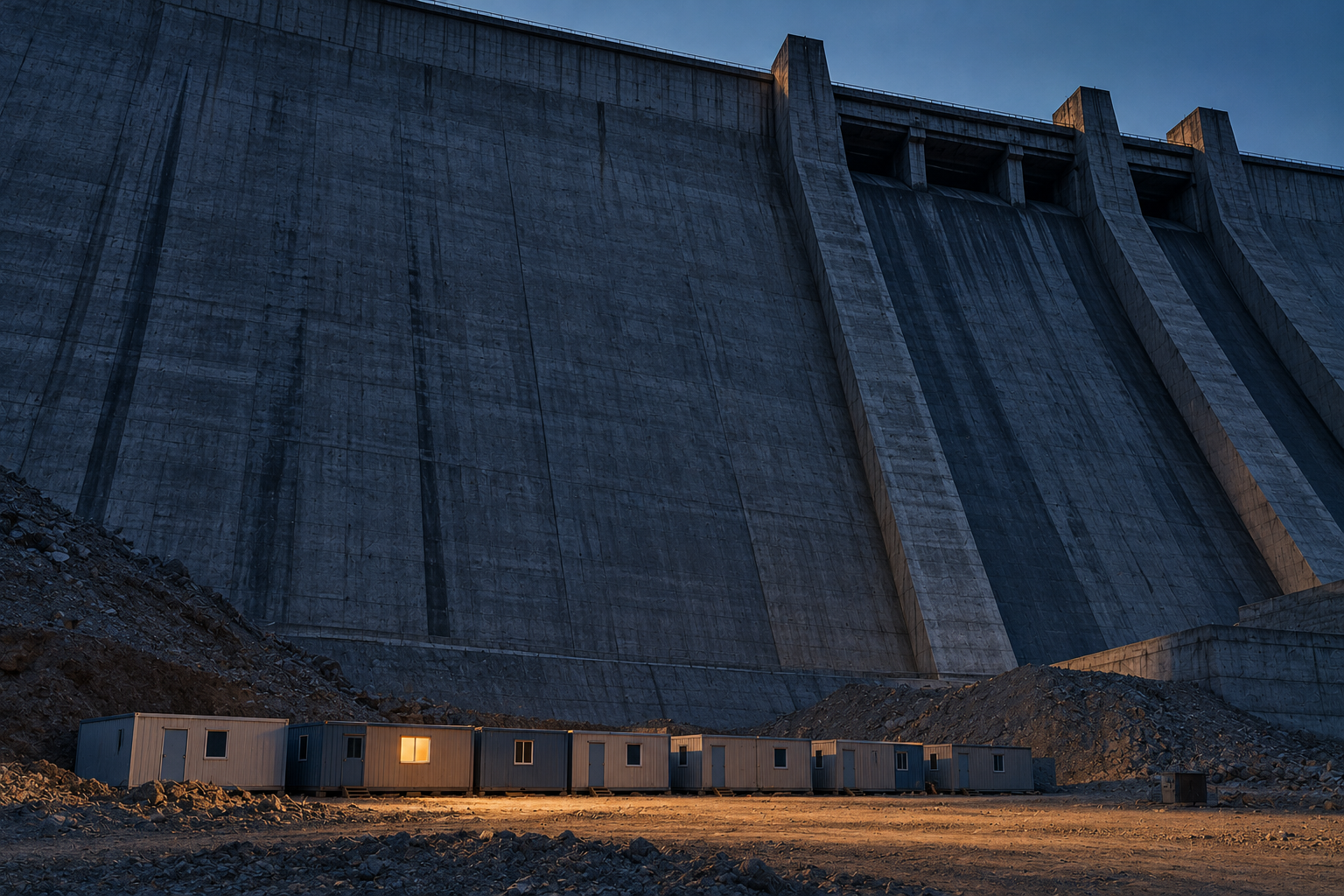
Rogun’s updated labour document dates the dam to 2032 and the cost to $6.6 billion
The labour management procedures for the Rogun project, updated in September 2026 and published on the plant’s site, give 2032 for the dam’s completion where the 2024 edition gave about 2029, and $6.6 billion as the estimated cost of completion against $4.9 billion, Asia-Plus reported on Friday 16 October. The document also counts 20,563 workers in August, 38% more than at the end of 2023.
Trump waives every Graham act duty two days before the deadline as Rubio reaches Samarkand
An executive order signed on Friday 16 October adds a 500% duty to goods from Russia and 100% duties to the five largest buyers of Russian oil and gas and to five facilitators of evasion, then waives all three until the president or the secretary of state decides otherwise. Two days later Marco Rubio landed in Samarkand for Monday’s C5+1, with a business delegation and the duties set aside.

Baku keeps the CICA chair to 2028 and an Azerbaijani takes the secretary general’s post
The seventh CICA summit in Baku on 15 October extended Azerbaijan’s chairmanship to 2028, made Azerbaijani ambassador Sultan Hajiyev secretary general to 2030 and admitted Laos as the 29th member, Azerbaijan’s foreign ministry said. Kazakhstan founded the forum in 1992 and a Kazakh ran its secretariat until this week. Kassym-Jomart Tokayev said the members had agreed to turn CICA into a full international organisation, a line the ministry omits.

Rahmon extends Tajikistan’s moratorium on business inspections to 1 January 2029
Emomali Rahmon told entrepreneurs and investors on 14 October that the moratorium on inspections of businesses runs two more years, to 1 January 2029, with tax inspections excepted, and that business registration, permits and licensing must move online by the end of 2027, Asia-Plus reported from his press service.
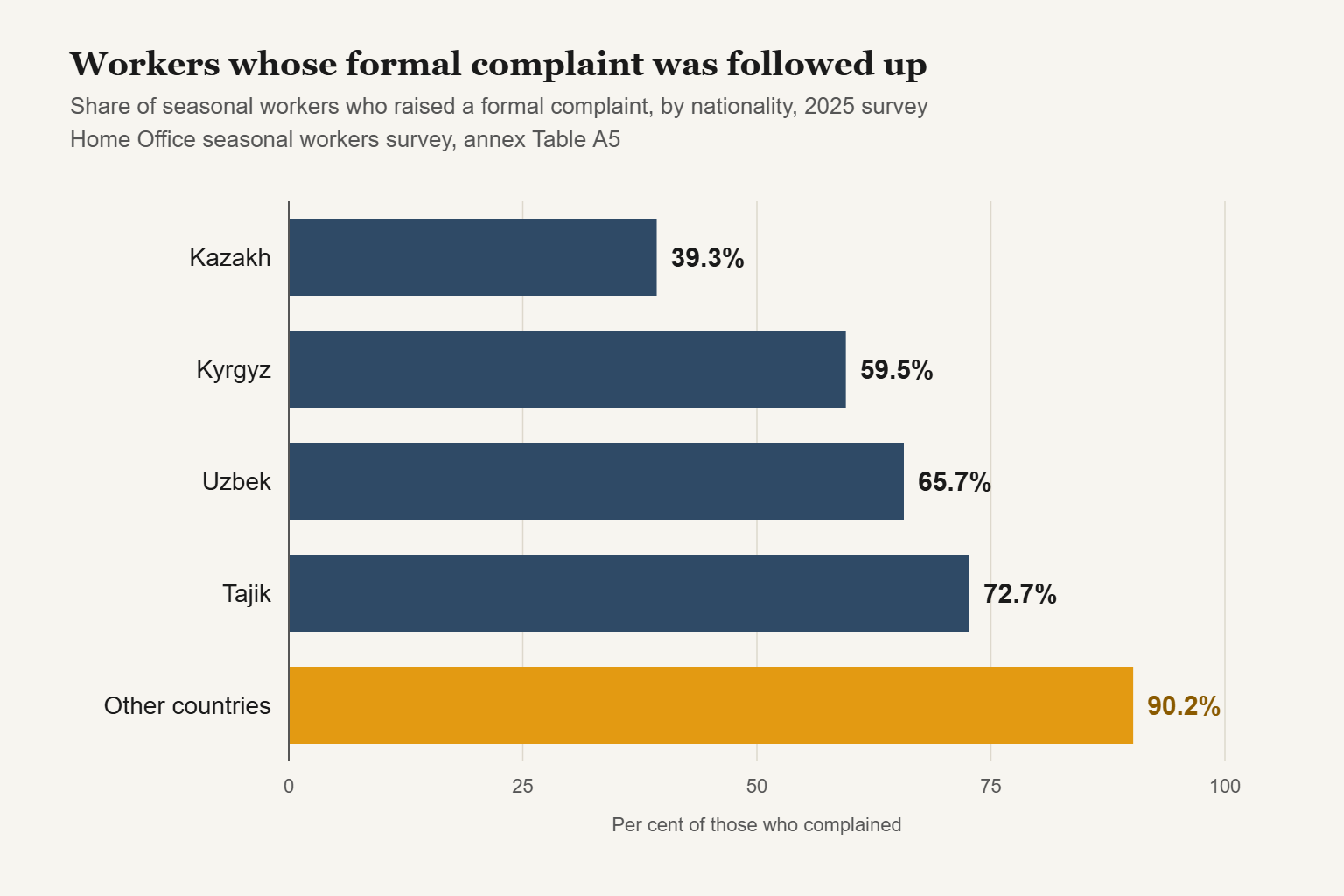
Four in five British seasonal farm visas go to Central Asians who buy the visa themselves
Britain granted 41,766 Seasonal Worker visas in the year to June 2026 and 79% went to Central Asians, with Kyrgyzstan, Uzbekistan, Kazakhstan and Tajikistan the countries the Home Office names. Its survey with Defra of 16,787 workers shows who paid: 90.1% said they bought their own visa, 63% spent £500 to £999 before arrival, and 26.8% of Uzbek respondents reported paying labour or migration ministry fees.
Four Central Asian presidents are in Baku for the seventh CICA summit
Tokayev, Mirziyoyev, Rahmon and Japarov are in Baku for the seventh summit of the Conference on Interaction and Confidence Building Measures in Asia on 15 October, their third joint appearance in eight days. Azerbaijan closes two years in the chair with a Baku declaration expected, Laos is to be admitted as the 29th member, and the forum’s depositary and secretary general are Kazakh.

Tajikistan’s parliament moves the only Central Asian ICC member toward the exit
The lower house of Tajikistan’s parliament has voted to withdraw from the Rome Statute, Asia-Plus reported on 14 October, four weeks after the chamber’s council listed a draft resolution to that effect, and the chamber has printed nothing. Tajikistan is the only Central Asian state that ratified the treaty, and in November 2025 the court’s pre-trial chamber asked it to explain why Vladimir Putin was not arrested in Dushanbe.

Rubio brings 200 business leaders to Samarkand as the Graham act’s 30-day deadline arrives
Secretary of State Marco Rubio will be in Samarkand between 17 and 22 October for the C5+1 ministerial, bilateral meetings with all five governments and a delegation of more than 200 business leaders, the State Department said on 13 October. Sunday 18 October is the thirtieth day of the Graham act, the deadline it sets for the president’s first duties on the largest buyers of Russian oil and gas.
The World Bank adds more than $40 million for Tajik agro-logistics and preschool classes
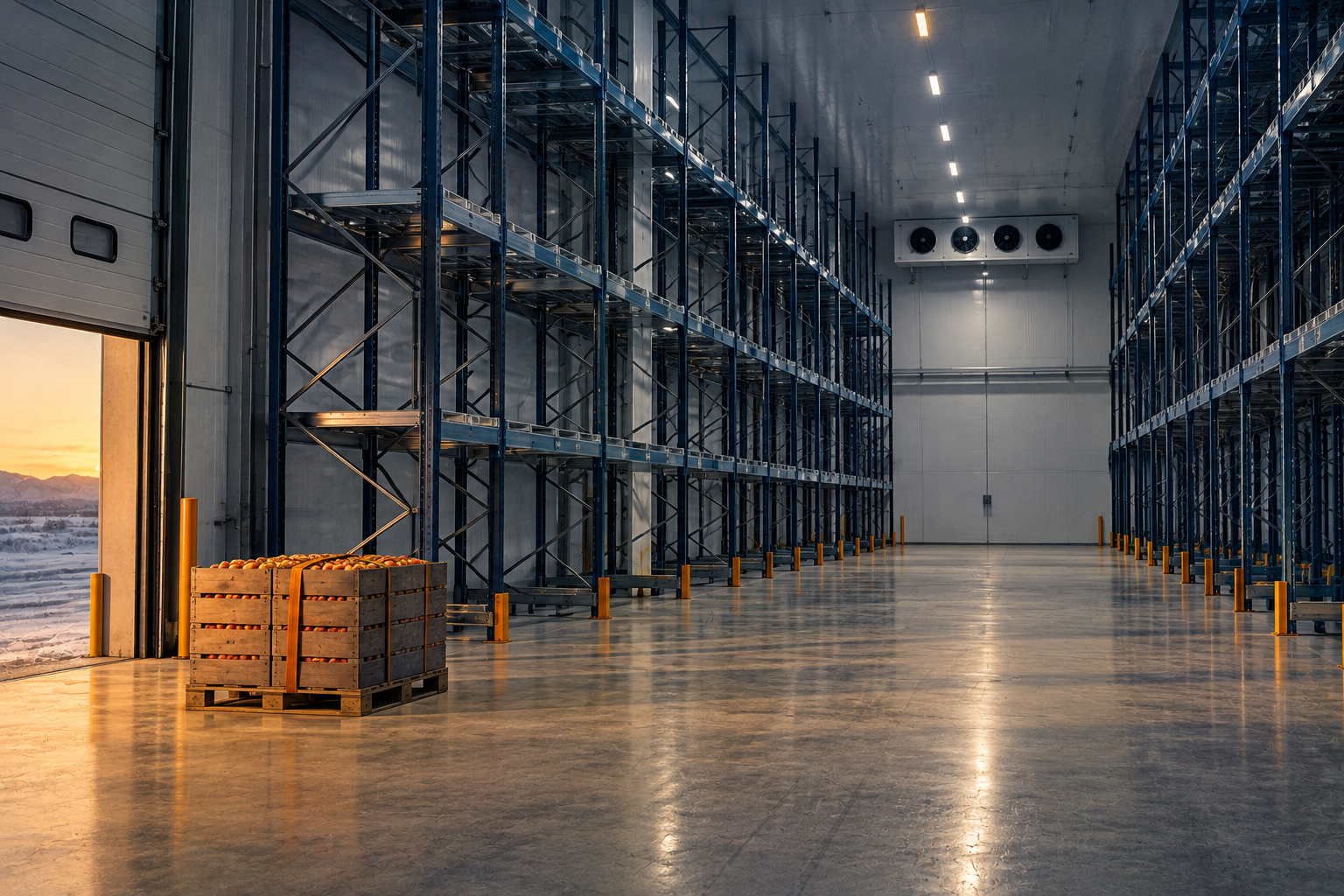
Finance minister Faiziddin Qahhorzoda and the World Bank’s resident representative signed two additional financing agreements on 11 October: $7.5 million to finish an agro-logistics centre in Dangara district and equip one in Dushanbe, and €30 million, $33.6 million, to extend the early childhood development programme to four more districts with 300 preschool classes, Asia-Plus reported on Tuesday. A further $4.5 million comes from the Global Financing Facility.
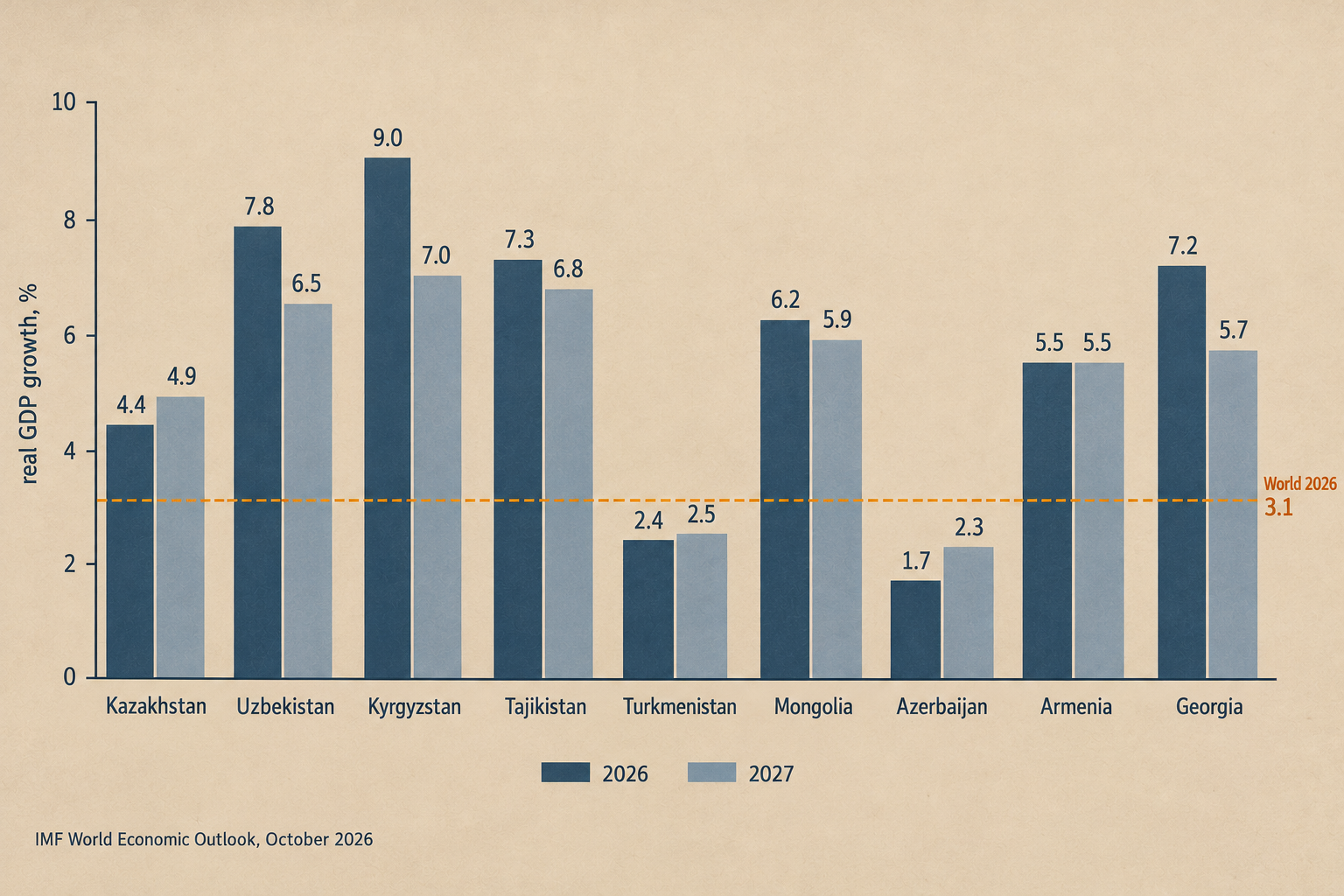
The IMF slows seven of nine regional economies in 2026 and lifts Uzbekistan and Azerbaijan
The IMF’s October World Economic Outlook, published on Tuesday, has growth slowing this year in seven of the nine economies CAW covers, with Kyrgyzstan still the fastest at 9% and Azerbaijan the slowest at 1.7%. Uzbekistan edges up to 7.8% and Azerbaijan gains too, from 1.4%. World growth slows to 3.1% in 2026 and recovers to 3.4% in 2027, the Fund says.
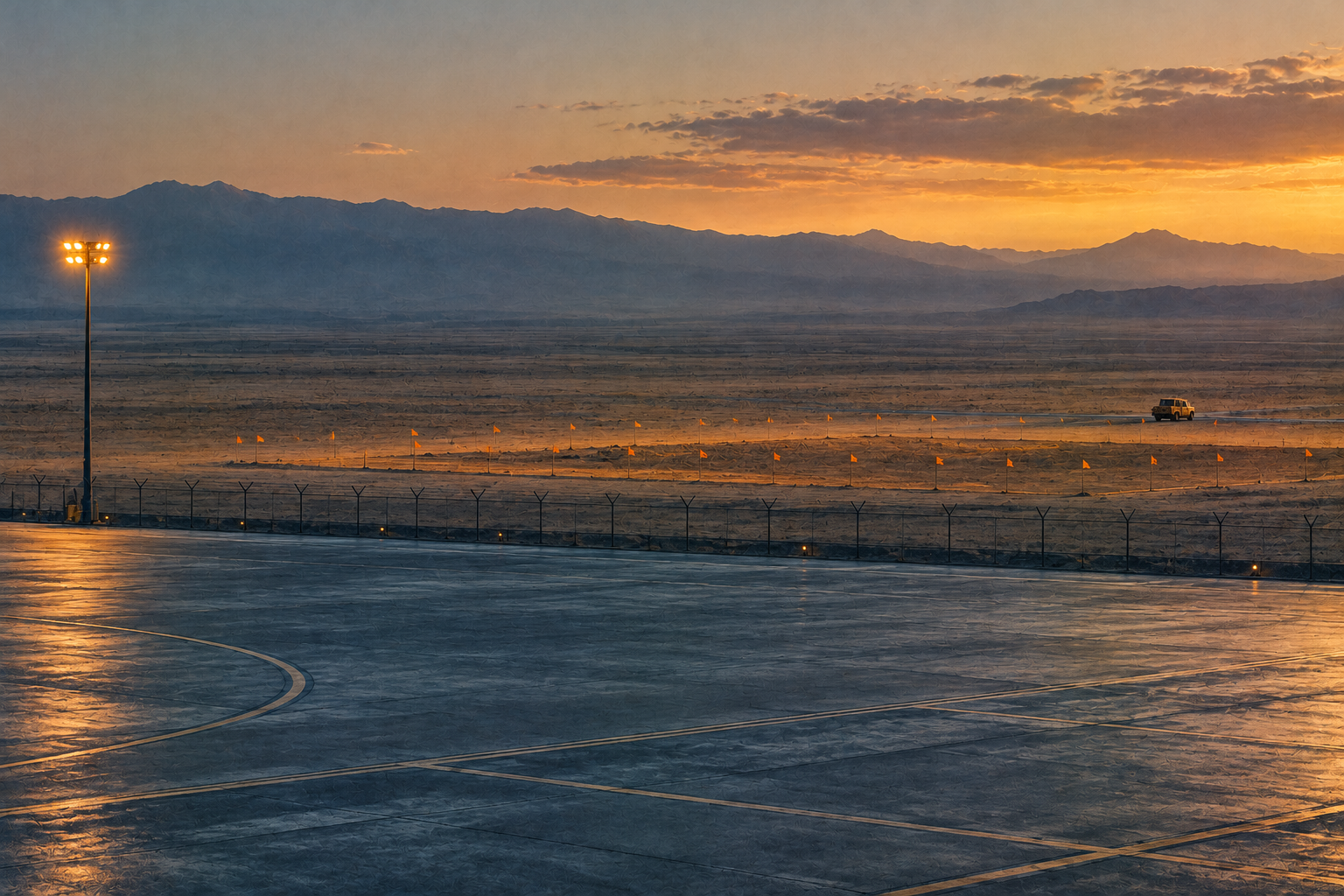
Dushanbe lays the stone of an 8.5 million-passenger terminal with no price and no builder
Emomali Rahmon laid the foundation stone of a new international terminal at Dushanbe airport on Friday, with the chairman of the Majlisi Milli and the city’s mayor, Rustami Emomali, beside him, Khovar reported at 17:59. Capacity is put at 8.5 million passengers a year and the build at 18 months. Khovar names no cost, no contractor and no source of money.