

Bishkek court remands Kenzhebaev, who accused Japarov’s circle in August, to 13 November
Bishkek’s Pervomaisky district court on 13 October granted an investigator’s motion and placed Syrgak Kenzhebaev, a businessman and former deputy head of the Agency for Investment Attraction and Protection, in remand prison SIZO-1 until 13 November. The court’s press service names two suspicions: fraud in an especially large amount under article 209 part 4 of the criminal code, and organising preparations for mass riots under article 278 part 1.

Kyrgyzstan detains Syrgak Kenzhebaev abroad as a suspect in preparing mass disorder
The interior ministry said on Tuesday that Syrgak Kenzhebaev, the businessman who accused president Sadyr Japarov’s circle in August, was detained in a foreign state and brought to Bishkek. He is suspected of taking $150,000 from a woman under the pretext of a joint business, and the ministry opened a case under article 36 and part 1 of article 278 of the Criminal Code, preparation to organise mass disorder.

Two ex-GKNB officers held on corruption suspicion as Japarov replaces his frontier chiefs
A Bishkek court ordered a month in custody on Saturday for Kurbanbek Avazov, first deputy chairman of the State Committee for National Security until February, and Kanybek Dosmambetov, the former health minister who ran its Jalal-Abad directorate, both suspected of corruption under article 336. On Friday Sadyr Japarov replaced the heads of the customs and border services, and on Monday he said about 15 of their officers were in custody.

Pashinyan calls the Shaki shooting an ordinary crime and keeps the trial in Armenia
The Azerbaijani serviceman held over the 1 October shooting in Shaki will be tried in Armenia’s courts and, if sentenced to prison, will serve the term in Armenia, Nikol Pashinyan told the National Assembly on Wednesday, calling the incident “an ordinary criminal situation”. Defence Minister Suren Papikyan acknowledged shortcomings over the border crossing and said the man did not resist arrest, which to him shows he was no saboteur.

Bulgaria ends the search for ten sailors as Erdoğan raises Black Sea safety with Putin
Bulgaria ended the search for the ten crew of the Turkish-owned Alfa Watan at 17:00 on Tuesday after finding three life rafts, an overturned lifeboat and no one, and expects the second ship hit, the Able, to sink, its rescue chief Rumen Nikolov said in Varna on Wednesday, by Euronews. The same day Erdoğan told Putin by telephone that navigational safety in the Black Sea matters.

Tokayev puts a budget specialist into the Defence Ministry after a week of removals
Tatyana Savelyeva, a vice-minister of finance from 2016 to 2023 and chair of the Mazhilis budget committee until July, was named Deputy Minister of Defence by a presidential order on Wednesday, minutes after the Kurultai ended her mandate without a dissenting vote, by Zakon’s reports of 10:22 and 11:53. Asker Beisenov was released from the post by another order the same morning.

Pashinyan removes the security deputy who oversaw the border troops, with no reason given
Nikol Pashinyan dismissed Davit Sanamyan as deputy director of the National Security Service on Monday by a decree that gives no reason, Armenpress reported, and Azatutyun wrote that the major general coordinated and oversaw the service’s border troops. An Azerbaijani serviceman crossed into Syunik province and shot a woman in her home in the settlement of Shaki on 1 October.

Kazakhstan arrests the navy commander it relieved three days ago over the Caspian deaths
Kanat Niyazbekov, the former commander of Kazakhstan’s navy, has been detained and placed under arrest with a court’s sanction on suspicion of a negligent attitude to service, in the investigation of the 14 deaths at the Caspian landing exercise of 24 September, the interior ministry said on Tuesday. Tokayev relieved him on 3 October. The defence minister’s reform plan is due on Wednesday.

After the Caspian drill deaths, Kazakhstan’s defence inspection opens 13 criminal cases
The commission Tokayev set up after 14 servicemen died in a Caspian landing exercise on 24 September has produced 13 criminal cases over possible theft of state property and abuse of office in its first stage, Akorda said on Monday, with 5 officials under arrest in the negligence case. On the same day the Higher Audit Chamber reported an audit of 50 defence sites, 48 of them military units.

After 14 Caspian deaths, Tokayev picks a chief of staff from his own guard
President Tokayev on Monday made Aitkurman Omarbekov, a major general of the State Guard Service, first deputy defence minister and chief of the General Staff, two days after relieving Kanysh Abubakirov from that post, deputy minister Almaz Dzhumakeev and navy commander Kanat Niyazbekov. Fourteen servicemen died in a Caspian exercise on 24 September, and a reform plan is due from the new defence minister on Wednesday.

An Armenian court remands the Azerbaijani soldier taken at Shaki for 2 months on 5 charges
The Investigative Committee said on Friday that Nasim Musaev, the Azerbaijani conscript accused of shooting a woman in her home in the Syunik village of Shaki on Thursday, was remanded in custody for 2 months. Armenia’s Prosecutor General’s Office is prosecuting him under 5 articles: illegal border crossing, smuggling of military goods or firearms, illegal arms trafficking, unlawful entry into a dwelling and grave harm to health.
An Azerbaijani conscript who left his unit is held in Armenia, accused of shooting a woman
A serviceman who walked out of an Azerbaijani unit in the Lachin district on 26 September is accused of entering a house in the Syunik village of Shaki on Thursday and shooting the woman who found him in the leg. He was detained 90 minutes later. The prosecutors general of Armenia and Azerbaijan issued statements that match on his absence from his unit and open different cases.
Guler expects Kyrgyz and Kazakh troops at larger drills as 3 armies train in Khojavend
The Strength of Unity 2026 exercise of Azerbaijan, Türkiye and Uzbekistan held its observer day at the Qizilqaya range in Khojavend district on Thursday, with the participating countries' defence ministers and chiefs of general staff present, Azerbaijan's defence ministry said. Türkiye's Yasar Guler said he believes the Kyrgyz and the Kazakhs will join for larger exercises, and Uzbekistan and Azerbaijan signed a 2027 military cooperation plan in Baku.

A Turkish engineer is missing after a drone hits a Turkish-owned bulker nearing Novorossiysk
The Palau-flagged bulk carrier Aroyat, 18,315 tonnes deadweight and operated for Istanbul companies, was hit by an aerial drone on 27 September as it approached Novorossiysk from Poti, the Turkish maritime press and The Maritime Executive reported on Tuesday. Fire took the accommodation block and the stern, and the ship has been towed towards Turkey. Of the 16 crew, the Turkish second engineer is missing.

Myrzakhmetov’s first order at the defence ministry: fewer reports, more readiness
Aidos Myrzakhmetov held his first working meeting with the defence ministry’s leadership on Monday afternoon, a day after his appointment, and set his priorities: real combat readiness, training built on today’s wars and drones, fewer administrative procedures, reports and meetings of no practical value, and purchases matched to what the troops need. Every soldier, he said, must feel safe.
Tokayev removes defence minister after the Caspian deaths and wants a reform plan in 10 days
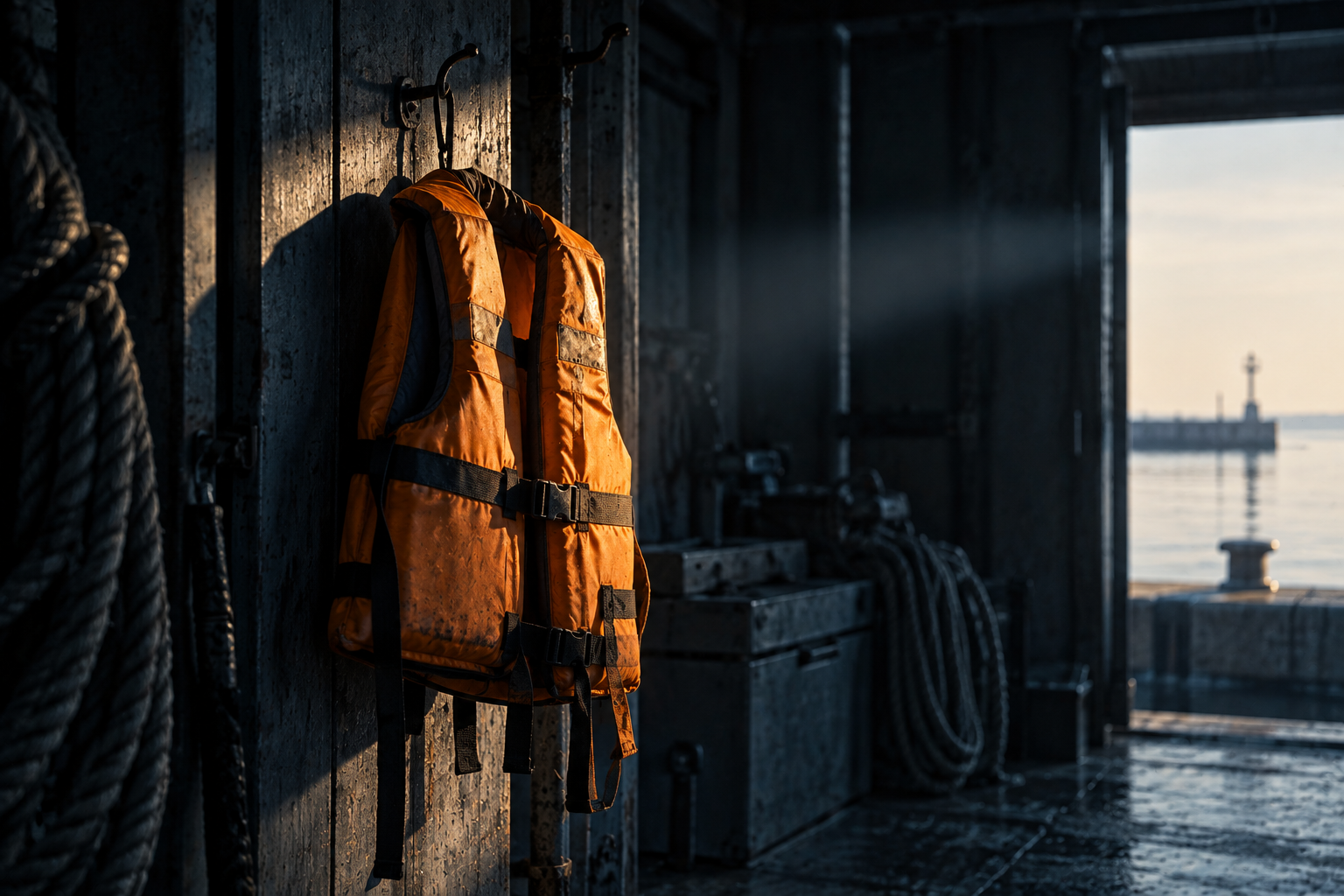
Tokayev dismissed Dauren Kosanov on Sunday morning and gave the defence ministry to Major General Aidos Myrzakhmetov, until then the commander of the special operations forces. The president told the ministry’s leadership that the 14 men who died on 24 September had not been given life jackets, and gave it 10 days to draft a military reform plan.

The Caspian search ends at 14 dead and 3 rescued as five officers are detained, the Navy’s chief of staff among them
The defence ministry found the last two of the missing at about 09:15 on Friday, Sergeant Mansur Gumarov and Seaman Miras Turdybekuly, and declared the search over: of the 17 servicemen swept into the sea on Thursday during the Khazar Korgany-2026 exercise, 14 are dead and 3 were rescued. By early afternoon the interior ministry said five officials of the defence ministry were in the temporary detention facility of the Aktau police as suspects, the chief of staff and first deputy commander of the Naval Forces, two commanders of military units, the commander of a marine infantry company and the commander of the patrol boat Qaisar, from which the men were disembarking 43 km from Aktau in adverse weather.

Kazakhstan mourns 12 servicemen from the Caspian exercise, with 2 still sought and the count of the swept-away revised from 19 to 17
Friday is a national day of mourning in Kazakhstan, by President Tokayev’s order, for the servicemen lost in the Caspian on Thursday: the defence ministry’s count on Friday morning is 17 swept into the sea during the Khazar Korgany-2026 exercise, 12 dead, 3 rescued and 2 still being searched for, against the 19 and 9 of its first statement. Round the clock the search runs with 252 personnel, 37 military divers, 14 ships and boats, more than 20 aircraft including 4 helicopters and 34 units of ground equipment, the ministry said, and the Prosecutor General’s office is investigating under article 453 part 2 of the Criminal Code, a negligent attitude to service with grave consequences, and article 465, violation of the rules of navigation.
Bad weather sweeps 19 Kazakh servicemen into the Caspian during the Khazar Korgany-2026 naval exercise: 9 dead, 3 rescued, 7 missing
Nineteen servicemen of Kazakhstan’s naval forces were swept into the Caspian Sea off Mangystau on Thursday when the weather turned and the wind rose during the Khazar Korgany-2026 exercise, the defence ministry said; 9 died, 3 were rescued, one of them in hospital, and the search for the other 7 was still running when the government’s statement went out at 15:12 Astana time. Prime minister Olzhas Bektenov put a government commission under deputy prime minister Kanat Bozumbaev and ordered him to the site; the Prosecutor General’s office opened a criminal case.