Search
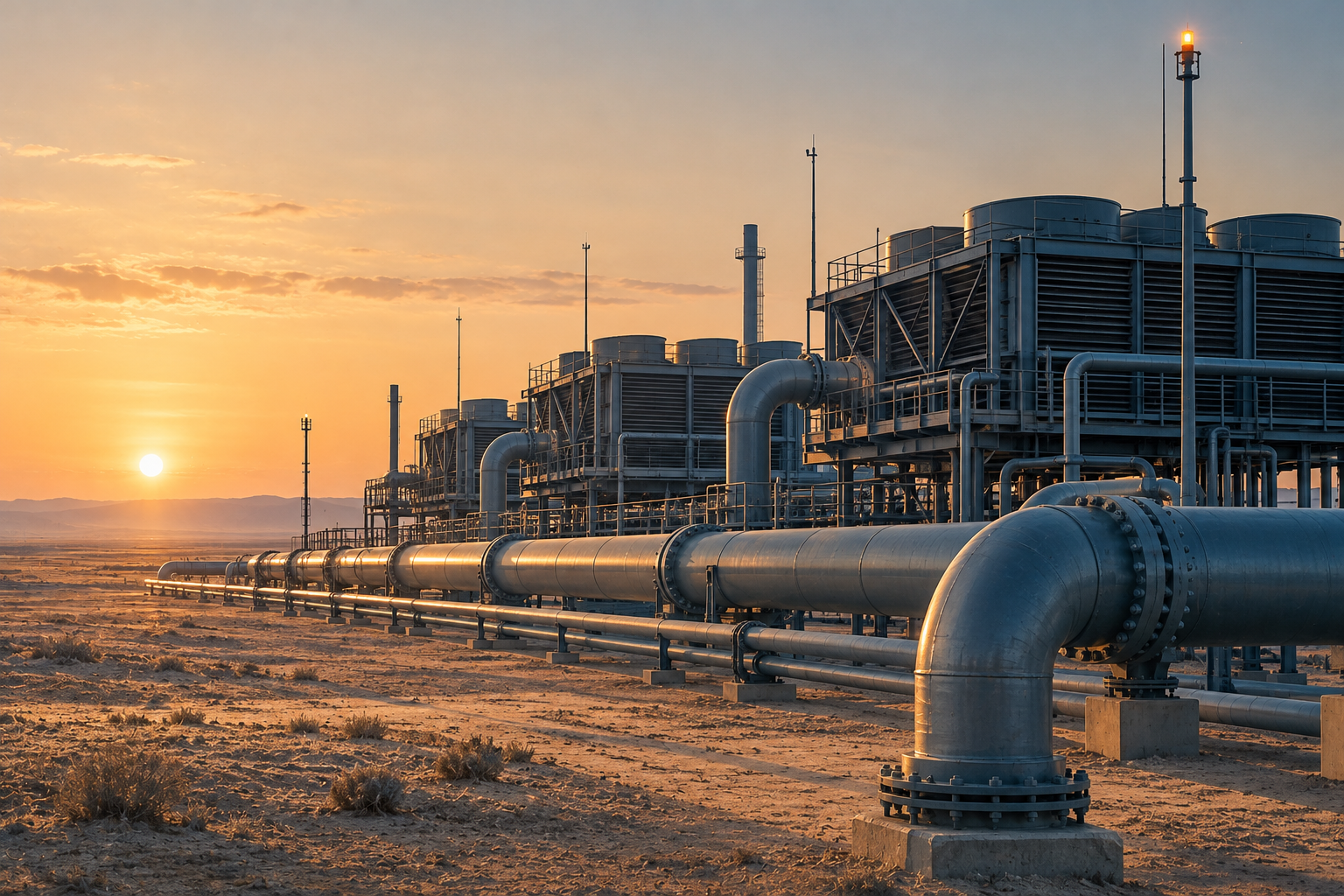
Turkmenistan dates first TAPI gas to mid-2027 and ties it to the Afghan side’s readiness
Turkmengaz expects about 80 billion cubic metres of gas this year and next, roughly half of it exported to China and Uzbekistan. Its chairman told the closing press conference of Oil and Gas of Turkmenistan 2026 on Friday that the Serhetabat to Herat section of TAPI should be complete by the end of this year, with first gas to Afghanistan by mid-2027 if the Afghan side is ready.
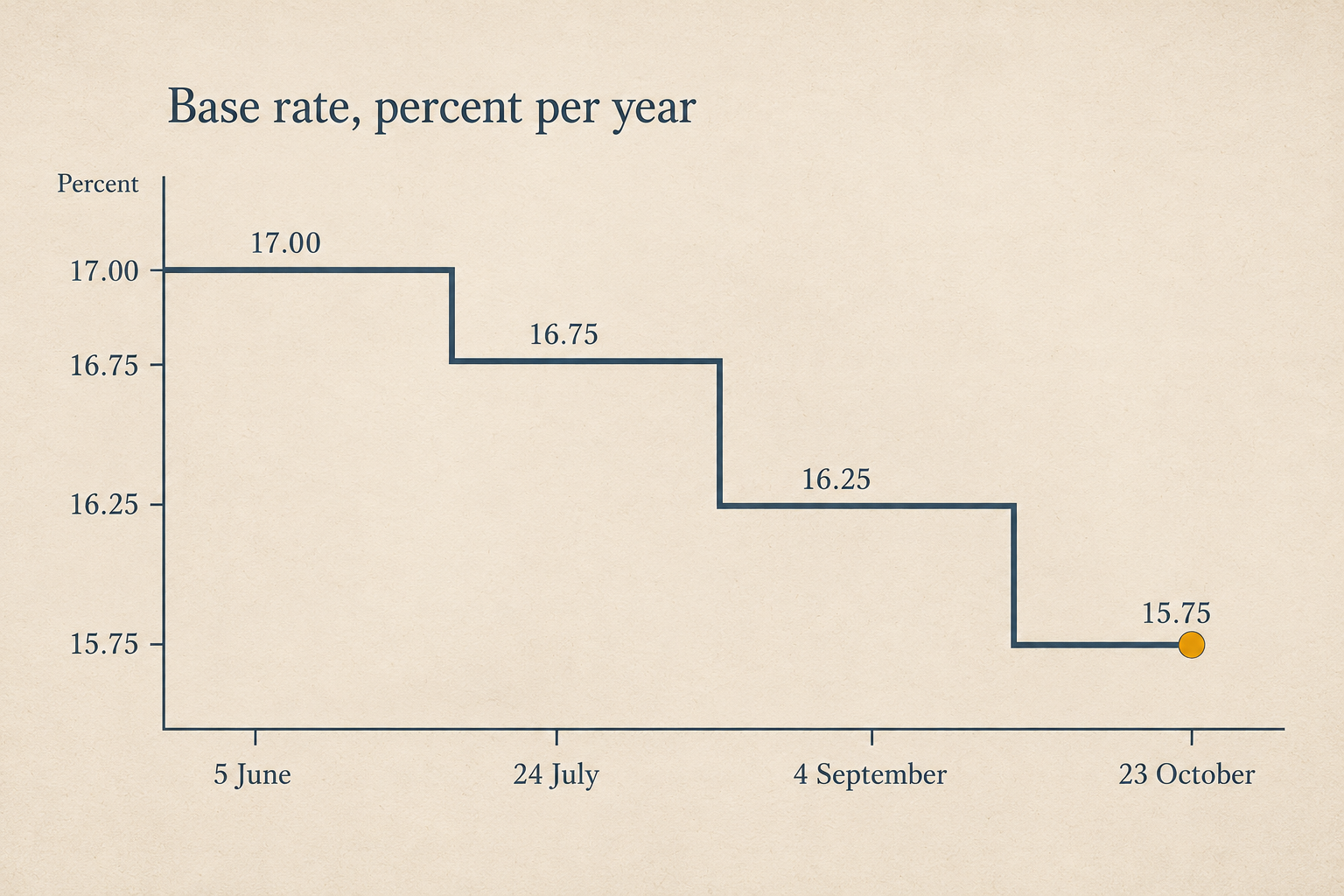
Kazakhstan cuts its base rate to 15.75 percent and calls another change this year unlikely
The National Bank of Kazakhstan cut its base rate to 15.75 percent on Friday and wrote that another change before the end of 2026 is unlikely, with the risks it lists all on the upside. Annual inflation stood at 9.3 percent in September, slowing for a twelfth month. The tenge weakened by 3.11 tenge to 451.05 per dollar on the day of the decision.
Pashinyan calls the EAEU report a third attempt to change Armenia’s government
Asked on 22 October about the four governments’ report on suspending the EAEU treaty for Armenia, Nikol Pashinyan said member states have no right to expel a member and called the report a third attempt to change the government after 2023 and June 2026. He ruled out an economic apocalypse from gas at $300, and on Friday the CSTO’s secretary general said Armenia had de facto left that bloc.
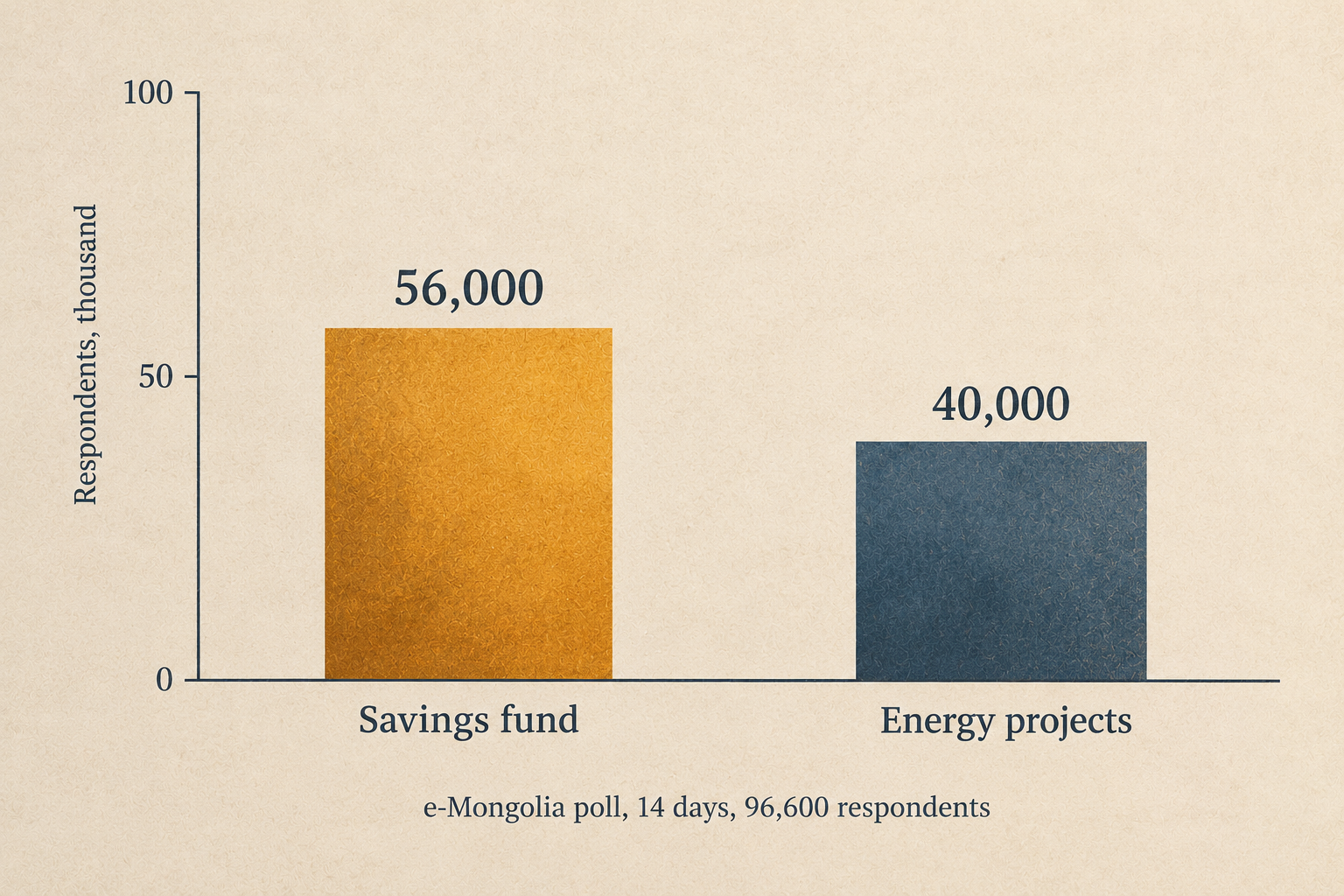
Mongolia drops its Oyu Tolgoi dividend spending bill, citing an e-Mongolia poll
On 23 October the government withdrew the one-off bill that would have put ₮2 trillion of the ₮3 trillion Oyu Tolgoi dividend expected in 2027 into a 300 MW power plant, ten provincial heating plants and dormitories. Finance Minister Mendsaikhan gave two reasons: a budget the debate was making unrecognisable, and an e-Mongolia poll in which about 56,000 of 96,600 respondents chose the Savings Fund over energy projects.

Kashagan tribunal rejects $12 billion of Kazakh claims as time-barred, Bloomberg reports
An international arbitration tribunal has rejected about $12 billion of Kazakhstan’s claims against the Kashagan consortium’s shareholders over disputed development costs of 2011 to 2015, ruling that the government filed too late, and allowed about $8 billion of other claims to proceed, Bloomberg reported on 22 October citing people familiar with the matter. The process continues, and Astana still seeks more than $150 billion.

US order on buyers of Russian oil and gas waives every duty and names no country
Executive Order 14436 reached the Federal Register on 21 October: four pages that set the Graham act’s duties and waive them, with its bank and secondary sanctions, in one text. The 100% duty on the five largest buyers of Russian oil and gas is tied to new purchases from 18 October, the five are unnamed, and the waivers run until the President or the Secretary of State decide otherwise.

Kazakhstan’s Security Council approves a military reform that splits conscription in two
On 21 October Kassym-Jomart Tokayev’s Security Council approved a military reform plan that moves conscripts to six months in training centres followed by six months in units, creates Drone Forces and a Commissioner for Servicemen, and sets the organisational steps for this year and what it calls the main conceptual measures for 2027. The plan’s text, troop numbers and budget are not published.
Armenia knows of no way to suspend an EAEU member, Mirzoyan says
Armenia’s foreign minister said on 21 October that his government knows of no legal mechanism by which four EAEU members can suspend a fifth, that sovereignty takes precedence over trade, and that he does not know how far a unilateral gas price rise would be in the spirit of partnership. Earlier that afternoon a parliamentary committee voted four to one for the TRIPP agreement with the United States.
Ten years of UK memoranda on Mongolian mines end in a working group and an unfunded list
Mongolia’s mining sector was put before London on 21 October at a Mongolian-British Chamber of Commerce conference during LME Week. The state’s list of mines seeking investment holds 67 projects asking for ₮3.5 trillion, about $970 million, two thirds of it one Australian-owned coal deposit. Britain’s record since the first mining memorandum of 2016 is a working group, a metro memorandum and a listing programme without an issuer.

Turkistan’s new virology laboratory promises faster tests and publishes no turnaround time
Kazakhstan opened a virology laboratory in Turkistan on 10 September under a $58.2 million pandemic-preparedness project, $19.2 million of it a Pandemic Fund grant, for a region that used to send its samples elsewhere. Every speech promised faster diagnosis. No public document sets the time from sample to result, before or after: not the order on especially dangerous infections, not the laboratory standard of 2020, none of the releases.
Kazakhstan and Kyrgyzstan sign an EAEU appeal that prices a suspension of Armenia
The heads of government of Russia, Belarus, Kazakhstan and Kyrgyzstan sent the Eurasian Economic Commission on Tuesday a report on what suspending the union treaty for Armenia would cost: gas assumed at $300 instead of $177.50 a thousand cubic metres, trade with the union cut by 55.6%, remittances from Russia halved. Their appeal goes to four presidents and Armenia’s prime minister, two months before the presidents’ December date.
Dushanbe says the ADB plans $500 million for Rogun as Barqi Tojik owes it $110 million
Tajikistan’s finance ministry came back from Bangkok with a plan for $500 million from the Asian Development Bank, a $200 million grant and a $300 million concessional loan, not yet approved. A day later Rogun’s nine-month report showed the state utility owing the plant 983.2 million somoni, up 21.6 million in September after falling since February.

Uzbekistan’s $12 billion US package: 54 documents, twelve names, one verb in dispute
The package presented at the Uzbekistan-United States Business and Investment Council in Samarkand on Monday 19 October names GE Aerospace, Wabtec, four American financial houses, three minerals firms and three others, with one sum for all. Its ministry says the 54 documents were signed, the presidency says prepared, and only AKFA Group’s $80 million plant in Kentucky came with a figure of its own.

Samarkand gives the C5+1 a vision without figures as Trump says why the Graham act stays waived
The statement the six foreign ministers adopted in Samarkand on Monday 19 October runs to six visions and names no sum, no sanction and no country outside the format. Tashkent supplied the sums, 54 agreements and initiatives worth about $12 billion by Mirziyoyev’s count, and Washington the reason the Graham act’s duties on Russian energy buyers stay waived: Trump is negotiating with Putin and can impose them at any time.
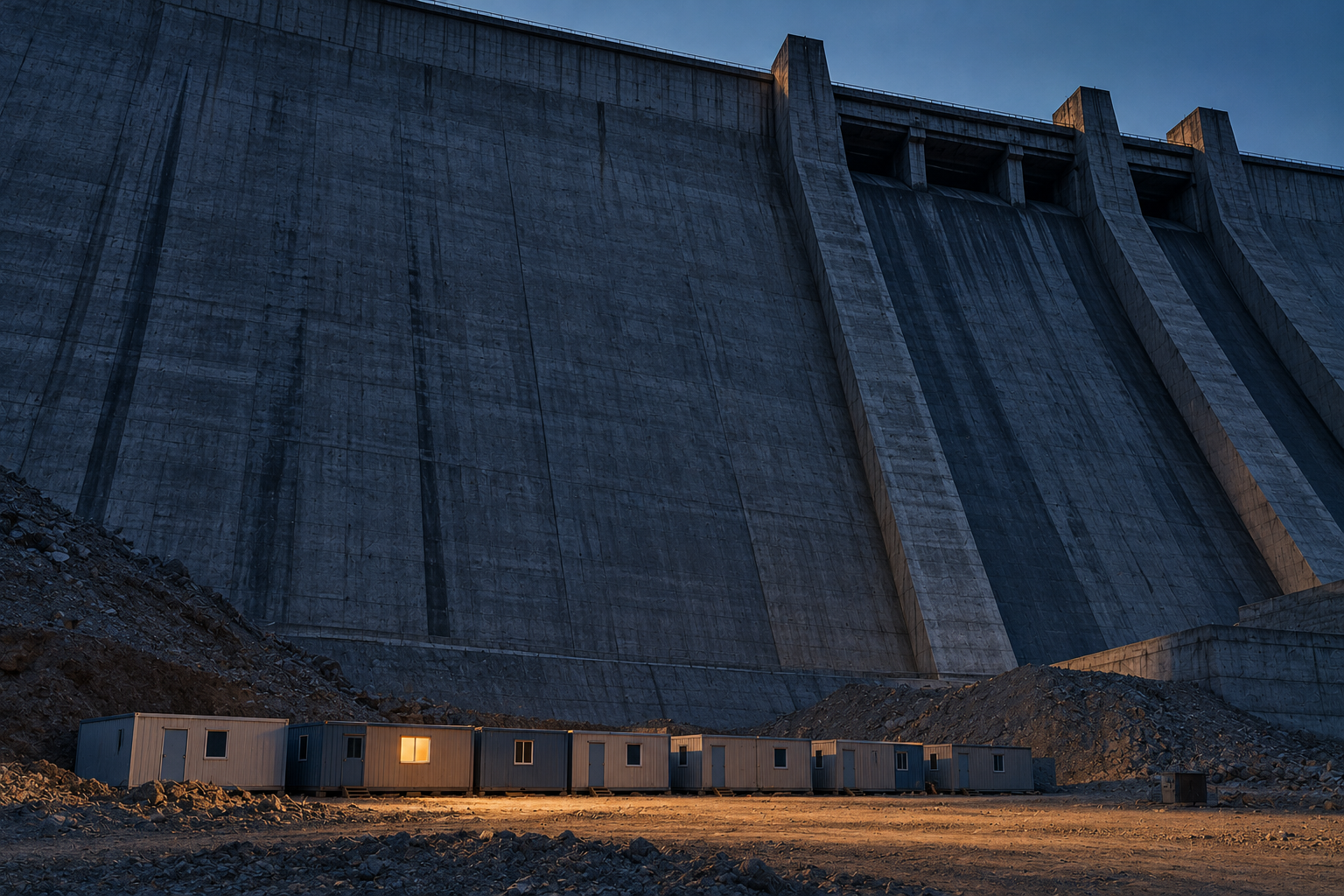
Rogun’s updated labour document dates the dam to 2032 and the cost to $6.6 billion
The labour management procedures for the Rogun project, updated in September 2026 and published on the plant’s site, give 2032 for the dam’s completion where the 2024 edition gave about 2029, and $6.6 billion as the estimated cost of completion against $4.9 billion, Asia-Plus reported on Friday 16 October. The document also counts 20,563 workers in August, 38% more than at the end of 2023.
Trump waives every Graham act duty two days before the deadline as Rubio reaches Samarkand
An executive order signed on Friday 16 October adds a 500% duty to goods from Russia and 100% duties to the five largest buyers of Russian oil and gas and to five facilitators of evasion, then waives all three until the president or the secretary of state decides otherwise. Two days later Marco Rubio landed in Samarkand for Monday’s C5+1, with a business delegation and the duties set aside.
Mongolia amends its Minerals Law and votes a 2 trillion tugrik deficit in the same sitting
The State Great Khural finally approved on 16 October Minerals Law amendments that, by the ministry’s summary, double the local share of royalties, bring the copper royalty into line with international benchmarks and strengthen the legal basis for a critical minerals policy. The sitting also adopted the 2026 budget revision, with spending of 33.9 trillion tugrik and a 2 trillion deficit, four days before the ruling party’s deadline.

Baku keeps the CICA chair to 2028 and an Azerbaijani takes the secretary general’s post
The seventh CICA summit in Baku on 15 October extended Azerbaijan’s chairmanship to 2028, made Azerbaijani ambassador Sultan Hajiyev secretary general to 2030 and admitted Laos as the 29th member, Azerbaijan’s foreign ministry said. Kazakhstan founded the forum in 1992 and a Kazakh ran its secretariat until this week. Kassym-Jomart Tokayev said the members had agreed to turn CICA into a full international organisation, a line the ministry omits.
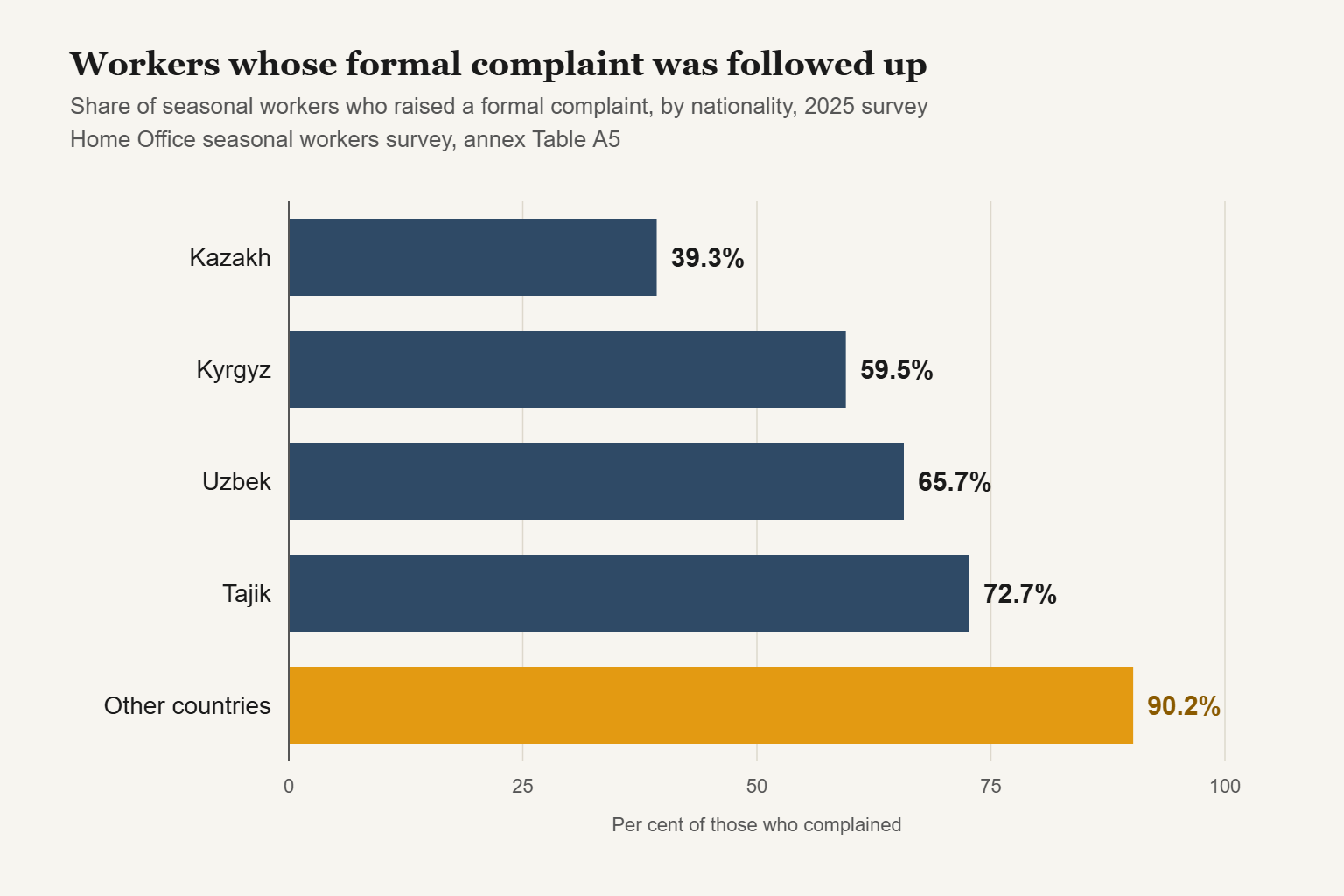
Four in five British seasonal farm visas go to Central Asians who buy the visa themselves
Britain granted 41,766 Seasonal Worker visas in the year to June 2026 and 79% went to Central Asians, with Kyrgyzstan, Uzbekistan, Kazakhstan and Tajikistan the countries the Home Office names. Its survey with Defra of 16,787 workers shows who paid: 90.1% said they bought their own visa, 63% spent £500 to £999 before arrival, and 26.8% of Uzbek respondents reported paying labour or migration ministry fees.
Four Central Asian presidents are in Baku for the seventh CICA summit
Tokayev, Mirziyoyev, Rahmon and Japarov are in Baku for the seventh summit of the Conference on Interaction and Confidence Building Measures in Asia on 15 October, their third joint appearance in eight days. Azerbaijan closes two years in the chair with a Baku declaration expected, Laos is to be admitted as the 29th member, and the forum’s depositary and secretary general are Kazakh.