Search
Mongolia’s committees clear the 2026 budget rewrite’s third reading with a 2 trillion tugrik deficit and back $450 million from the ADB and the ¥158.3 billion airport loan on one day
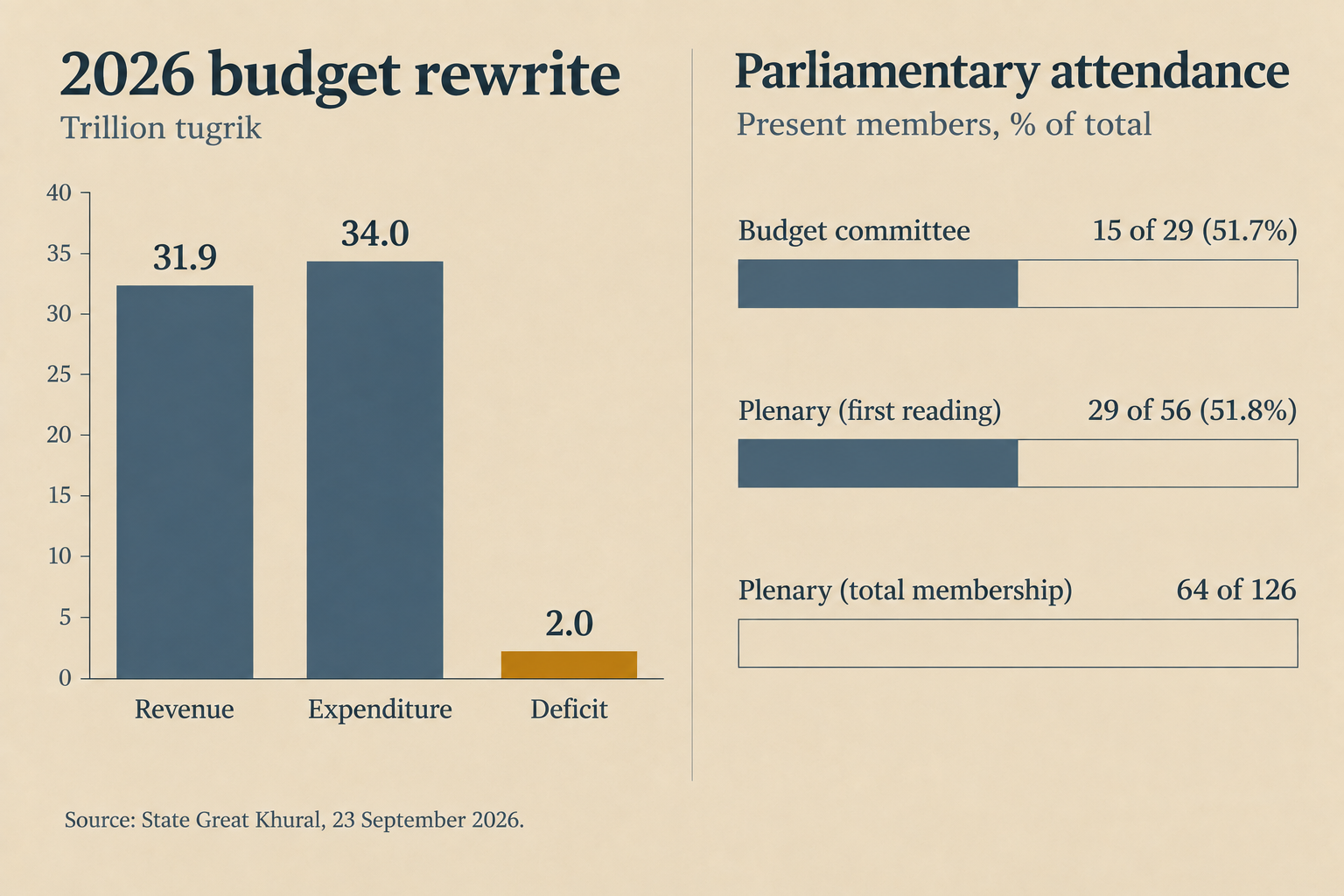
The State Great Khural’s security and foreign policy committee took the third reading of the 2026 budget amendment on Wednesday with 15 of its 29 members present and sent its conclusions to the budget committee, the parliament’s site reported: balanced revenue of 31.9 trillion tugrik, expenditure of 34.0 trillion and a deficit of 2.0 trillion, with 107.3 billion for tariff-loss subsidies, 92.7 billion for power stations, 150.0 billion for food reserves, 170.1 billion for wage rises and 1,440.9 billion in savings. On the same day a joint sitting of the budget and security committees, 29 of 56 members present, backed the government’s 2 loan drafts, the Asian Development Bank’s $450 million “financing general programme” by 56.3% of those present and Japan’s ¥158.3 billion loan for the Chinggis Khaan airport by 66.7%, and sent its minutes and conclusions to the government.
Aliyev weighs a 5.3 billion manat mining programme to 2030 that must first re-count reserves last measured 40 years ago
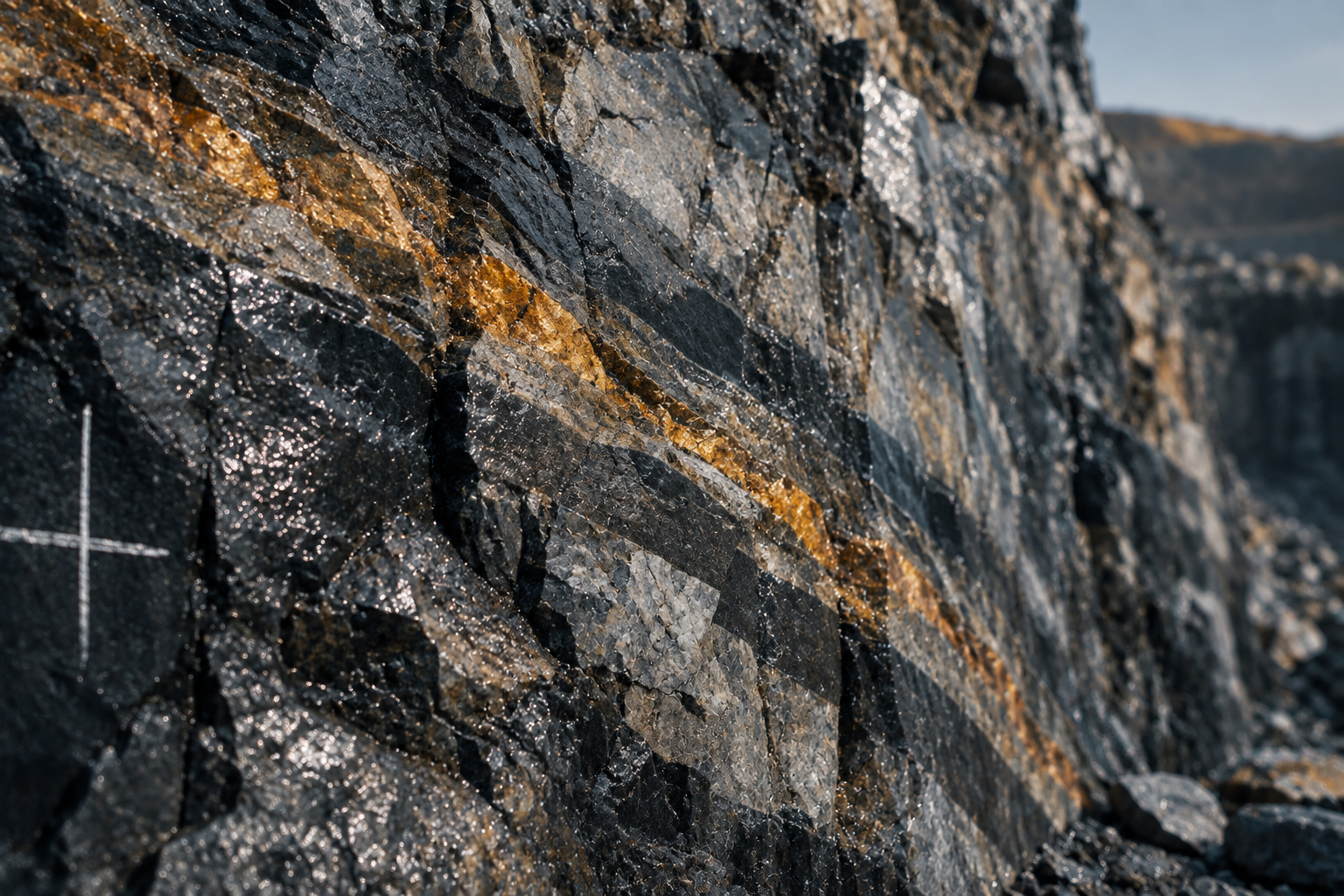
President Ilham Aliyev chaired a meeting on Tuesday on the draft State Programme for the development of the mining and metallurgical industry for 2027 to 2030, AZERTAC reported at 14:35. Economy minister Mikayil Jabbarov put the investment at 5.3 billion manats over the 4 years, 1.1 billion from the state budget, 2.2 billion from state companies and 2 billion from private funds, with the sector’s contribution to GDP to rise from 700 million to 1.8 billion manats and its exports from 1.3 billion to 3.4 billion by 2030. The president’s own condition came before the targets: the reserve figures date from Soviet times, about 40 years ago, and are out of date.
Dushanbe’s tax bill triples the VAT threshold and taxes online shops at 3%, and 12 trades lose the simplified regime
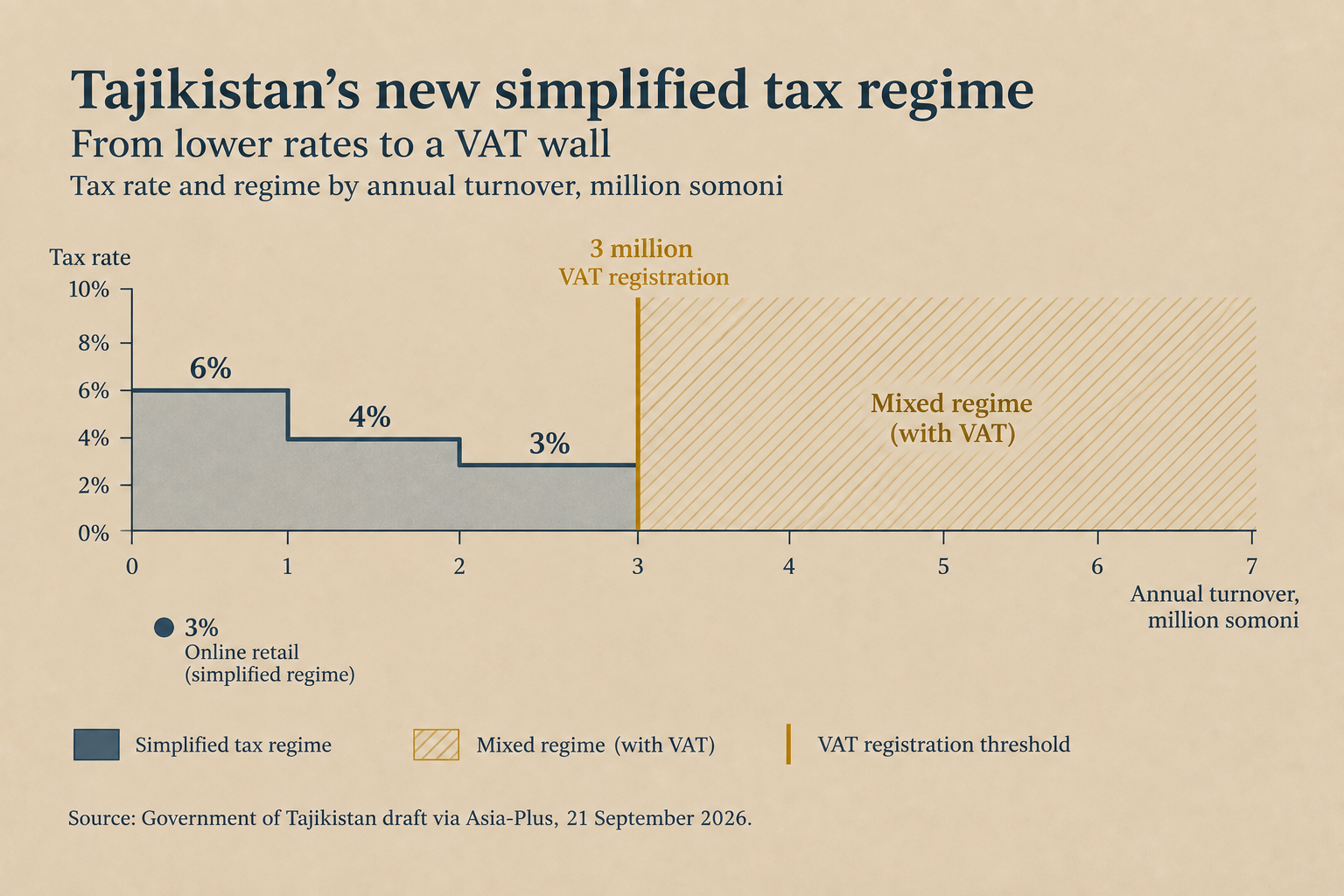
Tajikistan’s government has sent parliament a package of Tax Code amendments that raises the turnover at which a business must register for VAT from 1 million to 3 million somoni, sets 3% as the simplified rate for firms between 2 and 3 million, puts a 3% turnover tax on online retail and removes construction, consulting, audit, medicines, markets and 7 other lines of business from the simplified regime altogether, Asia-Plus reported on Monday. The package arrives 10 days after the World Bank published a framework under which its grants to Dushanbe are expected to become credits from the fiscal year that began in July.
Bishkek tells parliament it cannot hold pump prices next year, with 39 billion som pledged against inflation and an election on 27 January
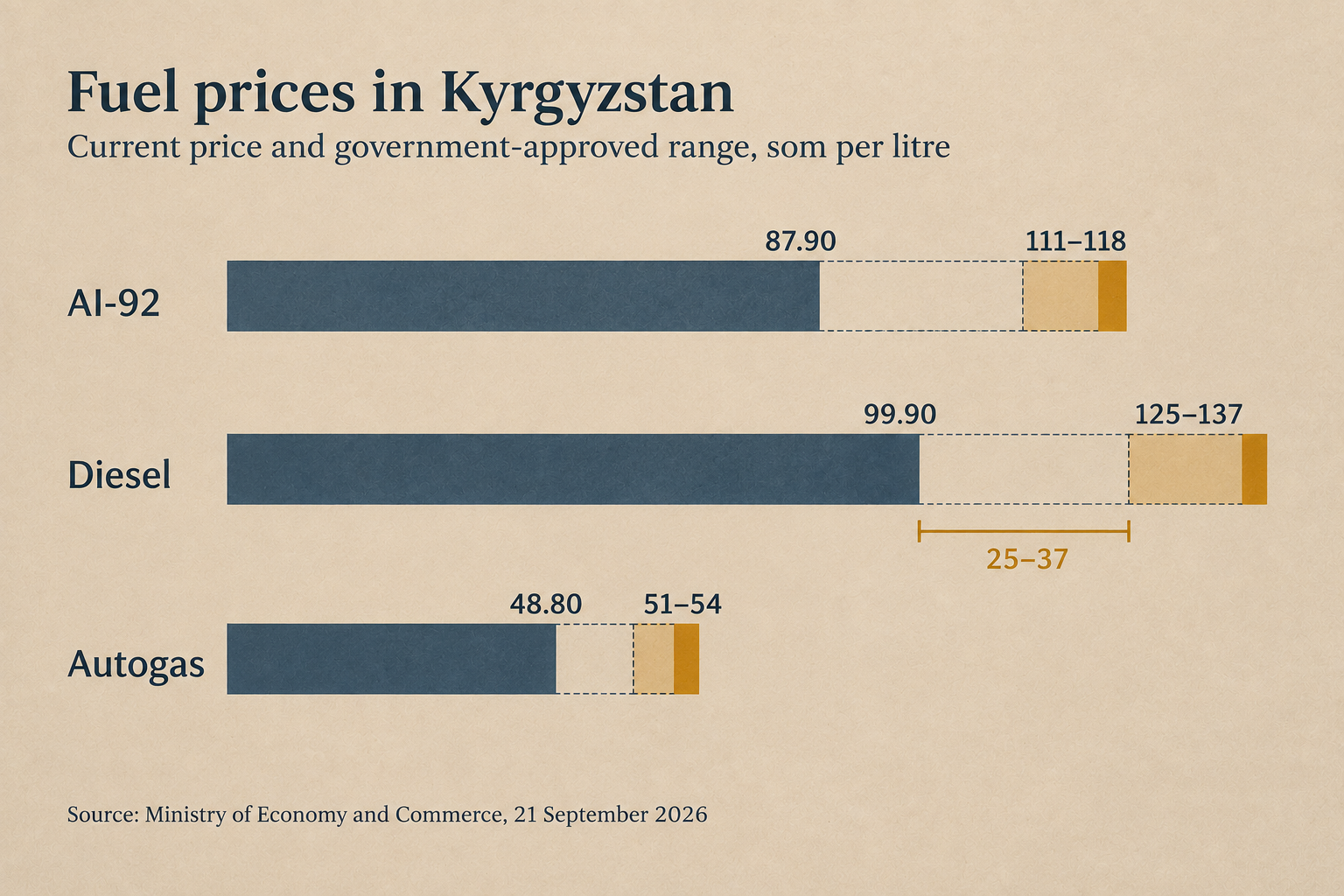
Kyrgyzstan’s first deputy cabinet chairman, Daniyar Amangeldiev, told a parliamentary committee on Monday that the state pays “practically 40%” of the fuel price and that “next year we will not be able to hold it and will reduce it”. At the same sitting he put 39 billion som, about $446 million at Monday’s official rate, against inflation in 2027, naming fuel first. The compensation scheme that keeps AI-92 petrol at 87.90 som a litre runs to 31 December, 27 days before the presidential election.

A Rio Tinto mine outlives a government: Mongolia and the second deal
Mongolia’s parliament formally instructed the government to secure at least 53% of the economic benefit from the Rio Tinto-operated Oyu Tolgoi mine. Months later Rio Tinto and Ulaanbaatar agreed to cut financing and management costs and set 2027 as the target for the first dividends, and the public documents do not yet show the parliamentary requirement met in full. Madagascar, Bougainville and Juukan Gorge place the Mongolian case inside a wider pattern: Rio Tinto’s mines run for decades while the governments, contracts and communities around them change.
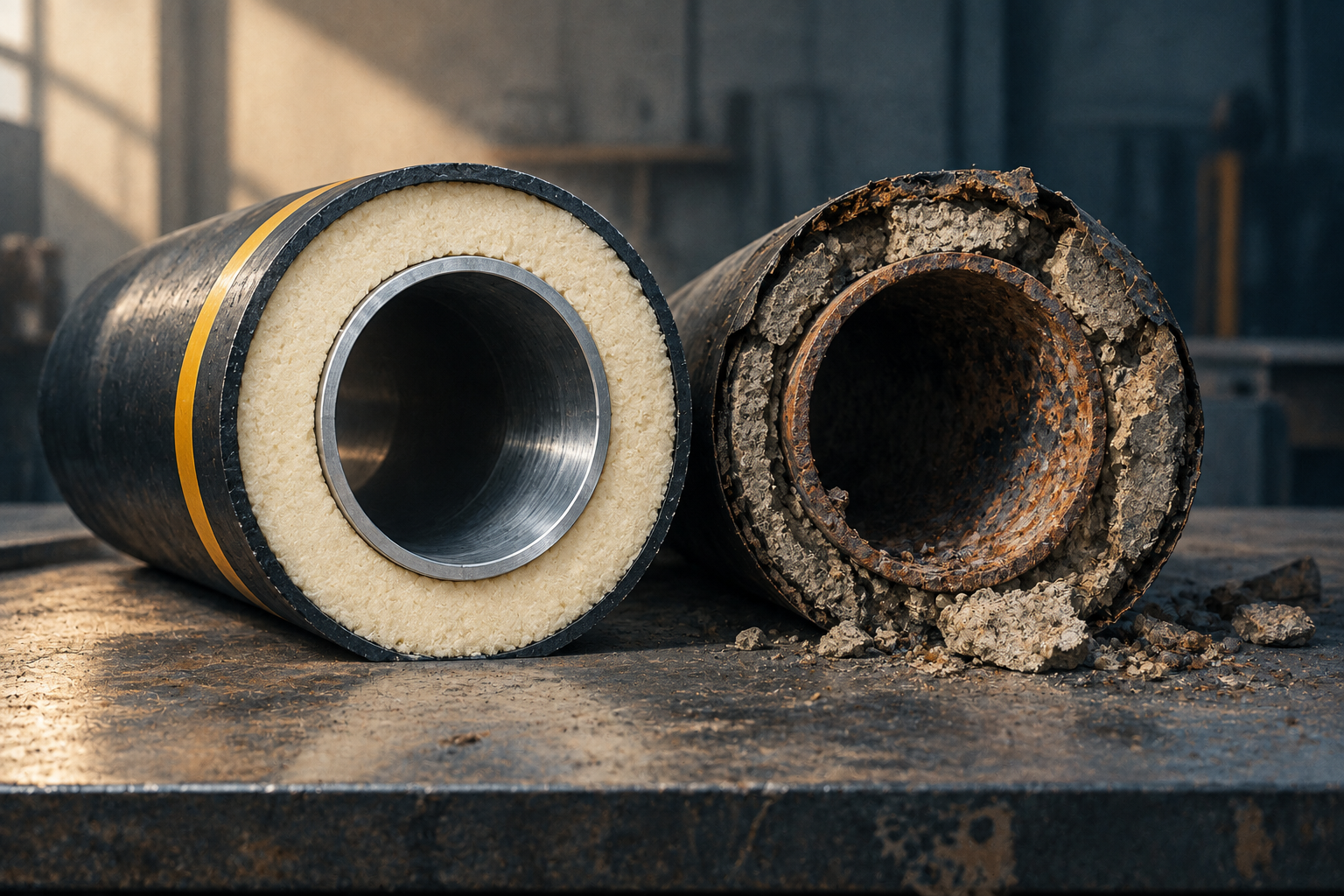
Kazakhstan's utilities overhaul has finished 14 of 347 projects as contractors win 112 complaints against its tenders
A deputy prime minister's review on Friday put the government's own numbers on the national project meant to renew Kazakhstan's utility and power networks by 2029. They show a programme budgeted at 13 trillion tenge and held up at the tender stage.

Uzbekistan's central bank holds 90% of its reserves in gold and now plans to take its bond book beyond US Treasury bills
Abror Mirzo Olimov, deputy chairman of the Central Bank of Uzbekistan, told the first International Forum on Public Asset Management in Tashkent on Friday that the bank held about 439 tonnes of gold worth about $65 billion at the start of September, about 90% of international reserves of more than $72 billion, and that the bank plans to take its fixed-income portfolio of $1.766 billion, about 2.4% of reserves, beyond US Treasury bills into sovereign, subnational and other fixed-income instruments, Gazeta.uz and Spot reported.
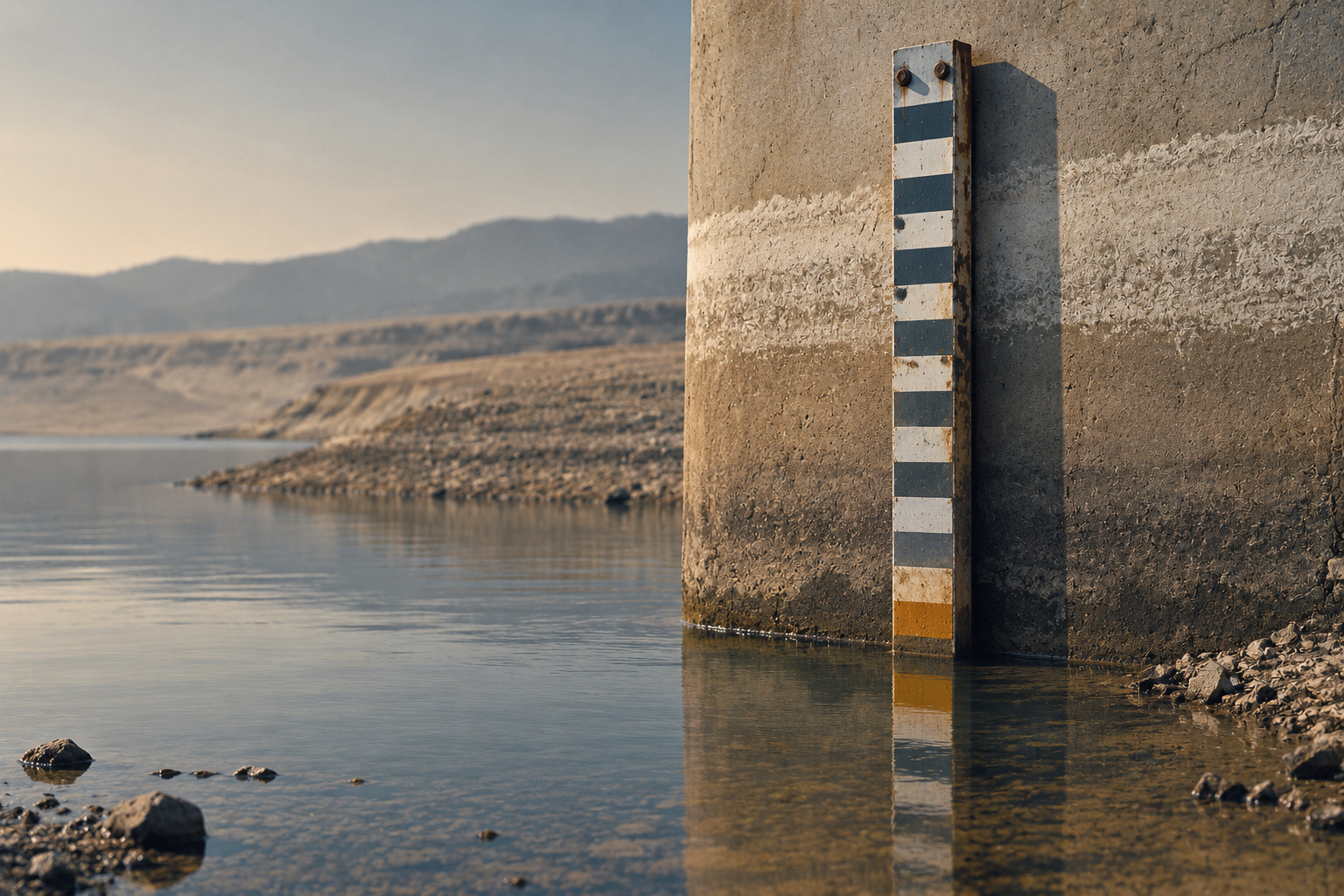
The WMO writes the region's water year down: reservoirs below normal from Kyrgyzstan to Afghanistan, the Aral basin's rivers in decline, glaciers with one of their 3 worst years on record
The World Meteorological Organization's State of Global Water Resources 2025, published on Thursday, records inflows to the reservoirs of Tajikistan, Uzbekistan, Kyrgyzstan and Afghanistan below or well below the 1991 to 2020 normal, a decline in flow across the Aral Sea basin, and the glacier balance of Central Asia in the year to September 2025 among the 3 most negative on record. Globally, 2021 to 2025 was one of the driest runs for river flow since observations began in 1991. Every water instrument the region has put on paper this month is priced to a river the report says is running short.

Washington's new tariff law counts Russian gas by volume, and Kazakhstan and Uzbekistan are closing in on its top five
The House cleared the Lindsey O. Graham Sanctioning Russia and Iran Act for the President on Wednesday with a 262 to 159 vote. It lets him put duties of up to 100% on all goods from the 5 largest buyers of Russian crude or gas. By the volumes on the record, Astana and Tashkent are fourth and fifth on the gas list, with about 1 billion cubic metres or less between them and the buyers behind.

Kazakhstan’s budget lost 1.7 trillion tenge to the oil it did not pump, and 2027 is written at 480 tenge and $70
The first vice-minister of national economy, Azamat Amrin, put a figure on the year’s lost barrels as the 2027 to 2029 draft went to the Kurultai: 1.7 trillion tenge less for the budget, about 200 billion of it in export duty on the barrels that did not leave, on a production plan cut from 105 million tonnes to 96. The new draft assumes 480 tenge to the dollar against the 540 in the current law, and a $70 barrel against $60.

Uzbekistan's central bank holds at 14% against 6.2% inflation, a real rate wider than Astana's or Yerevan's
The board kept the main rate on Wednesday and named the risks it does not control: world prices, the liberalisation of regulated prices and expectations that fall more slowly than inflation. Its target is 5% by the end of 2027, the year the pension draft's changes begin.

Seoul's declaration puts the summit on a 2-year clock with Astana next; the presidents' pitches ran from a Kyrgyz dam to a Turkmen gas plant
South Korea and the five Central Asian presidents adopted the Seoul Declaration on Wednesday: summits every 2 years, the second in Astana in 2028, a new industrial ministers' body under a supply-chain memorandum, and a Korea Desk inside each state's government structures to serve Korean companies. No sum appears in the presidential office's readout of the session. Sums came from the presidents at the business summit that followed: Tokayev's $19 billion of commercial agreements, Berdimuhamedov's 17 projects with Korean companies worth over $12 billion, Japarov's 10 business documents with the sums undisclosed.

Brussels puts €12 billion on the Middle Corridor, and Yerevan's court clears the Trump route the same day
Ursula von der Leyen told the European Parliament in Strasbourg on Wednesday that the EU will aim to crowd in up to €12 billion of public and private investment to link the South Caucasus and Central Asia directly to the European market, with a regional connectivity summit to be organised with Bulgaria's prime minister. In Yerevan the Constitutional Court's external relations department told News.am that the framework agreement with the United States on the Trump route is constitutional, and in Seoul Kassym-Jomart Tokayev asked Korea to integrate the Middle Corridor with that route. The corridor is now priced by three parties that do not build it, and its physical bottlenecks did not move.

Kyrgyzstan's boom has a creditor: Russian suppliers are owed 52.3 billion roubles by Kyrgyz firms, and the CIS bill runs to 967 billion
Rosstat's count of what companies in CIS countries owe Russian organisations under direct contracts reached a record 967 billion roubles in June, up more than 40% in a year, Izvestia reported on Monday. Kazakhstan's firms account for 401.3 billion, Belarus's for 327.3 billion, Uzbekistan's for 81.7 billion, Armenia's for 65 billion and Kyrgyzstan's for 52.3 billion. The overdue share is 4.5%. Russian firms' own debts to CIS business run to about 506 billion. What remains is the trade credit on which the region's import boom from Russia runs.

Armenia's central bank prices Russia's bans as a glut at home, and Strasbourg votes the alternative market the same afternoon
The Central Bank of Armenia raised its refinancing rate by 0.25 points to 6.75% on Tuesday and listed the restrictions on exports to Russia among the risks, as excess supply on the domestic market. The same afternoon the European Parliament approved, 583 votes to 49, a 2-year suspension of duties on about 80% of Armenia's exports to the EU.

Uzbekistan's finance ministry drafts a 12-year climb in the pension age for a fund the budget is set to top up with 23 trillion soums this year
The Ministry of Economy and Finance has posted a draft presidential decree, UzDaily reported on Tuesday, that would raise the retirement age by 3 months a year from 2028, to 63 for men and 58 for women in 2039. The same ministry's fiscal strategy books a 23 trillion soum budget transfer to the Pension Fund for 2026, up from 16.3 trillion 2 years earlier.

Mongolia signs the Oyu Tolgoi amendments 17 years on: a first dividend dated 2027, as the parliament that spent the coal dividend reopens
Prime minister Uchral announced, with Rio Tinto's Simon Trott beside him, that changes to the 2009 shareholders' agreement had been signed and confirmed, ikon.mn reported on Saturday; the government counts $8.4 billion off the mine's costs and about $4 billion more for Mongolia over its life. The Speaker opened the autumn session on Tuesday by calling it the first dividend in 17 years. The pension rise in this year's budget was paid from coal.

Seoul’s summit week opens on minerals, with a new ministers’ channel and $1 billion of Korean cofinancing pledged in May
South Korea held the first meeting of industry ministers with the five Central Asian states in Seoul on Monday, with critical minerals, lithium and rare earths among them, as one of its main lines, 2 days before the first Korea-Central Asia summit. The same day Lee Jae-myung exchanged 13 documents with Shavkat Mirziyoyev, Kassym-Jomart Tokayev landed on a state visit, and the Asian Development Bank’s president Masato Kanda met finance minister Koo Yun-cheol about the minerals facility to which Korea Eximbank and K-SURE each pledged $500 million in May.
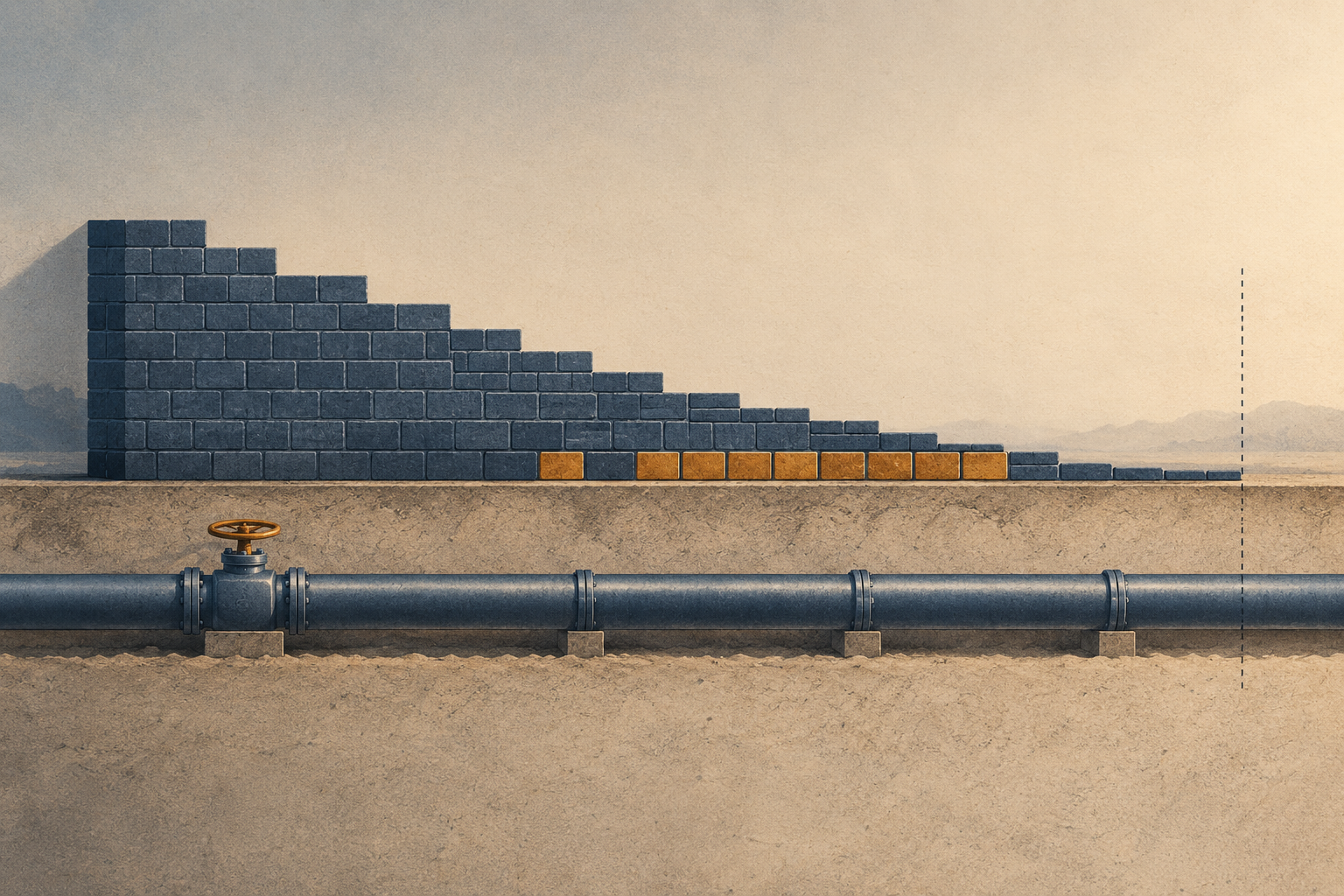
Overchuk holds out a full free-trade zone for Mongolia after 3 years, on a schedule of dairy, chocolate, cars and metals
Russia’s deputy prime minister Alexei Overchuk told reporters in Ulaanbaatar on Monday that the EAEU’s temporary trade agreement with Mongolia, in force since 22 July, should become a permanent, full-format free-trade agreement once its 3-year term has run. The schedule that agreement carries zeroes or cuts duties on 367 tariff lines each way; the goods listed on Russia’s side at entry into force, in Interfax’s report from the Eurasian Economic Commission, were dairy, confectionery, tinned food, chocolate, drinks, cars, special machinery and metals.

Kyrgyzstan’s central bank made 45.7 billion som last year, and the finance ministry credits Kumtor’s gold
The National Bank of the Kyrgyz Republic earned 45.7 billion som in 2025, three times the year before, and the reason is its right to buy gold from the state-run Kumtor mine, the deputy finance minister told a parliamentary committee on Monday. The same hearing put the debt to China at $1.4 billion and 16% of budget revenue.