The ministers’ meeting, in the C5+Korea format, agreed to widen industrial and trade cooperation and to work on supply chains, Asia-Plus reported from Seoul. Its priorities were trade volumes, industrial parks and infrastructure, advanced technology and digital production, and the training of young technical specialists, with critical minerals, lithium and rare earths named, as one of the main lines. The new mechanism ‘should become a permanent platform for joint industrial projects’, in the agency’s words.
Lee’s diary, as the Korea Herald printed it, gives each president a slot: Mirziyoyev on Monday, Serdar Berdimuhamedov on Tuesday morning and Tokayev in the afternoon, Emomali Rahmon and Sadyr Japarov on Wednesday morning, before the summit adopts a Seoul Declaration and a business summit of about 500 people meets alongside. Tokayev arrived overnight at Lee’s invitation and was met at the airport by the deputy prime minister for science and ICT, Akorda’s press service said through Tengrinews. Japarov’s visit is dated 15 to 18 September with a package of documents in the economic, investment, customs and other spheres promised; Ashgabat’s Cabinet took Meredov’s report on Serdar’s state visit on Friday without a date; no announcement of Rahmon’s trip had surfaced on Khovar or Asia-Plus by Monday evening.
Tashkent’s numbers came first. Its readout of the Mirziyoyev-Lee talks counted a $12 billion portfolio of prospective projects and more than 700 enterprises with Korean capital, named Korea Eximbank, KOICA and the EDCF as the money’s channels, and put critical minerals third in a list of five priorities after trade and investment. A technology alliance in IT, cybersecurity, digital health and pharmaceuticals, military-technical cooperation, four Korean university branches and five KOICA training centres filled out the readout; 2027 was declared a year of culture and mutual exchanges.
The exchange on the table is ore for technology, and the Tajik ledger, cars in and $26,500 out, is what that exchange looks like before a mine is financed.
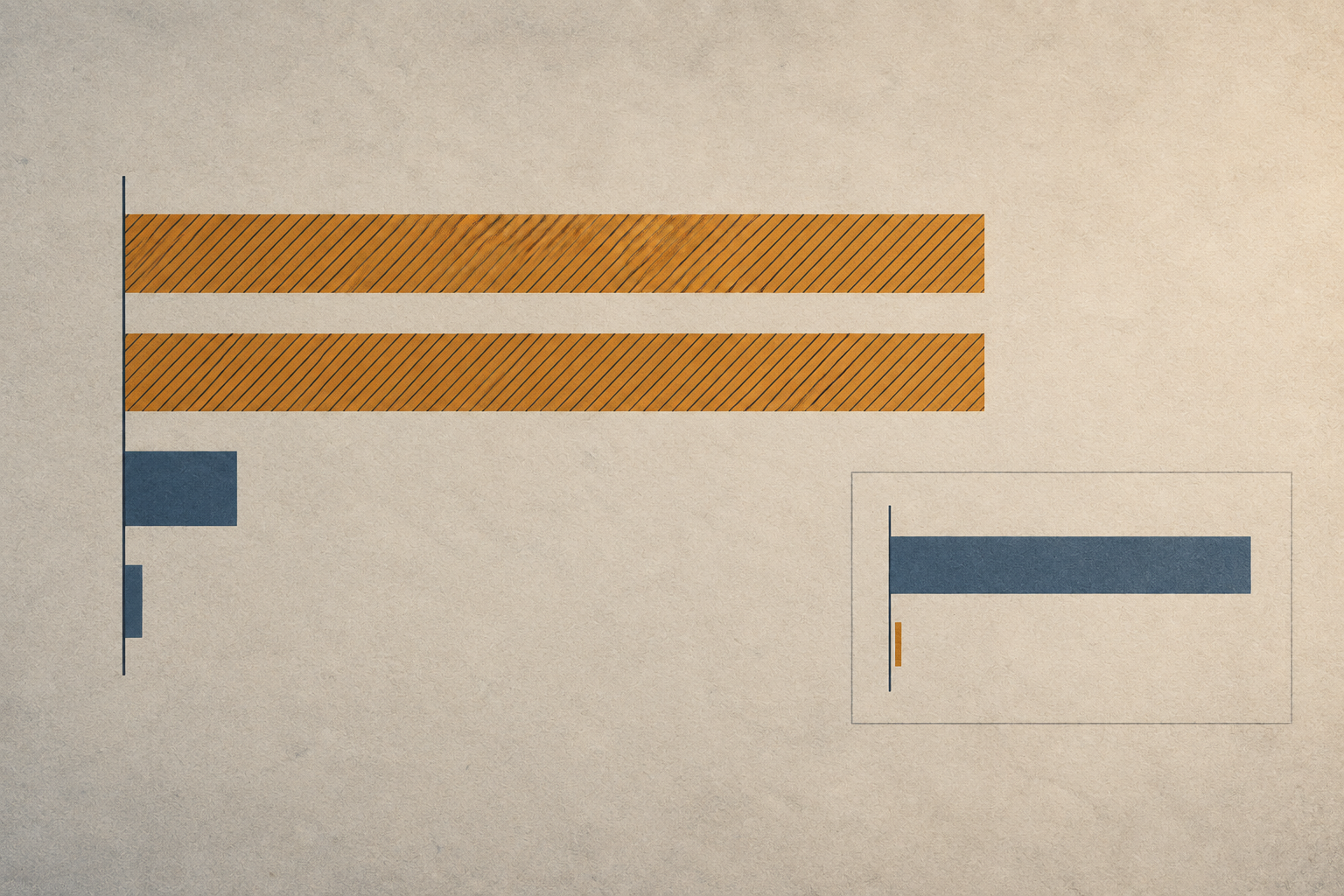
Dushanbe’s numbers show the other end of the exchange. Trade with Korea went from $40.9 million in 2021 to $196.1 million in 2025, 4.8 times, and Tajikistan’s exports in 2025 were $26,500, Asia-Plus reported; in the first half of 2026 imports were $116 million, $73.1 million of them 11,200 vehicles. What Seoul’s trade ministry named in August, at a Korea-Tajikistan minerals forum in Seoul on 12 August, was Tajikistan’s gold, silver and antimony.
The financing frame was signed before the diplomacy. On 3 May in Samarkand the ADB launched its Critical Minerals-to-Manufacturing Financing Partnership Facility with a grant window, $20 million from Japan and $1.6 million from Britain, and a catalytic window in which Korea Eximbank and the trade insurer K-SURE each signed a $500 million memorandum as the first partners; the bank listed a critical minerals strategy in Kazakhstan, AI-driven critical metals production in Uzbekistan and geological mapping in Mongolia among the work already under way. On Monday Kanda told Koo the bank was ready to support cooperation between Korea and Central Asia and hoped it would ‘lead to detailed investment projects’, Yonhap reported; no document was signed.
The money Seoul brings is credit and insurance: a $500 million memorandum with an export-credit bank is a cofinancing ceiling, a $500 million memorandum with a trade insurer is a risk-sharing ceiling, and both run through a development bank whose product is prepared projects, and neither is equity in a mine. The exchange on the table is ore for technology, and the Tajik ledger, cars in and $26,500 out, is what that exchange looks like before a mine is financed.
Wednesday’s declaration is the test: whether it names a deposit, a plant or a sum with a lender behind it, or restates the format. A second test is the ministers’ channel, which the Tajik account says is to be permanent; its first fixed date would be the first sign the format has a calendar of its own.