The bill is the Senate's: on 7 August it struck the text of a House tax measure, H.R.5334, and inserted its own sanctions act, 86 votes to 11. On Wednesday evening the House agreed to the Senate amendments without change, so the version headed for the President's desk is the one the Senate wrote. In July the White House said his advisers would recommend he sign it in that form. As of Thursday the White House list of presidential actions ended with nominations and withdrawals sent to the Senate, and no signature.
Moscow answered the vote through Dmitry Peskov on Thursday: the Kremlin is watching the document's passage, and any additional sanctions would complicate the search for a settlement in Ukraine. Beijing answered through its foreign ministry the same afternoon, in an answer that named neither the act nor the United States: China's trade with other countries targets no third party and accepts no third party's coercion, and China opposes long-arm jurisdiction without a basis in international law or a Security Council mandate.
The clause that reaches Central Asia is section 113. Not later than 30 days after enactment the President raises the duty on all goods from a country that, from the 30th day, knowingly makes new purchases of Russian-origin crude oil or natural gas, and that was among the 5 largest importers, by total volume, of Russian crude oil or natural gas in the 12 months before enactment. The rate is up to 100% ad valorem. The first wave counts oil and gas in one phrase. From the first review, due within 180 days of the first duties and every 180 days after, the Trade Representative keeps two separate lists with State and Energy: the 5 largest importers of Russian crude, and the 5 largest importers of Russian gas.
Gas, for the law, is the substance of customs heading 2711, which covers pipeline gas, LNG and the liquefied petroleum gases, propane and butane, together. Ten days before any duty the President or the Trade Representative owes Congress a written justification with the methodology that put a country on the list. That document is the first place the region will learn how the counting works.
The top three are not in doubt. China took close to 40 billion cubic metres of Russian gas in 2025 by pipeline and as LNG, on Reuters' figures, and its pipeline intake rose slightly this year on the IEA's reading. Turkey took 21.16 billion in 2025 and 11.4 billion in January to July of 2026, 10.4% less than a year earlier, on the regulator's data TASS carried on Tuesday. Belarus, whose gas is Russian, takes in the region of 18 billion a year on CAW's estimate from its consumption figures.
Fourth and fifth are where the region enters. Kazakhstan's vice-minister of energy, Kaiyrkhan Tutkyshbayev, said at the Tyumen industrial forum on Wednesday that the country takes 11 billion cubic metres this year against 4 billion last year, that about 9 billion is under discussion for 2027, and that the reason is minor technical disruptions at the country's large fields. Uzbekistan took 6.48 billion in 2025 by Gazprom's annual report; the IEA's third-quarter market report expects just over 10 billion this year. Domestic output fell 16% in the first half, to 18.3 billion.
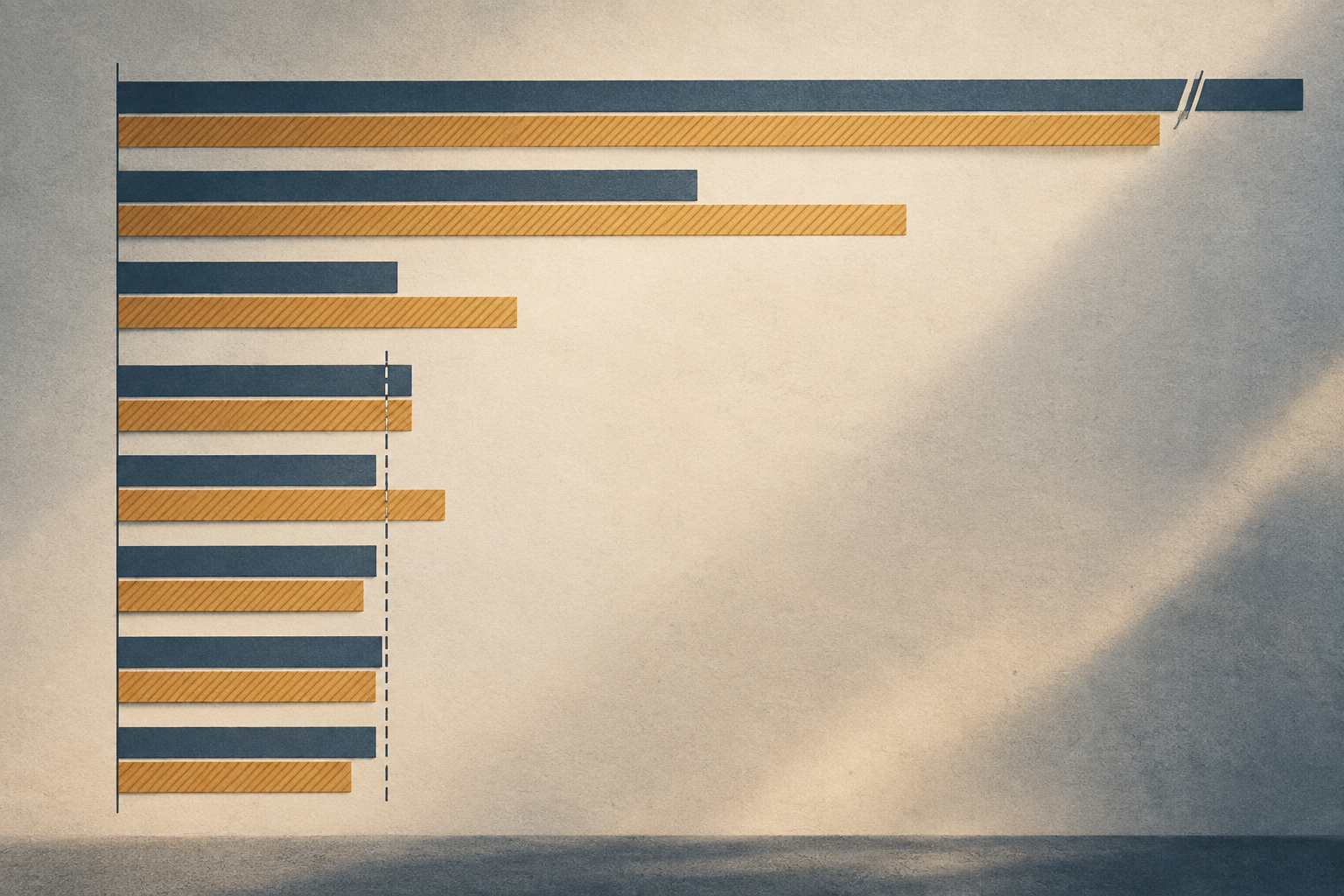
The European buyers sit right behind. France took 6.3 million tonnes of Yamal LNG in 2025 on Urgewald's count of Kpler cargo data, about 8.6 billion cubic metres; Japan's Sakhalin cargoes came to about 8 billion in 2025; Hungary's foreign minister put his country's intake at 8 to 8.5 billion. On CAW's count, with a flat monthly profile over the 12 months to an enactment this month, Kazakhstan and Uzbekistan both land between 9 and 9.5 billion, ahead of France by well under 1 billion and of Hungary and Japan by about 1 billion. The order holds whether the Trade Representative counts in cubic metres or in tonnes. That margin is thin enough for the methodology, and the LPG cargoes the heading also counts, to decide it.
Gas buyers have one exit in the law, and it has two locks. Section 113(d) lifts the duty for gas if the country's Russian gas was under 15% of Russia's total gas exports in the window, and if the country has taken significant steps to reduce those imports. Kazakhstan and Uzbekistan pass the first lock: each is around 7% of what Russia sells abroad, on CAW's estimate. Both fail the second on their own record, because their imports are rising to cover falling output. The law does not ask why a country buys more Russian gas.
Money is the second layer. Section 103 orders the President, within 30 days, to impose the full set of sanctions on Sberbank, VTB, Gazprombank, every other bank the Russian state owns in whole or in part, and any foreign financial institution that engages in significant transactions with them: blocking, and a bar on correspondent accounts in the United States. The President need not impose them on a foreign bank where the Treasury Secretary finds the sanction inconsistent with US economic or foreign-policy interests. QazaqGaz pays Gazprom in roubles, monthly, under the fixed-price contract Inbusiness described in June, and Uzbekneftegaz pays on terms that have not been published. The banks are unnamed. Section 104 puts the entities the Russian state controls or majority-owns, Gazprom among them, under review for blocking within the same 30 days.
Kazakhstan carries one shield the law wrote for it. Section 114(g) keeps the whole title away from oil of non-Russian origin that transits Russia for export, and from any entity that transports it; the Caspian Pipeline Consortium carries more than 80% of Kazakhstan's oil exports on that route. Nothing in the text shields the gas.
The law does not ask why a country buys more Russian gas.
The exposure runs the other way from the volumes. US imports from Kazakhstan were $4,072.9 million in 2025 and $667.1 million in January to July, about $95 million a month, on the Census Bureau's tables. Imports from Uzbekistan were $574.9 million last year and $48.8 million in the 7 months, about $7 million a month. A 100% duty is a bill Astana would feel and Tashkent would barely notice.
Exits are in the act. A country on the list can get a rate above zero after the Trade Representative tells Congress in writing that it took significant steps. The President can waive any duty, or any sanction on a person, with a certification of national interest and a report. Termination needs a certification that the country has stopped the conduct, reliable assurances, and 30 days without a joint resolution of disapproval. Since the Supreme Court ended tariffs under emergency powers in February, this act is the statute Washington has for secondary tariffs, so the likely course is bargaining over exceptions, country by country.
The list is arithmetic Astana and Tashkent wrote themselves: a production shortfall at home, covered through the Central Asia-Centre pipeline in reverse, at volumes that this year put two Central Asian states level with France and Japan as buyers of Russian gas. The fix was priced in roubles. From the day the act takes effect, its price is also written in Washington, in a duty on exports to the United States and in a question to every bank that moves the payment.
Three things are not yet on the record: whether the first wave ranks oil and gas as one list or two, what unit heading 2711 is measured in, and what the monthly profile of Kazakhstan's 11 billion looks like when the window closes. A fourth is in Astana: Inbusiness reported on Wednesday that the sides had reached an understanding on pricing for possible re-export, with no recipient named, and a re-exported cubic metre raises the question of whose import it is.
The clock starts at enactment. Within 20 days the methodology goes to Congress; within 30 the first duties and the first bank sanctions are due; within 180 days of the duties comes the first review with a gas list of its own.