Kazakhstan
Avaza’s week has a Caspian summit in one portal post and none in the programme
Turkmenistan’s state portal, turkmenistan.gov.tm, gives two accounts of the 3 days that open in Avaza on Wednesday. Its programme has the Caspian ministers on 7 October, the heads of state of Central Asia and Azerbaijan on 8 October and the CIS council on 9 October. Its post on Tokayev’s attendance adds a Caspian Ecological Summit, dated 9 October by an Ashgabat outlet that expects Putin and Pezeshkian.
After the Caspian drill deaths, Kazakhstan’s defence inspection opens 13 criminal cases
The commission Tokayev set up after 14 servicemen died in a Caspian landing exercise on 24 September has produced 13 criminal cases over possible theft of state property and abuse of office in its first stage, Akorda said on Monday, with 5 officials under arrest in the negligence case. On the same day the Higher Audit Chamber reported an audit of 50 defence sites, 48 of them military units.
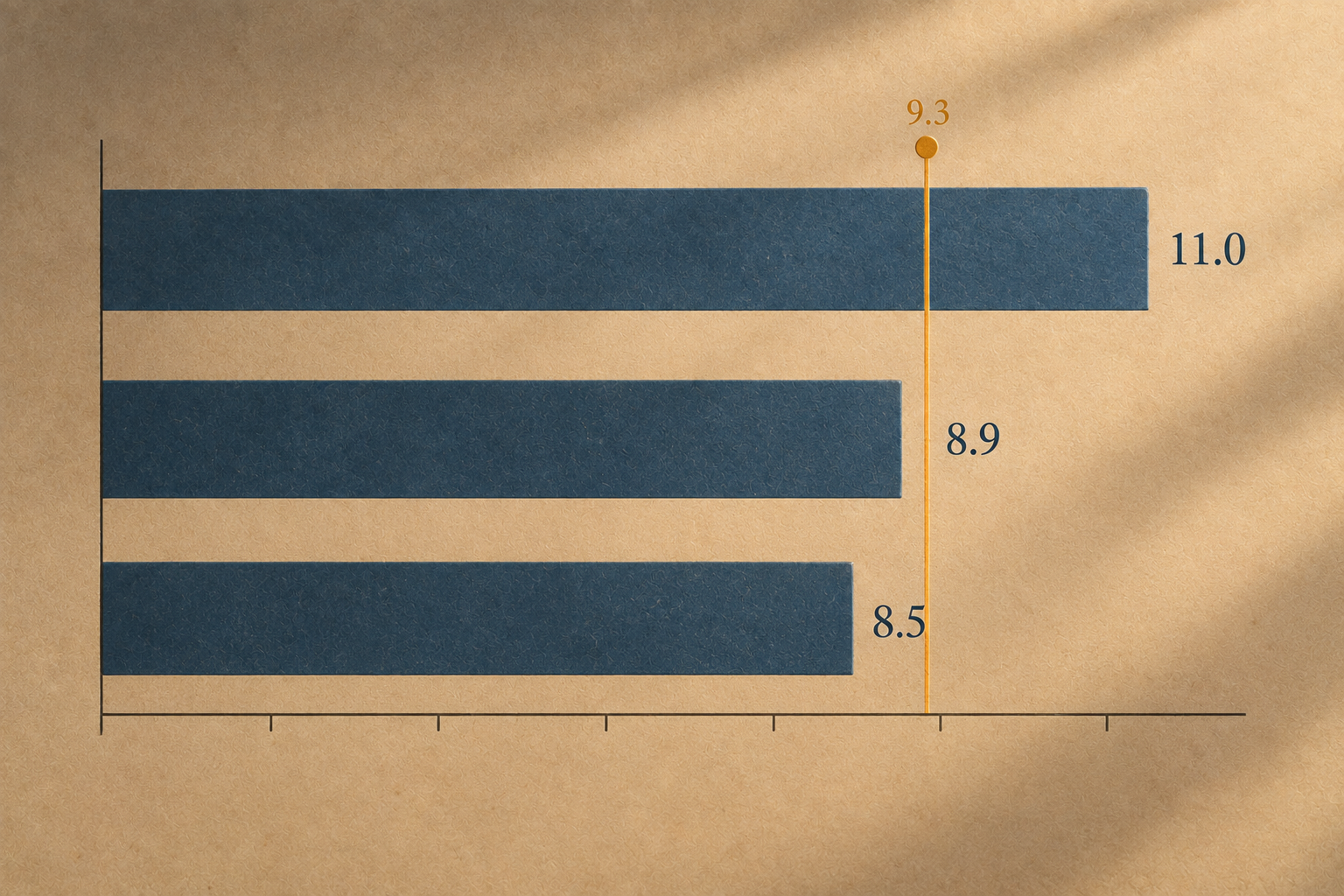
Kazakhstan’s inflation slows to 9.3% in September as the tenge opens the week at 447.73
Annual inflation fell to 9.3% in September from 9.8% in August, the fourth monthly decline in a row, the Bureau of National Statistics reported on 1 October. Monthly inflation held at 0.6%. The National Bank set the official rate at 447.73 tenge to the dollar for Monday, with the base rate at 16.25% ahead of its decision of 23 October.

After 14 Caspian deaths, Tokayev picks a chief of staff from his own guard
President Tokayev on Monday made Aitkurman Omarbekov, a major general of the State Guard Service, first deputy defence minister and chief of the General Staff, two days after relieving Kanysh Abubakirov from that post, deputy minister Almaz Dzhumakeev and navy commander Kanat Niyazbekov. Fourteen servicemen died in a Caspian exercise on 24 September, and a reform plan is due from the new defence minister on Wednesday.

At the EAEU council, Lukashenko asks Armenia where its brandy will go if it chooses the EU
The Eurasian Intergovernmental Council met in Minsk on Friday under Kazakhstan’s chairmanship, with Pashinyan on a video link. Bektenov put the union’s first-half growth at 1.1% and its investment at $244.5 billion, Mishustin said mutual trade rose 10% from January to July, and Lukashenko told the heads of delegations that Armenia should work out where its brandy and fruit will go before it hurries to the EU.
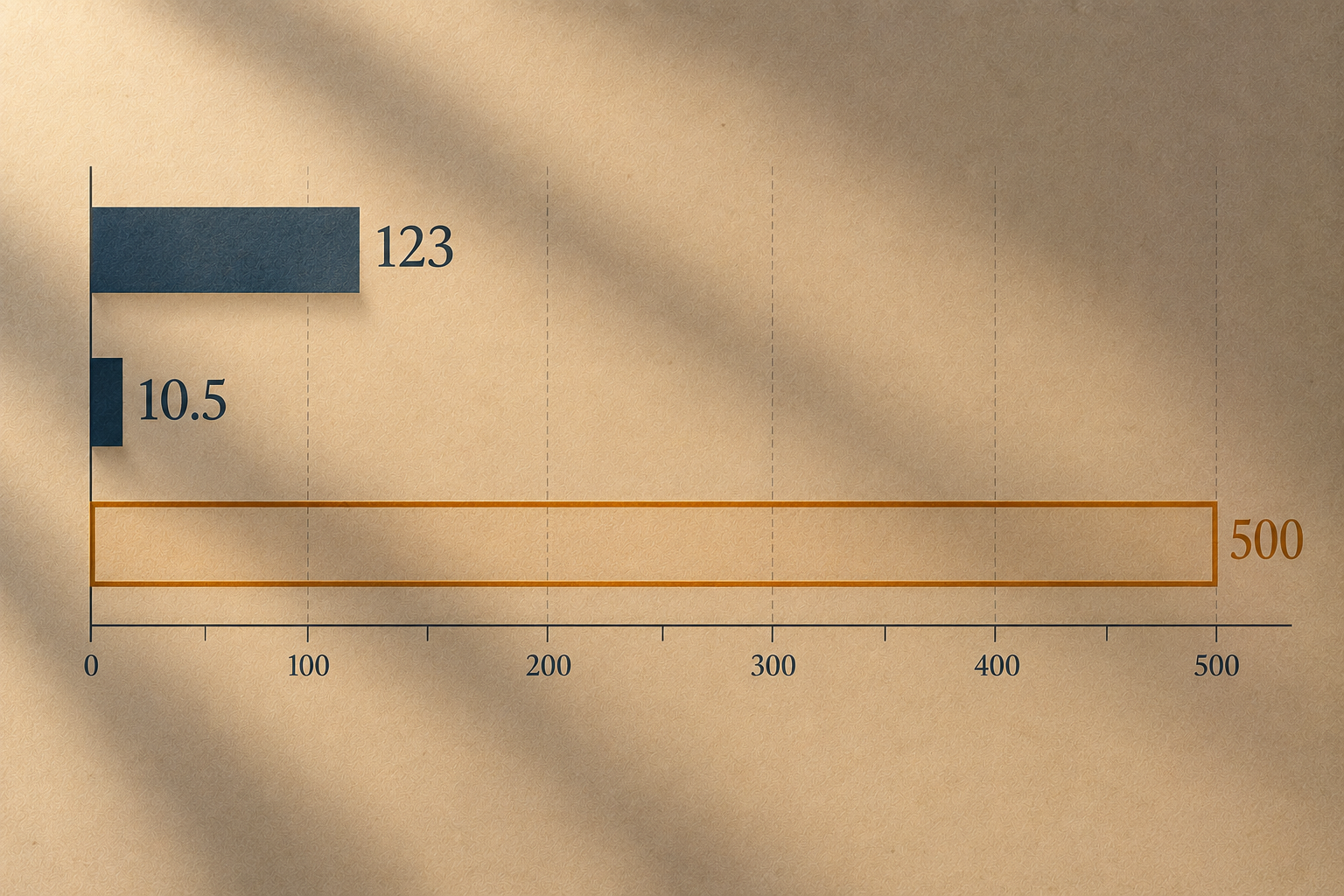
Astana and Ulaanbaatar set a $500 million trade target against $133.5 million last year
The 10th session of the Kazakhstan-Mongolia intergovernmental commission met in Astana on Thursday and signed a protocol that aims the two countries’ trade at $500 million under their 2025 to 2027 roadmap, Mongolia’s foreign ministry said. Kazakhstan’s agriculture ministry put 2025 trade at $133.5 million, with $123 million of it Kazakh exports, so the target is almost 4 times last year’s turnover.
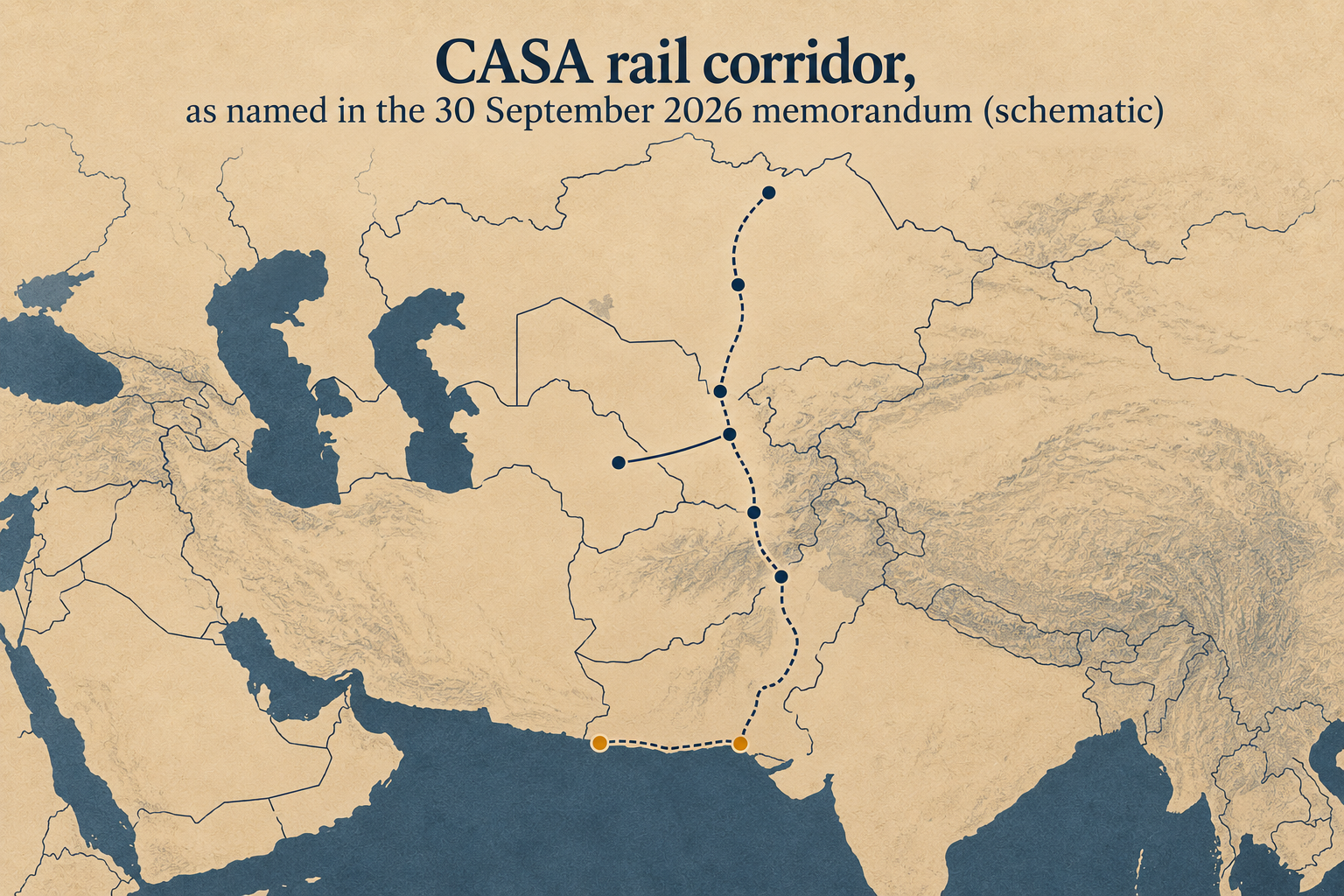
Kazakhstan, Uzbekistan and the UAE sign a memorandum on a rail route to Pakistan's ports
The transport ministries of Kazakhstan and Uzbekistan and the UAE's Ministry of Energy and Infrastructure signed a memorandum on 30 September to study a new railway, named CASA, running from Kazakhstan through Uzbekistan and Afghanistan to Pakistan's seaports, the Kazakh government said. The parties will run technical and economic studies and are considering a working group on the project's financing.

Plan, ceremony, tally: how Kazakhstan's investment forums count
In Almaty the plan said "more than 40" documents, the stage showed ten and the evening tally said 50. In Berlin 37 projects became "more than 30" documents and the euros became dollars. Peter Lidovsky on the number every forum produces and nobody audits.
The Kremlin thanks Tokayev for his words on Putin as he flies on from Berlin to Munich
Russia values and is grateful for the assessment Kassym-Jomart Tokayev gave of Vladimir Putin in Berlin, Dmitry Peskov said on Wednesday, and the two presidents’ close, constructive and trusting relations let them discuss the hardest questions of the international agenda, Ukraine included. Tokayev arrived in Munich on Wednesday afternoon for talks with Bavaria’s government and Landtag and a Kazakh-Bavarian technology forum, Kazinform reported at 14:45 Astana time.
Merz asks Tokayev for oil in Russia’s place, and Berlin signs 30 documents worth about $2 billion
Germany wants Kazakh oil to replace the Russian oil it no longer buys, Chancellor Friedrich Merz said beside Kassym-Jomart Tokayev at the Chancellery on Tuesday afternoon. At the same press conference Tokayev counted more than 30 commercial documents worth about $2 billion for the day. He also called Vladimir Putin an outstanding statesman and spoke of freezing hostilities in Ukraine so that talks could begin.

Russia caps cash roubles for 7 neighbours at 1 million a head and bans firms from carrying any
A decree Vladimir Putin signed on Tuesday bans anyone from carrying more than 1 million roubles in cash out of Russia into the other 4 members of the Eurasian Economic Union, Azerbaijan, Tajikistan or Uzbekistan. Companies and sole traders may carry none, with 3 exceptions. The $100,000 ceiling that had applied since April is gone, and cash above the limit is confiscated at the border.
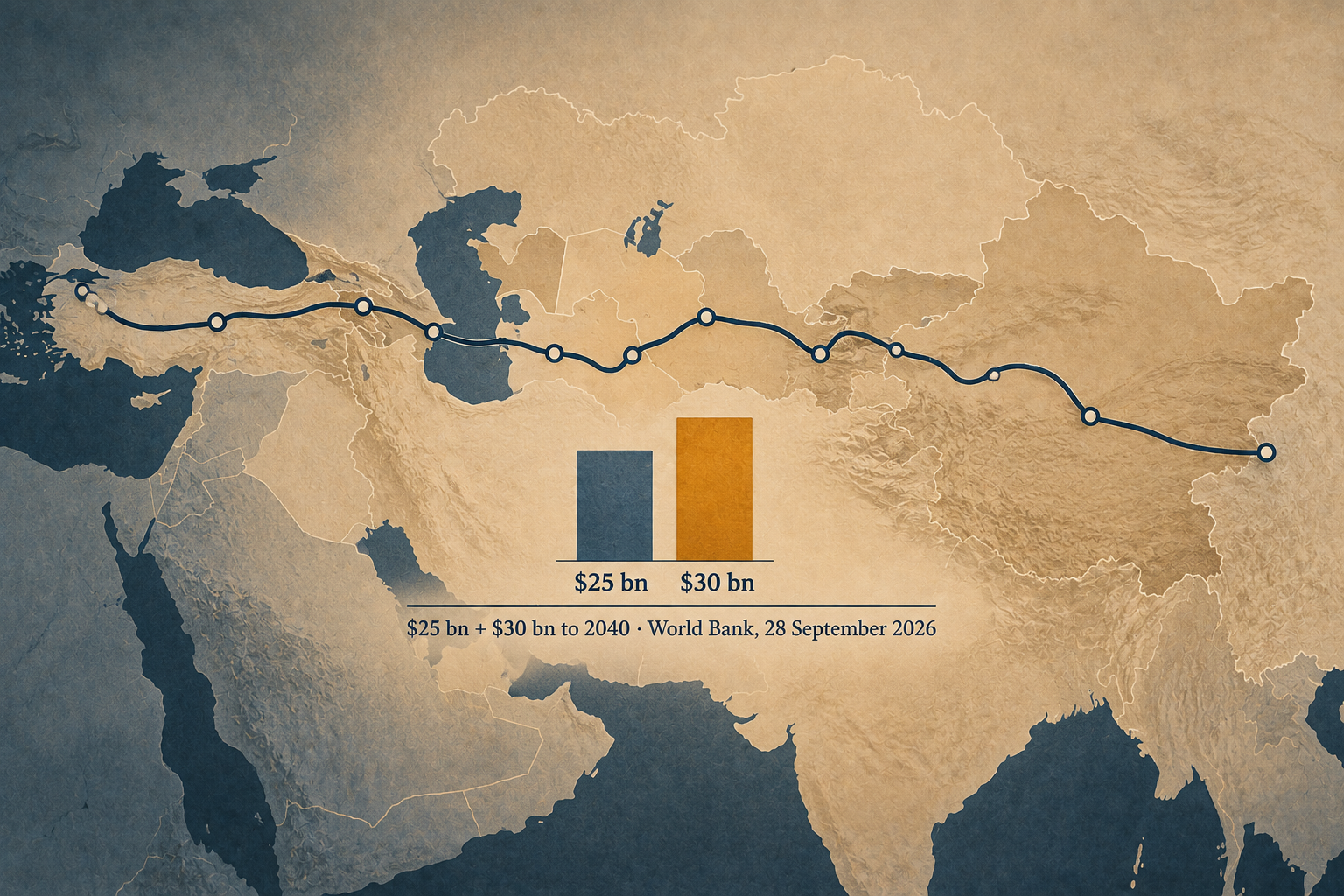
The World Bank prices the corridor at $55 billion to 2040, with $30 billion of it beyond the track
A World Bank report published on Monday says the Trans-Caspian corridor’s development could triple its volumes, halve its travel times, add 3.3% to the 9 countries’ GDP and create 2 million jobs by 2040. The bill it attaches is at least $25 billion of physical infrastructure and an estimated $30 billion of enabling investment. With reforms, the Bank says, the volumes would quadruple.
Astana says the Graham act’s tariffs do not reach Kazakhstan, whose gas imports put it near the cut
Kazakhstan is not covered by the tariff measures the law provides for, the foreign ministry told the Kazakh outlet Ulysmedia.kz in a written answer published on Tuesday at 17:08. Its 3 sentences name no volume and no exemption, and they are the first official word from Astana on the Lindsey O. Graham Sanctioning Russia and Iran Act since Donald Trump signed it on 18 September.
Five Years Ahead: the dawn that will come every dawn
Uzbekistan has approved 57.2 gigawatts of generating capacity for 2035. On Friday the region's grid showed what one new plant does to 4 countries before breakfast.
2 Uzbek-Kazakh border posts go round the clock as trucks through Syrdarya rise 10%
Uzbekistan's Customs Committee said on Monday evening that the Malik-Syrdarya and Ok Oltin-Tselinny crossings with Kazakhstan will move to 24-hour operation and that the Gishtkuprik customs post is to open in the fourth quarter of 2026. More than 9,200 trucks passed through Syrdarya in September, 10% more than a year earlier, Spot reported at 20:43 Tashkent time.
Russia locks away its fuel export data, and the region loses the numbers behind its diesel
Decree 686, published on Monday, bars anyone in Russia from publishing what its fuel exporters ship, to whom, at what price and through which port, plus refinery output and exchange sales of petrol and diesel. Companies may disclose their own figures; the government has 10 days to list the goods covered. Kazakhstan, Kyrgyzstan, Tajikistan and Mongolia, whose Russian diesel intake doubled in August, lose the exporter's side of the count.

Tokayev in Berlin: German business expects 37 projects worth €1.8 billion, Merz this afternoon
Kassym-Jomart Tokayev arrived in Germany on Monday evening at Frank-Walter Steinmeier's invitation, Akorda said. The German-Kazakh Business Forum opens on Tuesday at the Haus der Deutschen Wirtschaft in Berlin, where the Ost-Ausschuss expects 37 bilateral projects worth €1.8 billion to be signed, and Chancellor Friedrich Merz receives him at the chancellery in the afternoon to talk energy and raw materials.

Myrzakhmetov’s first order at the defence ministry: fewer reports, more readiness
Aidos Myrzakhmetov held his first working meeting with the defence ministry’s leadership on Monday afternoon, a day after his appointment, and set his priorities: real combat readiness, training built on today’s wars and drones, fewer administrative procedures, reports and meetings of no practical value, and purchases matched to what the troops need. Every soldier, he said, must feel safe.
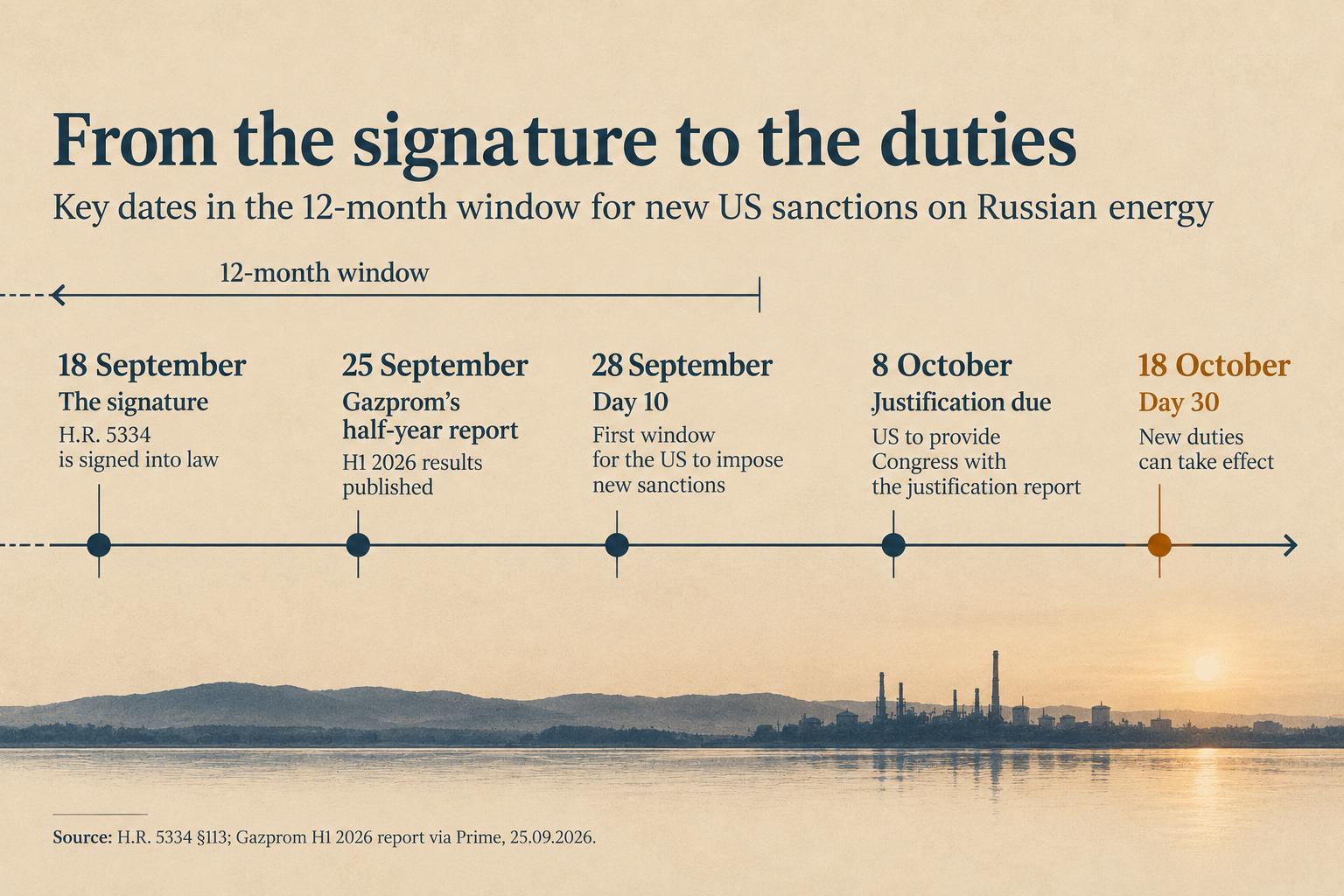
Gazprom says its growth is Kazakhstan, and the USTR has 10 days to show its count
Gazprom’s half-year report, as Prime quoted it on Friday afternoon, says its pipeline sales to the near abroad rose 29% in the first half of 2026 mainly because of Kazakhstan, and prints no volume. Monday is day 10 of the law that ranks Russia’s gas buyers; the US Trade Representative’s written justification is due by 8 October, and its press page through 27 September carries nothing on it.
Tokayev removes defence minister after the Caspian deaths and wants a reform plan in 10 days
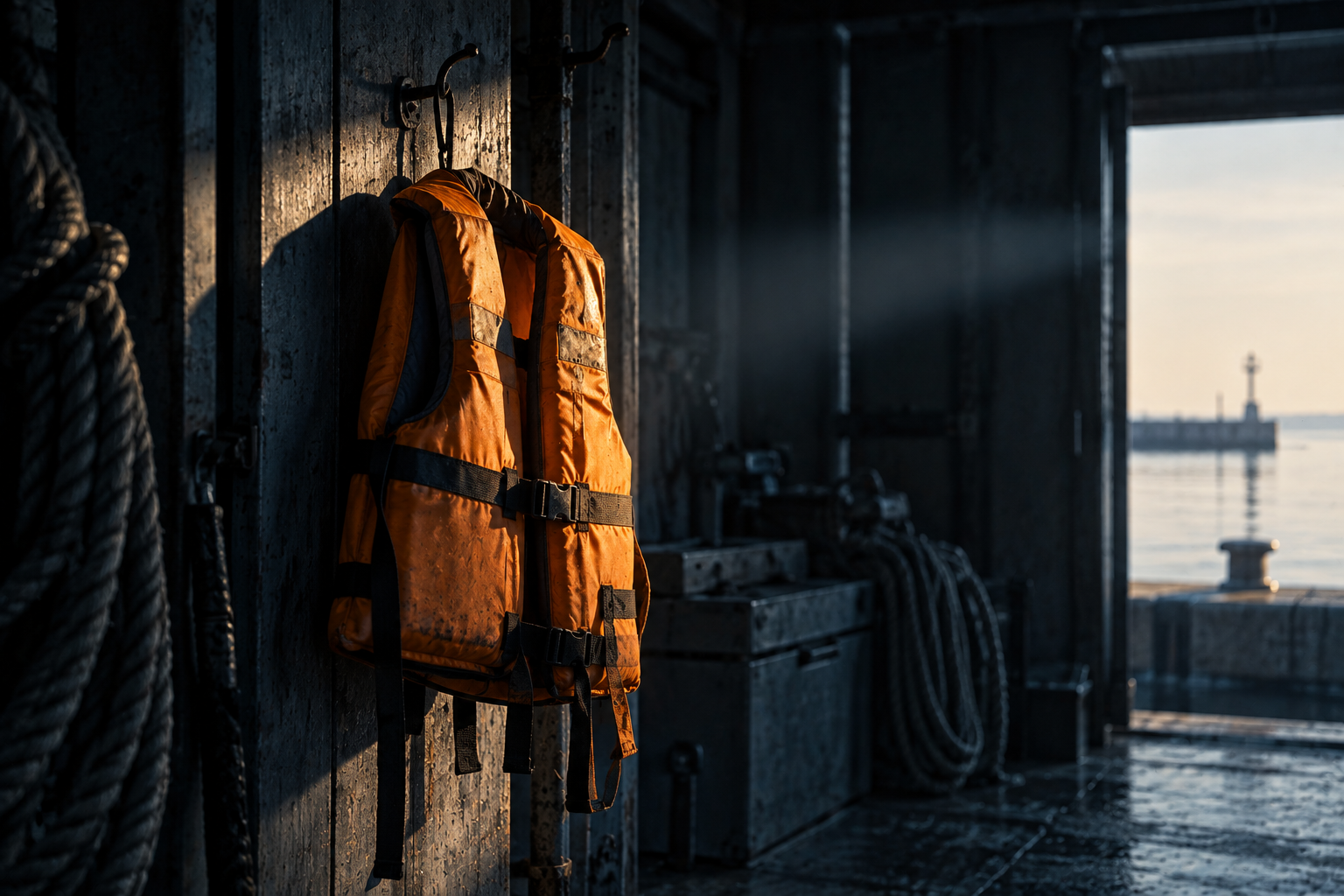
Tokayev dismissed Dauren Kosanov on Sunday morning and gave the defence ministry to Major General Aidos Myrzakhmetov, until then the commander of the special operations forces. The president told the ministry’s leadership that the 14 men who died on 24 September had not been given life jackets, and gave it 10 days to draft a military reform plan.