Search
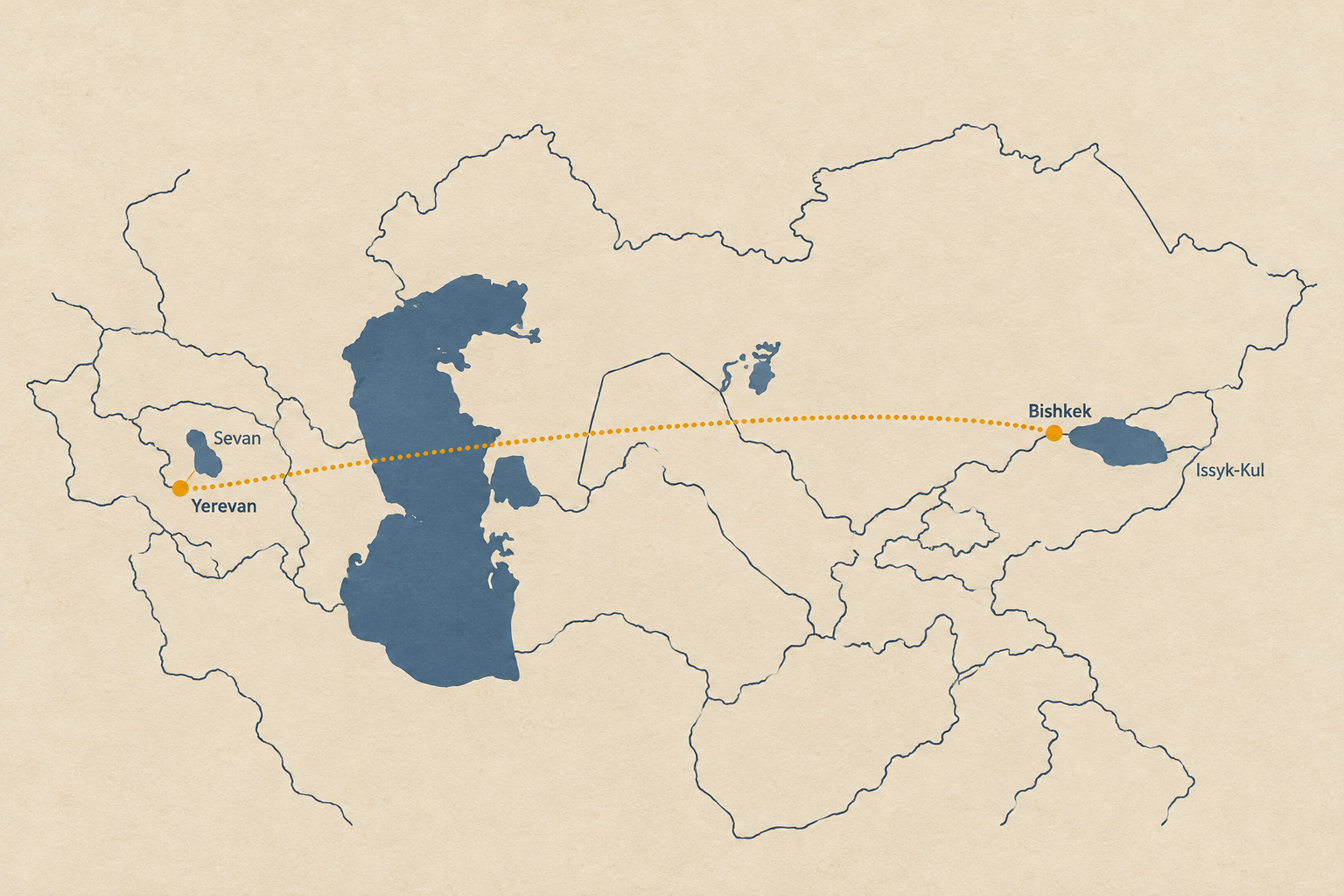
Japarov leaves Yerevan with a roadmap to 2029, a travel agreement and a pension accord
Sadyr Japarov’s official visit to Armenia on 16 and 17 October ended with a joint statement with Nikol Pashinyan and a set of documents exchanged in Yerevan: a cooperation roadmap for 2027 to 2029, an agreement on procedures for citizens’ visits and stays, a memorandum on protecting Lakes Sevan and Issyk-Kul, a sister-city agreement between Yerevan and Bishkek and an agreement on cooperation in pension provision, Armenpress reported on Saturday.

Japarov needs no new language test as a failed hopeful reports a night with the police
Sadyr Japarov will not have to sit the state-language test if he stands on 27 January 2027, because the B2 certificate he earned as a candidate in 2020 does not lapse, Kyrgyztest’s head said on Saturday. One of the two hopefuls who failed its written part, ex-financial police chief Syimyk Japykeev, said on Monday he had spent the night at a police station, the police citing noise and drink.
Mongolia holds 10 days of AI-92 and 27 of diesel as police log 431 fuel-queue disputes
Mongolia’s national stock stood at 22,000 tonnes of AI-92 petrol, or 10 days of consumption, and 108,000 tonnes of diesel, or 27 days, the deputy minister of industry and mineral resources, B. Munkhtamir, said on Monday, in ikon.mn’s account at 14:12 Ulaanbaatar time. Of 78,000 tonnes contracted from Russia, China and third countries, 38,000 had arrived.
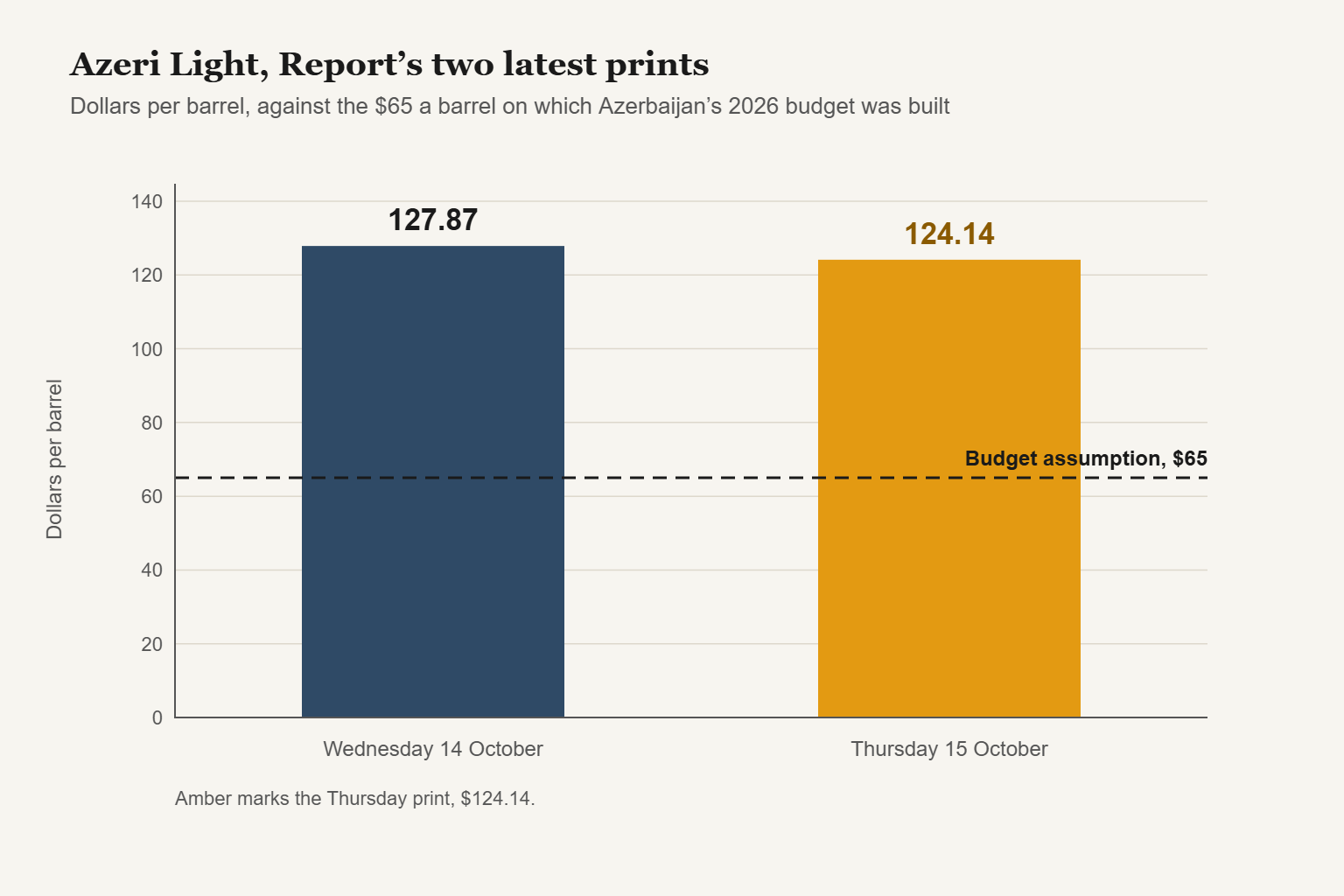
Azeri Light falls 2.91% to $124.14 a barrel on Report’s Thursday print
Azerbaijan’s export blend fell $3.73, or 2.91%, to $124.14 a barrel on the world market, Report wrote at 09:58 Baku time on 15 October, after the $127.87 print of Wednesday. December Brent futures stood at $127.55 a barrel on the same page.

Tashkent will index heating tariffs to inflation from May 2028, with a 10% ceiling a year
Centralised heating tariffs in Uzbekistan are to be indexed every year from 1 May 2028 by the annual inflation rate but by no more than 10%, deputy economy and finance minister Khurshed Mustafayev said on 14 October, Spot reported on Thursday evening. The same mechanism has applied to household electricity and gas tariffs since the start of 2026, he said.

Kyrgyzstan’s presidential race has one filer as two ex-officials fail the language test
One person has applied to the Central Election Commission to stand in the presidential election of 27 January 2027, 24.kg’s mirror reported on 16 October, as former interior minister Omurbek Suvanaliev and Syimyk Zhapykeev failed the written part of the state-language examination and were offered a retake in three working days. The commission says retakes are outside its competence.

Georgia’s party-ban hearings open in Batumi on 21 October as the opposition plans protests
The Constitutional Court’s proceedings on the petition to ban opposition parties begin on 21 October, Coalition for Change leader Nika Gvaramia said on 15 October, naming Batumi as the venue and promising to attend, Interpressnews reported. The opposition alliance announced a protest campaign from 25 October to a rally on 28 November, and Georgian Dream’s majority meets Bidzina Ivanishvili on 17 October.

Yerevan declares ENA an overriding public interest and sets up a railway group with Russia
Armenia’s government recognised 100% of the shares of Electric Networks of Armenia, or ENA, owned by the Tashir group, as an overriding public interest at its sitting on 15 October, the status Armenian law requires before the state can take property, News.am reported. Tashir’s owner Samvel Karapetyan leads the opposition Strong Armenia alliance. Nikol Pashinyan the same day set up a working group with Russia on the railway concession.
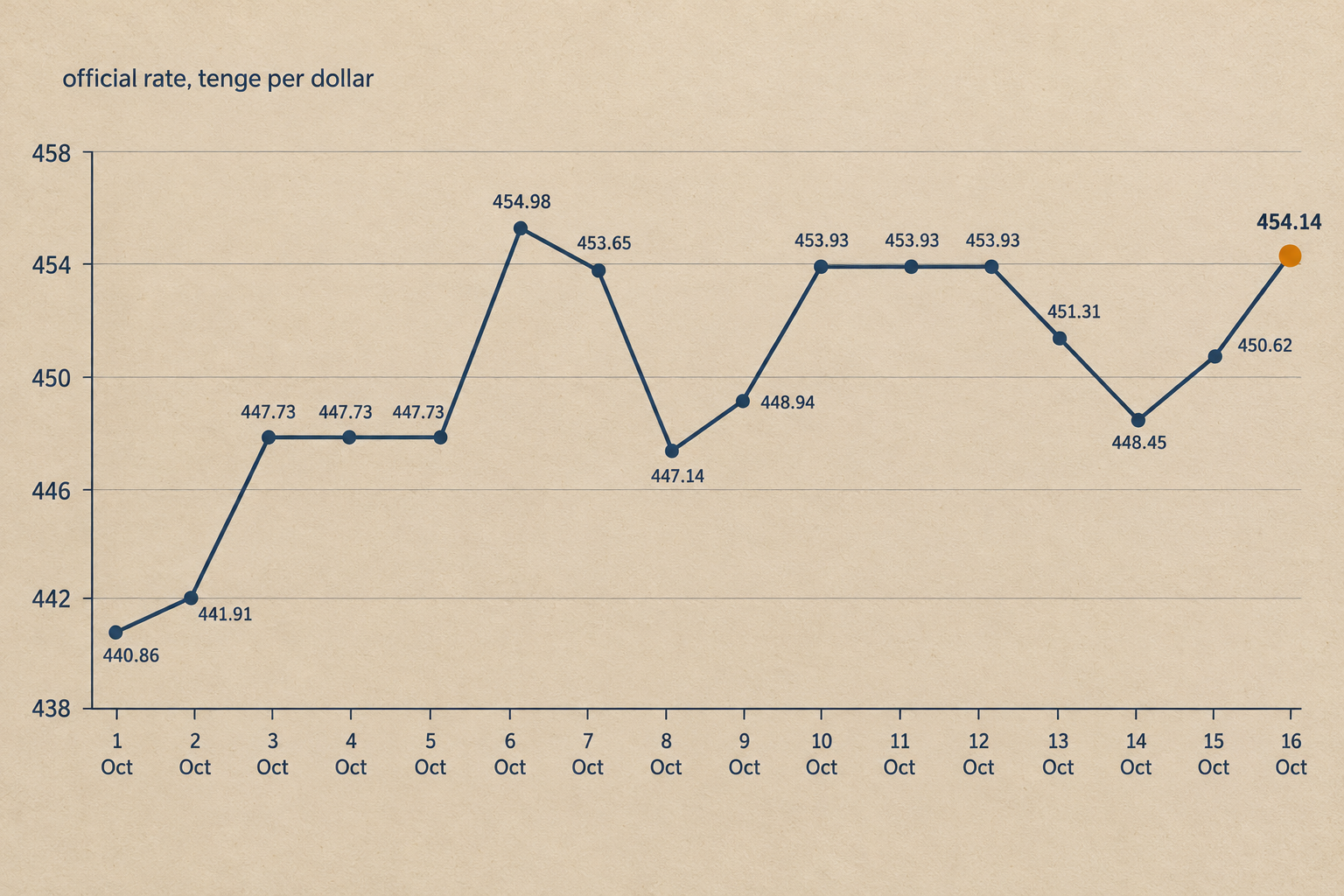
The tenge falls to 454.14 as analysts polled by the National Bank cut inflation forecasts
The National Bank set the official rate at 454.14 tenge to the dollar for 16 October, up 3.52 from Thursday’s 450.62 and the third rise in a row. Its October survey of 14 forecasting organisations lowered the median inflation expectation for 2026 from 10% to 9.5% and raised the Brent assumption for the year to $88.4 a barrel.

Kazakhstan’s 2027 budget passes first reading with 19.9 trillion tenge of own revenue
Kazakhstan’s parliament approved the draft republican budget for 2027 to 2029 in first reading on 14 October by 128 votes with 8 abstentions, Kapital reported. The draft puts 2027 own revenues at 19.9 trillion tenge and spending at 30.2 trillion, with 5.5 trillion more in transfers, and the co-rapporteur said the VAT rise to 16% has yet to bring the revenue expected.
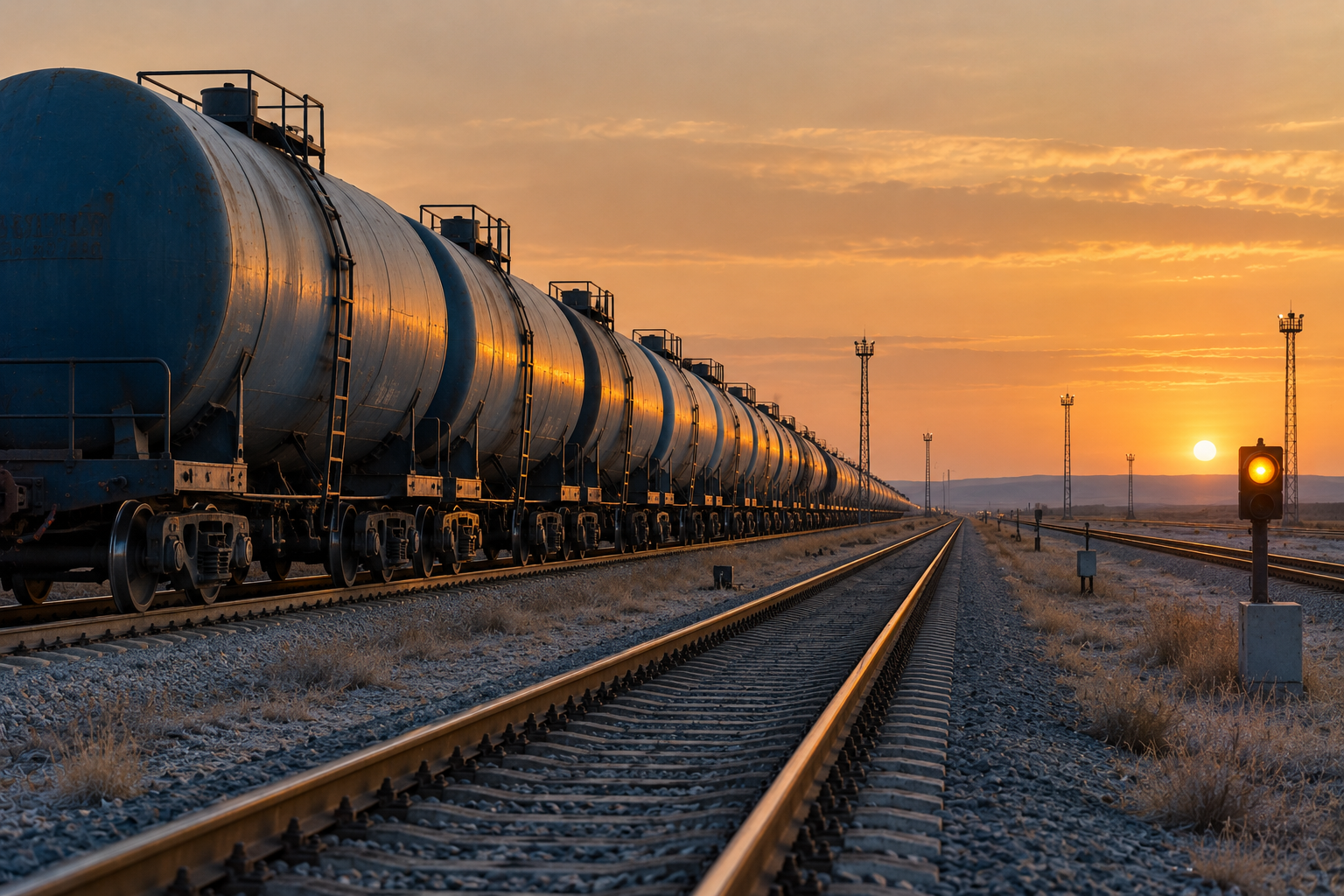
Tokayev ratifies the oil protocol with Russia that saves 30 billion tenge in duties
Kassym-Jomart Tokayev signed the law ratifying the protocol that revives the 2010 Kazakh-Russian agreement on supplies of oil and oil products to Kazakhstan, which had expired on 1 January 2024, Interfax reported on 16 October. The Kurultai’s conclusion puts the saving from duty-free imports at about 30 billion tenge in 2026.

Kazakhstan and Azerbaijan switch on a 380 km Caspian cable and sign a Middle Corridor pact
Kassym-Jomart Tokayev and Ilham Aliyev opened the Trans-Caspian fibre-optic line between Sumgayit and Aktau online on 15 October, a 380 km cable on the seabed with a capacity above 400 terabits a second, Report said. In their presence the two governments exchanged a signed agreement on the Middle Corridor and restated a $1 billion trade target, Akorda said.
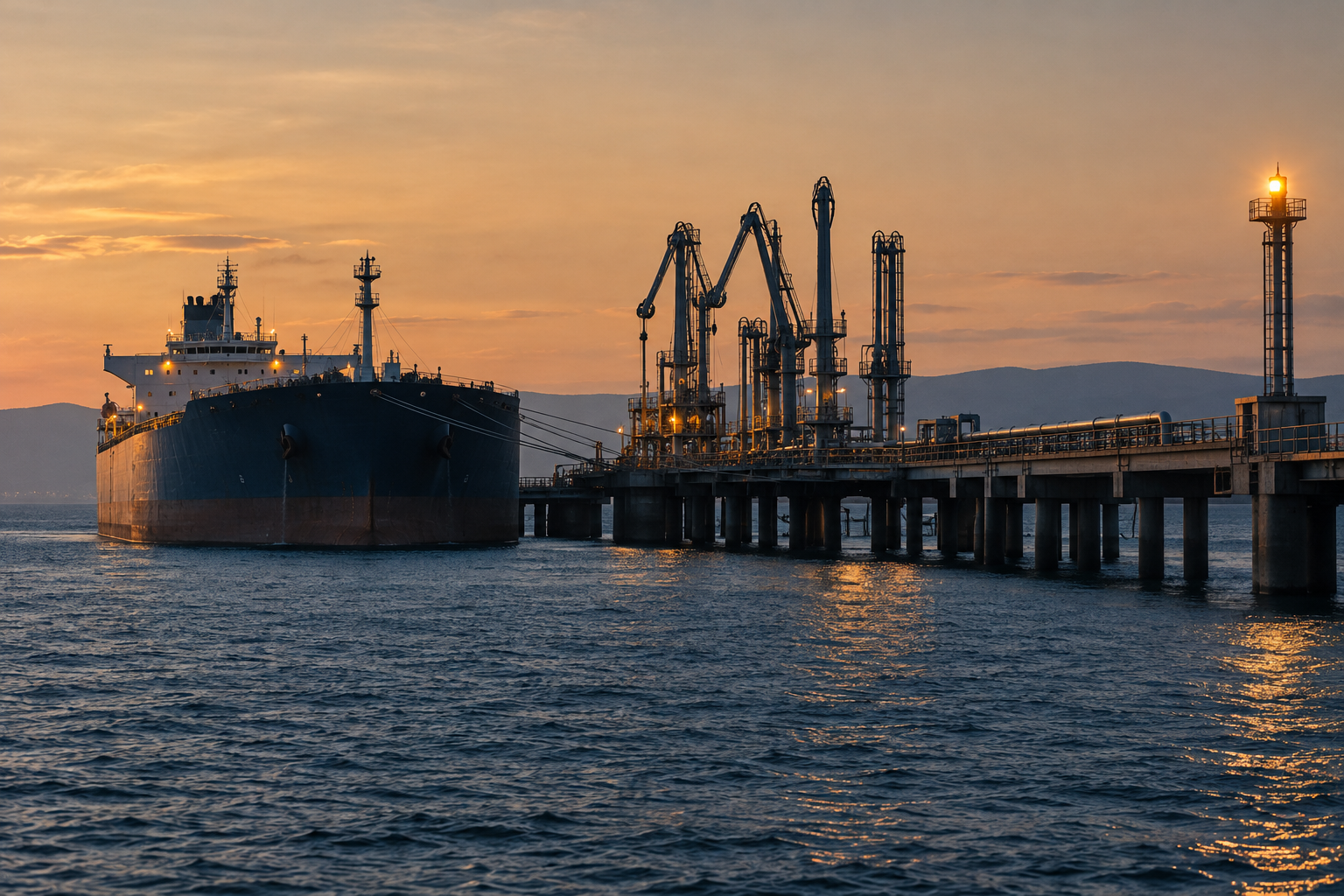
Azeri Light slips 2.85% to $127.87 a barrel, $63 above the budget’s $65
Azerbaijan’s export blend fell $3.75, or 2.85%, to $127.87 a barrel on the world market, Report wrote on 14 October citing an oil-market source, with the FOB Ceyhan price down $4.19 to $116.51. The blend stays about $63 above the $65 a barrel on which the 2026 state budget is calculated.
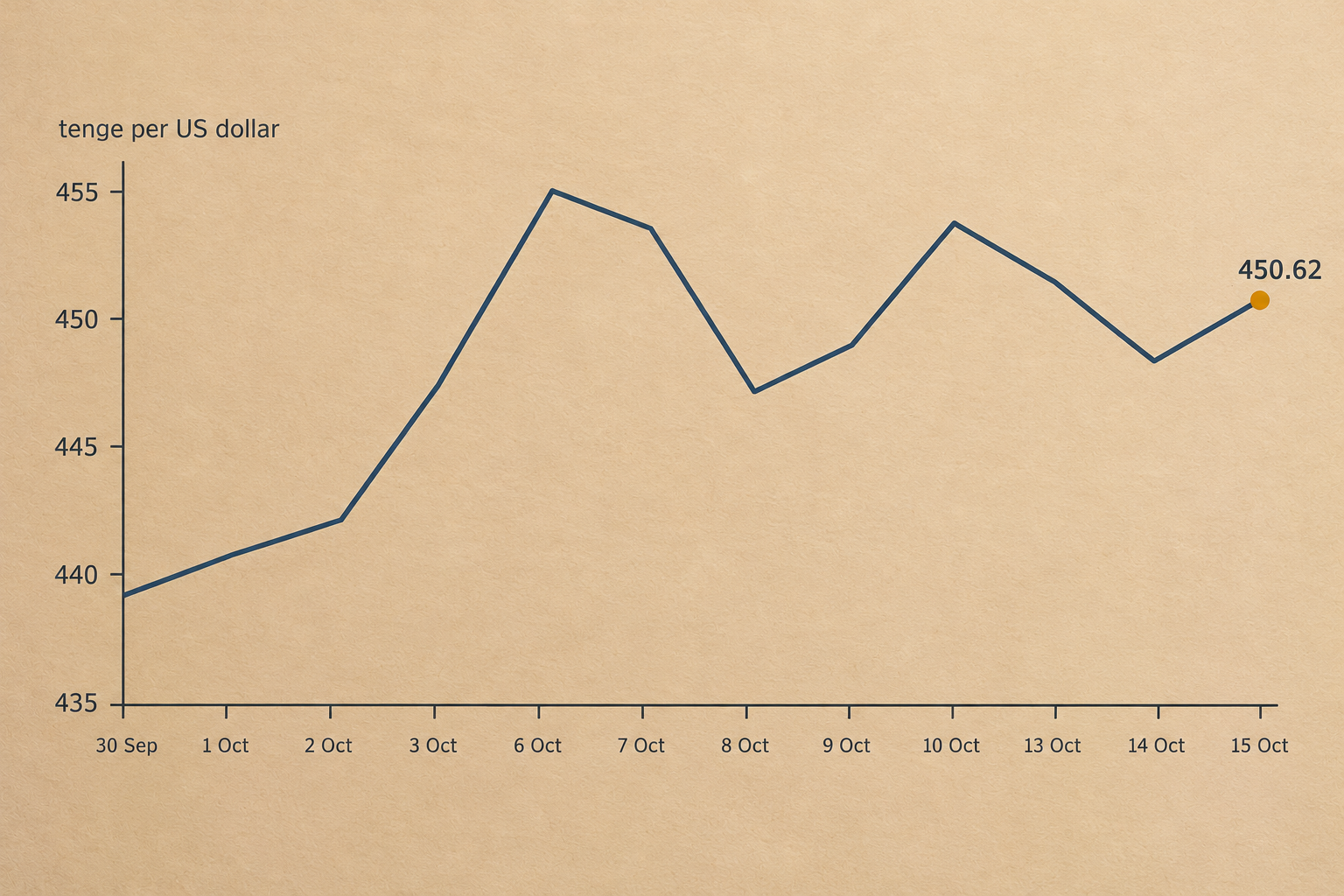
The tenge’s official rate steps back to 450.62 for 15 October after two days of gains
The National Bank of Kazakhstan set the official rate at 450.62 tenge to the dollar for 15 October, 2.17 weaker than Wednesday’s 448.45, by its daily series. The two preceding days had taken the rate down from the 453.93 that held over the weekend and Monday.

Rahmon extends Tajikistan’s moratorium on business inspections to 1 January 2029
Emomali Rahmon told entrepreneurs and investors on 14 October that the moratorium on inspections of businesses runs two more years, to 1 January 2029, with tax inspections excepted, and that business registration, permits and licensing must move online by the end of 2027, Asia-Plus reported from his press service.
Meredov receives the EU envoy as a 10 million euro skills programme meets in Ashgabat
Turkmenistan’s foreign minister met the European Union’s special representative for Central Asia, Eduards Stiprais, on 14 October, the ministry said, on the second day of the fifth high-level meeting of DARYA, a 10 million euro EU programme on skills for the five Central Asian states that the European Training Foundation runs.
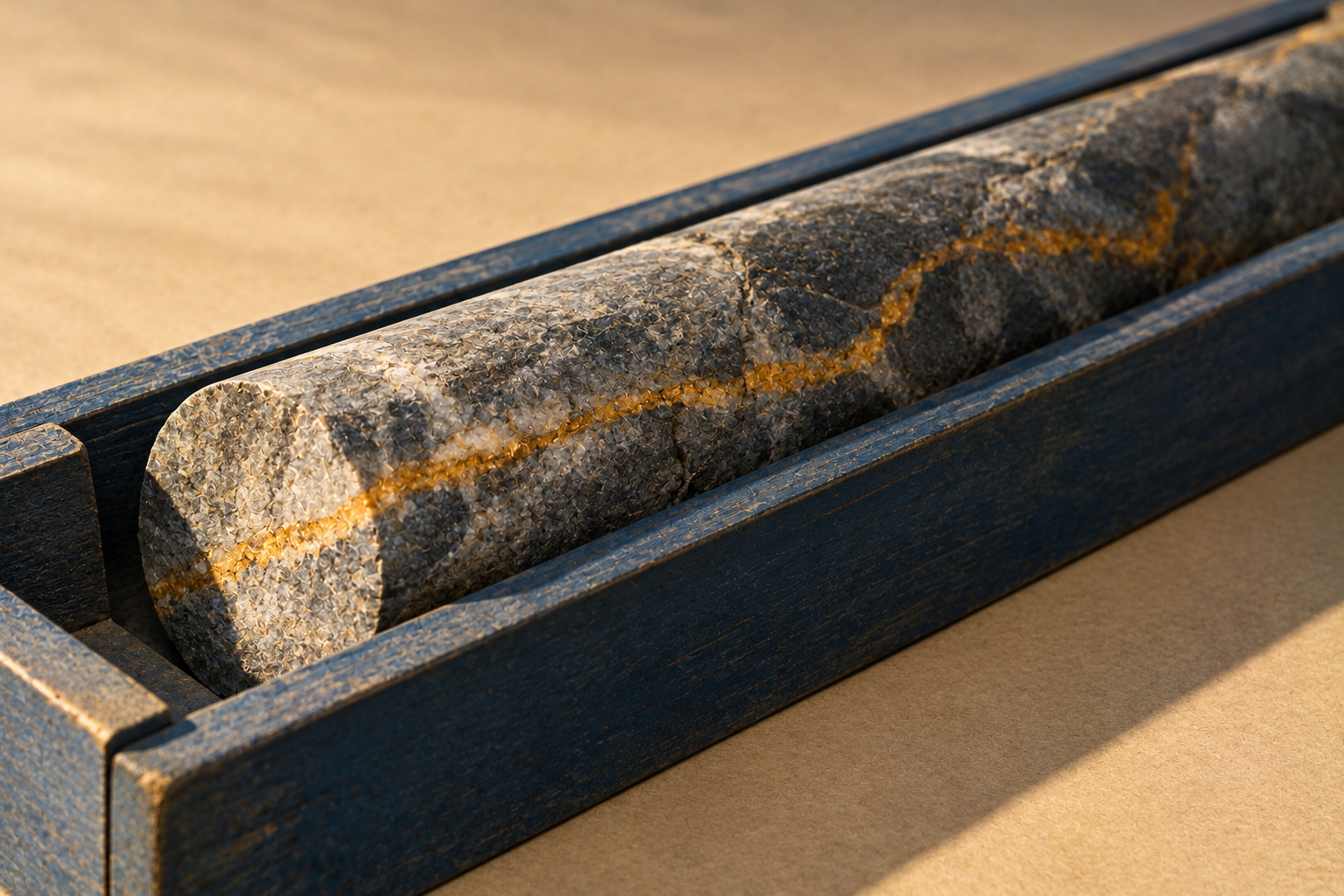
China Nerin’s half-year report prices its Togolok contract with Kumtor at $112.8 million
A Chinese contractor’s filing has put a number on the mine Kumtor is building beside its main pit: China Nerin Engineering Technology signed a $112.8 million engineering, procurement and construction contract with Kumtor Operating Company on 23 April for the Togolok gold plant, tailings facility and infrastructure, Economist.kg reported on 14 October from the company’s first-half report.
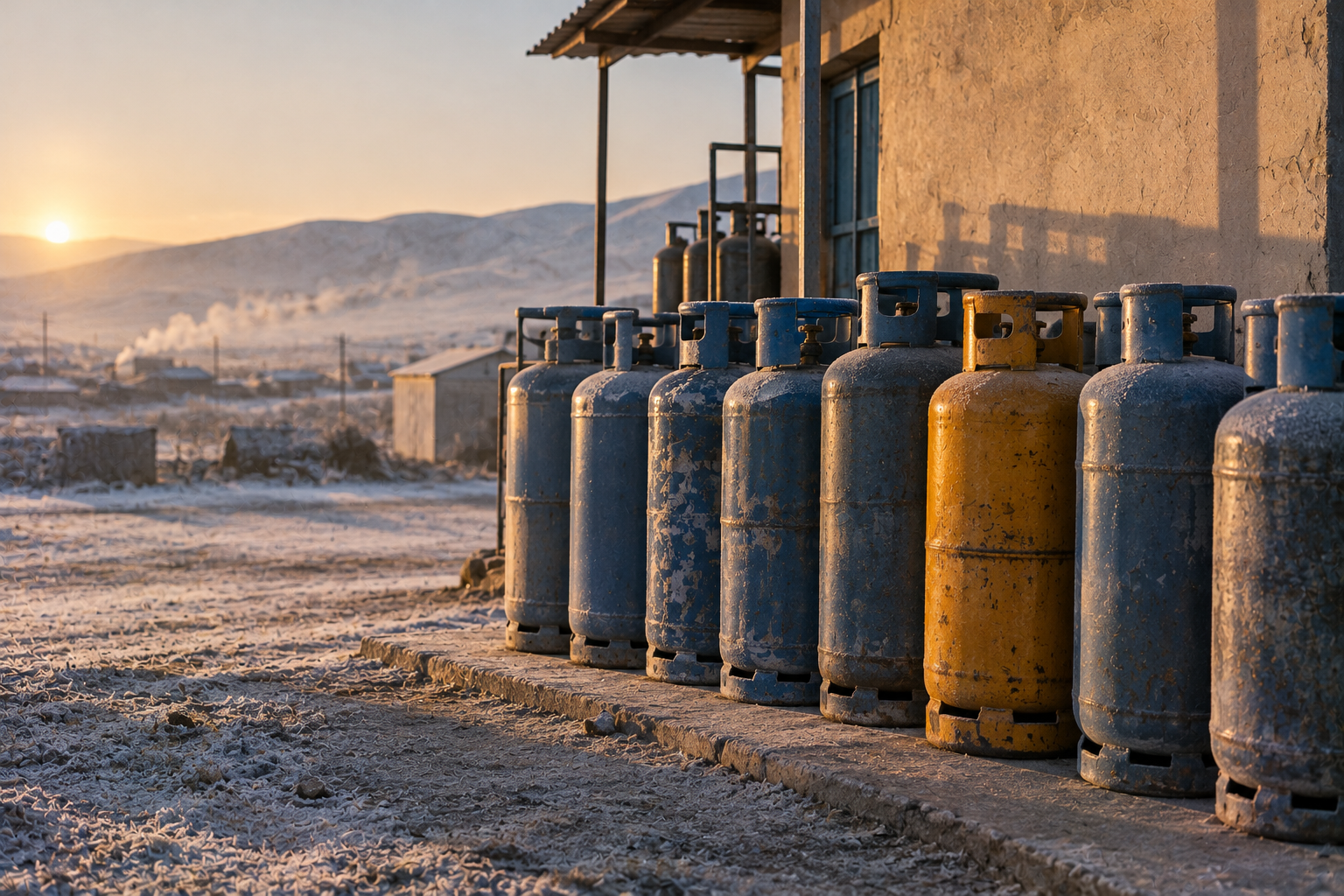
Tashkent drafts a 5,000-soum propane price from 1 November and a 3,000-soum subsidy
Uzbekistan’s Ministry of Economy and Finance has published a draft resolution that sets the retail price of liquefied gas for households at 5,000 soums a kilogram from 1 November, 2.5 times the current 2,000, and pays needy families back 3,000 soums a kilogram on up to 20 kilograms a month until 1 January 2030.

Pashinyan sets terms for peace: no enclaves on either side, all roads open, no claims
Armenia’s prime minister set out on 14 October what the country should look like after the peace agreement with Azerbaijan is signed and ratified: the same 29,743 square kilometres the state counts today, borders drawn from the Alma-Ata Declaration, enclaves exchanged for land of equal size and all roads open, within TRIPP and beyond it.
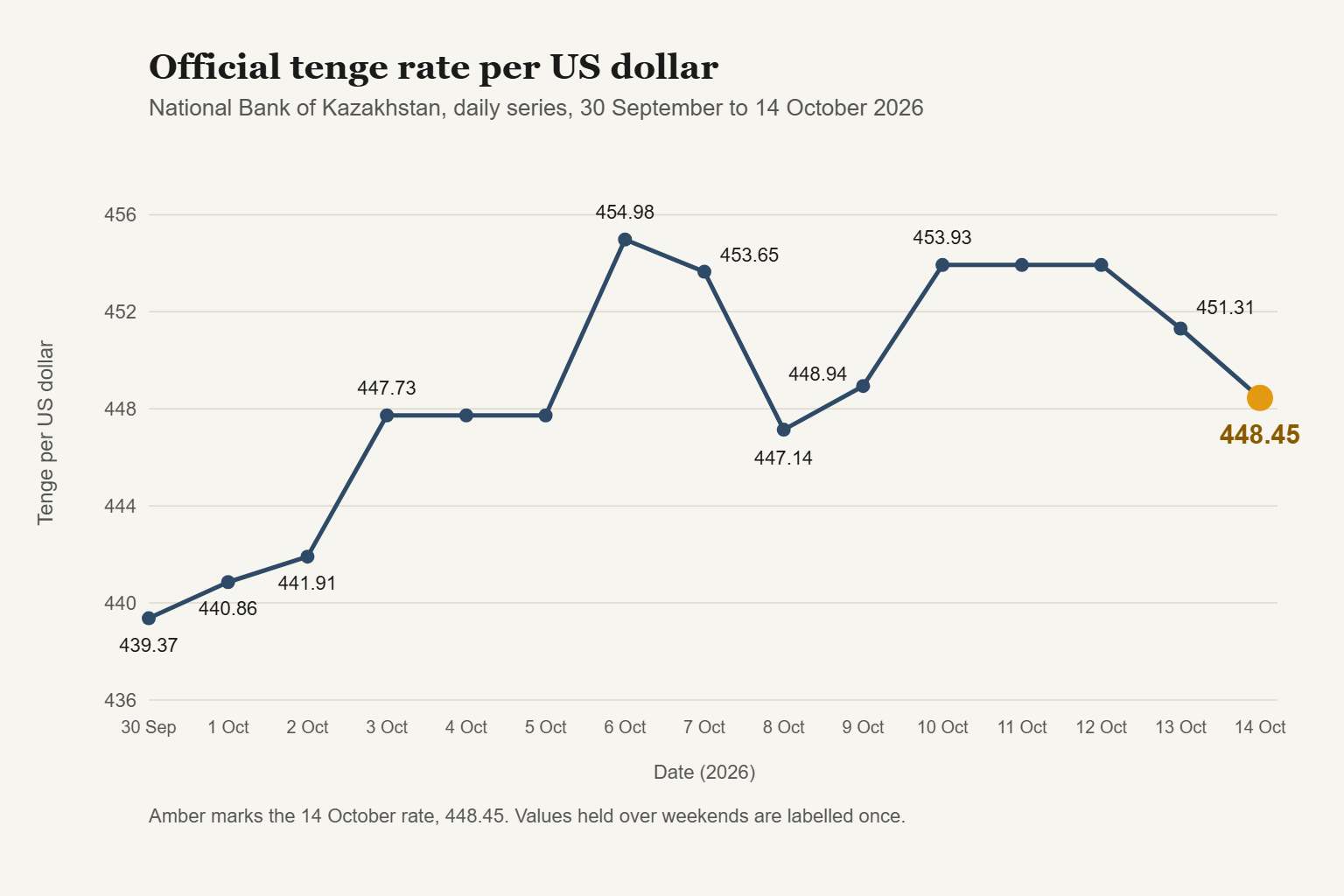
Kazakhstan’s official rate is 448.45 tenge to the dollar for 14 October after two falls
Kazakhstan’s official rate for 14 October is 448.45 tenge to the dollar, down 2.86 from 451.31 for 13 October, which was itself 2.62 below the 453.93 that held for Saturday 10 October and Monday 12 October. The euro is at 501.59.