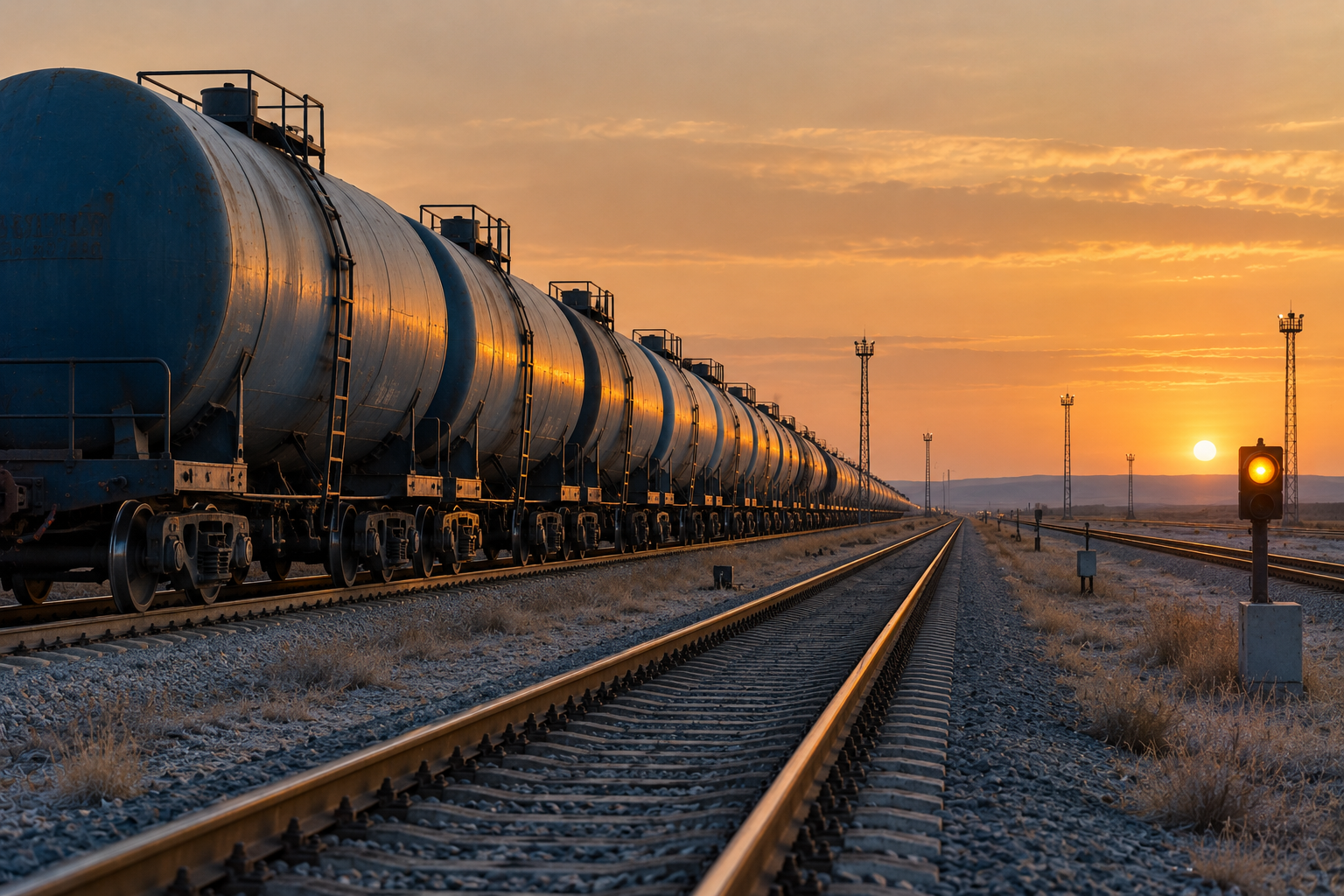
Kazakhstan’s official media published the law on Friday, Interfax reported from Moscow. The protocol was signed in Astana on 27 November 2024 and its purpose is to renew the agreement of 9 December 2010, whose term ran out on 1 January 2024, and to update some of its provisions.
The protocol keeps the mechanism of annual agreement on indicative supply balances and the exchange of information between the two countries’ competent authorities, and it keeps the possibility of duty-free imports of oil products from Russia, energy minister Yerlan Akkenzhenov told the Kurultai, by Interfax’s account. Deputies passed the bill in two readings on 7 October, the government’s site recorded.
The agreement matters for energy security and the stable working of the domestic market in oil products, Akkenzhenov said: it creates an international legal basis for coordinating the two states’ authorities, lets balances be drawn up in time and lets measures be taken when a shortage of particular products looms. Without ratification, he said, the intergovernmental mechanism for coordinating supplies would lapse and the ability to react to shortage risks would narrow.
Deputies passed the bill in two readings on 7 October, the government’s site recorded.
The Kurultai’s conclusion on the law puts a number on the duty-free regime: an expected saving of about 30 billion tenge in 2026, of which 5.59 billion falls on petrol, 15.75 billion on diesel and 8.61 billion on jet fuel. At the National Bank’s rate for 16 October, 454.14 tenge to the dollar, 30 billion tenge is about $66 million, by CAW’s arithmetic.
Russia reopened diesel exports for 500,000 tonnes on 10 October while a US licence runs to April, CAW reported on 12 October, and the Russian producers’ diesel export ban under resolution 1252 ends on 31 October. Tajikistan, which takes 73% of its oil products from Russia by value, raised fuel supply with the US envoy last week.