Search
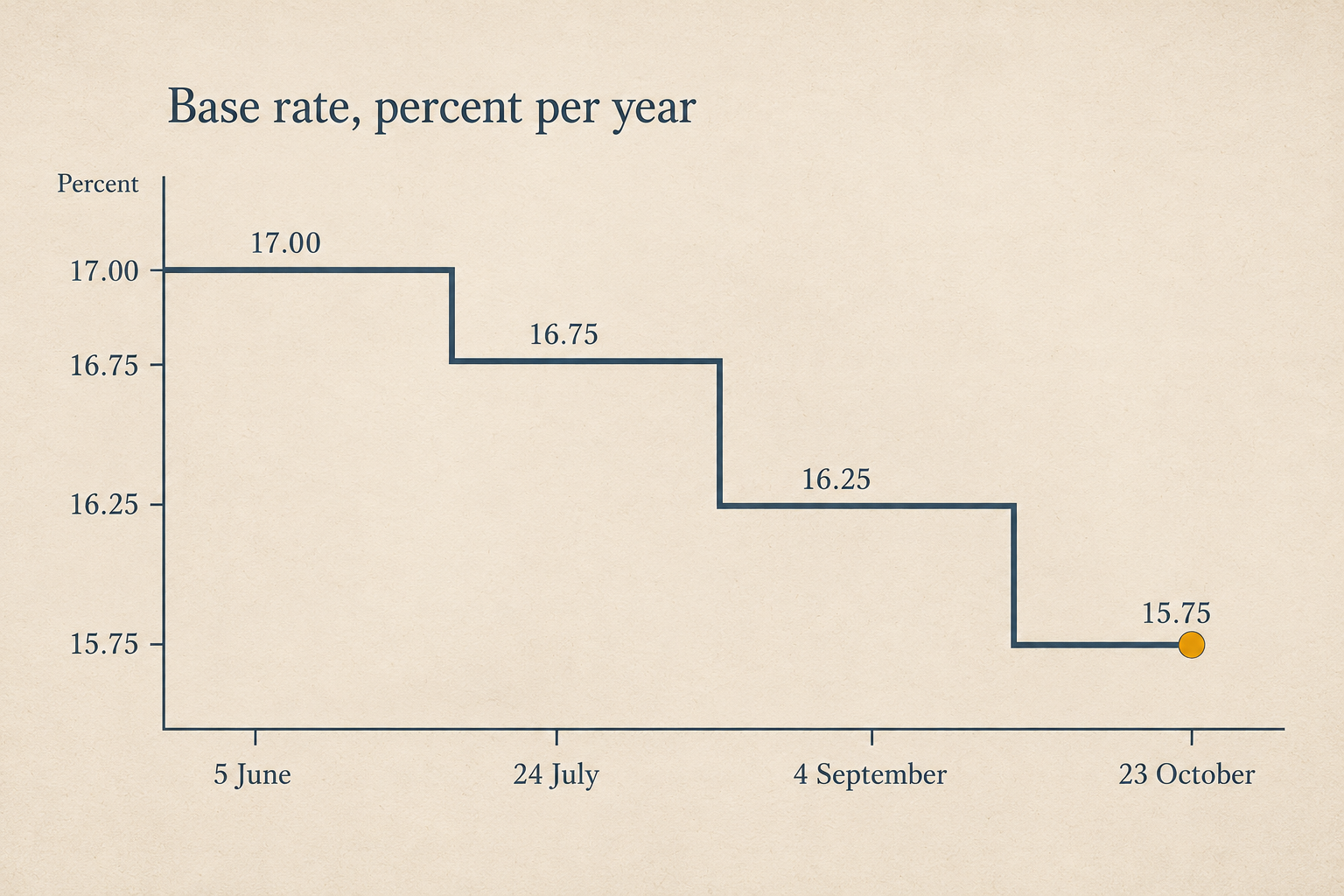
Kazakhstan cuts its base rate to 15.75 percent and calls another change this year unlikely
The National Bank of Kazakhstan cut its base rate to 15.75 percent on Friday and wrote that another change before the end of 2026 is unlikely, with the risks it lists all on the upside. Annual inflation stood at 9.3 percent in September, slowing for a twelfth month. The tenge weakened by 3.11 tenge to 451.05 per dollar on the day of the decision.
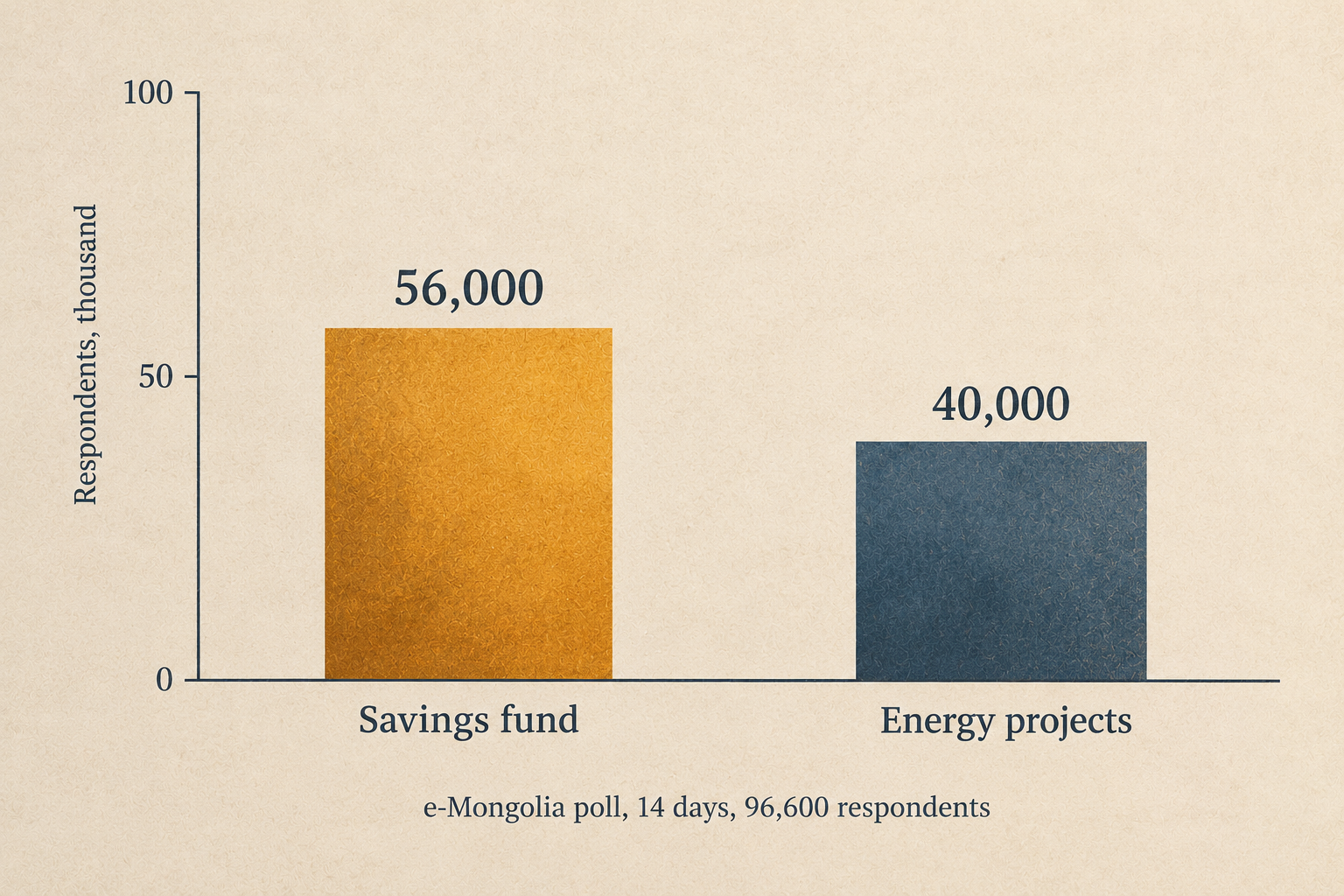
Mongolia drops its Oyu Tolgoi dividend spending bill, citing an e-Mongolia poll
On 23 October the government withdrew the one-off bill that would have put ₮2 trillion of the ₮3 trillion Oyu Tolgoi dividend expected in 2027 into a 300 MW power plant, ten provincial heating plants and dormitories. Finance Minister Mendsaikhan gave two reasons: a budget the debate was making unrecognisable, and an e-Mongolia poll in which about 56,000 of 96,600 respondents chose the Savings Fund over energy projects.
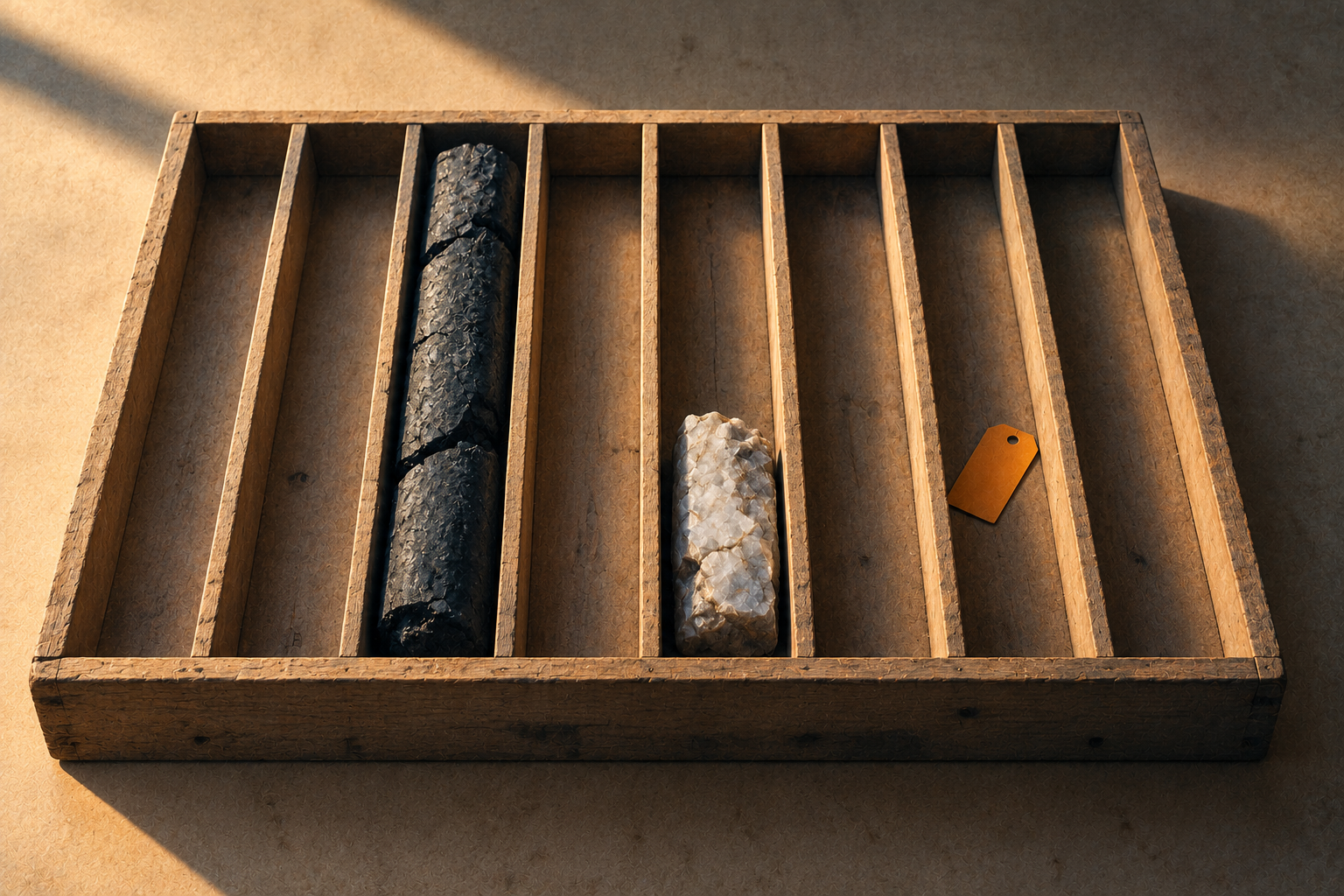
Ten years of UK memoranda on Mongolian mines end in a working group and an unfunded list
Mongolia’s mining sector was put before London on 21 October at a Mongolian-British Chamber of Commerce conference during LME Week. The state’s list of mines seeking investment holds 67 projects asking for ₮3.5 trillion, about $970 million, two thirds of it one Australian-owned coal deposit. Britain’s record since the first mining memorandum of 2016 is a working group, a metro memorandum and a listing programme without an issuer.

Turkistan’s new virology laboratory promises faster tests and publishes no turnaround time
Kazakhstan opened a virology laboratory in Turkistan on 10 September under a $58.2 million pandemic-preparedness project, $19.2 million of it a Pandemic Fund grant, for a region that used to send its samples elsewhere. Every speech promised faster diagnosis. No public document sets the time from sample to result, before or after: not the order on especially dangerous infections, not the laboratory standard of 2020, none of the releases.

Uzbekistan’s $12 billion US package: 54 documents, twelve names, one verb in dispute
The package presented at the Uzbekistan-United States Business and Investment Council in Samarkand on Monday 19 October names GE Aerospace, Wabtec, four American financial houses, three minerals firms and three others, with one sum for all. Its ministry says the 54 documents were signed, the presidency says prepared, and only AKFA Group’s $80 million plant in Kentucky came with a figure of its own.
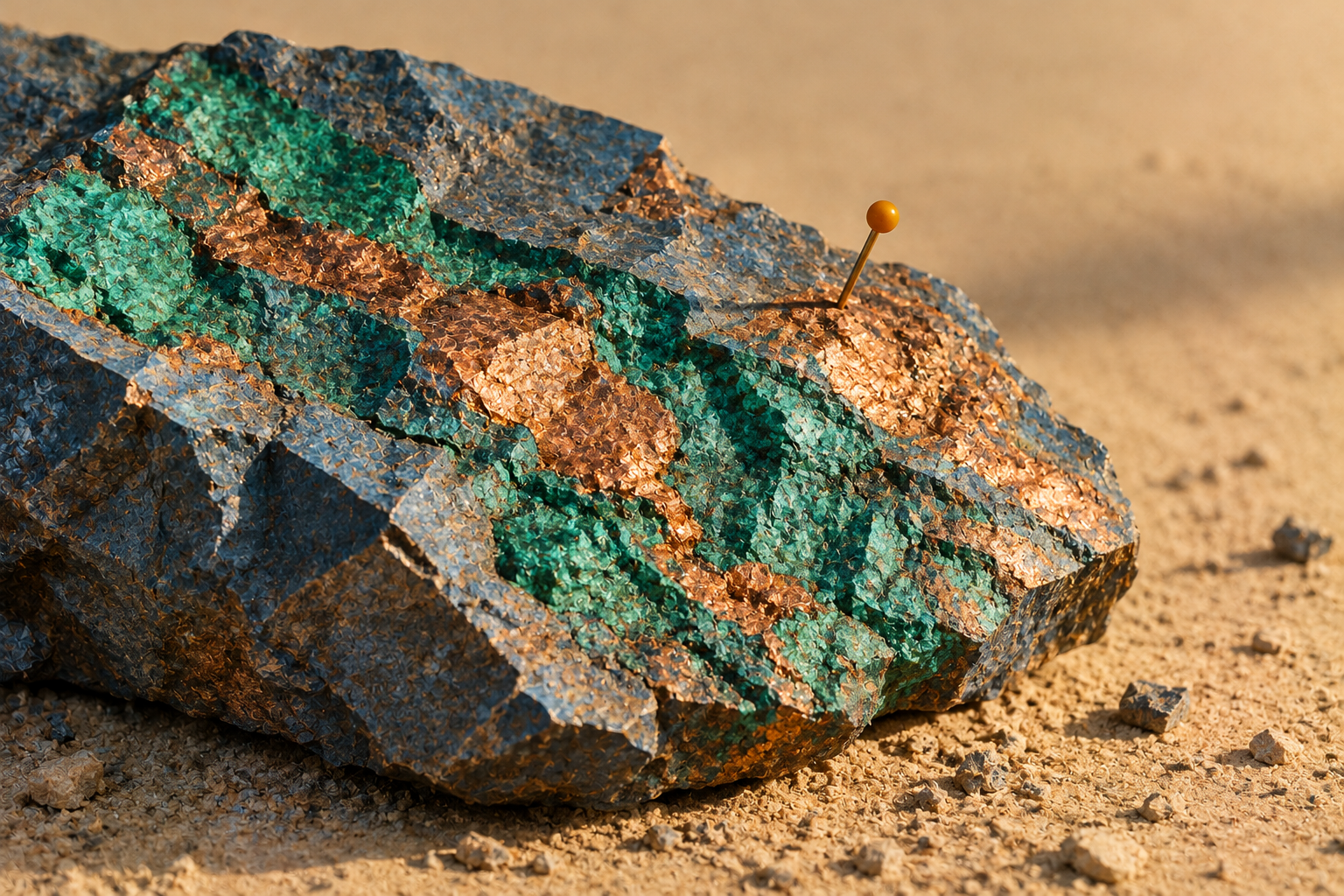
Mongolia amends its Minerals Law and votes a 2 trillion tugrik deficit in the same sitting
The State Great Khural finally approved on 16 October Minerals Law amendments that, by the ministry’s summary, double the local share of royalties, bring the copper royalty into line with international benchmarks and strengthen the legal basis for a critical minerals policy. The sitting also adopted the 2026 budget revision, with spending of 33.9 trillion tugrik and a 2 trillion deficit, four days before the ruling party’s deadline.
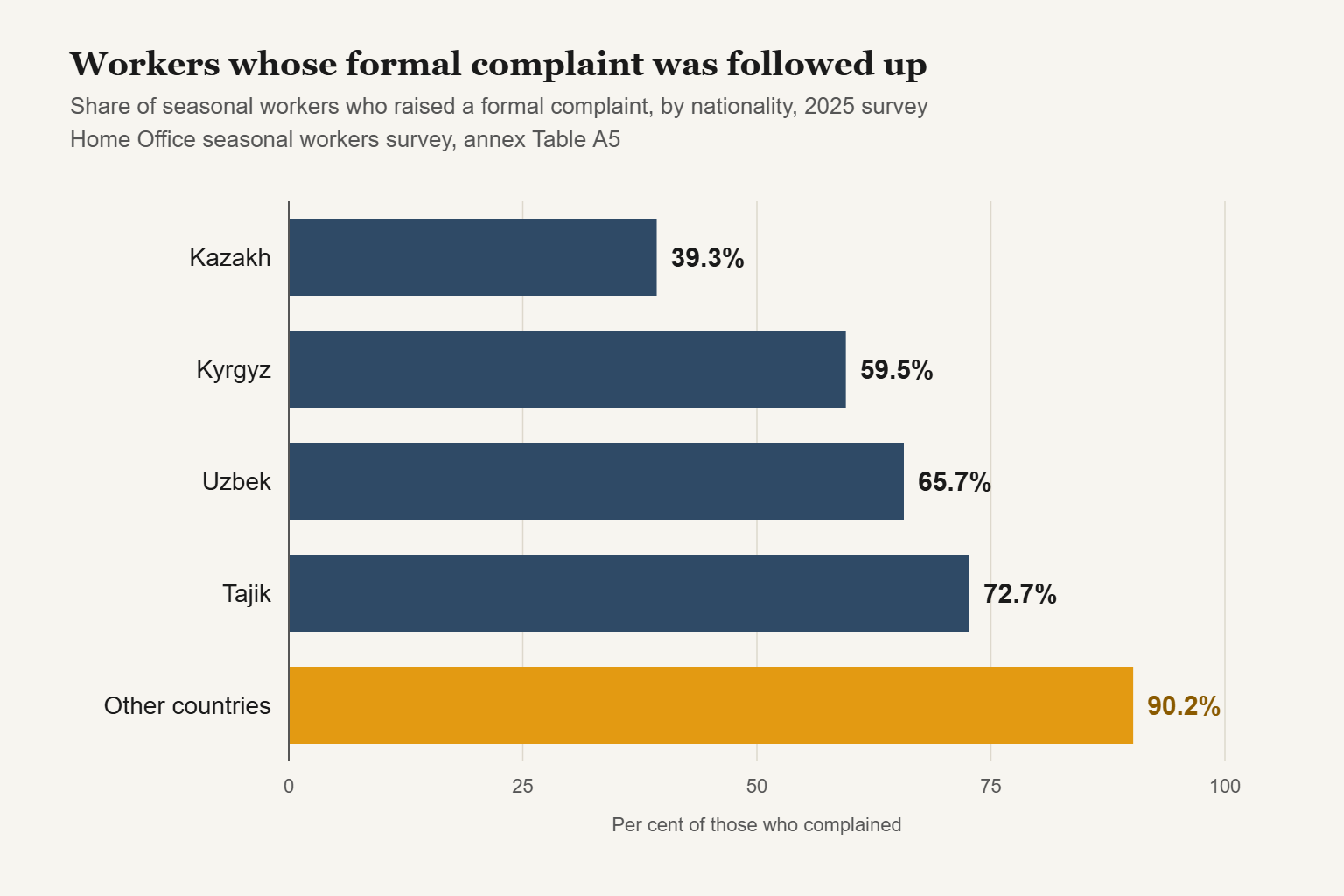
Four in five British seasonal farm visas go to Central Asians who buy the visa themselves
Britain granted 41,766 Seasonal Worker visas in the year to June 2026 and 79% went to Central Asians, with Kyrgyzstan, Uzbekistan, Kazakhstan and Tajikistan the countries the Home Office names. Its survey with Defra of 16,787 workers shows who paid: 90.1% said they bought their own visa, 63% spent £500 to £999 before arrival, and 26.8% of Uzbek respondents reported paying labour or migration ministry fees.

Uzbekistan drafts a 30% heating rise from 1 November and a million soums for the poorest
Uzbekistan has published two drafts for public comment, a cabinet resolution on tariffs and a presidential decree on social support, that set the terms of its move to market energy prices. Heating and hot water rise about 30% from 1 November, with Tashkent’s heating tariff at 314 soums per square metre a day. Families in the social registry get a one-off 1 million soums in November.
Mirziyoyev moves the ministries to New Tashkent, where entrepreneurs have 94 hectares
Shavkat Mirziyoyev told the prime minister on Monday to start moving the remaining ministries and state bodies to New Tashkent, three years into a project that has absorbed more than $2 billion from all sources, with the state paying for most of the 1,000 hectares under construction. Entrepreneurs have been allotted 94 hectares, the president said, and private business is being drawn in more slowly than the opportunities allow.
On the dry Mongolian Plateau, steadier plant cover comes with less growth, a study finds
A study of 306 grassland sites on the Mongolian Plateau, 286 of them in China’s Inner Mongolia, finds that the drier the site, the more its plants trade biomass for water-use efficiency and steadier greenness. Mongolia measures its own fight against land degradation in trees planted, 140 million so far against a billion promised by 2030.
The Middle Corridor is promised billions while its Caspian ferries sail part-empty
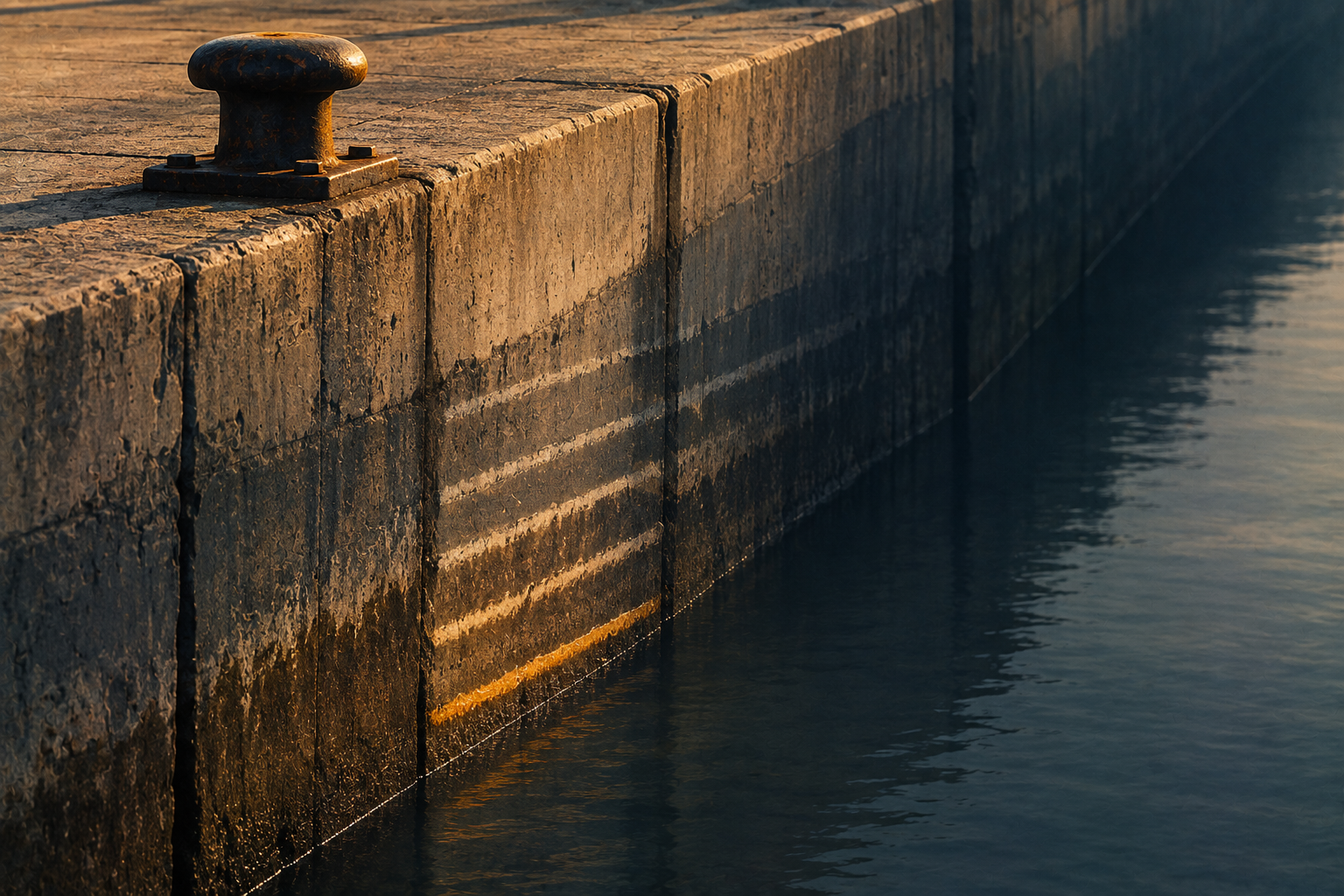
Brussels plans to attract up to €12 billion for the Middle Corridor. The sea at its centre has dropped about 2.5 metres in 30 years, Azerbaijan’s Institute of Geography says, and ferries leaving Kazakhstan already sail with part of their cargo space empty. On Wednesday the ministers of the five shore states met in Avaza to discuss it.

At the EAEU council, Lukashenko asks Armenia where its brandy will go if it chooses the EU
The Eurasian Intergovernmental Council met in Minsk on Friday under Kazakhstan’s chairmanship, with Pashinyan on a video link. Bektenov put the union’s first-half growth at 1.1% and its investment at $244.5 billion, Mishustin said mutual trade rose 10% from January to July, and Lukashenko told the heads of delegations that Armenia should work out where its brandy and fruit will go before it hurries to the EU.
Bishkek screens every cash exchange and every crypto firm’s owner as sanctions clocks run
The cabinet approved an anti-laundering strategy to 2030 and rewrote its 2025 rules for virtual-asset firms: beneficial owners vetted by the financial intelligence service, mining licences reported monthly, identification for every cash exchange whatever the sum. The documents name no deadline. Russia’s cash-rouble cap took effect on Tuesday, US sanctions on banks dealing with Russian state banks are due from 18 October, and EU and US lists carry Kyrgyz names.
Georgia's budget annex lists 8 arbitration claims at $4.8 billion, half its 2027 tax plan
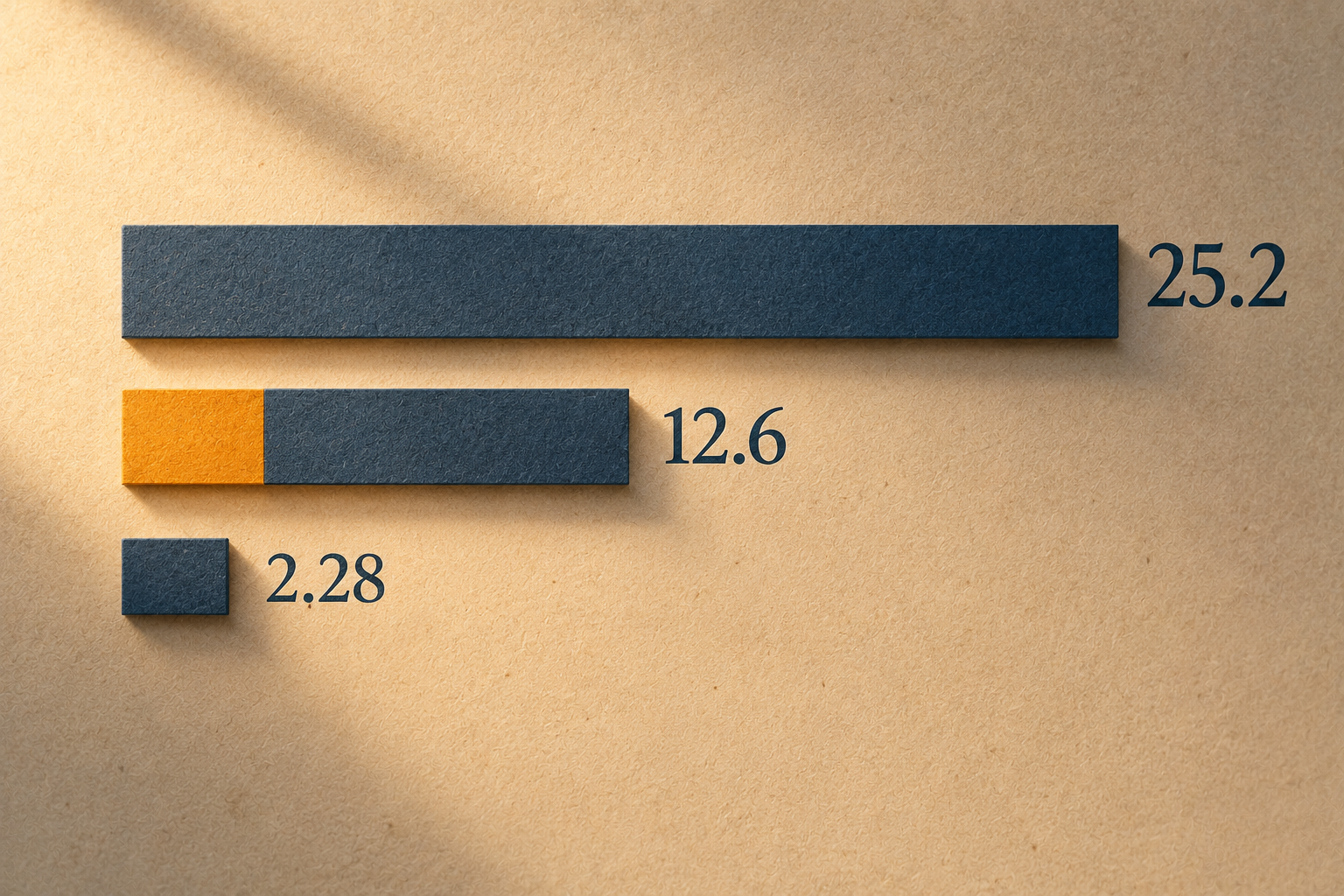
The fiscal-risk analysis attached to Georgia's 2027 draft, published on Thursday, lists 8 pending international arbitrations with claims of $4.8 billion, about 12.6 billion lari and half of the draft's 25.2 billion lari tax plan. Two cases already lost, ENKA's over the Namakhvani dam and Inter RAO's, carry about $582 million between them, and ENKA took its award to a Washington court in September.
Georgia publishes 2027 spending with no revenue line as the central bank curbs credit
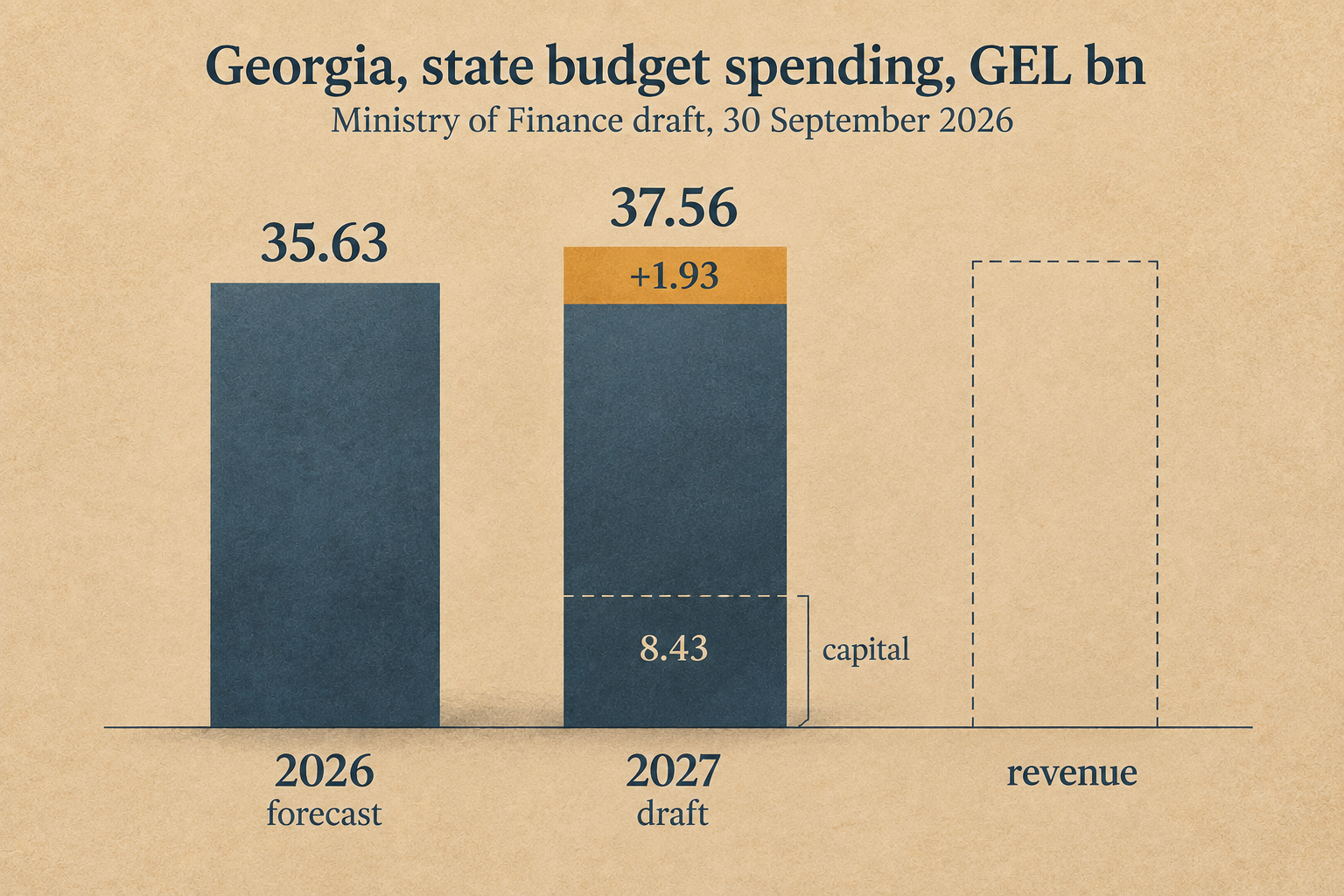
Georgia's finance ministry sent parliament a first 2027 draft on 30 September with spending of GEL 37.56 billion, growth of 5%, GDP of GEL 126.4 billion and GDP per head of $12,000, and its release carried no revenue, deficit or debt figure. On the same afternoon the National Bank announced tighter payment-to-income limits for borrowers earning GEL 1,500 to 2,500 a month.

Russia caps cash roubles for 7 neighbours at 1 million a head and bans firms from carrying any
A decree Vladimir Putin signed on Tuesday bans anyone from carrying more than 1 million roubles in cash out of Russia into the other 4 members of the Eurasian Economic Union, Azerbaijan, Tajikistan or Uzbekistan. Companies and sole traders may carry none, with 3 exceptions. The $100,000 ceiling that had applied since April is gone, and cash above the limit is confiscated at the border.
The World Bank prices the corridor at $55 billion to 2040, with $30 billion of it beyond the track
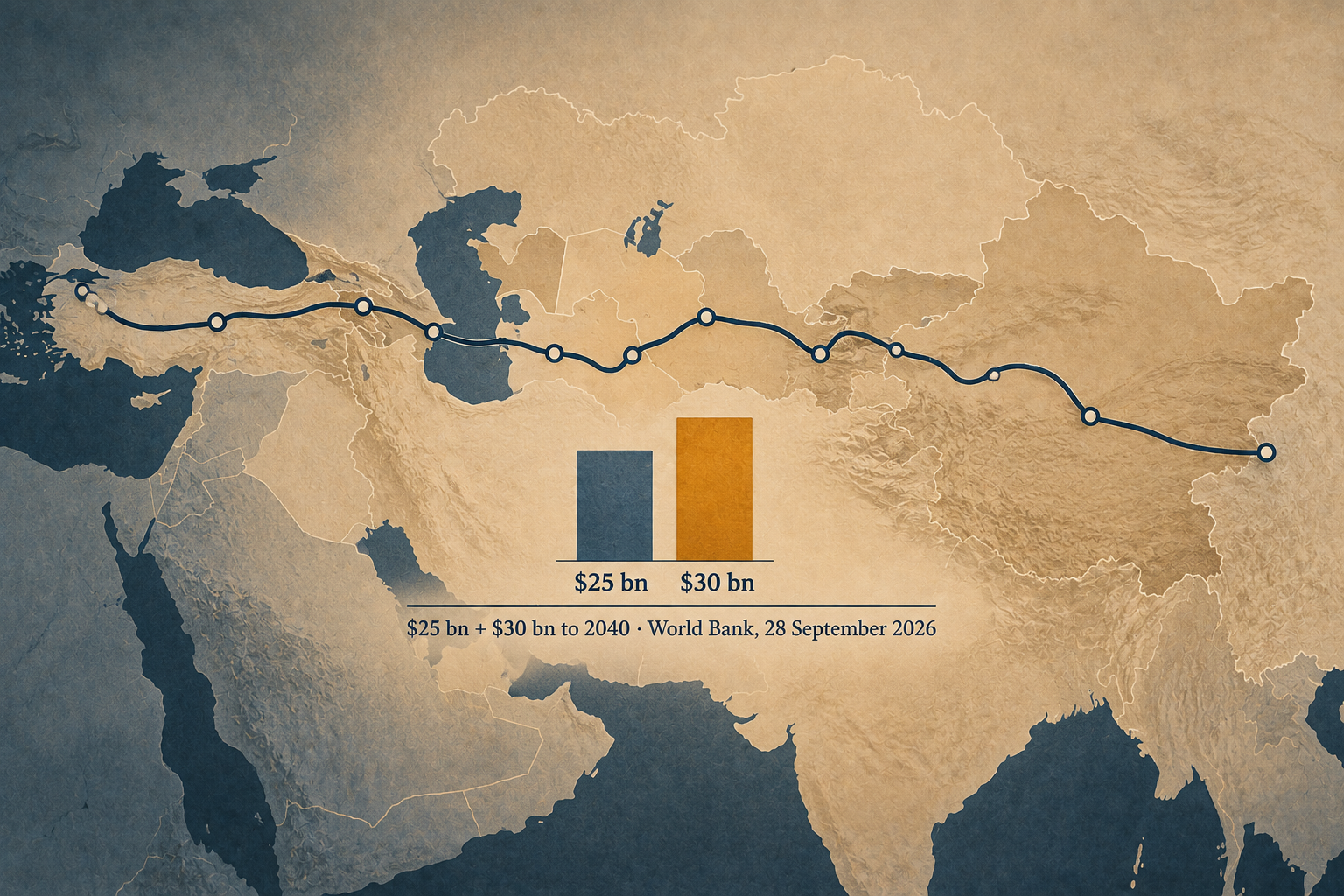
A World Bank report published on Monday says the Trans-Caspian corridor’s development could triple its volumes, halve its travel times, add 3.3% to the 9 countries’ GDP and create 2 million jobs by 2040. The bill it attaches is at least $25 billion of physical infrastructure and an estimated $30 billion of enabling investment. With reforms, the Bank says, the volumes would quadruple.
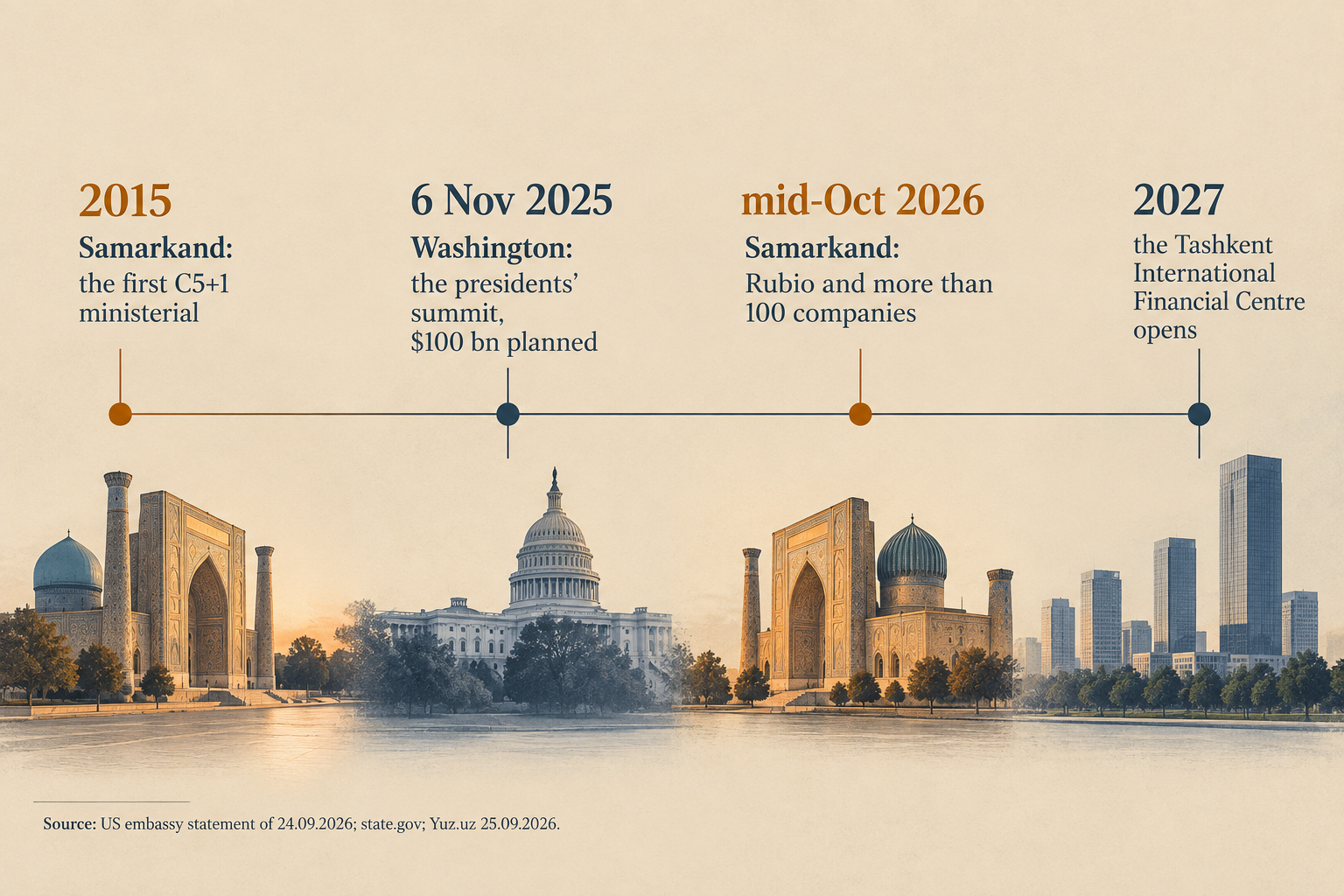
Washington books Samarkand for October while BlackRock draws Tashkent’s financial centre: Rubio’s 100 companies, a C5+1 back where it began in 2015, a launch date of 2027
Secretary of State Marco Rubio will bring “a historic business delegation of more than 100 American companies” to Samarkand in mid-October for the C5+1 ministerial with the five Central Asian foreign ministers, the US special envoy for South and Central Asia Sergio Gor announced on Thursday in a statement the Tashkent press relayed on Friday. The same morning Saida Mirziyoyeva, head of the presidential administration and since 10 September secretary general of the Tashkent International Financial Centre’s council, met BlackRock’s president Robert Kapito and vice chairman Thomas Donilon in New York on the centre’s launch in 2027, with BlackRock “assisting in forming the concept and structure of the Centre”.
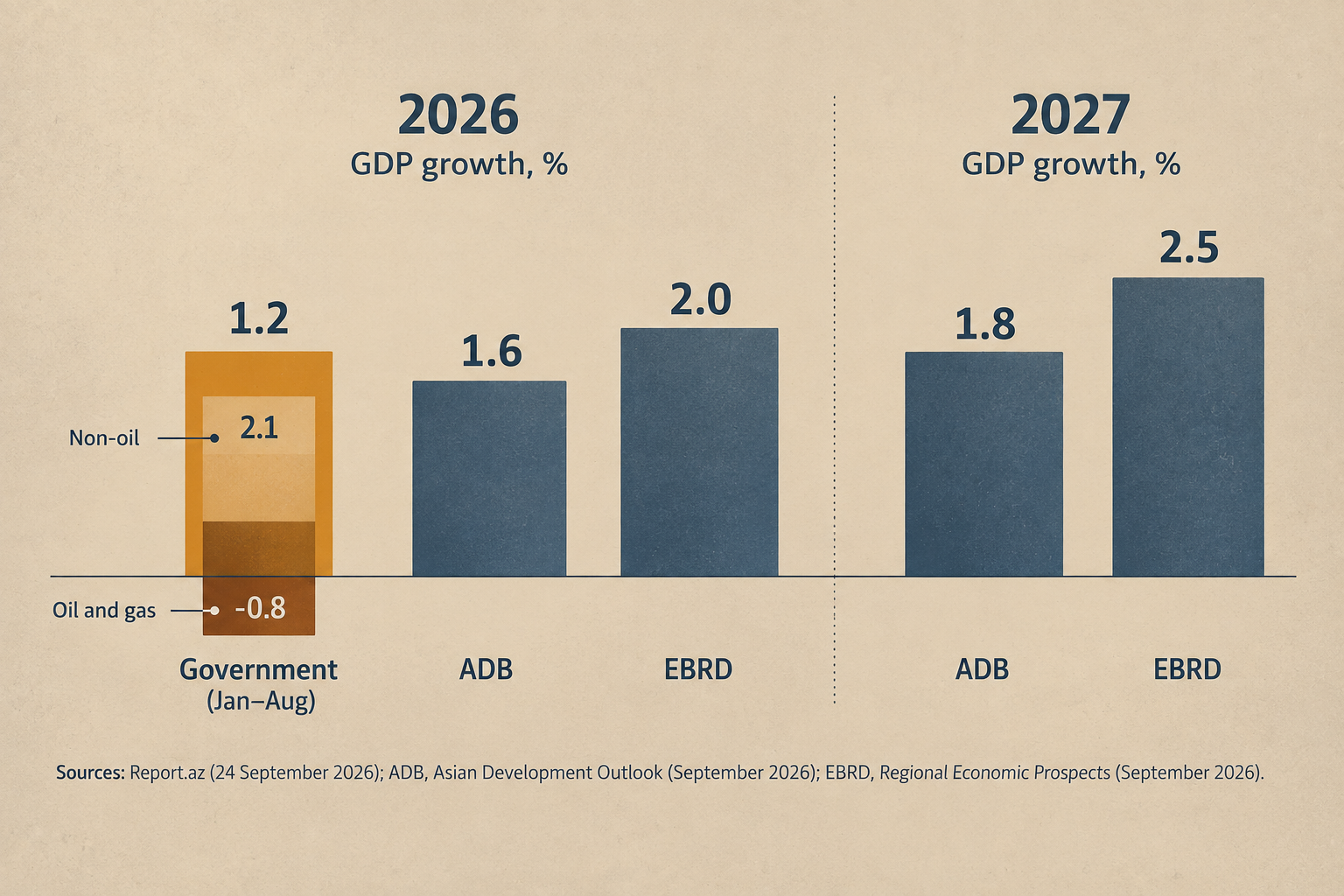
Azerbaijan drafts its 2027 to 2030 strategy on a 1.2% year, with $91 billion in reserve, 5.6% of GDP in debt and 8.8 billion manat for defence
The drafts of a new development strategy for 2027 to 2030 and of the second State Programme of the Great Return have been discussed at the Economic Council and presented to President Aliyev, Report.az wrote on Thursday at 15:44, quoting prime minister Ali Asadov, and the numbers around them describe the year the strategy is written in: growth of 1.2% in January to August, 2.1% outside oil and gas and a fall of 0.8% inside it, strategic currency reserves of about $91 billion, external state debt of $4.5 billion or 5.6% of projected GDP, a trade surplus above $10 billion in 8 months and inflation of 5.7%, with 5.3% forecast for 2027. Approval is expected in the coming months, Report.az wrote.
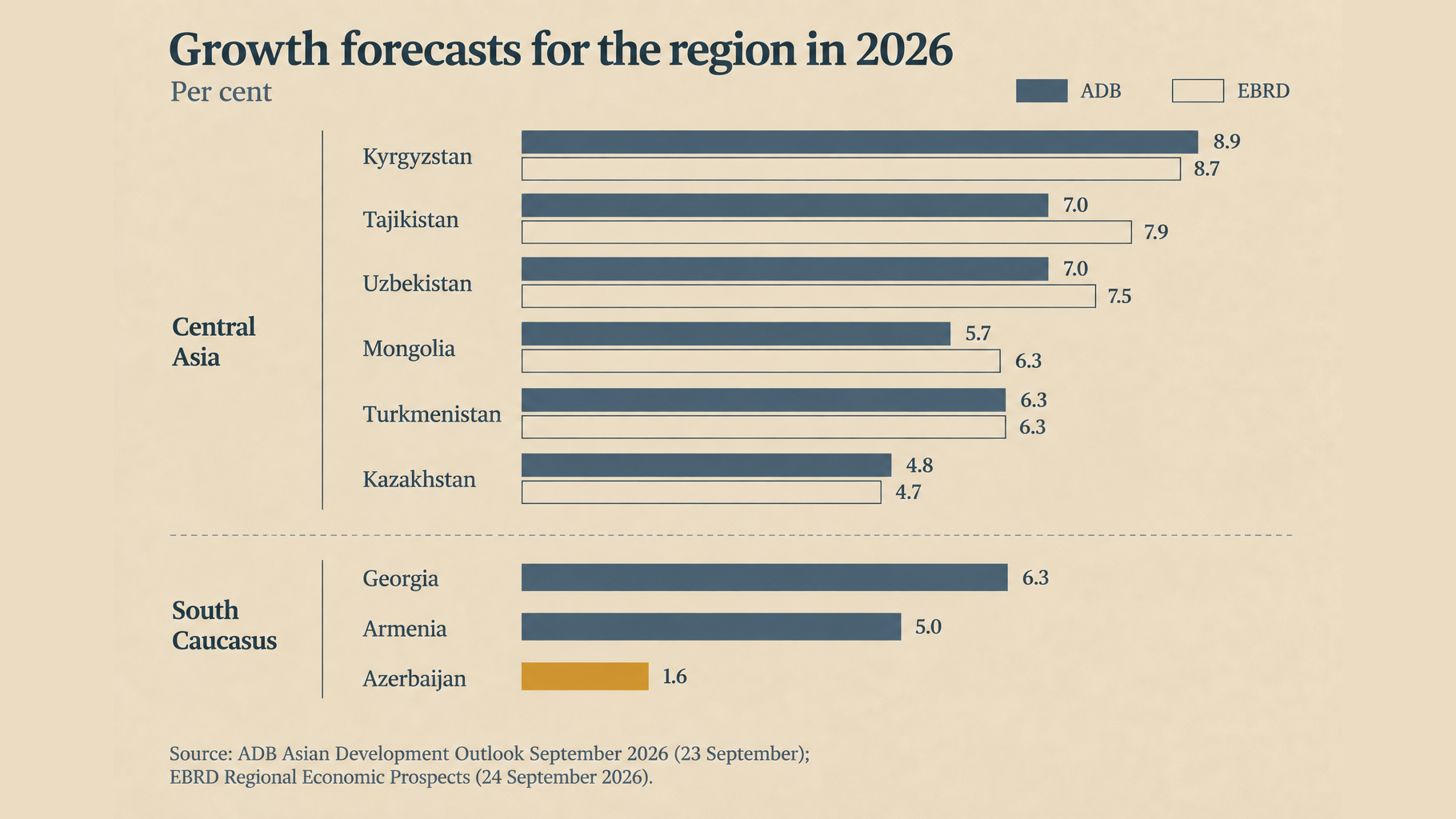
The ADB and the EBRD publish their autumn forecasts a day apart: Central Asia and Mongolia grow 5.8% on one count while the Caucasus slips on the other
The European Bank for Reconstruction and Development put Central Asia and Mongolia at 5.8% growth in 2026 and 5.3% in 2027 in its Regional Economic Prospects published on Thursday: Kyrgyzstan 8.7% this year, Tajikistan 7.9%, Uzbekistan 7.5%, Mongolia and Turkmenistan 6.3%, Kazakhstan 4.7%. The Asian Development Bank’s September Outlook, published on Wednesday, raised Uzbekistan to 7.0% from 6.7% after an 8.5% first half and Georgia to 6.3% from 5.5%, cut Tajikistan to 7.0% from 7.3% and Azerbaijan to 1.6% from 2.0%, and left Kazakhstan at 4.8%, Kyrgyzstan at 8.9%, Turkmenistan at 6.3%, Armenia at 5.0% and Mongolia at 5.7%. Its subregion, the Caucasus and Central and West Asia, slips to 3.7% for 2026 and 4.1% for 2027, a tenth of a point down on July on both years.