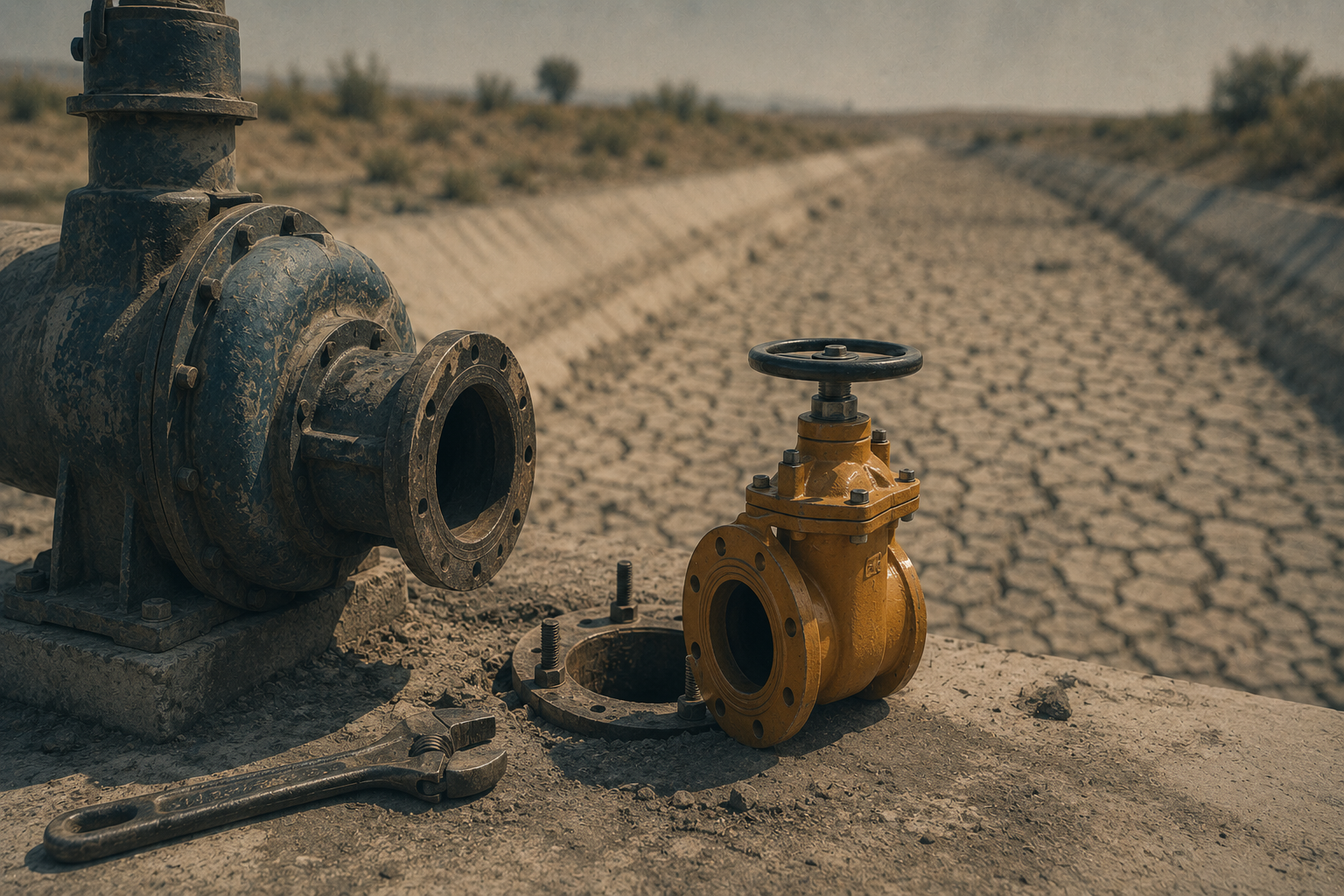
The agency laid out the plan on 9 July, reporting first-half results across five state programmes. The biggest single line, 194 million somoni, about $18.7 million, is for replacing and repairing pumping-station equipment with more energy-efficient units. Coastal and flood protection takes 82.1 million somoni; the 2024 to 2028 reclamation programme, 64.3 million; and improving the condition of 18,076 hectares of farmland, 22.2 million. Alongside the state programmes, five investment projects worth $179.7 million are running, with $16.9 million spent in the first half.
The mix is the story. The largest allocation goes to keeping aging pumps alive, not to building new capacity. That is the signature of a maintenance deficit, the quiet variable the state-capacity track watches for, because deferred upkeep on old infrastructure is exactly what stays out of the headlines until it fails. The agency reports over-fulfilling its plans, coastal works past 100% and investment spending at 103% of the half-year target, which is a real delivery signal. The direction of the spending still leans toward preservation.
The water math is the second tension. In the same week, Tajikistan announced it is bringing more than 2,800 hectares of new land into irrigation, while its own water-use debts reached 402.9 million somoni, close to this entire year’s reclamation budget. Expanding irrigated area while the collection side runs a hole that large, on rivers feeding a basin already under strain, is a bet that deserves scrutiny.
The biggest single line in this year’s water budget goes to keeping aging pumps alive.
That strain is documented. The Amu Darya faces upstream competition from Afghanistan’s Qosh Tepa canal, due at full capacity in 2028, and Uzbekistan’s first full census since the Soviet era found irrigated cropland running 23% above what water planning had assumed. More irrigated hectares upstream and down is more demand on a system whose supply forecasts are already contested.
Who pays sits underneath all of it. The pumping-station and investment spend draws on international financial institutions and organisations alongside the state budget, in the agency’s own account. So the resilience of Tajikistan’s water system is partly an external-financing story, tied to the fiscal question Central Asia Wire raised over Rogun on 6 July: whether the state can pay for everything it has committed to.