The signature landed on 10 July. The agreement itself was signed on 15 November 2025 in Tashkent, during Tokayev’s state visit; Uzbekistan approved it on 6 March 2026 by presidential resolution PP-88, and Kazakhstan’s Majilis and Senate passed the ratification law in June. Both ratifications are now complete, and the treaty’s core institution can be built: an intergovernmental Kazakh-Uzbek commission for the joint management and rational use of transboundary water objects and the interstate water infrastructure that serves them.
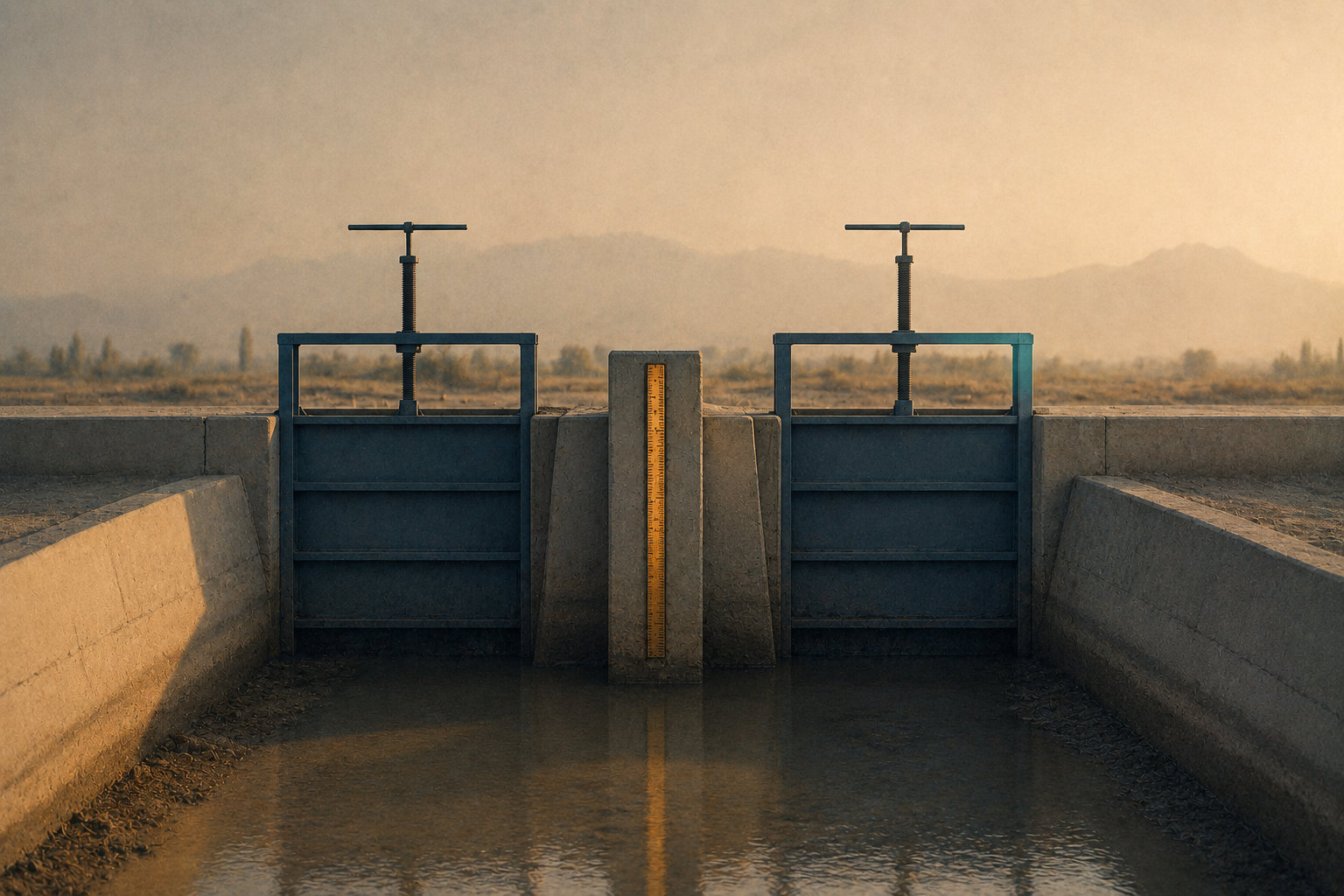
The working matter is the Syr Darya. Its lower course irrigates the fields of Turkestan and Kyzylorda regions, supplies drinking water, carries hydropower releases from upstream and holds the ecological remnant of the Aral system. The commission gets a measuring layer to stand on: the two states earlier agreed to install 10 automated hydrological posts on transboundary sections of the river, 5 in each country, replacing contested manual readings with shared instruments.
The reason this is more than protocol is what it replaces. Water allocation in the basin has run on Soviet-era quotas and yearly bargaining, renegotiated each season between energy-hungry upstream releases and irrigation-hungry downstream demand. A standing bilateral commission with its own published data is a different kind of instrument. The skeptical register still applies: a commission is a signed page until its first dispute, and the conversion to watch is boring and specific, gauge data made public and a first jointly scheduled release survived.
A commission is a signed page until its first dispute.
The demand side is moving against the new machinery. Uzbekistan’s census found irrigated cropland running 23% above what water planning had assumed; Tajikistan is opening more than 2,800 hectares of new irrigation this year while its reclamation budget goes mostly to keeping old pumps alive. More users are arriving faster than more water.
And the treaty’s limit is drawn on the map. It binds the two lower riparians of one river. The Amu Darya, where Afghanistan’s Qosh Tepa canal is due at full capacity in 2028, has no equivalent instrument, and its newest upstream actor sits in no commission at all. The machinery now exists on one river; the problem is growing fastest on the other. Watch the commission’s composition, its first session date, and the hydro-post rollout: those three facts will say whether 10 July was a water event or a ceremony.