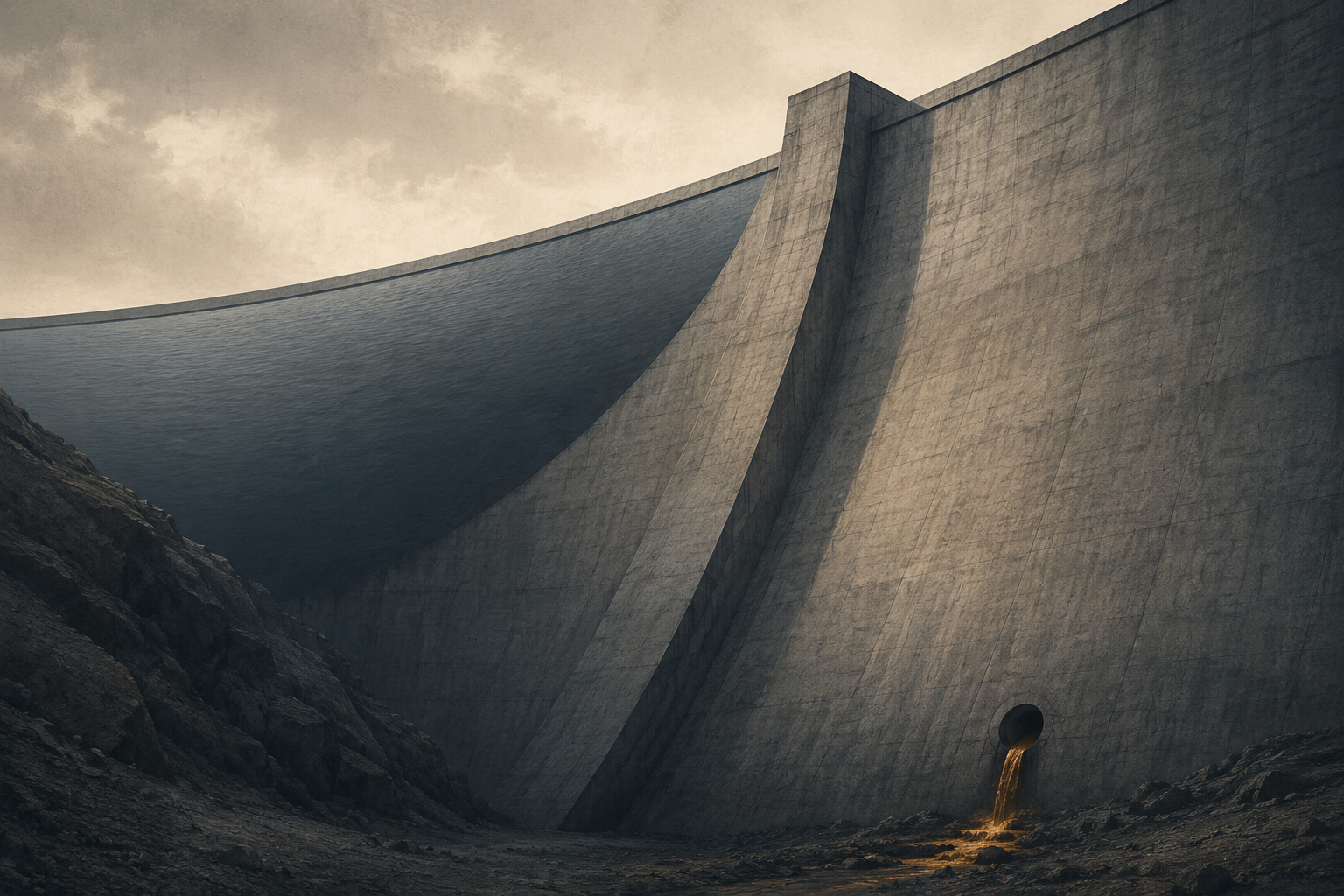
The second grant follows a $350 million first phase, bringing the World Bank's Rogun commitment to $650 million. It funds civil works, generating equipment, resettlement, and monitoring for downstream flood risk. Charles Cormier of the Bank called it a major milestone. A separate $100 million grant on 1 July backs reforms in digital, aviation and energy, and greater transparency at state enterprises.
Rogun is the region's textbook case of money found while the finish line moves. Construction began in 1976. Two of six planned 600 MW units run today. Full capacity is now dated to the mid-2030s, with the third unit promised for September 2027. Financing has been assembled for decades, and the completion date has slipped for just as long.
Rogun is the region's textbook case of money found while the finish line moves.
The plant is enormous next to the economy carrying it. Tajikistan leans on remittances for close to half its national income, is due to lose its least-developed-country status in 2026, which can raise its borrowing costs, and holds a sovereign rating that S&P keeps at B while warning that Rogun may never generate sufficient returns. The grants ease the near-term gap and deepen the long-term bet.
Downstream, the arithmetic looks different. Rivers Without Boundaries, acting for communities in Uzbekistan and Turkmenistan, warns that filling the reservoir could cut Amu Darya flows by more than a quarter, on a river already squeezed by Afghanistan's Qosh Tepa canal. The Bank's own Inspection Panel has registered a complaint. Rogun will generate about 14,400 gigawatt-hours a year, close to 60% of Tajikistan's current output, and is meant to export power to Kazakhstan and Uzbekistan, the same neighbours who depend on that water.
This lands as Kyrgyzstan, the other upstream state, presses to charge downstream users for water and treats it as a commodity under a code in force since January. Upstream storage is turning into a regional bargaining chip.
The grants buy time. They do not settle whether Tajikistan can finish and pay, or whether its neighbours will accept the water cost. Watch the September 2027 unit, the effect of the LDC graduation on borrowing, and whether reservoir filling becomes a diplomatic fight as the Amu Darya tightens.