The heat ledger closes at records across the board. Kyrgyzgidromet’s Bishkek series peaked at 43.5 on 19 July; Uzbekistan’s energy ministry counted five consecutive days of consumption and generation records through the weekend; Friday’s cascading blackout in Kyrgyzstan sits in the same ledger, a grid that saved itself by shedding its customers at peak.
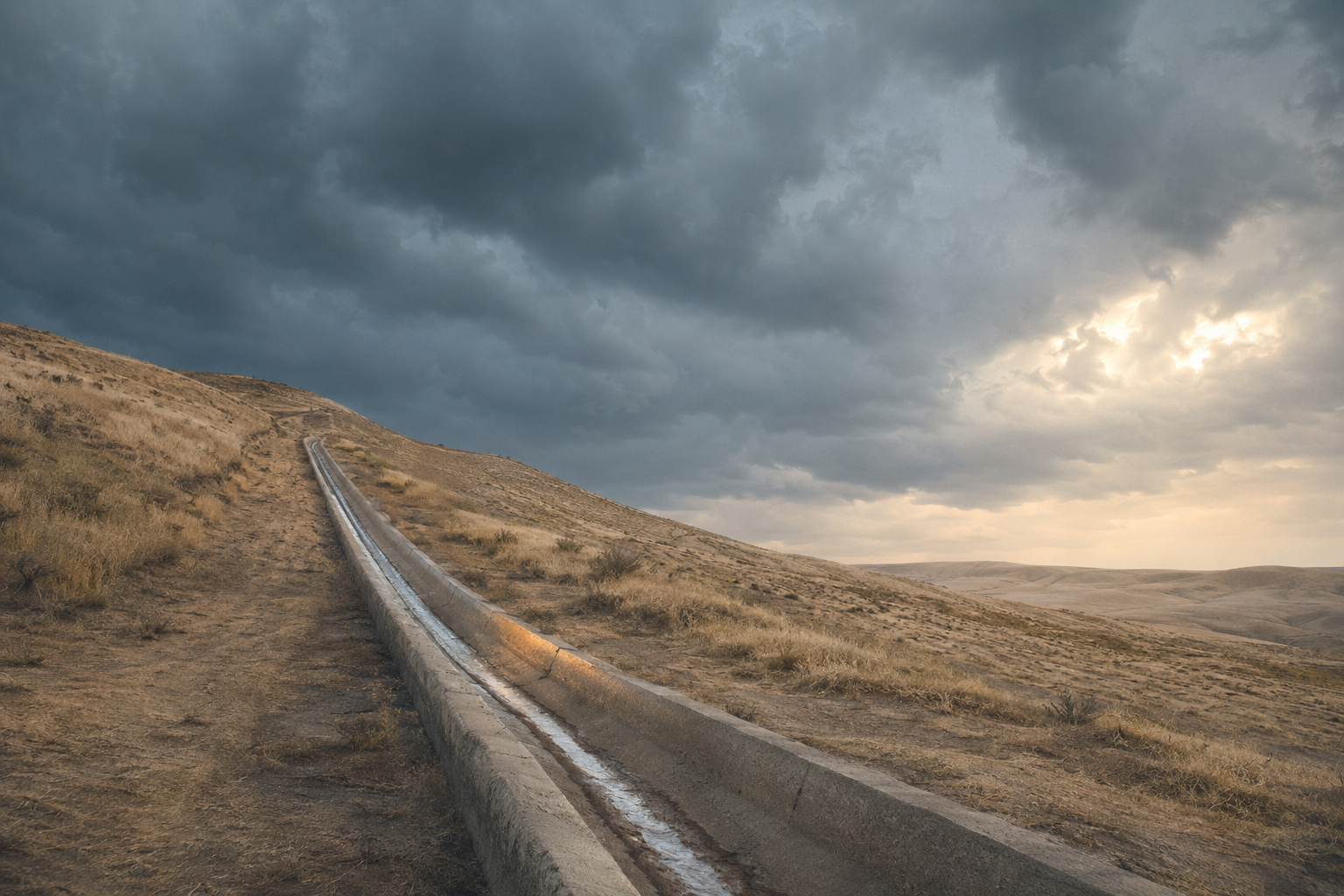
The relief carries its own warning label. Kyrgyzgidromet expects mudflows in mountain and foothill districts from 21 to 25 July as rain returns; Uzgidromet flags mudflow and flood risk from 21 to 24 July in four regions, the mountain districts of Tashkent region and the Fergana Valley among them. The ground is pre-loaded: Nooken district spent part of this month under a mudflow emergency, and by early July Kyrgyzstan had packed a full year’s mudflow volume into six months.
The grid’s test ends where the drainage’s test begins.
The finance layer for exactly this exists on paper. Since last October the region holds an approved adaptation envelope: $250 million from the Green Climate Fund for the ADB-led Glaciers to Farms program, mostly as grants, alongside a planned $3.25 billion of ADB investment over a decade. Its four target basins include the Naryn, which sits inside this week’s warning zone. Approved finance and standing drainage are different assets, and the region’s own budgets show the gap: Tajikistan’s entire reclamation budget for 2026 is about $48 million, with its single biggest line spent replacing pumps.
What next week will show: whether the warnings convert into washouts and closures on the mountain roads; whether any Glaciers to Farms money surfaces as a first named project rather than a program document; and where the bill lands in the water-debt ledgers CAW already tracks.