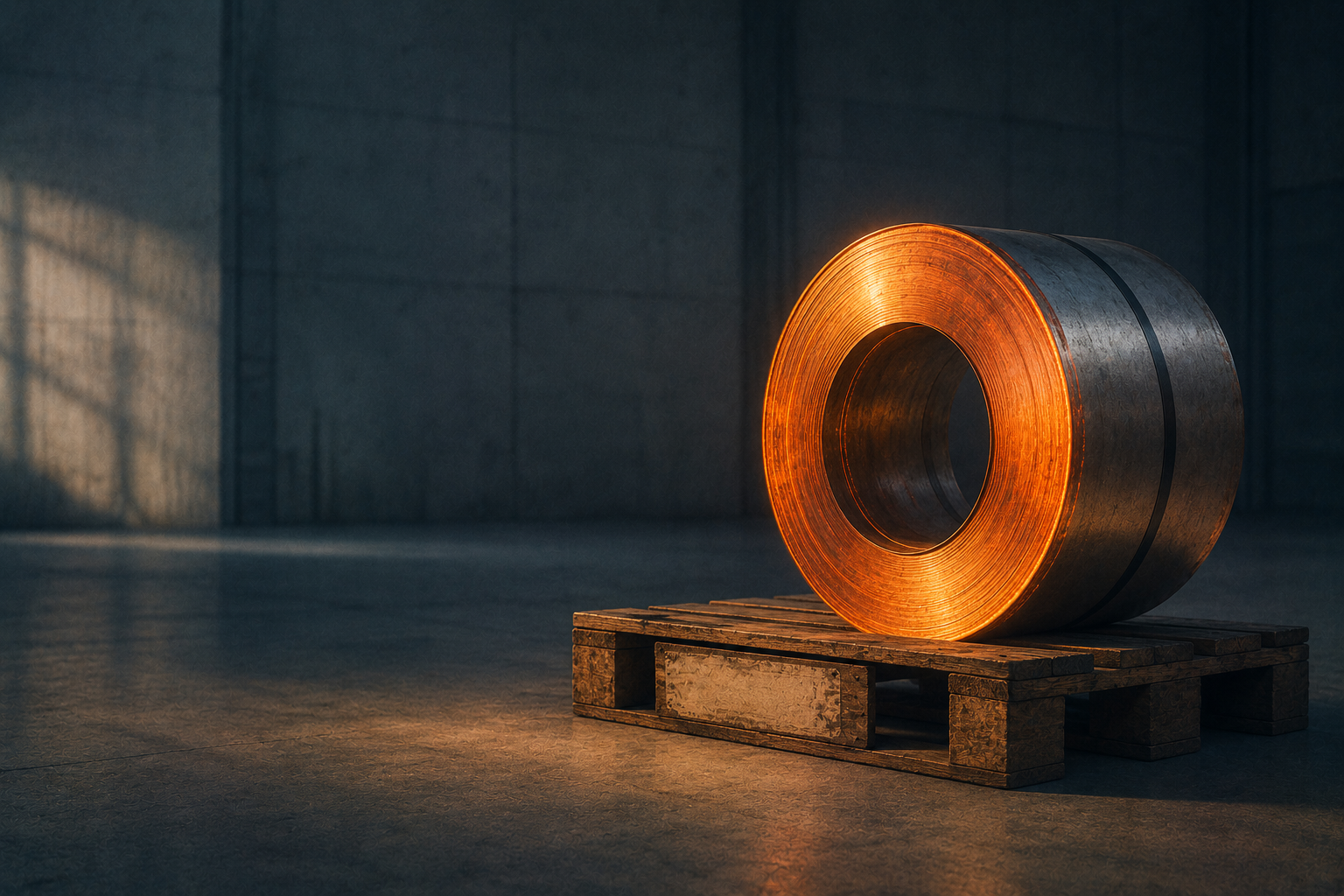
The plant is a real capability, not a ribbon. Built since August 2018 by Renaissance Heavy Industries on Danieli technology from Italy, the 18-hectare complex casts and rolls in one integrated line: 1.04 million tonnes of hot-rolled coil a year at capacity, sheet from 2 to 12 millimeters, roll changes in 5 to 7 minutes instead of 40, three operators where nine stood. It lifts the combine’s total capacity toward 2 million tonnes and its staff toward 7,000, and the press service values a year’s output at 8 trillion soums, around $630 million.
The demand is named and domestic. Uzbekistan’s appetite for sheet, sections, pipe and structures has tripled in a decade to 5.5 million tonnes a year, and the state’s own megaprojects, the nuclear plant, the fourth copper concentrator, the new copper smelter, will alone consume some 2.5 million tonnes of sheet and rebar. Until Monday the sheet in that bill was all imported; the localization potential the government attaches to the new line runs to $1.5 billion across carmaking, machinery and construction.
The soft spot sits underneath, and the president named it himself: 60% of the combine’s feedstock is imported, scrap covers 40%, and roughly 500,000 tonnes of scrap a year, over 40% of the market, moves in the shadows, which is why an E-lom tracking platform is due on 1 August. The ore answer leans on new deposits, Tebinbulak to carry steel toward a million tonnes in three to four years, Surun-ota to yield an agreed 650,000 tonnes a year of ore feedstock mined with Chinese partners, concentrate flowing from 2027, Temirkon requested for development, and an AI-assisted review of promising territories, with an exploration program ordered within the month. The mill is Italian, the builder Turkish, the ore plan partly Chinese: the value chain is climbing, and the rungs are still imported.
The value chain is climbing, and the rungs are still imported.
The regional frame is the one CAW set on 10 July. Tajikistan is pouring its Shohkadam plant to stop importing $600 million of rebar; Uzbekistan has now switched on sheet production to stop importing what its nuclear and copper projects will eat. Two neighbors are climbing the same steel ladder in the same week, both against import bills, each with Chinese partners or contractors somewhere in the chain, and the region’s metallurgy is quietly becoming a race between state industrial programs rather than a market.
And the fresh layer is the constraint. On the day the outdoor-work advisories tightened, Gazeta.uz reported a new national record for electricity consumption; steel is among the hungriest industries there are, and Uzbekistan is adding smelting and rolling capacity onto a grid that sets records in every heat wave, with a gas import bill already up 84% this year. Watch three conversions: the first coil shipped to a named domestic project, the E-lom platform’s effect on shadow scrap after 1 August, and whether Surun-ota concentrate actually lands in 2027 on the terms the meeting promised.