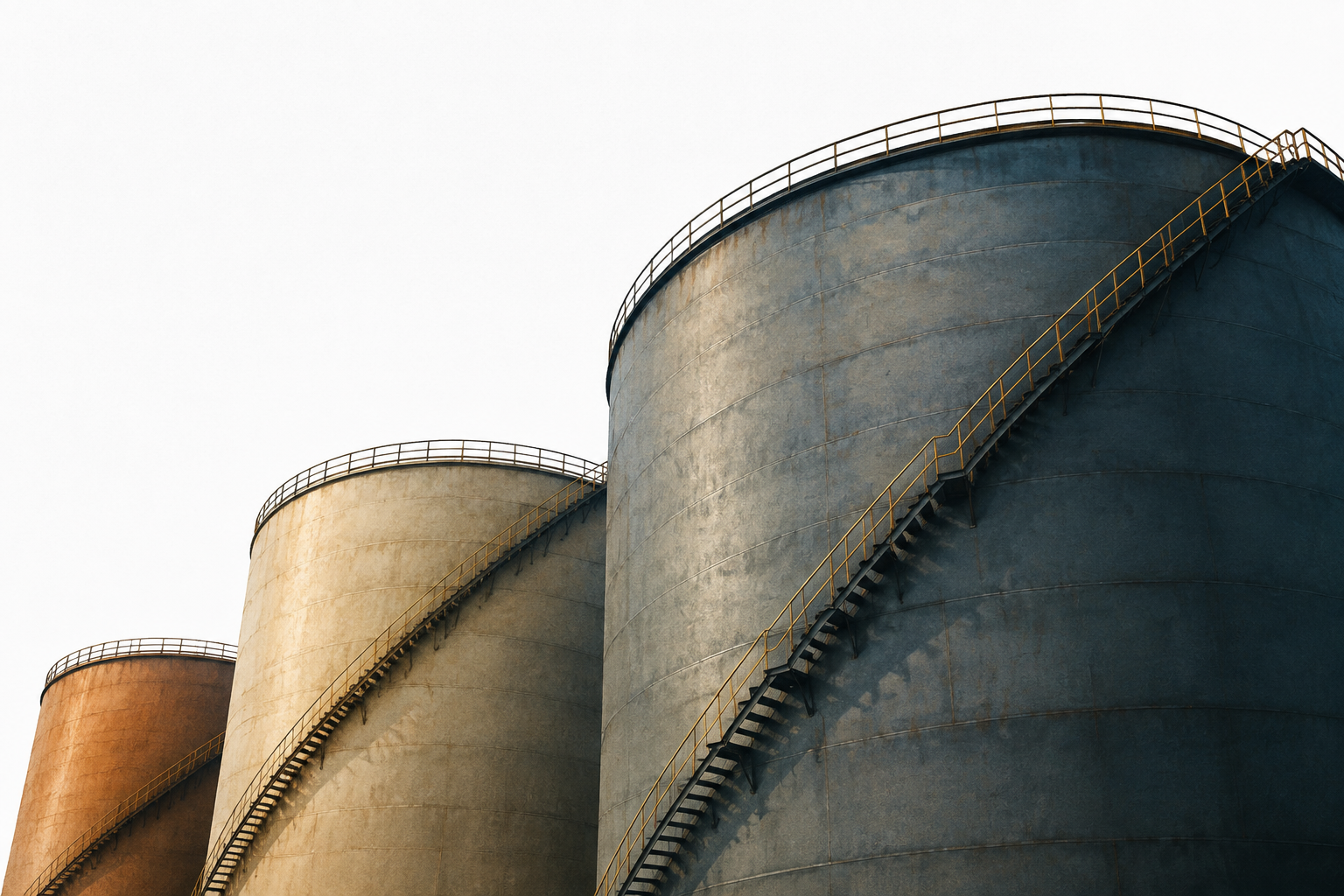
The halt came quietly. Early on Friday a tanker due to load at Sheskharis turned back to open sea after a drone warning, and by the end of the day, Reuters reported from three industry sources, the terminal had stopped accepting crude because its tank farm was full. Russia’s largest Black Sea oil terminal, which handles about 700,000 barrels a day in a normal month, had no room left to store oil and no ship willing to take it.
Kazakhstan loads at that pier. KEBCO, the rebranded Kazakh grade shipped through Novorossiysk outside the CPC system, moved 360,000 tonnes through the terminal in July, up 3% on the year, according to KazTransOil figures reported on Friday. The same figures measure the alternatives: 286,000 tonnes through Ust-Luga on the Baltic, down 16.9%; 155,000 tonnes to the BTC line at Baku; 98,000 tonnes to China through the Atasu to Alashankou pipeline. Every route away from the Black Sea is counted in hundreds of thousands of tonnes. The CPC system alone carried 64.8 million of Kazakhstan’s 78.7 million tonnes of crude exports last year.
The damage behind the stop is specific. The 12 August strike, the one that halted Novorossiysk’s trains and grain while oil kept loading, also hit the tunnel portal at the Grushovaya depot that feeds Sheskharis, by the Ukrainian security service’s own account. Loading survived that strike by two days, then ran out of storage. The war does not need to touch the CPC pier to close the port around it.
What has not been hit is the CPC terminal at Yuzhnaya Ozereyevka, which remains absent from Ukraine’s published target lists. The consortium has been silent in its own name since 30 July, 18 days; its July loading total is still unpublished, and Astana has still put no official number on the losses. The record freight rate of $440,948 a day, set on 12 August for the Novorossiysk to Augusta run, stood through the weekend with no newer print found in the Baltic Exchange series.
The war does not need to touch the CPC pier to close the port around it.
The tanker Aegean Dream, the decision point CAW has carried for a week, remains a transponder story. One port-call database logged her arriving off Novorossiysk late on Sunday evening; another still shows her under way in ballast toward the CPC berth, against an arrival estimate that lapsed a week ago. Her AIS coverage has been intermittent since 10 August. No loaded departure is recorded anywhere, and that is the only fact that would count.
Diplomacy offered no relief. Kyiv, by Reuters’ account on Thursday, proposed a mutual stop to Black Sea attacks through an intermediary; Moscow rejected the idea a day later as a half-measure, a story CAW carries separately. The undertaking Ukraine is reported to have given Washington covers the pipe and the terminal. It says nothing about the tank farm, the tunnel, the rail junction or the freight market, and those are where Kazakhstan’s August is being priced.