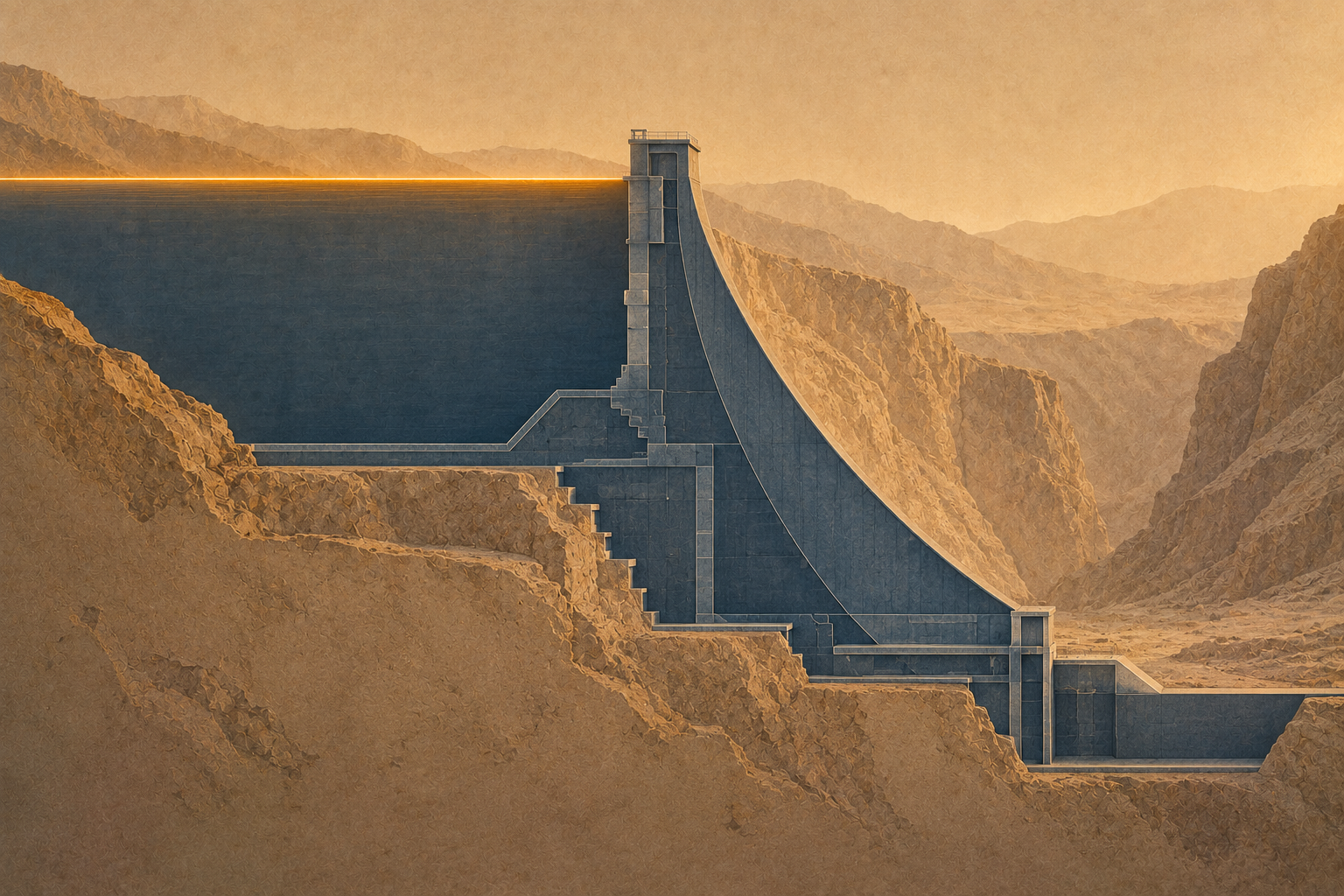
The preliminary feasibility study gives the plant 6 units and an average annual output of 2.684 billion kWh, a dam 76 metres high and 234 metres wide, a machine hall 225 metres long, 45 wide and 60 high, and a useful water volume of 4 million cubic metres. Construction is estimated at 72 months. The project, also called Shurob, is part of the planned cascade on the Vakhsh.
The ministry’s release names no builder, no financier and no decision beyond the minister’s visit to the sites of the dam, the machine hall and the other main structures. Its cost figure, $2.247 billion, is about 3.5 times the $650 million the World Bank has committed to Rogun in two grants, the second of them ratified by the lower house on 1 October, by CAW’s arithmetic.
The project, also called Shurob, is part of the planned cascade on the Vakhsh.
Rogun, the 3,780 MW plant upstream, is priced at about $5.8 billion by S&P and about $6.3 billion by the World Bank, which puts Hutalon at roughly a third of it on the ministry’s figure. Nurek, downstream, is the plant Hutalon’s water would reach next.
Two of the plant’s figures come in two versions on the same page, an output of more than 2.5 billion kWh in the study’s summary and 2.684 billion in the ministry’s detail, and the release gives no year for its cost.