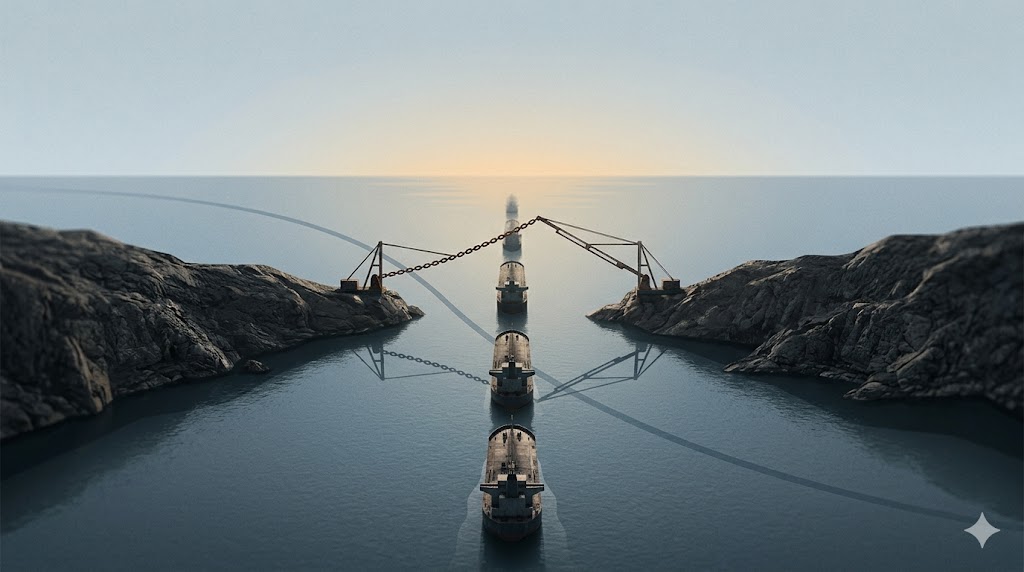
Over the weekend the United States and Iran reached an agreement to end the 2026 war and reopen the Strait of Hormuz, shut since early March. Trump declared the deal complete on the night of 14 June, saying oil would flow once it is signed, which he put at the end of this week. Pakistan, the mediator, said the final text had been agreed; the memorandum is to be signed on 19 June and is meant to wind the conflict down over 60 days. Reported terms include reopening the strait, lifting the US naval blockade, and dismantling Iran’s nuclear program, though both governments disputed leaked versions of the text.
Markets moved at once. Brent crude fell about 4 percent in early Monday trading to below $84 a barrel, with US crude beneath $81, down roughly 12 percent from the middle of last week and far below the $126 the conflict reached at its peak. Asian stock markets jumped, Japan’s Nikkei rising more than 5 percent.
The war briefly turned Central Asia’s disadvantage into an asset. The peace takes it back.
For Central Asia the effects run through prices and routes. The closed Gulf had briefly raised the region’s standing. Kazakhstan and Turkmenistan, whose oil and gas leave by routes that avoid the Strait of Hormuz, gained importance as alternative suppliers, and the price spike swelled Kazakhstan’s budget and its sovereign fund. The deal reverses both. Prices are sliding back toward pre-war levels, and the International North-South Transport Corridor through Iran, the region’s blocked path to Gulf ports, can begin to reopen.
A formal signing is still days away, and earlier truces in this war broke within weeks. But the direction is set, and for the region the most concrete change is already visible on the screens in Astana, where the barrel is worth far less this morning than it was on Friday.