Georgian Prime Minister Irakli Kobakhidze visited Kyrgyzstan from 11 to 13 June, the first top-level Georgian visit in the 34 years since the two countries established relations, and met President Sadyr Japarov in Bishkek on 12 June. The two signed a joint statement and nine documents covering customs, aviation and economic cooperation, and discussed launching direct flights.
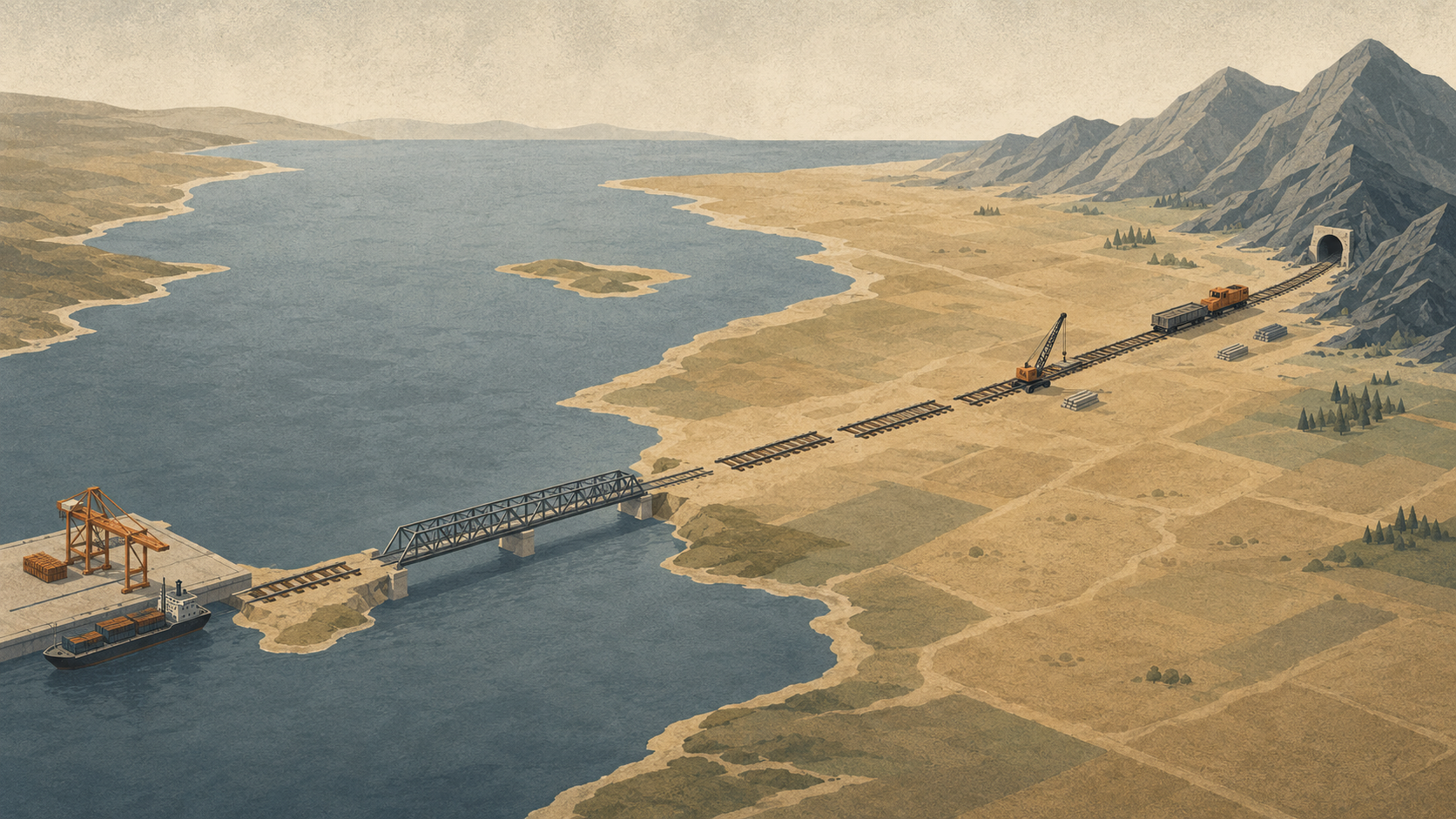
Transport was the heart of it. Japarov said the talks centered on linking the China-Kyrgyzstan-Uzbekistan railway, known as CKU, to Georgia’s Black Sea port infrastructure, casting Georgia as the western exit of a route that runs from China through Central Asia, across the Caspian and the South Caucasus, to Europe. That route is the Middle Corridor, the trade path that avoids Russia.
The CKU line has moved from a decades-old plan to active construction. A financing agreement set the cost at $4.7 billion, with China holding 51 percent of the project company and Kyrgyzstan and Uzbekistan 24.5 percent each, and about half the cost covered by a 35-year Chinese loan. The line runs from Kashgar in China through Kyrgyzstan to Andijan in Uzbekistan, with a 2030 target. For landlocked Kyrgyzstan, which has no through rail link between China and Uzbekistan, it would turn the country from a place freight bypasses into part of the route.
As the Gulf reopens and the corridor’s wartime premium fades, Bishkek and Tbilisi keep wiring it together for the long run.
Georgia’s interest is the cargo. In the first four months of 2026 Kyrgyzstan was Georgia’s top export destination at $272.8 million, much of it vehicle re-exports, and Tbilisi wants more Central Asian freight moving through its ports. The timing is pointed. As the Iran war ends and the Gulf reopens, easing the wartime premium that made the Middle Corridor look indispensable, Bishkek and Tbilisi are still wiring the corridor together for the long run. Its case rests on a steady regional wish to reach Europe without crossing Russia, with or without a war to dramatize it. The harder questions, Caspian shipping capacity, port handling, border procedures and price, the visit left for later.