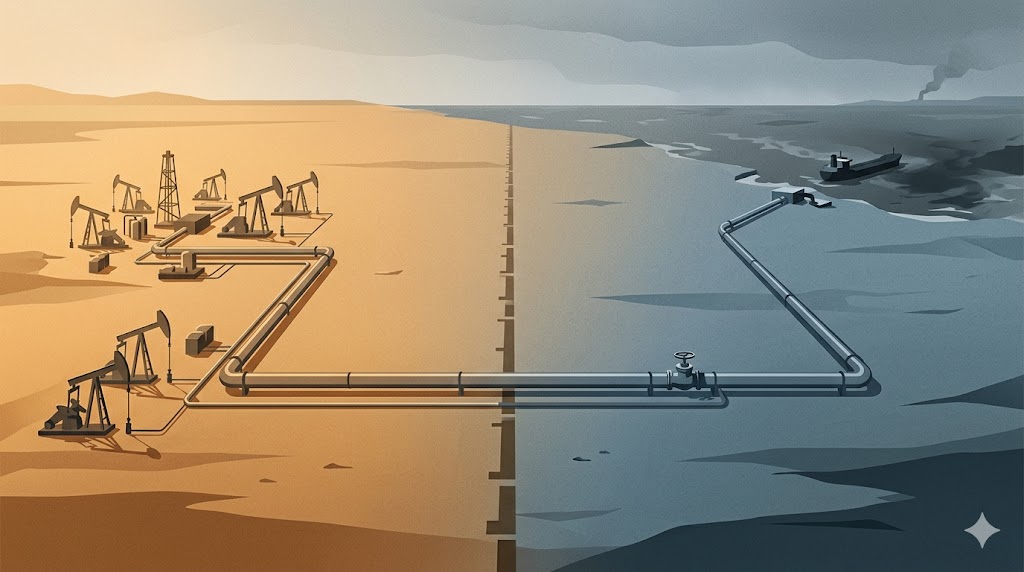
The 98-million-tonne target the energy minister gave on 10 June is the headline. The route behind it is the story. More than 80 percent of Kazakhstan’s oil exports leave through the Caspian Pipeline Consortium line, which runs across Russian territory to Novorossiisk on the Black Sea. The roughly 5 million tonnes lost this year trace partly to attacks on that infrastructure, the war between Russia and Ukraine reaching onto Kazakhstan’s main commercial artery.
On paper there are other ways out. Kazakhstan sells small volumes through the Baku-Tbilisi-Ceyhan pipeline across the Caucasus, ships east through the China-Kazakhstan line, and uses the northern Atyrau-Samara route. None comes close to the CPC’s capacity, and redirecting at scale is slow and more expensive. Analysts have warned that sustained disruption could squeeze the revenue and cash flow of the state company, KazMunayGas.
Kazakhstan can set the output target. It does not control the pipe that carries the oil out.
That is the quiet logic behind every route Astana courts, from BTC across the Caucasus to the Middle Corridor to the Caspian links it discusses with partners almost weekly. The country can raise its production target, but the chokepoint is not in its hands. What matters is how many of those tonnes can reach a buyer, and through whose territory. For now the answer still runs through Russia, and through a Black Sea that has become a war zone.