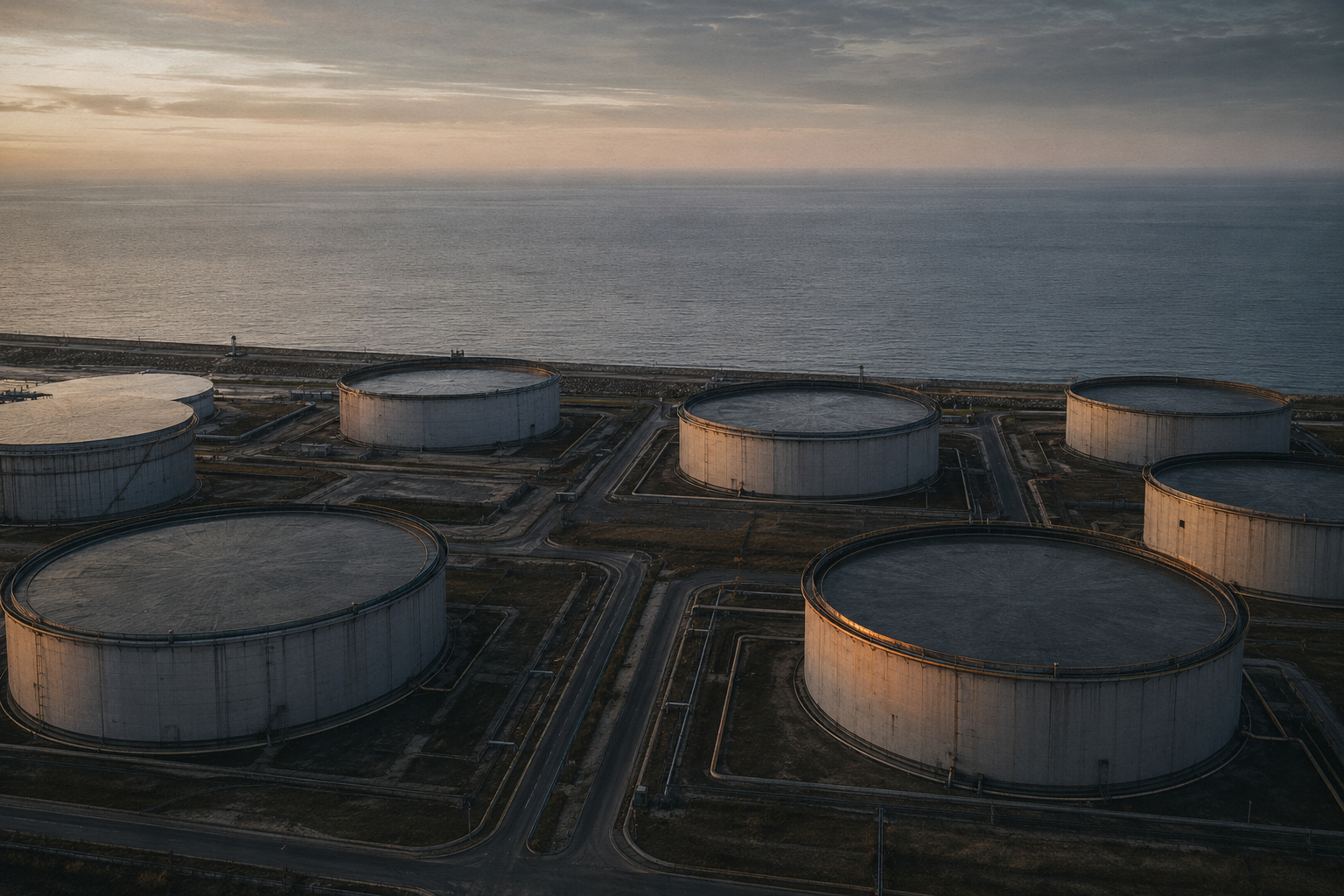
The consortium is not commenting. Chevron, which holds 15% of it and operates Tengiz, said it is watching the situation closely and that the safety of its people comes first. The Financial Times reported that Kazakhstan is halting deliveries into the pipeline; Bloomberg had the stop planned for Tuesday without confirmation. The physical result is the same in each account: the system carrying about 80% of the country’s oil exports has no outlet.
The precedent has numbers on it. On 29 November 2025 unmanned boats disabled mooring point 2 at this terminal. Reuters reported in December that output fell roughly 6% that month as Tengiz volumes were cut, and the energy ministry has since described its response: it pushed what it could through the Atyrau to Samara line and raised shipments to China.
The alternative routes are real, and they are measured against a system built for 82 million tons a year.
That is also the ministry’s own position. In May the energy minister, Yerlan Akkenzhenov, told reporters that the consortium can move 82 million tons of oil a year and that no alternative to the pipeline exists today. He has separately called an alternative route to Southeast Asia technically available but economically doubtful, because of what the haulage costs.
The year was impaired before this week began. January’s outage at Tengiz and the constraints on the pipeline had already cut the 2026 production forecast from 100.5 million tons to between 96 and 98 million. First-quarter exports came to 15.3 million tons, 78.5% of the same period last year, on production of 19.7 million tons, nearly 20% below plan. June flows through the system ran at 1.699 million barrels a day, down 7% on May. July was trimmed to about 1.6 million after Karachaganak dropped to 25,000 tons a day from a normal 34,000, following the 24 June drone strike on the Orenburg gas plant that processes its output.
So the stoppage lands on a route already carrying less than it was built to carry, in a country with little room to store what it pumps. Tengiz is the field to watch first, because it is the largest and because its operator is already speaking publicly.
Four things convert this from a stoppage into the year’s energy story: confirmation from the consortium itself; the first named production cut at a field; the volume Astana can actually push through the December playbook of Atyrau to Samara and China; and the war-risk premium that will decide when charterers come back. The reserved damages claim is the fifth, and the slowest.