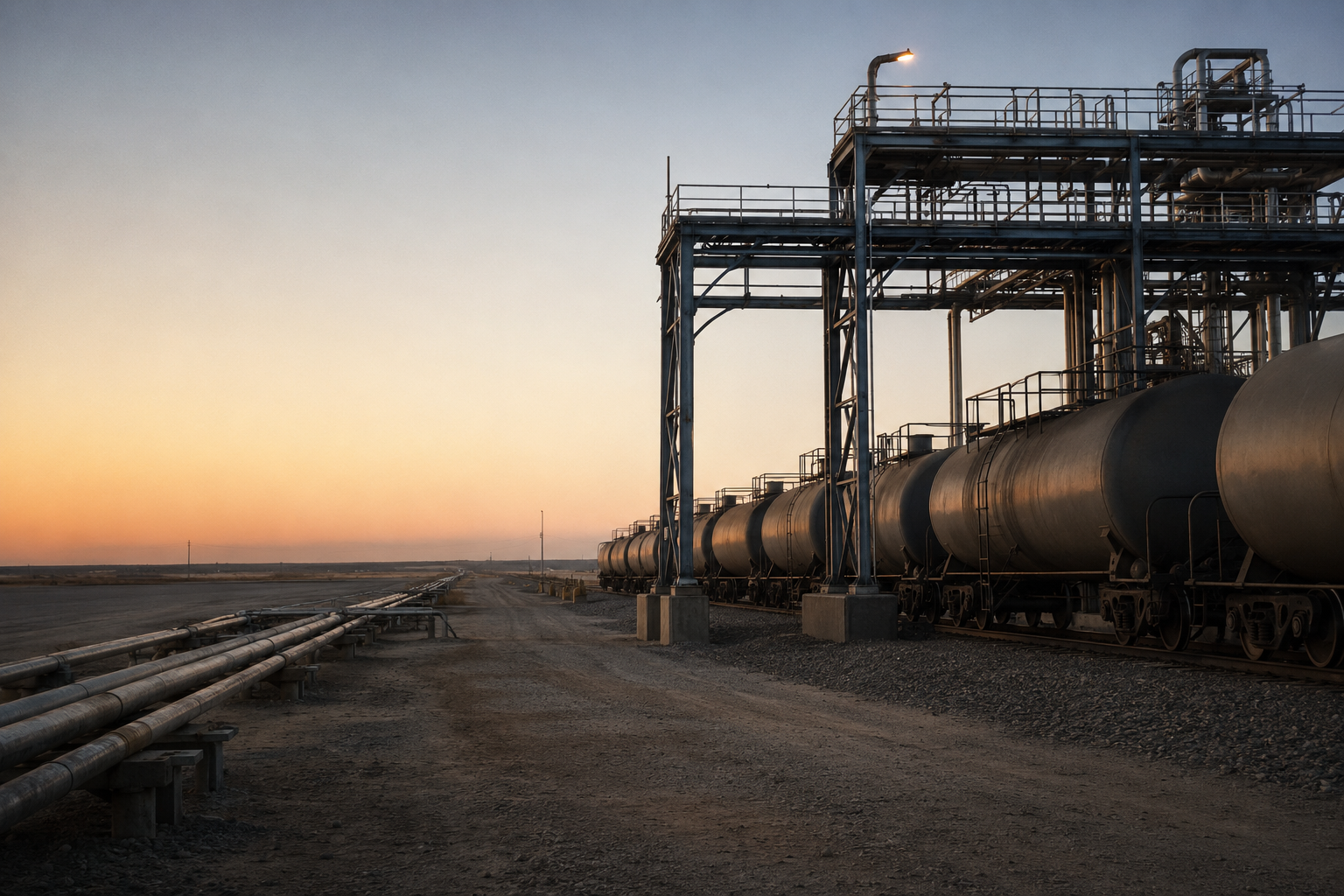
The ministry’s explanation is worth reading closely, because it is the first official account of the mechanism. Restrictions on intake into the pipeline system forced producers to adjust daily output; that adjustment prevented the tanks from overfilling; the reduction is temporary and technological, and necessary to keep production facilities running stably. Every technical object of the consortium, it adds, is undamaged and ready to resume the moment conditions allow.
That is a careful piece of drafting. It converts a political emergency into an operational routine, and it avoids the word that would otherwise appear: shut-in. It is also true. Fields with nowhere to send their oil do reduce output to protect their own equipment, and Tengiz went from 925,000 barrels a day to 406,000 on 22 July doing exactly that.
The terminal has been shut for five days, and the state has not yet published a loss figure.
The redirection is the number to watch, and nobody has published it. The routes exist: Atyrau to Samara and the eastward pipeline to China, with the Caspian shuttle to Baku behind them. Their limits also exist, and they are unforgiving. The eastward line is largely occupied by Russian transit, its reverse section from Kenkiyak to Atyrau is limited to about 6 million tons a year, and the Caspian route moves a fraction of what the closed terminal handles. Against a system built for 82 million tons a year and running at more than 80% of national exports, the alternatives are a tourniquet rather than a substitute.
The consortium’s move to litigation is the week’s other new instrument. It is a company suing over damage to its own property, which is a narrower and more collectible claim than the sovereign damages Astana reserved on 19 July, and it does not require Kazakhstan to name a respondent its own diplomacy has been careful not to name. Two claims are now forming over the same events, with different plaintiffs and different burdens.
One correction to the timeline behind all this. The attacks did not begin on 17 July. On 8 July drones struck the Yasa Polaris, an empty tanker chartered by Chevron, as it approached the terminal; it withdrew to a safe port without loading. What changed on 19 July was the target: from empty ships on approach to loaded ships at the moorings. The insurance market reads that distinction faster than any ministry does.
What converts next: the first published redirection volume, the July loading total, whether the state issues a loss estimate of its own, and whether the consortium’s filing produces a number that Astana’s reserved claim has so far avoided.