Caucasus
Coverage across the South Caucasus — Georgia, Armenia, and Azerbaijan.

Pashinyan calls the union paralyzed
Armenia’s prime minister said on Thursday the Eurasian Economic Union is “de facto paralyzed”, his hardest wording since Russia began closing its market to Armenian goods in May. The union’s core promise, free movement of goods, is now disputed in public by one of its five members.

Bishkek signs its second alliance in two days
Kyrgyzstan and Azerbaijan signed a Treaty on Allied Relations at Cholpon-Ata on Friday morning, a day after Bishkek concluded a treaty of the same rank with Tashkent. Two alliances in two days make the lakeshore summit a working one.

The western workaround acquires statistics at Batumi
Batumi port moved more than 4 million tonnes in the first half of 2026, up 8%, its press service said on 30 July. The port and its oil terminal are run by KazTransOil’s Georgian subsidiary, which makes the figure a Kazakh number as much as a Georgian one.

The ADB puts $250 million into the road around Tbilisi
The Asian Development Bank approved a $250 million loan on 30 July for an 18.9-kilometre four-lane bypass of the Georgian capital, framing it as freight relief on the corridor that links Central Asia to Europe.
The region’s diplomacy moves to a Kyrgyz lakeshore
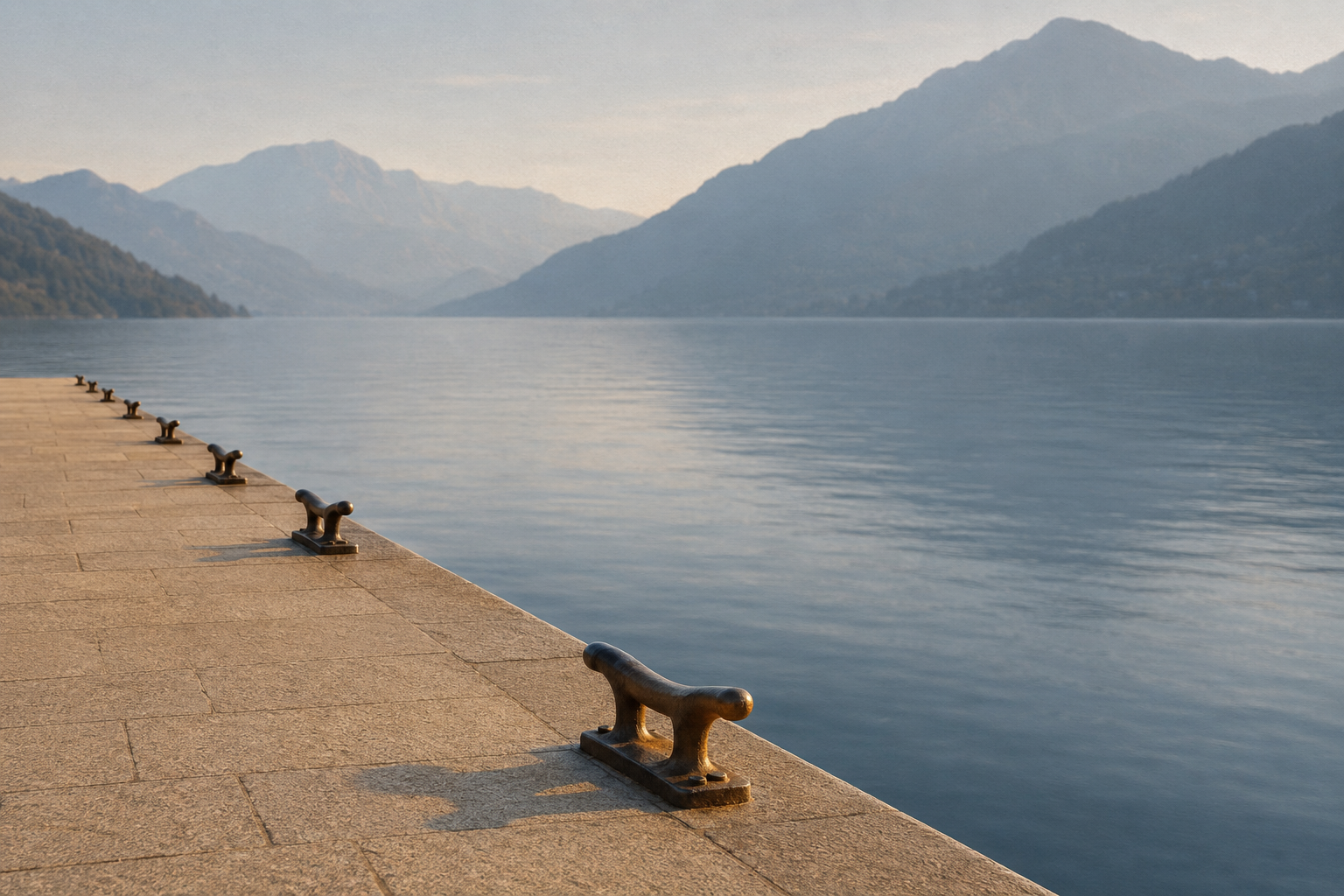
Shavkat Mirziyoyev departed for Kyrgyzstan on Thursday morning on a state visit that runs into a Central Asia-Azerbaijan summit at Cholpon-Ata from 30 July to 1 August. Ilham Aliyev arrives on a state visit of his own.

Moscow answers Yerevan through its foreign intelligence service
A day after Pashinyan asked Putin to lift the export restrictions, the Kremlin briefing dealt with an EU referendum and the Foreign Intelligence Service issued four statements on what leaving the Eurasian Economic Union would cost Armenia.
The corridor and the war now share one sea
Peskov called the strikes in the Caspian extremely dangerous on Monday. In the same days, the first cargo to move under electronic TIR across three countries crossed that water from Baku to Turkmenbashi.

Pashinyan asks Putin to lift the export bans
Armenia’s prime minister raised the Russian restrictions with Putin by telephone on Monday, the day the dairy ban took effect, and told him they contradict both the bilateral treaty framework and the rules of the Eurasian Economic Union.

Armenia’s dairy ban takes effect
Russia’s restriction on Armenian dairy came into force on Monday. Yerevan’s food safety inspectorate says the joint inspection behind it found nothing of the kind.

One littoral state speaks about the Caspian
Turkmenistan called the attack on a vessel in the Caspian inadmissible and named nobody at all. Kyiv answered Tehran the same day, and Baku and Tehran shut each other’s broadcasters.

The war reaches the Caspian
Iran says a Ukrainian strike killed a sailor on one of its commercial ships in the Caspian. The detour Kazakhstan is counting on runs across that same sea.

Berlin signs the agenda, the numbers stay unwritten
Aliyev and Merz signed the Joint Declaration on the Strategic Agenda of German-Azerbaijani partnership on Tuesday, agreed to stand up a bilateral Economic Council, and talked gas at length. The watch lines our Tuesday piece set resolved the same way: intent everywhere, a number nowhere.
The first e-TIR truck heads for Turkmenistan
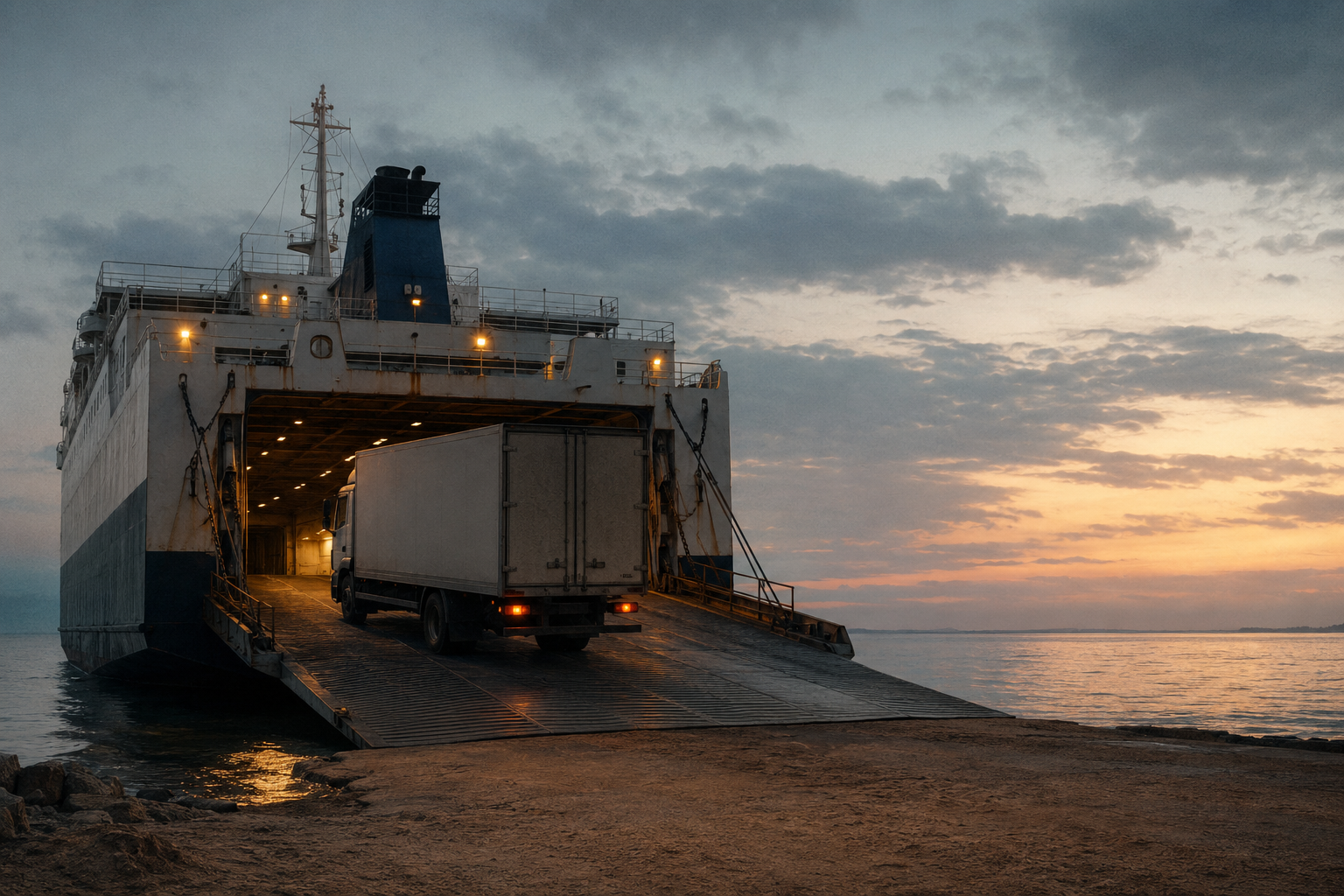
The first pilot shipment under the electronic TIR customs system between Azerbaijan and Turkmenistan began this week, the head of Azerbaijan’s road carriers association said: the cargo has already crossed from Kazakhstan to Azerbaijan over the Caspian and moves on to Turkmenistan next.

Aliyev takes a strategic agenda to Berlin
Azerbaijan’s president is in Germany, with a Joint Declaration on the Strategic Agenda of bilateral partnership planned for his meeting with chancellor Friedrich Merz, per the state agency APA. The agenda runs through gas and the Middle Corridor, and the visit lands while Baku’s rupture with Moscow stays open.

An Armenian court clears the runway for the grid takeover
The Administrative Court has refused to accept Tashir Capital’s lawsuit against the government concerning 70% of the shares of Electric Networks of Armenia, the infrastructure ministry announced on Tuesday. The refusal lands days before the government is due to declare the company an overriding public interest, and it closes the owner’s last visible domestic avenue.

Armenia moves to take its power grid, and the price is the message
The public consultation on declaring Electric Networks of Armenia an overriding public interest closed on 8 July; the government decision is due in mid-July. Documents obtained by RFE/RL put the state’s net offer for a grid that absorbed some $900 million of investment at roughly $360,000. The decision will be read far beyond Yerevan.

Central Asia's westward corridor runs through Baku, and Baku is fighting Moscow
On 6 July Azerbaijan summoned Russia's ambassador and handed him a protest note over a Russian drone strike on a SOCAR fuel station in Ukraine. It was the latest blow in a dispute that has outlived the settlement both sides signed in April. For Central Asia the quarrel lands close to home: the westward trade routes Astana, Tashkent and Ashgabat are building all pass through the country now at odds with Moscow.

Georgia's surrogacy boom runs on women recruited from Central Asia
An Oxford study published on 16 June maps a quiet labour chain. Clinics in Georgia, short of local surrogates since 2022, now recruit women from Kazakhstan, Uzbekistan, Tajikistan and Kyrgyzstan through Instagram and TikTok. The pregnancies are sold as paid work, and the controls around them sit outside the law.

Armenia's top court upholds the June election as the opposition vows to escalate
On 4 July Armenia's Constitutional Court rejected all seven opposition petitions and let the 7 June result stand, on the last day the law allowed. Nikol Pashinyan keeps his majority and his pro-Western course. Within the hour, five losing blocs answered that the legal fight is over and a political one begins.

Armenia's top court has one day left to rule on the June election
The Constitutional Court retired to deliberate on 1 July and must publish its verdict by the end of Saturday, 4 July, the last day the law allows. Seven opposition forces want the 7 June parliamentary result annulled. Expect the court to uphold it; the interest is in how it reasons, and what the losers do next.