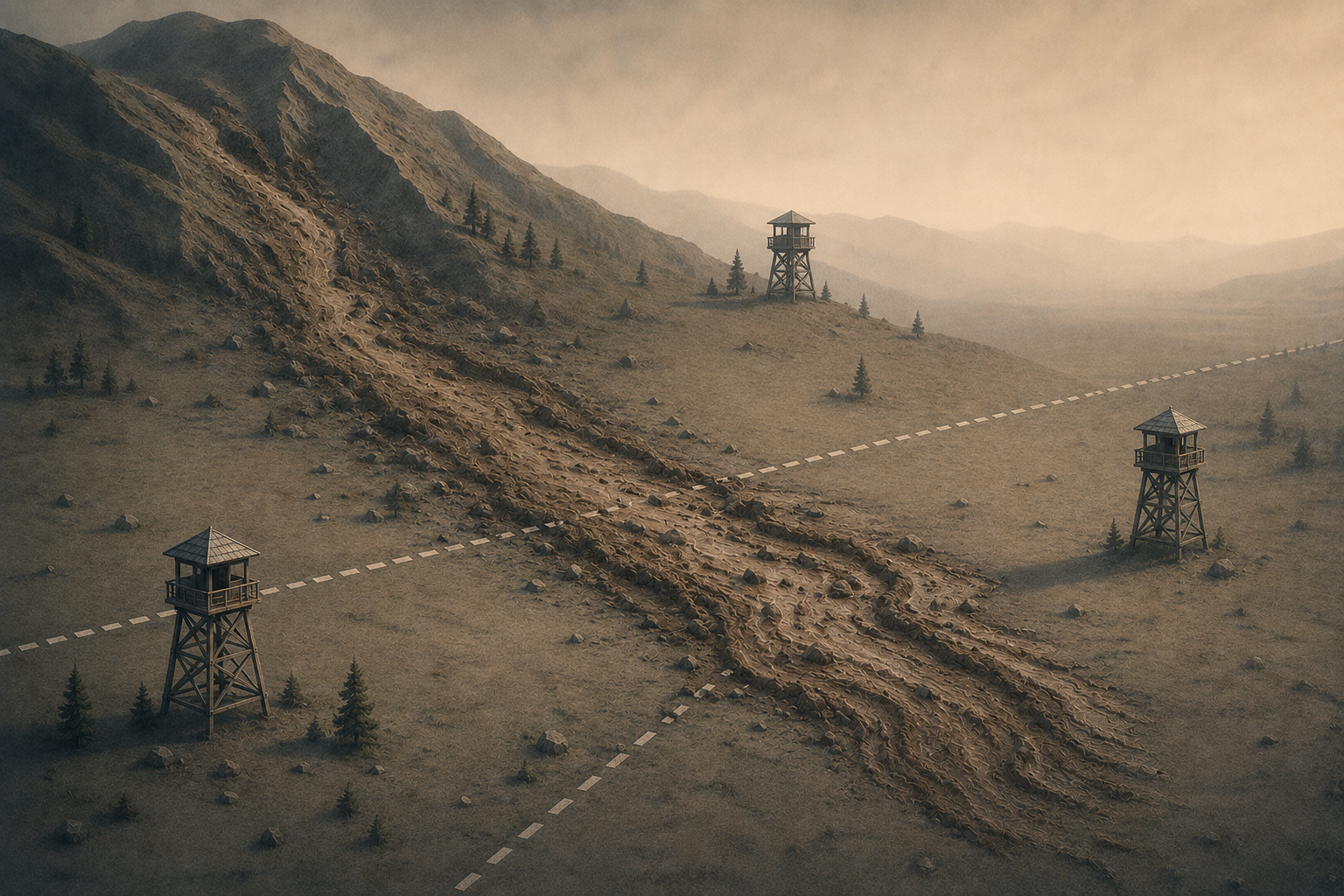
The meeting, running 24 to 26 June under the World Bank’s RESILAND CA+ programme, gathered officials and scientists from across Central Asia to draft a roadmap on transboundary mudflows and floods and to propose a single regional database of climate-related disasters. Kyrgyzstan’s deputy emergencies minister, Nurbek Jumaliev, said the country has recorded more than 240 mudflow events so far this year, with two deaths, up from 133 in 2024.
The framing has shifted. Officials now treat climate risk as a security and development problem as much as an environmental one. The logic is physical: glaciers retreating in Kyrgyzstan and Tajikistan, land drying in Kazakhstan, water stress climbing in Uzbekistan and Turkmenistan, hazards that cross borders and feed one another.
The gap the catalogue is meant to close is structural. The threats are transboundary; the response systems are national. A flood that begins on a Kyrgyz glacier becomes a Tajik or Uzbek problem downstream, yet each country watches its own slope. Shared data, common standards and a joint early-warning layer would move the region from reacting toward forecasting.
The threats cross borders. The response systems stop at them.
The condition is the familiar one. A catalogue is cheap to announce and hard to sustain: it needs data-sharing deals between governments that do not always trust each other, harmonised monitoring, and money that outlasts the donor project. RESILAND CA+ is a $256 million World Bank programme, with $52 million of it in Kyrgyzstan. For now the mudflows are running ahead of the institutions built to manage them.