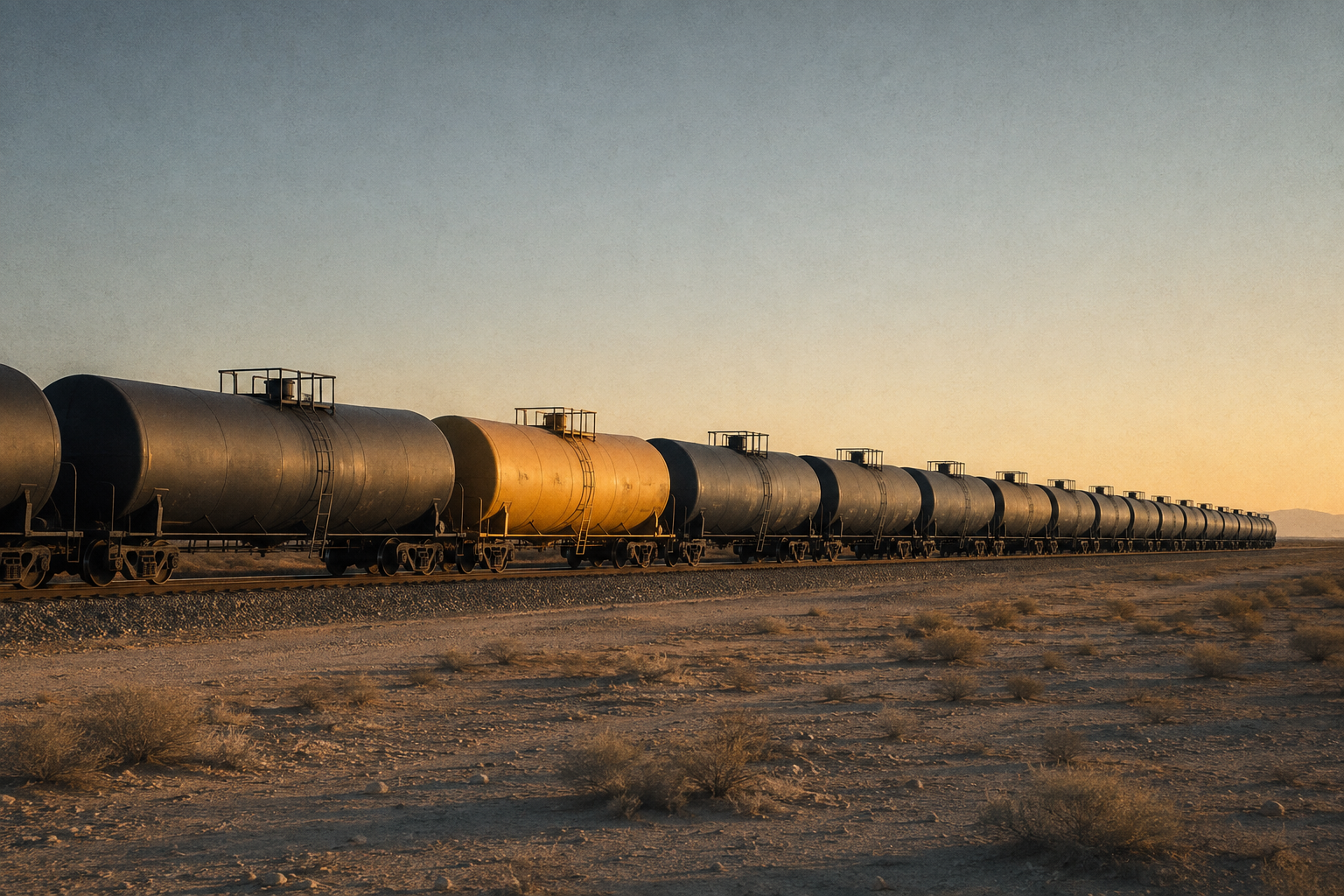
The cabinet's readout names Sinopec deputy director Tian Hongbin on the other side of the table. The agenda was practical: direct contacts between the corporation and Kyrgyz fuel companies, larger deliveries, transport logistics and customs clearance. Working groups were set up.
The numbers explain the urgency. Kyrgyzstan burns about 2 million tonnes of fuel a year and imports roughly 95% of it from Russia. From January to May, per Times of Central Asia, Russian suppliers shipped over 251,000 tonnes of petrol and 235,150 tonnes of diesel.
“Kyrgyzstan is interested in increasing supplies of petroleum products from China.”
That supply line is degrading. The Orsk refinery in Orenburg stopped after a drone strike on 11 August, with repairs estimated at up to 6 months; by mid-August at least 10 Russian regions had restricted fuel sales. Bishkek pumps tell the rest: petrol went from 78.4 soms a litre in May to 87.9 by Monday, and some stations temporarily closed.
Urumqi extends a line Bishkek has been drawing all summer. In June, Akunbekov sat with vice premier Ding Xuexiang in Xinjiang, and the two sides agreed to prepare a package of agreements for the intergovernmental commission and for the SCO summit Kyrgyzstan hosts from 31 August. Fuel contracts now have 12 days to make that list.
The test is tonnage. The readout promises working groups on transport and customs; contracted volumes, prices and routes will show whether Bishkek bought a hedge or began a pivot.