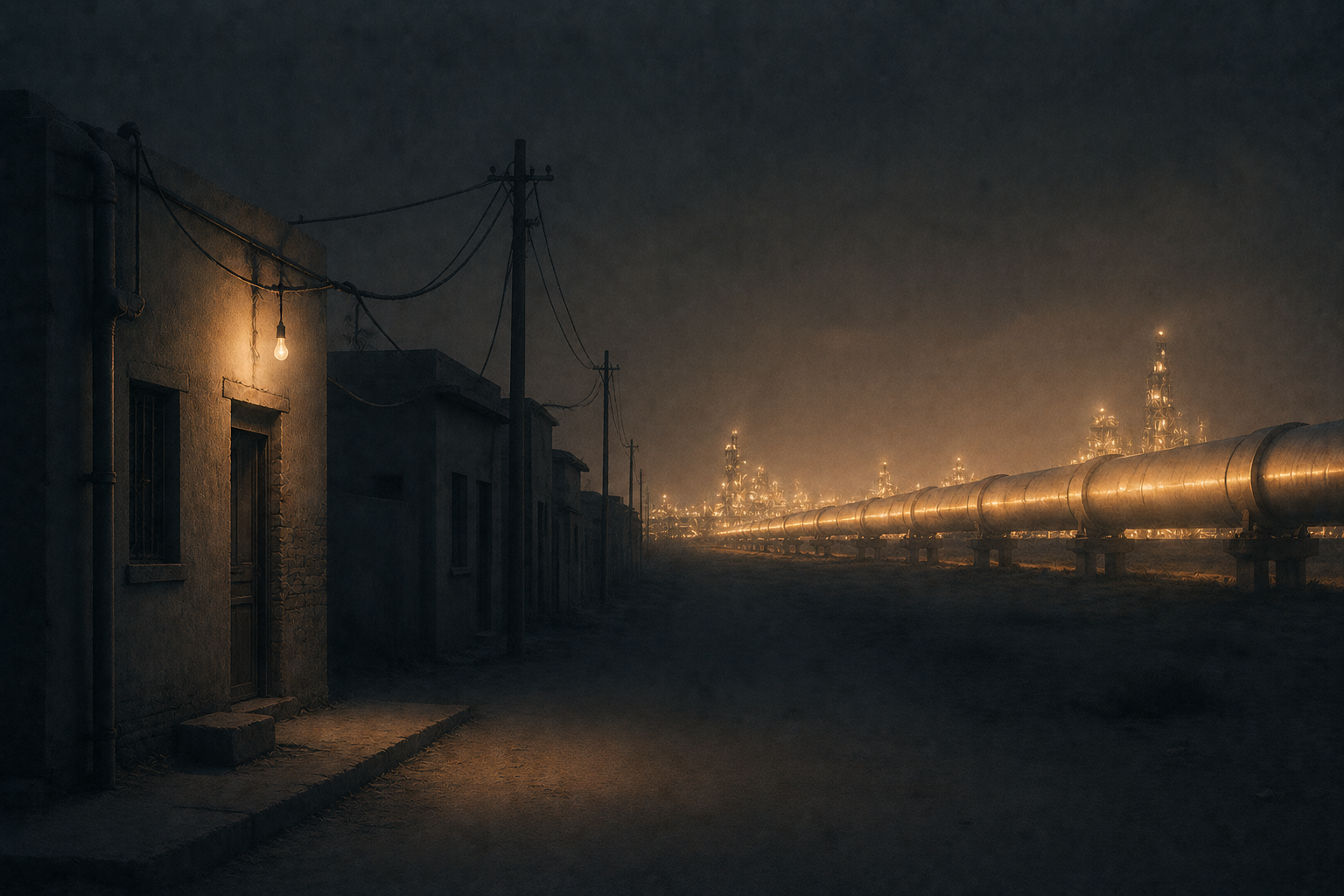
The outages in Mary Region began in mid-June, as temperatures pushed past 40 degrees Celsius, according to Turkmen.news and RFE/RL’s Turkmen service. Residents said power was cut three to four hours at a time, almost every day, leaving air conditioners, refrigerators and water pumps useless. In Bayramaly district, locals said the voltage drops so low that a fridge will not run.
On 17 June, several hundred people, most of them women, gathered outside the regional administration in Mary and demanded to see the governor. In a country counted among the world’s most repressive, where protest is rare and dissent is punished, that alone was striking. Police were sent to disperse them. The crowd stayed. The governor came out and promised a fix.
The state’s follow-up was personnel. Inspections led to the dismissal of several local officials, and authorities promised to replace worn-out transformers in Bayramaly. Residents say the cuts have continued and that no upgrades have been announced for other districts. Some locals allege officials had been diverting power to commercial clients for payment while rationing homes.
Turkmenistan sells gas to China by the pipeline. It cannot reliably light a region of its own.
The irony writes itself, and it runs deeper than irony. Turkmenistan sits on the fourth-largest gas reserves on earth and ships gas to China by pipeline. It cannot reliably light a region of its own, because the money goes into export infrastructure while the domestic grid is left to age. Firing a governor’s deputies does not buy a transformer.
This is the same story the region keeps telling in different accents. Kazakhstan loses a fifth of its power in old lines. Kyrgyzstan rations in winter. Turkmenistan blacks out in summer. The grids across Central Asia were built in Soviet decades for Soviet loads, and the bill for thirty years of deferred maintenance is coming due as the heat rises and the appliances multiply. The fix is unglamorous and costly, and it does not photograph like a pipeline deal.