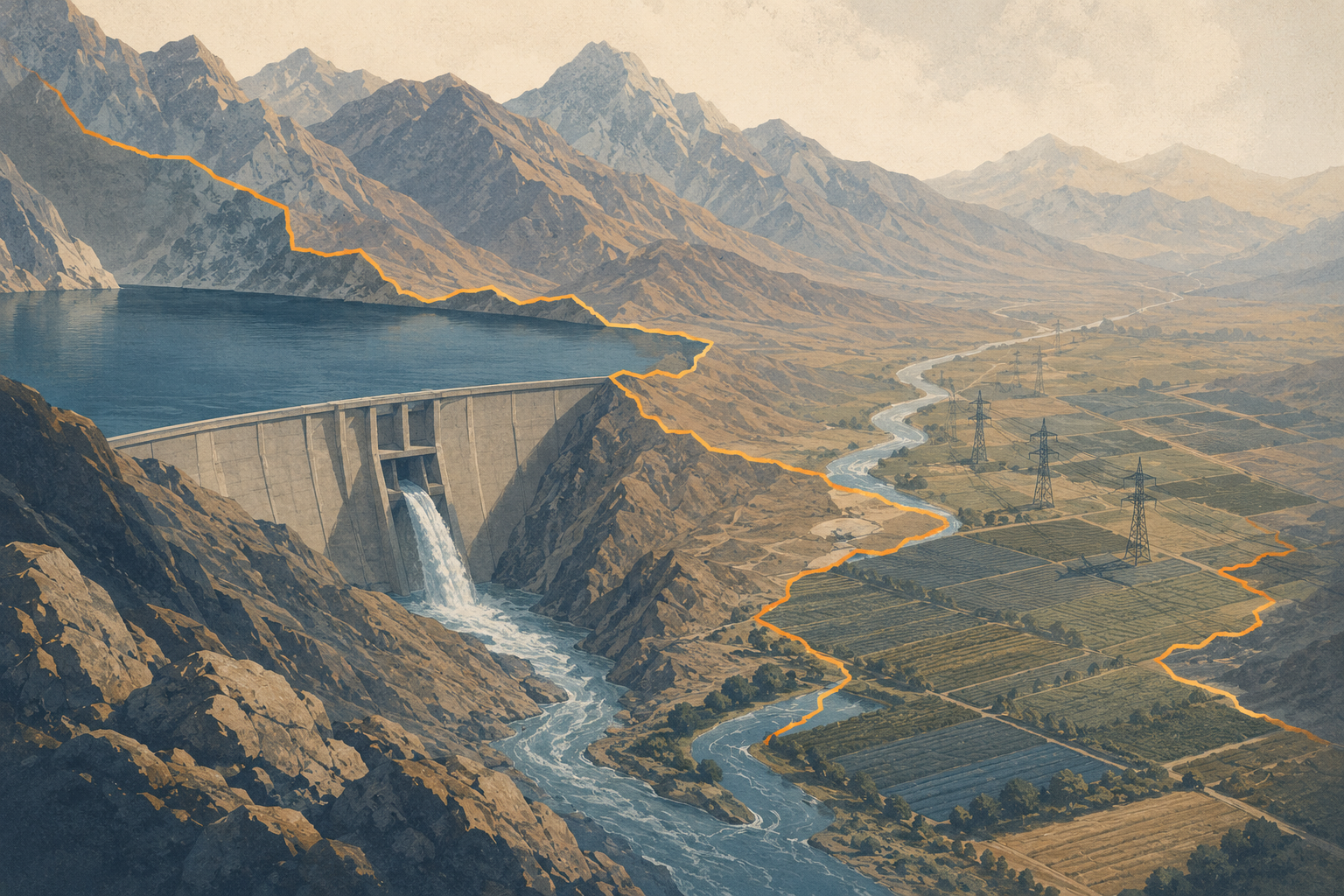
The energy and water resources ministers of Kyrgyzstan and Kazakhstan, Uzbekistan's water resources minister, and the director of Uzbekistan's National Dispatch Center, Muzaffar Boboev, met in Bishkek and signed a protocol coordinating water and energy supply across the three countries for July and August 2026. The statement from Uzbekistan's energy ministry framed the meeting as regular coordination ahead of the peak irrigation months, timed to the current hydrological picture and each country's summer water and power needs.
The mechanism behind the protocol is the core bargain of the Syr Darya basin. The Toktogul reservoir, on the Naryn river in Kyrgyzstan, holds the water and generates about 40% of Kyrgyz electricity. In winter Kyrgyzstan runs Toktogul hard for heating, which drains the reservoir and threatens the irrigation flows that Kazakh and Uzbek farms downstream depend on the following spring. The standing fix has Kazakhstan and Uzbekistan ship power to Kyrgyzstan in winter so it can hold water back, then release that water downstream in the growing season.
Upstream holds the water, downstream holds the power. Each summer the three countries have to agree the trade again.
This summer protocol sits on top of the wider arrangement the three signed for the 2025-2026 cycle, which set winter electricity volumes and water accumulation targets and even routed transit power from Russia to Kyrgyzstan through Kazakhstan's grid and from Turkmenistan to Kyrgyzstan through Uzbekistan's. The pieces fit together into one of the more functional examples of regional cooperation in Central Asia, built on necessity rather than goodwill.
The context is tightening. Population growth, rising power demand and the slow shrinking of the glaciers that feed the rivers all raise the stakes on getting these schedules right. The June protocol follows the move by Kazakhstan and Uzbekistan, reported in the 18 June pack, to set up a standing transboundary water commission. Read together, the two steps show the downstream pair building institutions while the upstream-downstream trade with Kyrgyzstan stays on a season-by-season footing. The test for all of it is a dry year, when the incentives to break the deal are highest.