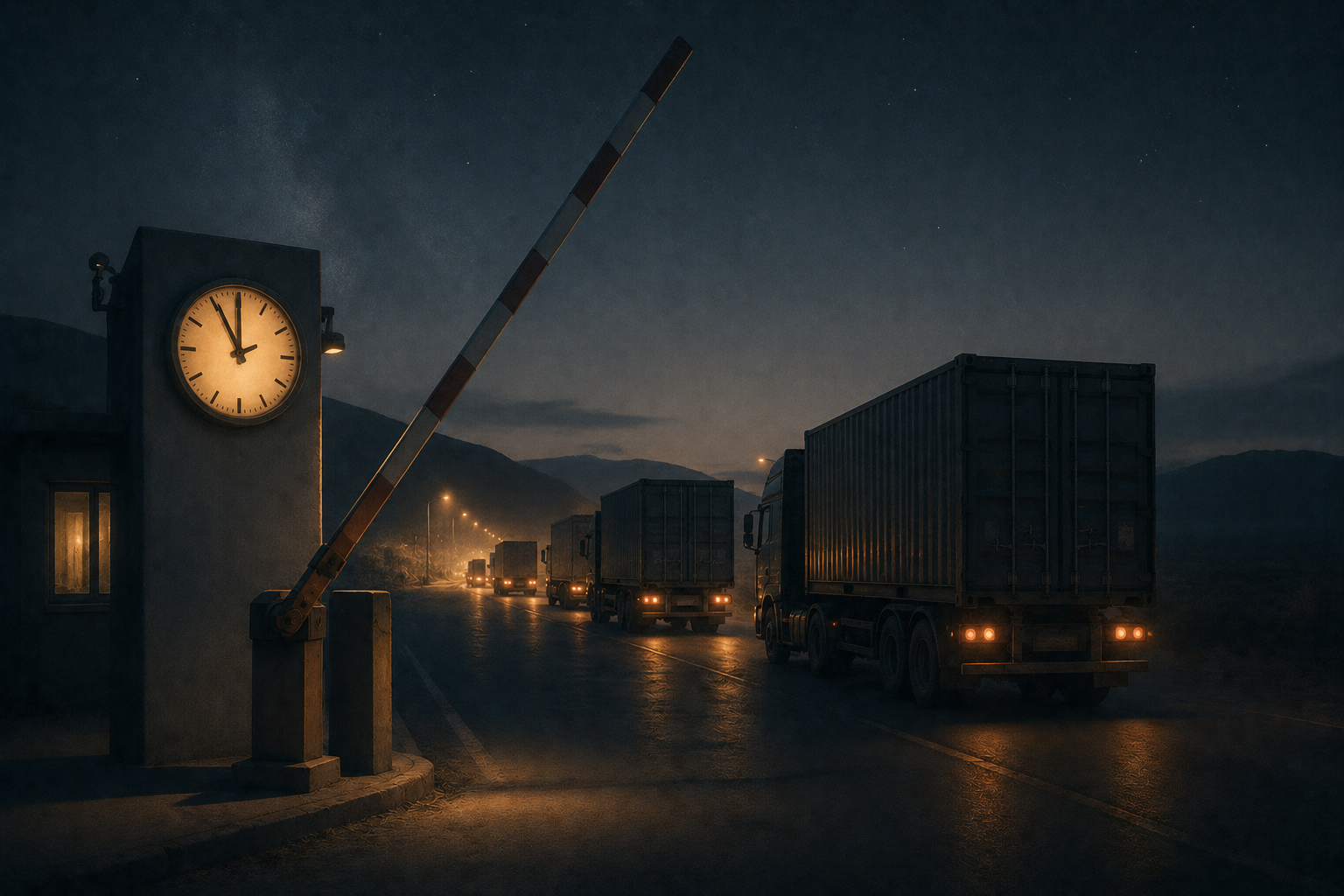
The step continues a steady upgrade of the Kazakh-Uzbek frontier. Over the past year the two countries have rebuilt key crossings, among them Kaplanbek and Atameken, widening lanes and automating inspection to push average clearance toward half an hour. The busiest crossing on the Tashkent to Shymkent road, Gisht-Kuprik, is closed for reconstruction and due to reopen later in 2026.
The logic runs under much of the region’s connectivity drive. The two largest economies in Central Asia trade across this border, and the cost of moving a truck is measured partly in hours spent waiting at a barrier. Longer hours, more lanes and automated clearance are dull changes that do more for everyday commerce than another signed memorandum.
It fits the wider picture CAW has tracked all week, from the Kyrgyz-Uzbek road swaps to the push for smoother transit south and east. Central Asia is stitching its internal seams while it courts distant corridors. The border that opens around the clock is the same project as the road that cuts 200 kilometres off a trip, carried out one checkpoint at a time.