The proposal came at Summer Davos in Dalian on 23 June, where Prime Minister Olzhas Bektenov met executives of SuperX AI Technology, a Singapore-based, Nasdaq-listed firm that builds AI computing infrastructure. SuperX floated a 1 gigawatt AI computing park, built in phases to 2029, that it called a possible cross-border node linking Europe and Asia. The company named Kazakhstan’s energy and location as the draw.
It is one entry in a fast-growing list. Kazakhstan has declared 2026 its Year of Artificial Intelligence and Digitalization, adopted a Digital Qazaqstan strategy, and is building a Data Center Valley at Ekibastuz. The American firms Firebird and NVIDIA are in talks on large AI infrastructure, and the wider US technology package runs to about $10 billion. The chips and the capital are courted from the United States, China and the Gulf at once, the multi-vector habit applied to silicon.
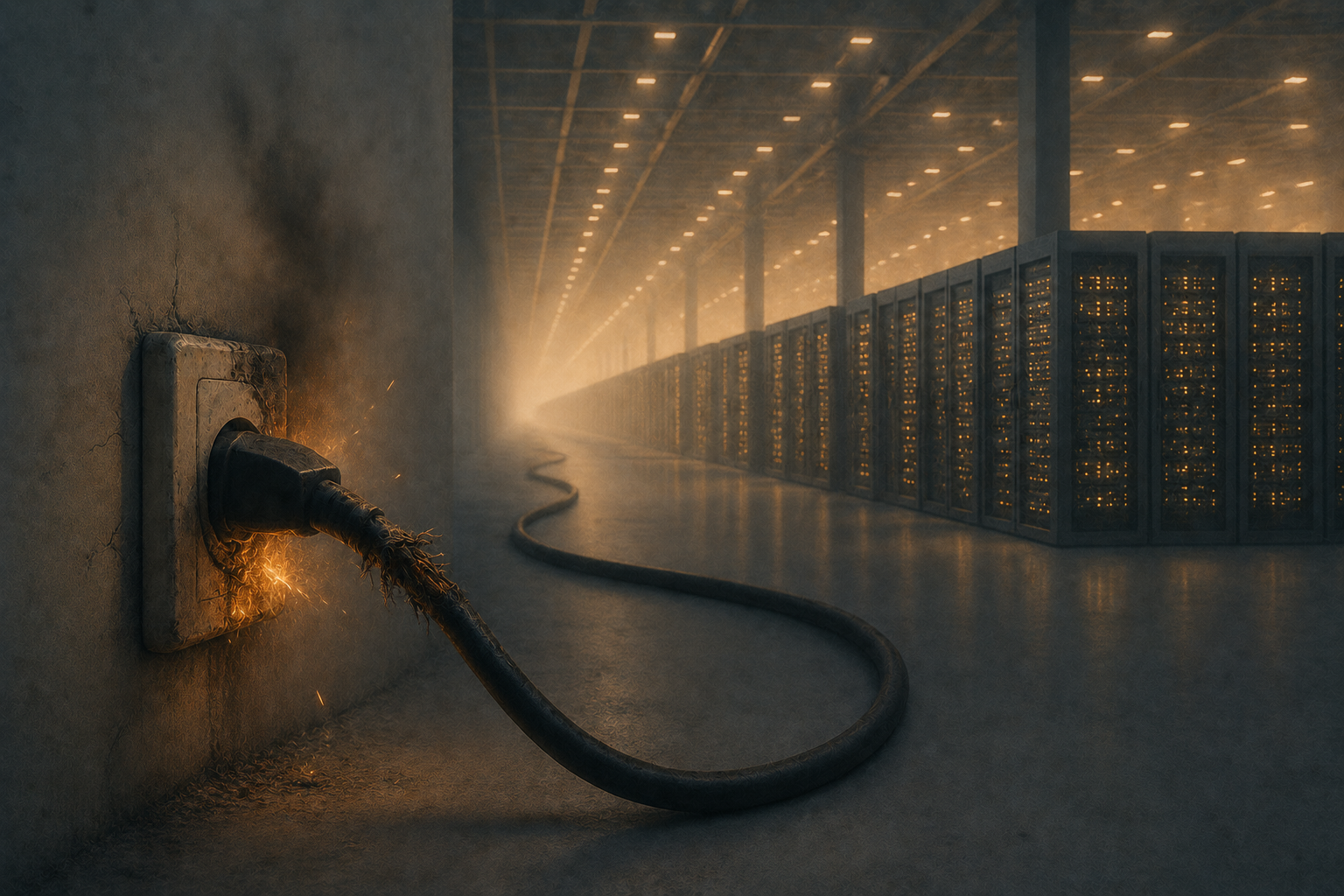
The figure that should give pause is the gigawatt. A 1 GW data centre draws about as much electricity as a mid-sized power station produces, running flat out, day and night. Kazakhstan gets roughly 7% of its power from renewables, leans on aging coal, and, as CAW noted yesterday, loses as much as a fifth of its electricity in old grids. Its first nuclear reactor will not switch on until the mid-2030s. The demand the AI boom would add is large, and it arrives now.
A gigawatt is a power station. Kazakhstan already struggles to keep the power it has.
That is why the SuperX pitch, like the others, bundles in power supply. The investors proposing these campuses know the grid cannot casually spare a gigawatt, so they offer to build their own generation next to the servers. Kazakhstan gets data centres and, attached to them, private power plants, which is its own form of dependence and its own claim on water and fuel.
Then there is the distance between announcement and silicon. SuperX is a small company, with reported revenue of about $2.83 million in the second half of 2025, proposing a project that would cost billions and consume more power than several Kazakh cities. The state investment arm will study whether it is viable. The proposal is real; the campus is not, yet.
The strategy is sound on paper. Kazakhstan has cheap land, cold winters that cut cooling costs, and a place between the markets. It could become the region’s computing hub. The bottleneck is the one under every other story in CAW's file, the power system. A country that cannot reliably move the electricity it already makes is selling itself as the place to plug in the most power-hungry machines yet built. The hub will be as real as the megawatts behind it.