The plans are now concrete, in the literal sense. In early June, Mirziyoyev and Putin launched construction of Uzbekistan’s first plant by video link, with the IAEA’s director general looking on. Kazakhstan signed its $16.5 billion agreement for the Balkhash plant on 28 May, during Putin’s visit to Astana, and aims to begin active construction in 2027 and commission a first reactor around 2034. Its strategy calls for at least three plants by 2050.
Both first plants go to Rosatom. In Kazakhstan it beat China’s CNNC, France’s EDF and Korea’s KHNP to build two VVER-1200 reactors of about 2.4 gigawatts, with Russia providing an export loan that covers as much as 85% of the cost. In Uzbekistan, Rosatom is building an unusual mix near Lake Tuzkan: two VVER-1000 units of about 1 gigawatt each, paired with two small modular reactors of 55 megawatts. Russia supplies the reactors, the credit, the fuel and the maintenance, and it trains the staff.
The paradox is sharpest in Kazakhstan. The country is the world’s largest producer of uranium and has generated no commercial nuclear power since it shut its last Soviet reactor in 1999. It is buying back into the atom as an importer, borrowing from Moscow to do it, while its own uranium feeds reactors abroad. A state that sells the fuel is paying another state to build the furnace.
A state that sells the uranium is paying another state to build the furnace.
The dependence cuts against the regional script. The same governments court the EU on minerals, the Gulf on capital and China on most things, all in the name of keeping options open. On nuclear they have signed up to a single supplier for the working life of the asset, because Rosatom offered the package the others would not match: turnkey build, long credit, fuel, and control of the back end. Kazakhstan keeps a hedge, a second plant promised to CNNC and early talk with American firms on small reactors, yet the first and largest plant is Russian.
The risk is concrete too. The United Kingdom sanctioned three Rosatom subsidiaries in February. Russia’s nuclear arm has so far avoided direct designation, but the Akkuyu plant in Turkey shows the exposure: a Western supplier withheld parts over export licences, Rosatom turned to China, and the schedule slipped. Kazakhstan’s brand-new nuclear regulator has to write safety rules, train inspectors and stand up emergency response from nothing, against a mid-2030s deadline. Kazatomprom is already in a dispute with a Rosatom-linked uranium venture over missed quotas.
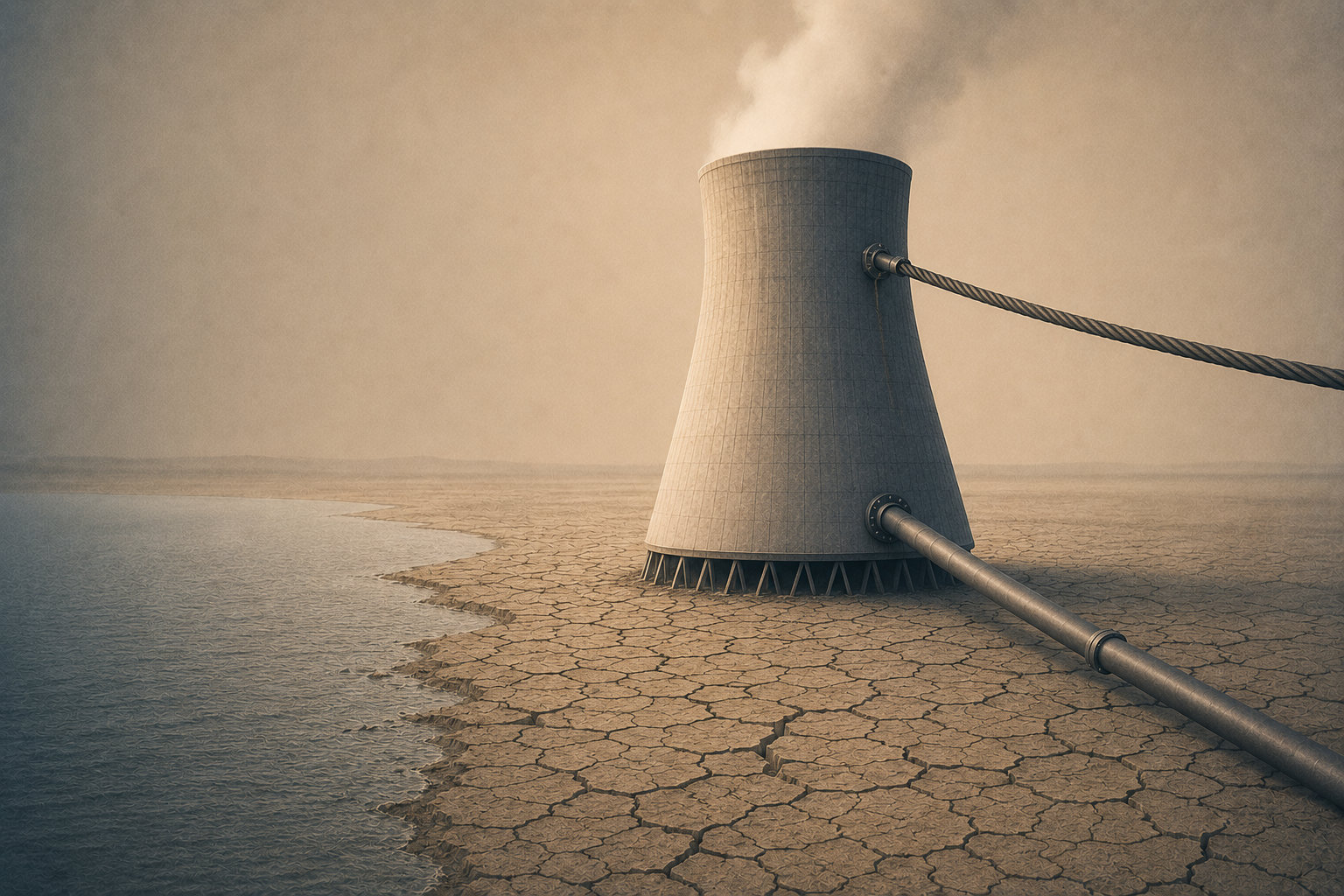
There is also the water. Both plants will draw cooling water in a region whose defining shortage is water, Balkhash a lake already under stress, Uzbekistan a country downstream of almost everyone. The energy answer and the water problem are being built on the same map.
The case for going nuclear is real: coal is old and dirty, demand is climbing, and industry and data centres need the steady baseload the present grid cannot supply. The argument is about the price of the bargain. Central Asia is solving its electricity problem by deepening the one dependence it says it most wants to escape, and it will be paying that bill, in roubles and fuel contracts, into the 2070s.