Russia
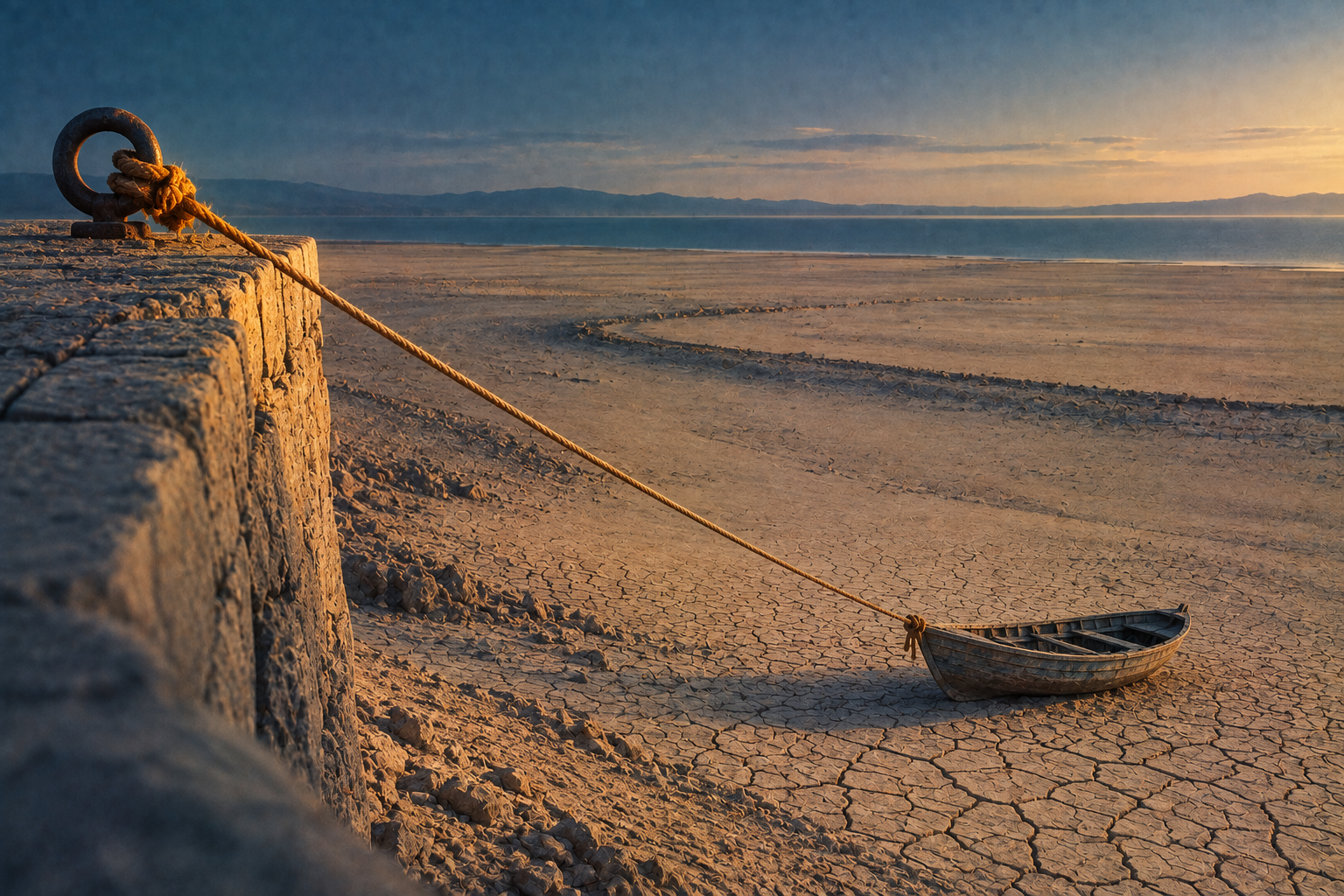
Three summits come to Avaza while the sea beside them is leaving
A volunteer with a camera found a new island off Kulaly days before the presidents arrive on the Turkmen shore. Moscow’s aide names the climate as the cause of the shallowing. The river that feeds the sea is Russia’s.
Pashinyan expects the Turkish border to open and keeps Russia’s reactor offer in play
The Armenia-Türkiye border is expected to open in the near future alongside the TRIPP project, with rail links to Azerbaijan and Türkiye to follow, Nikol Pashinyan told the first Armenia-UK Business Forum in Yerevan on 6 October, by Armenpress’s account. The same evening he said no final decision had been taken on a new nuclear plant’s technology and the Russian option is not excluded.
The Kremlin confirms a Caspian summit on Friday that Turkmenistan’s programme post omits
Vladimir Putin will speak on 9 October at a Caspian Ecological Summit in Turkmenistan where all five Caspian leaders are to speak and a declaration on the sea’s ecological problems, shallowing included, is expected, his aide Yuri Ushakov said on Tuesday evening. The CIS foreign ministers meet at Avaza on Wednesday with Sergei Lavrov, and the Caspian states’ ministers meet the same day, by the state portal’s programme.

Moscow’s Afghanistan format ends with no statement as Overchuk reports trade up 2.5 times
The eighth round of the Moscow format consultations on Afghanistan ended on Monday without a final statement because the Afghan and Pakistani delegations could not agree a text, Sergei Lavrov said on Tuesday, with the special envoys of Kazakhstan, Kyrgyzstan, Tajikistan and Uzbekistan at the table. Deputy prime minister Alexei Overchuk told foreign minister Amir Khan Muttaqi the same morning that trade had grown 2.5 times in seven months.
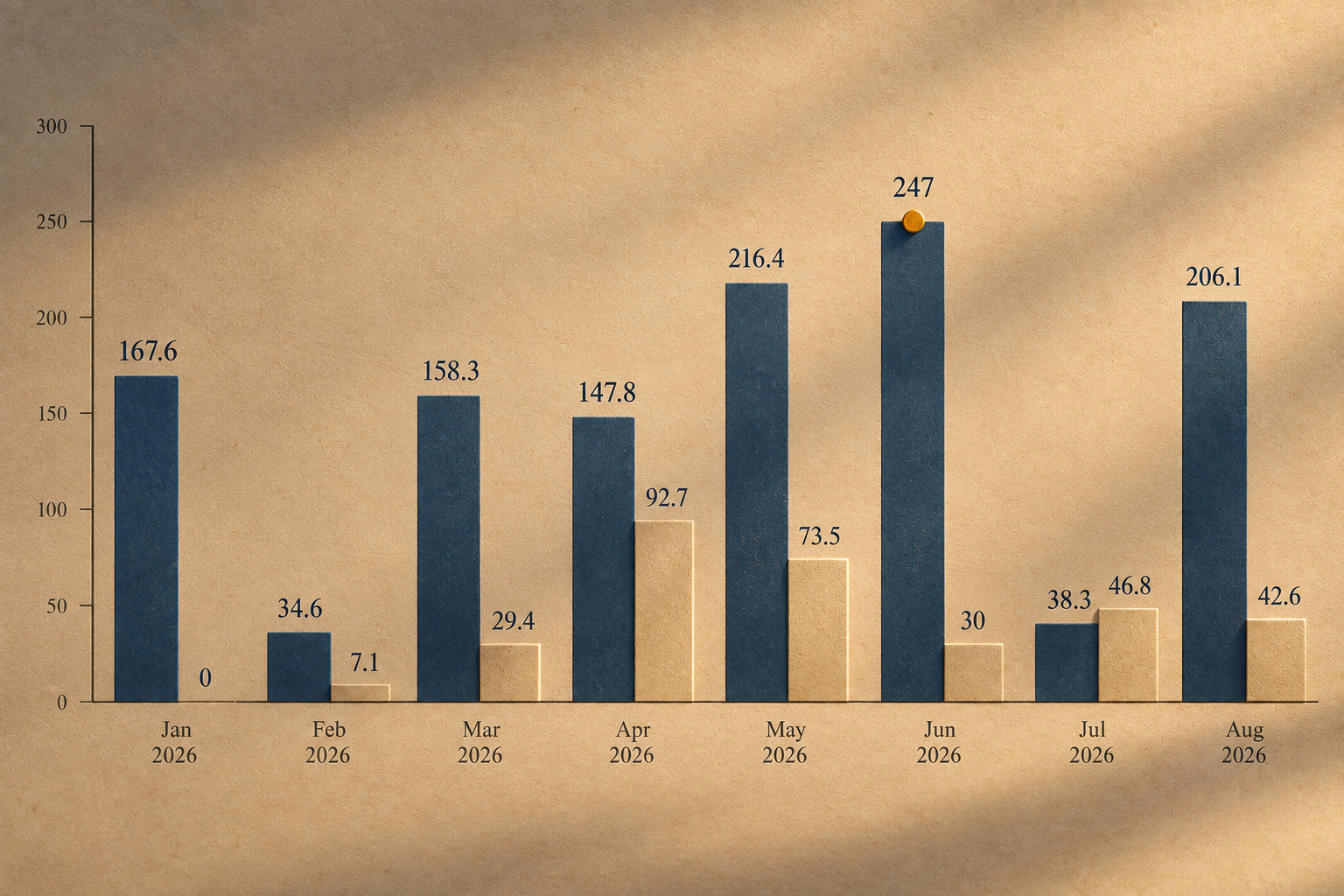
Uzbekistan imported $1.21 billion of gas in 8 months and sold $322 million
Uzbekistan’s gas imports were worth $1.21 billion in January to August, 15.2% more than a year earlier, while its gas exports fell 34.8% to $322.3 million, by National Statistics Committee figures published on 1 October. The bill is almost 4 times the receipts, and on Thursday the US Trade Representative faces its first deadline under the act aimed at the 5 largest importers of Russian gas.
Dushanbe and Moscow sign a Digmai tailings protocol and target 2.5 times the trade by 2030
The 22nd session of the Russia-Tajikistan intergovernmental commission in Dushanbe, chaired by Prime Minister Kohir Rasulzoda and Deputy Prime Minister Marat Khusnullin, signed a protocol amending the Rosatom roadmap on the Digmai tailings and set a goal of multiplying trade 2.5 times by 2030 from $2.47 billion last year, Avesta and TASS reported on Thursday. Rahmon received Khusnullin, and oil-product supplies were among the subjects.

Russia caps cash roubles for 7 neighbours at 1 million a head and bans firms from carrying any
A decree Vladimir Putin signed on Tuesday bans anyone from carrying more than 1 million roubles in cash out of Russia into the other 4 members of the Eurasian Economic Union, Azerbaijan, Tajikistan or Uzbekistan. Companies and sole traders may carry none, with 3 exceptions. The $100,000 ceiling that had applied since April is gone, and cash above the limit is confiscated at the border.
Russia locks away its fuel export data, and the region loses the numbers behind its diesel
Decree 686, published on Monday, bars anyone in Russia from publishing what its fuel exporters ship, to whom, at what price and through which port, plus refinery output and exchange sales of petrol and diesel. Companies may disclose their own figures; the government has 10 days to list the goods covered. Kazakhstan, Kyrgyzstan, Tajikistan and Mongolia, whose Russian diesel intake doubled in August, lose the exporter's side of the count.
Georgian Railway buys 200 wagons from Russia for $9.6 million after every tender failed
The railway signed a direct contract with the Roslavl wagon-repair plant for 200 open wagons at $48,000 each, on a decision of its supervisory board of 27 August, Novosti Gruzii reported on 24 September. Director general Lasha Abashidze gave two reasons: no European maker builds freight wagons for the 1,520 mm gauge, and the Russian price was the lowest.

Russian gas flows to Armenia again after 10 days of pipeline work: 2.7 billion cubic metres a year through one line across Georgia while Simonyan names four suppliers for the future
Gazprom Armenia said gas deliveries through the North Caucasus-Transcaucasia trunk pipeline resumed on 25 September after a suspension “from 15 September” for planned maintenance and repair on the Russian section, Interfax reported at 12:20 Moscow time. The line carried about 2.7 billion cubic metres to Armenia in 2025, beside the roughly 476 million a year that arrive from Iran in the gas-for-electricity swap, and Interfax put the contract price at $177.5 per 1,000 cubic metres to the end of 2026 or the start of 2027; Security Council secretary Alen Simonyan had given $165 at the border on 16 September, frozen since 2019.

Pashinyan says Armenia is talking to 5 countries about a new nuclear plant, with Rosatom’s 1,200 MW study already in Yerevan and Metsamor’s life running to 2026
Armenia is negotiating with the United States, Russia, China, France and South Korea over a new nuclear power plant and “is looking for the best offer to start construction”, Prime Minister Nikol Pashinyan said at a panel of the Concordia summit in New York, Arka reported on Wednesday at 14:27. Metsamor supplies up to 40% of the country’s electricity, its operating life has been extended to 2026 and work is under way on a further extension of 10 years; a preliminary feasibility study by Rosatom for a new 1,200 MW unit is already before the Armenian side, and the plan is to build the new plant within 8 to 10 years.
Remittances to Kyrgyzstan fall to $279.5 million in July, 12% below a year earlier, with Russia sending 9 dollars in 10
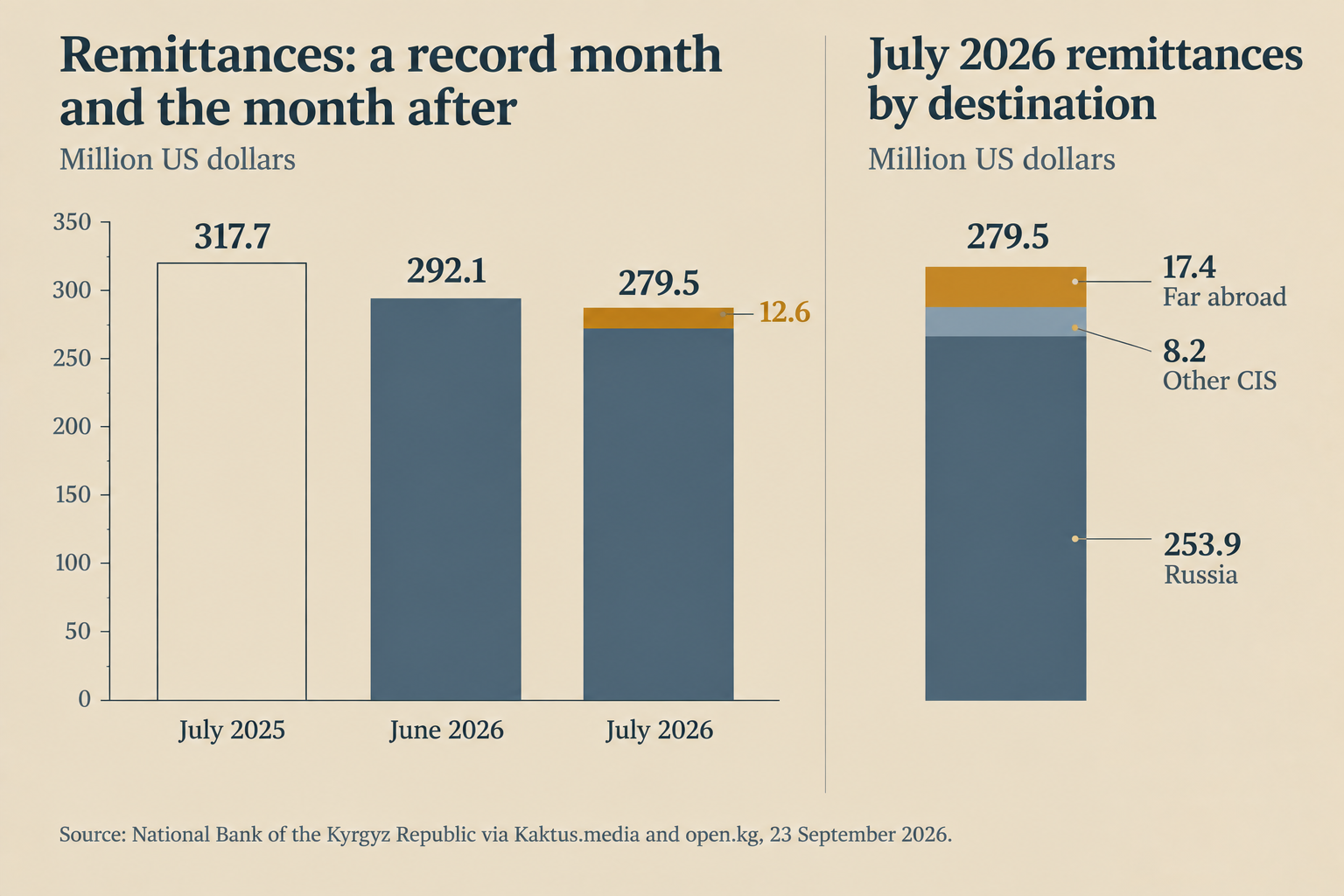
Individuals sent $279.5 million to Kyrgyzstan in July, the National Bank’s figures show: $262.1 million from CIS countries, $253.9 million of it from Russia, and $17.4 million from further abroad. The month is $12.6 million below June’s record of $292.1 million and $38.2 million below the $317.7 million of July 2025, a fall of 12% on the year; money sent out of the country fell to $24.4 million from $35.5 million in June, $21.8 million of it to the CIS.
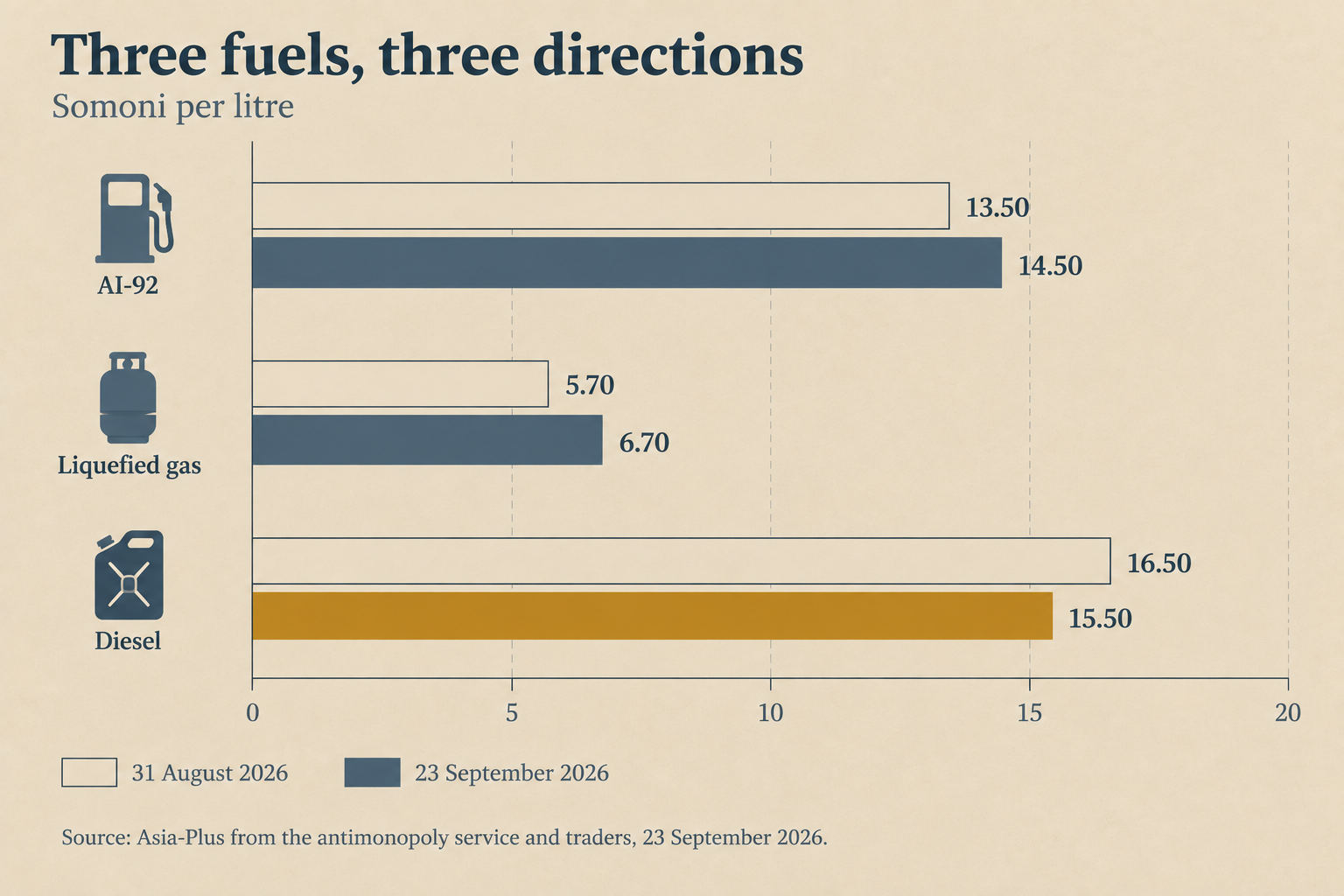
Diesel in Dushanbe falls 6% as Russian deliveries triple, while petrol rises 7.4% and liquefied gas 18% in 3 weeks
AI-92 petrol in Dushanbe costs about 14.50 somoni a litre against 13.50 at the end of August, liquefied gas 6.70 against 5.70 and diesel 15.50 against 16.50, Asia-Plus reported on Wednesday: petrol up about 7.4% in under a month, gas up about 18%, diesel down about 6%. The diesel fall follows Russia’s August deliveries of more than 56,000 tonnes against about 16,000 in July, a 3.5-fold rise; the reasons the authorities have given for the petrol rise are the world market, export restrictions in producing countries and transport costs.
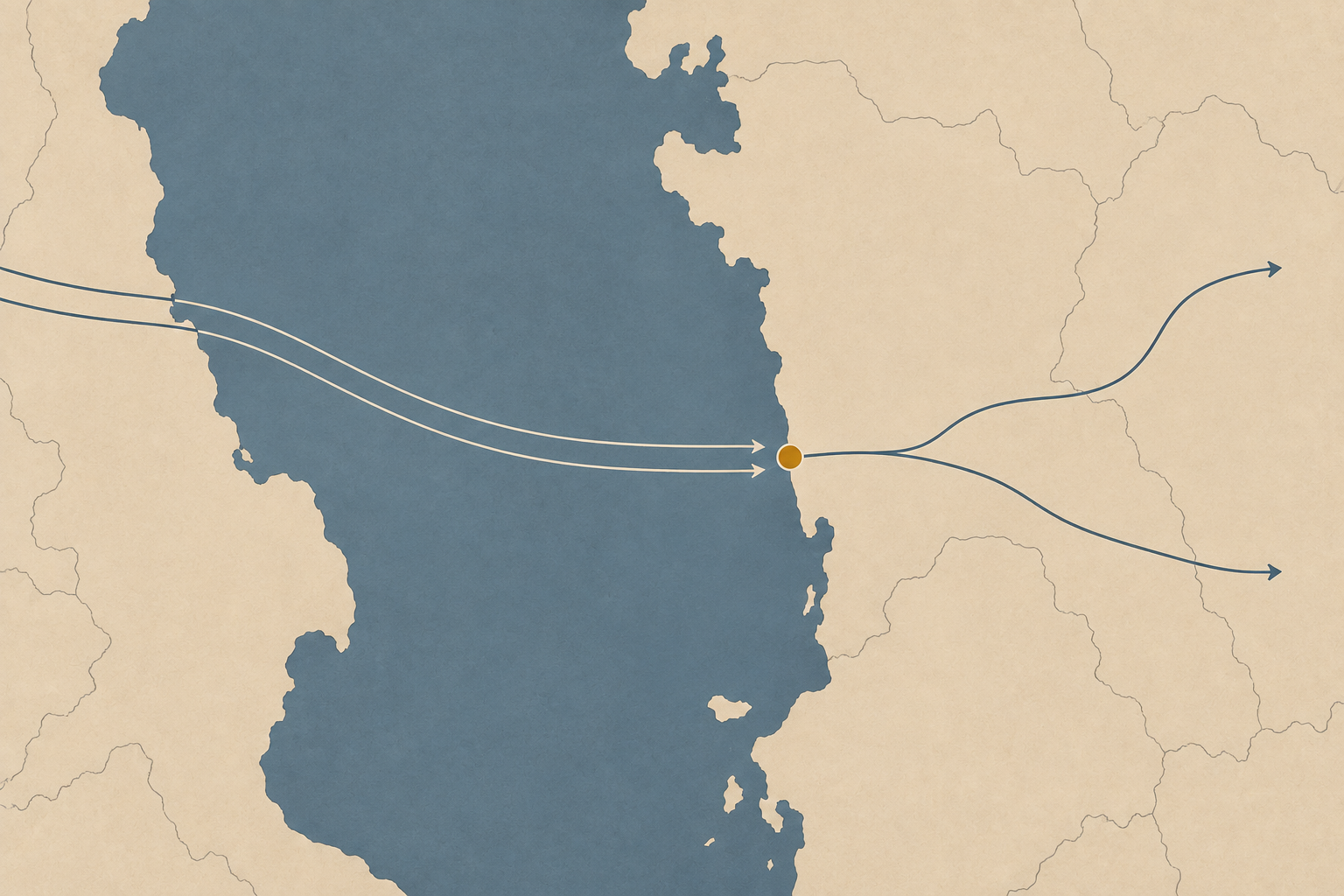
Ashgabat sets the CIS summit and a Caspian ecological summit for Avaza on 9 October with Putin confirmed, as the Halk Maslahaty gathers 4 days before the 35th anniversary
Turkmenistan will host the CIS Council of Heads of State and a Caspian Ecological Summit in the Avaza national tourist zone on 9 October, and President Putin “again confirmed his participation” in both, the state news agency’s account of the 2 presidents’ telephone call on Tuesday says. The call came on Serdar Berdimuhamedov’s birthday; the same account has him congratulating Putin on the conduct of Russia’s State Duma election and wishing “the new composition of the Russian parliament fruitful work”. On Wednesday the Halk Maslahaty, the country’s supreme representative body, holds its regular session in Ashgabat’s Maslahat köşgi palace, with the velayat delegations in the capital since Monday, 4 days before the 35th anniversary of independence on Sunday.
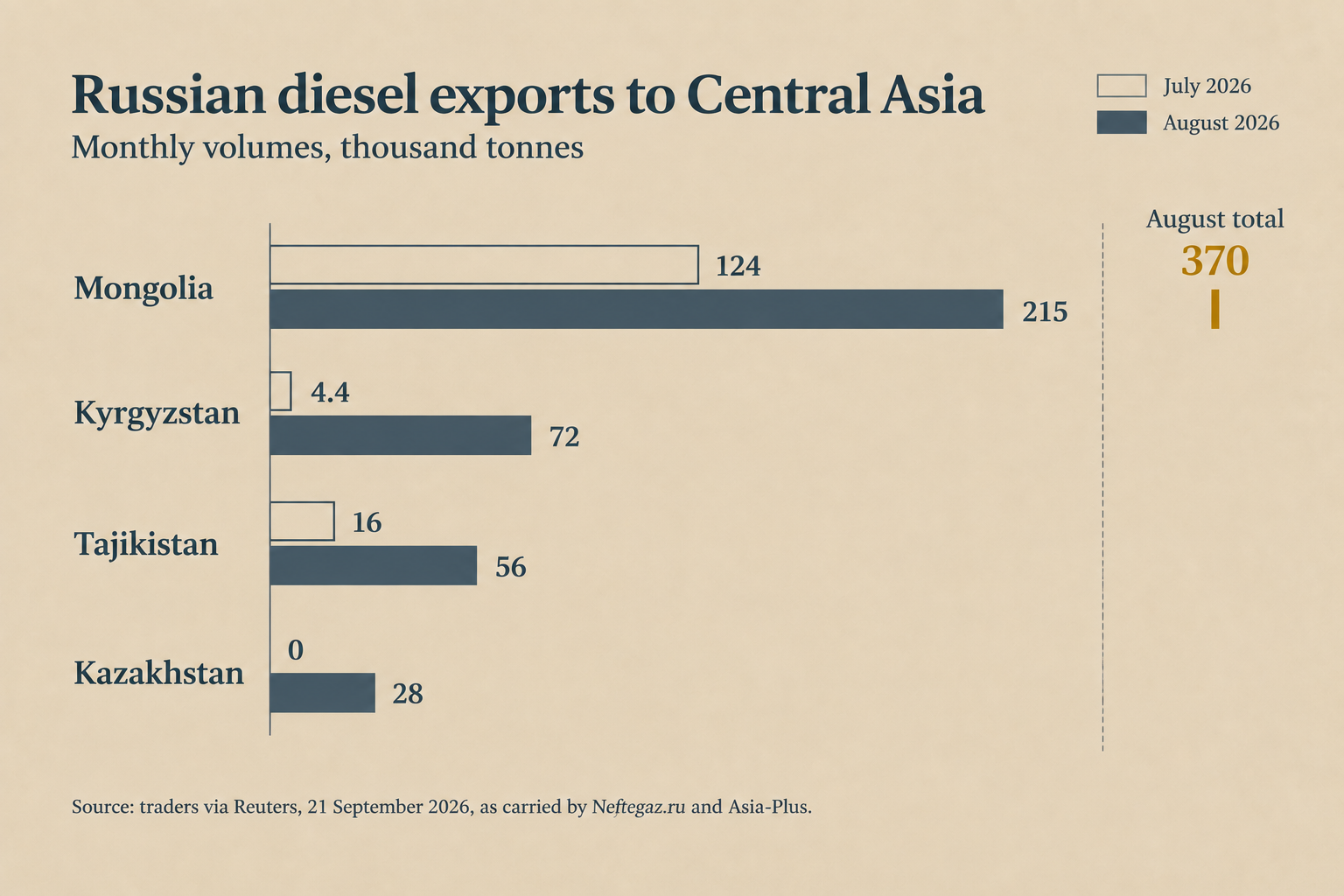
Russia’s diesel to 4 buyers in Central Asia and Mongolia doubled in August to 370,000 tonnes, with Mongolia taking 215,000 and Kyrgyzstan’s intake rising from 4,400 to 72,000
Russian diesel exports to Kazakhstan, Kyrgyzstan, Tajikistan and Mongolia exceeded 370,000 tonnes in August, more than double July’s, traders told Reuters on Monday in figures Neftegaz.ru carried the same evening and Asia-Plus on Tuesday. Mongolia took about 215,000 tonnes against 124,000 in July, Kyrgyzstan more than 72,000 against 4,400, Tajikistan more than 56,000 against 16,000, and Kazakhstan, which imported none in July, about 28,000. Over January to August Russia sent 2.5 million tonnes of diesel to Central Asia and Afghanistan, against 2.6 million a year earlier.
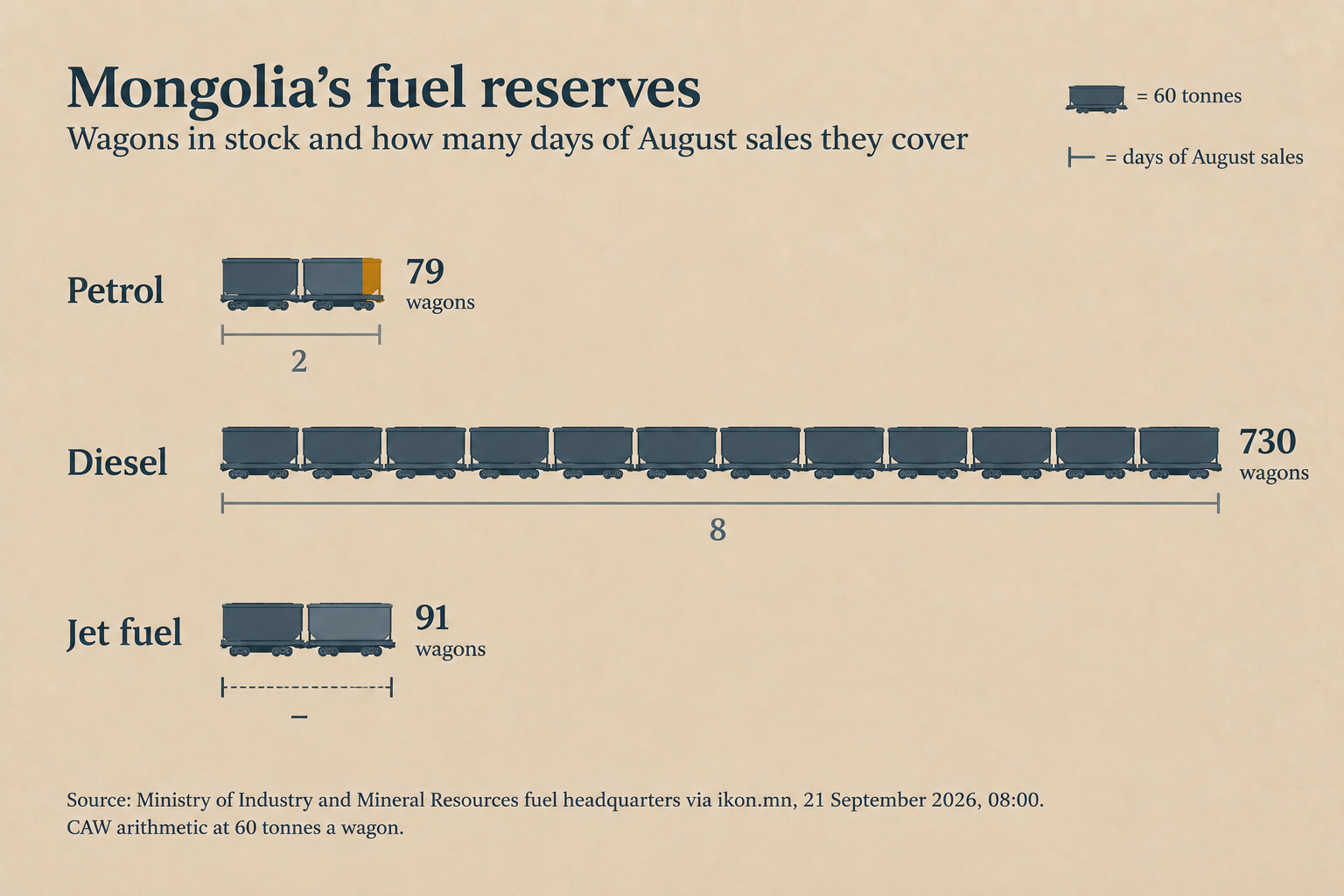
Mongolia’s fuel headquarters counts 79 tank wagons of petrol, about 2 days of sales, as Russia’s Moscow refinery stops processing and Novak orders risk scenarios
At 08:00 on Monday the Ulaanbaatar railway held 900 tank wagons of oil products, 79 of them petrol, 730 diesel and 91 jet fuel, the industry ministry’s fuel headquarters said after its meeting. On the 60 tonnes a wagon a Mongolian outlet used for the same count last October, the petrol comes to about 4,700 tonnes, 2 days of the 74,780 tonnes the headquarters’ own book recorded for August, on CAW’s arithmetic. That evening Reuters reported from 3 industry sources that Gazprom Neft’s Moscow refinery had stopped processing crude altogether on 20 September after drones set fire to both of its primary units.
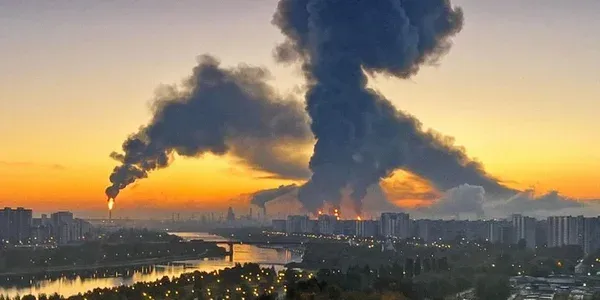
A night of 1,110 drones damages the Moscow refinery while Russia's diesel ban extension stays unpublished
Russia's defence ministry counted 1,110 drones shot down on the night of 19 to 20 September, and Moscow's mayor confirmed damage at the capital's refinery. For the Central Asian importers that buy on the same Russian market, the open item is a government resolution: the extension of the producers' diesel export ban has been reported since 16 September and published nowhere.
Kazakhstan's army will clear mines from a Caspian seabed block for the pipelines of a Lukoil project that KazMunayGas paused in March
A draft law amending Kazakhstan's Tax Code, on public discussion until 25 September, states that the Ministry of Defence will demine area No. 200 of the Kazakh sector of the Caspian Sea, through which the planned subsea oil pipelines of the Kalamkas-More and Khazar project are to run, Prime and Lada.kz reported on Thursday. The operator, Kalamkas-Khazar Operating LLP, a 50-50 venture of Lukoil and KazMunayGas, is to buy the equipment and transfer it to the ministry's ownership; KazMunayGas said in March that the project was suspended because of the sanctions imposed on Lukoil.

Washington's new tariff law counts Russian gas by volume, and Kazakhstan and Uzbekistan are closing in on its top five
The House cleared the Lindsey O. Graham Sanctioning Russia and Iran Act for the President on Wednesday with a 262 to 159 vote. It lets him put duties of up to 100% on all goods from the 5 largest buyers of Russian crude or gas. By the volumes on the record, Astana and Tashkent are fourth and fifth on the gas list, with about 1 billion cubic metres or less between them and the buyers behind.

Pashinyan calls the “Western Azerbaijan” narrative a threat to the peace and puts Kyarki inside 29,743 square kilometres; Shoigu declares Moscow’s crisis with Baku over
At a security conference in Yerevan on Thursday the Armenian prime minister named the “Western Azerbaijan” narrative a serious challenge and a threat to Armenia’s security, and drew the state’s border by the Soviet republic’s 29,743 square kilometres, with the Azerbaijani enclaves outside it and Artsvashen inside. In Moscow the same day Russia’s Security Council secretary said the crisis with Baku had been overcome by joint effort and that Russia “is not ready and will not finance” Armenia’s European integration.