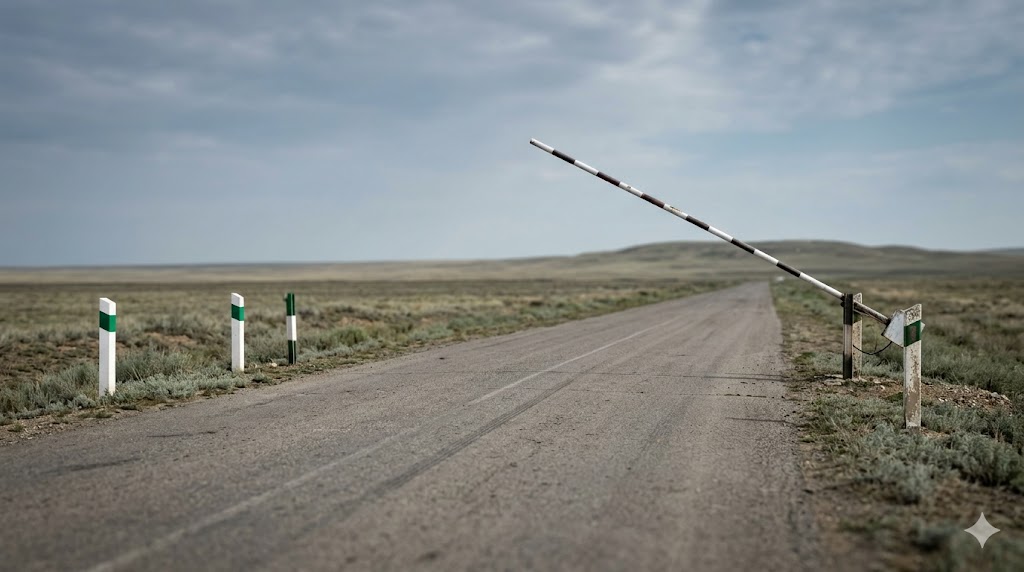
The Senate, the upper house of Kazakhstan’s parliament, approved ratification of the agreement on the Kazakh-Uzbek state border regime on 11 June; the lower house had ratified it about two weeks earlier. The agreement, signed in Astana on 8 August 2024, puts into force the 2001 border treaty and the December 2022 demarcation treaty that fixed the shared border at 2,356 kilometres.
The text sets a single legal framework for maintaining the border and its markers, for moving people, vehicles and goods through crossing points, and for economic activity in border zones and transboundary waters. It also creates mechanisms to resolve cross-border incidents and to coordinate flights and events in border districts.
Central Asia’s Soviet-drawn borders have long been a source of friction. Astana and Tashkent are closing theirs out on paper.
The step is routine in form and meaningful in context. Central Asia’s borders, drawn in the Soviet era, have produced repeated friction, including deadly Kyrgyz-Tajik clashes as recently as 2022. Kazakhstan and Uzbekistan, the region’s two largest states, completed their demarcation in 2022, and this regime agreement is the operational follow-through, one more sign of the quiet border-settling that has run through the region over the past two years.