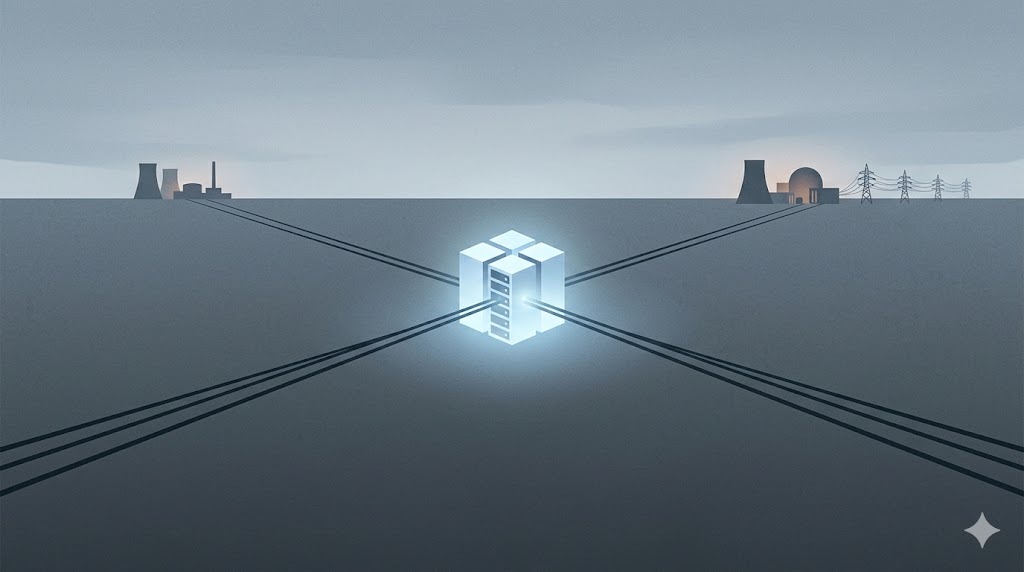
The region is racing to build digital economies, AI centres and crypto hubs. All of it needs electricity Central Asia does not yet have, which is why the same governments are courting Korea, Rosatom and Beijing for new power.
By CAW Editorial
Read the day’s news together and a single theme emerges. Kazakhstan signed a national AI and digitalisation strategy. Tajikistan broke ground on an IT hub built around a regional AI centre. Even Turkmenistan, hardly an open society, sat down with OpenAI. Central Asia has decided that artificial intelligence is its next growth story.
The announcements share a blind spot: electricity. Data centres, model training and crypto mining are among the most power-hungry activities an economy can take on, and the region is already short. Kazakhstan has run electricity deficits and rationing and openly worries about the load from crypto miners. Tajikistan endures winter shortages and has just raised power tariffs to plug an energy-sector hole. Uzbekistan’s gas-fired plants are under strain even as it imports more gas.
The headline is AI. The binding constraint is megawatts, and most of the new power will be built by Russia, China and South Korea.
That is the line connecting the digital push to the energy file, and it explains the rest of this week. Kazakhstan advanced energy and nuclear talks with South Korea, is building a Rosatom plant at Ulken and has lined up China’s CNNC for a second. Uzbekistan has started its own Rosatom plant. The digital ambition and the scramble for generation are the same project, seen from two ends.
This is where Central Asia Wire would temper the launch-ceremony optimism. A fully digital Kazakhstan and a regional AI centre in Dushanbe both assume reliable power that does not yet exist, and the financing and technology for that power come overwhelmingly from Russia, China and now South Korea. The sovereignty pitch of a home-grown digital economy rests on imported reactors and foreign-built grids. The number to watch is installed megawatts, and who owns them.