Search

Armenia's Constitutional Court takes up the Trump route at 11:00, 6 days after Baku dated the first works to 2027
The court sits on Tuesday morning to say whether the framework agreement Yerevan signed with Washington in June, a 49-year company that is 74% American on land Armenia keeps, fits the constitution. The ruling is the step before parliament. The calendar for the route itself has already been written elsewhere.

Seoul’s summit week opens on minerals, with a new ministers’ channel and $1 billion of Korean cofinancing pledged in May
South Korea held the first meeting of industry ministers with the five Central Asian states in Seoul on Monday, with critical minerals, lithium and rare earths among them, as one of its main lines, 2 days before the first Korea-Central Asia summit. The same day Lee Jae-myung exchanged 13 documents with Shavkat Mirziyoyev, Kassym-Jomart Tokayev landed on a state visit, and the Asian Development Bank’s president Masato Kanda met finance minister Koo Yun-cheol about the minerals facility to which Korea Eximbank and K-SURE each pledged $500 million in May.
Overchuk holds out a full free-trade zone for Mongolia after 3 years, on a schedule of dairy, chocolate, cars and metals
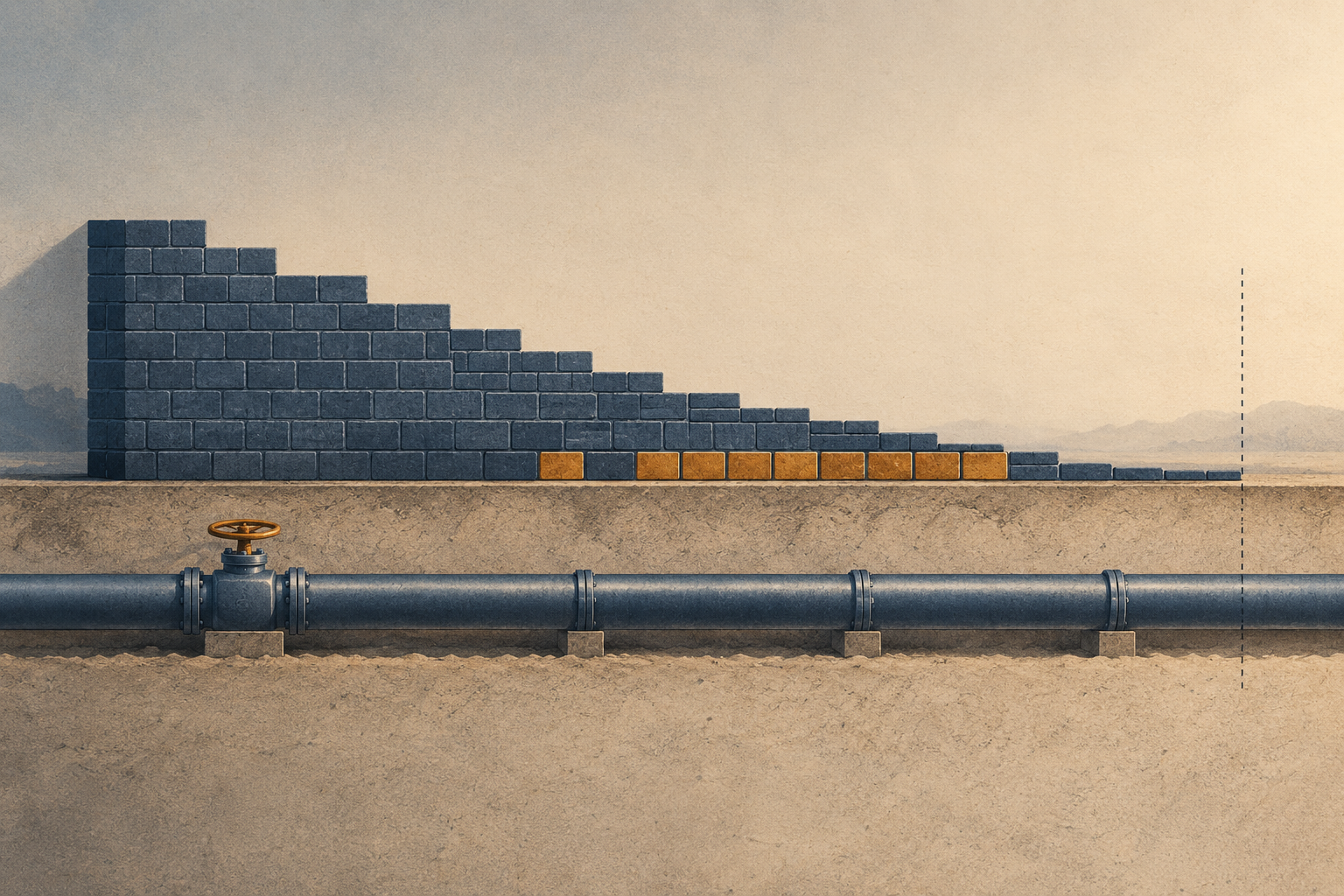
Russia’s deputy prime minister Alexei Overchuk told reporters in Ulaanbaatar on Monday that the EAEU’s temporary trade agreement with Mongolia, in force since 22 July, should become a permanent, full-format free-trade agreement once its 3-year term has run. The schedule that agreement carries zeroes or cuts duties on 367 tariff lines each way; the goods listed on Russia’s side at entry into force, in Interfax’s report from the Eurasian Economic Commission, were dairy, confectionery, tinned food, chocolate, drinks, cars, special machinery and metals.
Uzbekistan’s biggest bank joins China’s payment rail as Astana and Tashkent link their QR codes
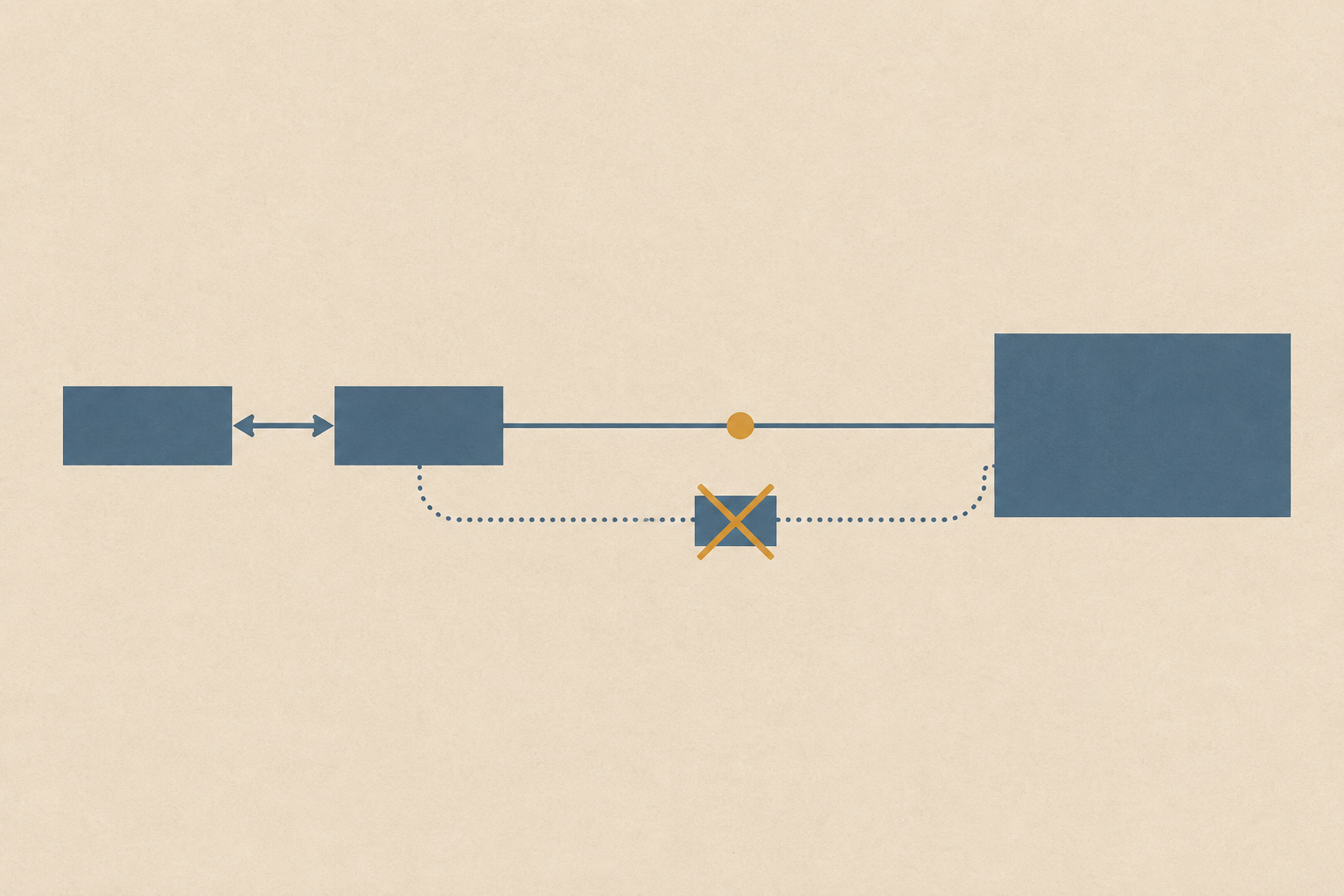
The National Bank of Uzbekistan became the country’s first direct participant in CIPS, China’s yuan clearing system, on 9 September and, during a Hong Kong visit on 9 and 10 September, agreed a $250 million bond in yuan and som for the Hong Kong exchange with CICC; on Friday Kazakhstan’s National Payment Corporation and Uzbekistan’s HUMO signed up to accept each other’s QR codes. Two new pipes are going into the region’s payment plumbing.

Kyrgyzstan’s central bank made 45.7 billion som last year, and the finance ministry credits Kumtor’s gold
The National Bank of the Kyrgyz Republic earned 45.7 billion som in 2025, three times the year before, and the reason is its right to buy gold from the state-run Kumtor mine, the deputy finance minister told a parliamentary committee on Monday. The same hearing put the debt to China at $1.4 billion and 16% of budget revenue.

Who sets the price of petrol: six machines between one Russian exchange and the pump
Central Asia and Mongolia buy most of their fuel from Russia and price it six different ways. A tour of the machinery, from Bishkek's dollar wall to Ashgabat's two price tags, and what each one does when the exchange in St Petersburg moves.

The World Bank's new Tajikistan programme replaces grants with credits from July and rates its own risk as high
The Bank's Country Partnership Framework for fiscal years 2026 to 2032, which its board discussed on 3 June and Asia-Plus read in full on Friday, sets an indicative $1 billion to $1.2 billion of IDA money over 7 years, moves the country from IDA grants to IDA credits from fiscal year 2027, and assesses the overall risk of the programme as high. On the Bank's calendar fiscal year 2027 began on 1 July 2026. The document is 3 months old; the terms in it are already running.

Barki Tojik books a 2.45 billion somoni profit made of currency gains while owing 8.36 billion to the plants that power it
The 2025 accounts of Tajikistan's power utility, published by the energy ministry and read by Asia-Plus on Thursday, show a net operating profit of 2.45 billion somoni, $265 million, after a loss of 1.6 billion in 2024, and the line that made the difference is 2.93 billion somoni of net income from foreign-currency operations. Beneath it sit 29.3 billion somoni of accumulated losses, 23.26 billion of financial obligations and 8.36 billion owed to the generators, Rogun among them. The auditor kept its warning.

The Black Sea drone war reaches Baku through the crew of a Turkish salvage tug
Two Azerbaijani sailors died on Wednesday when drones hit the tug Tedy twice off Odesa during a salvage operation for an Istanbul company, on a passage the Turkish trade press reports as bound for Constanța. On Thursday Russia's defence ministry reported a strike on “a tug escorting” two cargo ships bound for Odesa, Baku named its dead and told its citizens to keep away from war zones, and Ankara, which proposed a shipping-security mechanism 8 days ago, had added nothing to it by evening. The cost of the middle position in this war has moved from hulls to crews.

The UN's debt expert asks Dushanbe for the sums behind its projects as the grant era ends in 2027
Attiya Waris, the UN independent expert on foreign debt, ended a 12-day visit to Tajikistan on 31 August with a statement that reached the English-language wires through Eurasianet on 8 September: the government's actions “are not sufficiently visible to the public”, fiscal decisions “should be a transparent and participatory process”, the state should “prepare a cost-benefit analysis of all the government projects”, and from 2027 the country “will move from grant-based financing to concessional lending”. The latest poverty rate she cites is from 2018. Eight days after her statement, the president read the nation a ledger in which GDP had grown almost 100 times.

China's fuel promise to Mongolia gets a number: 17,000 tonnes for September, and a 20-year frame around it
CNPC will ship Mongolia 10,000 tonnes of petrol, 4,000 tonnes of jet fuel and 3,000 tonnes of diesel this month, the industry ministry said on Thursday, 9 days after Montsame reported Xi Jinping's promise of fuel with no tonnage attached. The petrol covers about a sixth of the month's book; the diesel about 2%. The larger object in the readout is a memorandum the two sides now intend to sign: 20 years of crude, refinery feedstock and coal chemicals, with a price formula and a rail chain still to be written.

Ashgabat tells a UN committee that drought is its greatest risk, and lists more cotton as its first short-term task
In its reply to the UN Committee on Economic, Social and Cultural Rights, Turkmenistan's government writes that drought carries the greatest threat to the country's socio-economic welfare, that low-water years on the Amu Darya and the Murghab are becoming more frequent, and that faster glacier melt may raise the demand for irrigation water and leave the Amu Darya basin with a substantial deficit by 2050, with a serious effect on the yield of key crops such as cotton. In the next paragraph, under the heading of the short-term outlook, the same section of the document lists an increase in cotton output as the first task, on the president's instruction of 2025. CAW has read the document, which turkmen.news reported on Wednesday.

Georgia promises to double its ports by 2032 for a corridor whose shallowest link is on the other sea
Georgia's sea ports and terminals handled 13.7 million tonnes in the first 8 months of 2026, 24% more than a year earlier and the best figure in ten years, the economy minister told the Georgia International Maritime Forum in Batumi. The prime minister, at the same opening, set a ten-year target: railway capacity doubled, port capacity doubled, airport capacity tripled, about $7 billion by 2032. The route's narrowest section runs across Azerbaijan and the Caspian, at a Kazakh quay whose fenders are broken and whose water is falling, and there the only dated commitment is a dredging contract.

Serbia's president says Uzbekistan's second nuclear plant is being built with China, and Tashkent has named no partner
Aleksandar Vučić told the Uzbek-Serbian business forum in Belgrade on Tuesday that Shavkat Mirziyoyev had told him that morning, one to one, that one nuclear plant is being built with the Russians and another with the Chinese, and that this is not enough for him. Uzbekistan's own record holds one plant, at Jizzakh with Rosatom, and a promise made on 17 August to prepare a second, partner unnamed. If the host heard right, Tashkent is copying the formula Astana chose last year: Rosatom for the first plant, CNNC for the second, and the price as the lever between them.

The upstream no longer asks: what the Nile's war of nerves means for the Amu Darya
On 9 September the Grand Ethiopian Renaissance Dam turns one and Tajikistan turns 35. The dates share a plot: a poor upstream state builds the largest thing it has ever built on a river the downstream lives by. Egypt answered with letters to the Security Council and got a year of arguments about floods. Uzbekistan answered with a railway, a gas valve and a decade of threats, then settled for a 20-year tariff with the World Bank's money behind the dam. On the Amu Darya's other bank a third builder has taken the Ethiopian script line for line, and there is no bank, no tariff and no treaty with which to buy it.

The Kremlin books Pashinyan for Moscow, and puts the referendum he dropped back on the agenda
Vladimir Putin invited Nikol Pashinyan to Moscow and Pashinyan accepted, Dmitry Peskov said on Monday; the two leaders, in his words, will discuss "the choice of the direction of development, Armenia's orientation" and "the holding of the corresponding referendum". A week earlier in Bishkek the Armenian prime minister had taken that referendum off his table. Moscow has now put it on its own, with no date attached.

Kyrgyzstan puts a 74.5 billion som price on its melting glaciers
A decree signed by President Sadyr Japarov creates a fund for the protection of Kyrgyzstan's glaciers and Lake Issyk-Kul, 24.kg reported on Tuesday morning, five days after the environment ministry published a draft National Adaptation Plan to 2035 costed at 74.5 billion som ($852 million), 54% of it expected from foreign grants and climate funds. The decree gives the cabinet until 1 October to say what the fund is and where its money comes from.

Mongolia's premier reaches into the coal company's profit for the pension rise, and the auditor puts the deficit at 2% of GDP
Nyam-Osoryn Uchral said on Monday, as the State Great Khural's extraordinary session opened on the budget amendment, that this year's pension and wage increases will be paid with ₮1.5 trillion ($417 million) taken from Erdenes Tavan Tolgoi as a dividend, through an amendment to the law that keeps state companies' dividends out of the budget. On Tuesday the general auditor told the same chamber that the package adds ₮998 billion of spending with no new revenue and fails the fiscal rule's primary-balance test.

Uzbekistan's gas fields gave 15% less in seven months and its power plants gave 6.4% more
The National Statistics Committee's release of 4 September puts January to July gas output at 21.6 billion cubic metres, 3.8 billion below last year, and electricity at 52.5 billion kWh, up 6.4%. Sun, wind and imports stand between the two numbers: solar and wind made 6 billion kWh in the first half, a quarter more than a year earlier, and seven months of gas imports cost $1.01 billion, up 8.2%.

Kazakhstan approves a 700 MW coal plant for its nuclear town, and the coal's owners are among the plant's founders
The government approved on Saturday an investment agreement with GRES Kurchatov LLP for an 881 billion tenge ($1.94 billion) coal-fired station in Kurchatov, the Abai region town that houses the National Nuclear Centre and the country's tokamak. Two of the company's founders, Eduard Ogay and Vladimir Dzhumanbayev, also appear in the 2020 share register of Karazhyra, the mine named at the foundation ceremony as its coal source. The release gives the size and the date. It does not give the price the grid will pay.