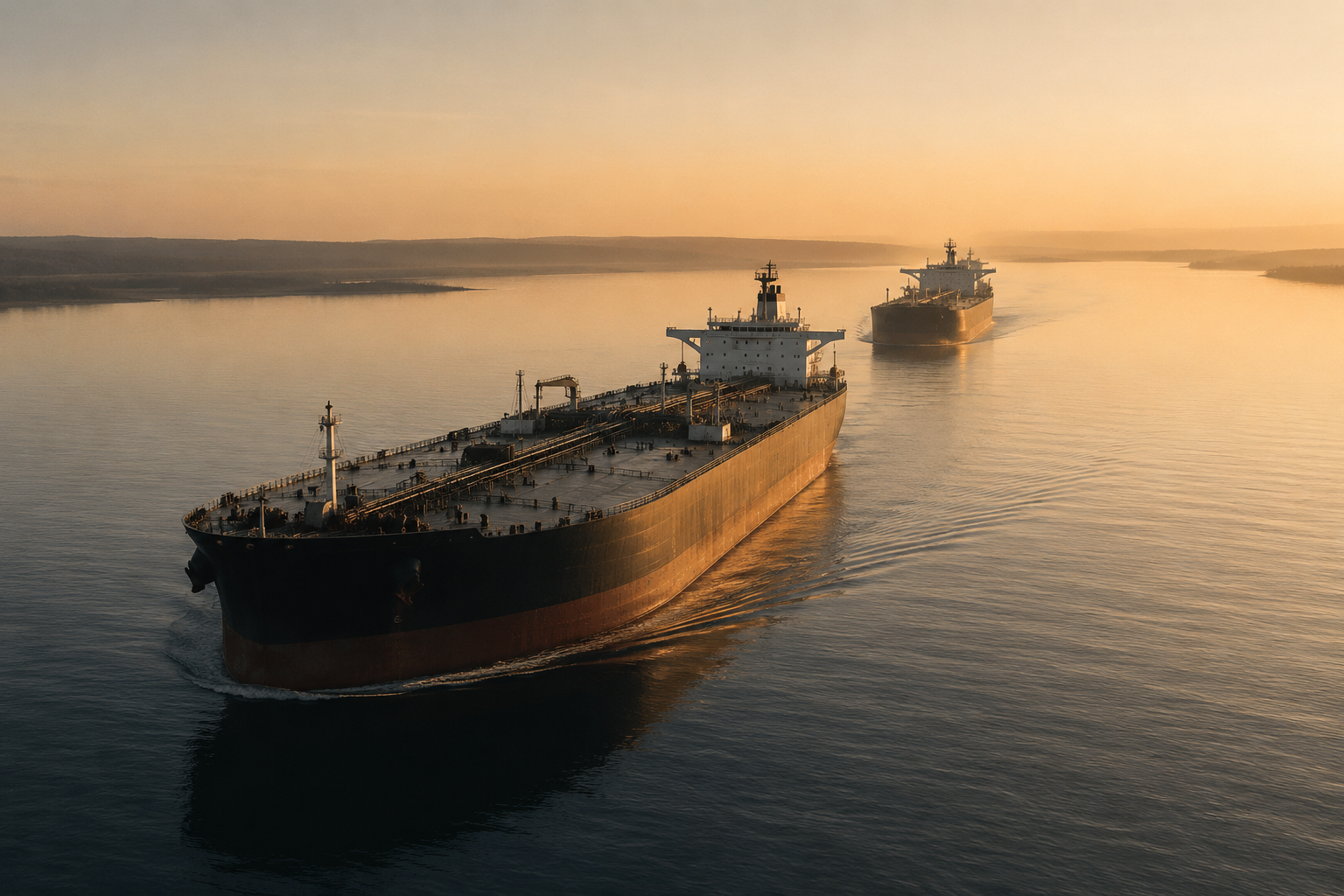
Two tankers belonging to the National Iranian Tanker Company, the supertankers Diona and Hero 2, passed through the Strait of Hormuz on 17 June carrying Iranian crude oil, ship-tracking platform Tanker Trackers confirmed, matching digital data with satellite imagery. It is the first time Iranian crude has left through the strait since the US naval blockade took effect in April; UANI's monthly tracker recorded zero crude shipments through the blockade for the entire month of May.
The movement came three days after President Trump announced the framework agreement and declared the blockade lifted, and two days before the MoU is due to be formally signed in Geneva. Iran's deputy foreign minister, Kazem Gharibabadi, had said Iran would not begin implementing the deal until after the signing. The tankers' departure suggests Iranian operators are reading the Friday ceremony as a credible commitment.
Zero crude shipments through the blockade in all of May. Two supertankers on 17 June.
The deal itself remains thin: Vice President JD Vance confirmed the MoU runs to roughly a page and a half and is described as 'a very general document.' The 60-day negotiating period that follows will address what the document deliberately avoids, Iran's nuclear programme, its ballistic missiles and its regional proxies. Vance's formulation captures the US position: as Iran does more, it receives more; as it does less, it receives less.
For Central Asia the movement of the Diona and Hero 2 is a data point, not a turning point. Kazakhstan and Turkmenistan have carried a pricing advantage for three months that erodes the moment Gulf supply normalises. Two tankers in one day does not normalise Gulf supply. But the direction is set, and the 60 days after Geneva will determine how fast it moves.