Search
Turkmenistan dates first TAPI gas to mid-2027 and ties it to the Afghan side’s readiness
Turkmengaz expects about 80 billion cubic metres of gas this year and next, roughly half of it exported to China and Uzbekistan. Its chairman told the closing press conference of Oil and Gas of Turkmenistan 2026 on Friday that the Serhetabat to Herat section of TAPI should be complete by the end of this year, with first gas to Afghanistan by mid-2027 if the Afghan side is ready.
Kashagan tribunal rejects $12 billion of Kazakh claims as time-barred, Bloomberg reports
An international arbitration tribunal has rejected about $12 billion of Kazakhstan’s claims against the Kashagan consortium’s shareholders over disputed development costs of 2011 to 2015, ruling that the government filed too late, and allowed about $8 billion of other claims to proceed, Bloomberg reported on 22 October citing people familiar with the matter. The process continues, and Astana still seeks more than $150 billion.
Dushanbe says the ADB plans $500 million for Rogun as Barqi Tojik owes it $110 million
Tajikistan’s finance ministry came back from Bangkok with a plan for $500 million from the Asian Development Bank, a $200 million grant and a $300 million concessional loan, not yet approved. A day later Rogun’s nine-month report showed the state utility owing the plant 983.2 million somoni, up 21.6 million in September after falling since February.
Rogun’s updated labour document dates the dam to 2032 and the cost to $6.6 billion
The labour management procedures for the Rogun project, updated in September 2026 and published on the plant’s site, give 2032 for the dam’s completion where the 2024 edition gave about 2029, and $6.6 billion as the estimated cost of completion against $4.9 billion, Asia-Plus reported on Friday 16 October. The document also counts 20,563 workers in August, 38% more than at the end of 2023.

Russia reopens diesel exports for 500,000 tonnes while a US licence runs to April
Russia’s government partly lifted its diesel export ban on Saturday, for 500,000 tonnes from 10 October, to carry out what Putin and Trump agreed by telephone on Friday. OFAC had licensed the sale, delivery and import of Russian-origin diesel the day before, through 7 April 2027. Neither document says whether the 500,000 tonnes stand beside or count against the duty-free balances under which Russian fuel reaches Kazakhstan.
Mirziyoyev hears of five gas discoveries and 80 wells as Uzbekistan’s output keeps falling
Uzbekistan has discovered five gas fields and drilled 80 wells this year, with 40 more due in the fourth quarter and 3D seismic work to reach five times last year’s volume, the presidential press service said after Mirziyoyev reviewed the sector’s large projects on 5 October. The readout prints no output figure, no sum and no partner’s name. Gas output was 16.3% lower in January to August.
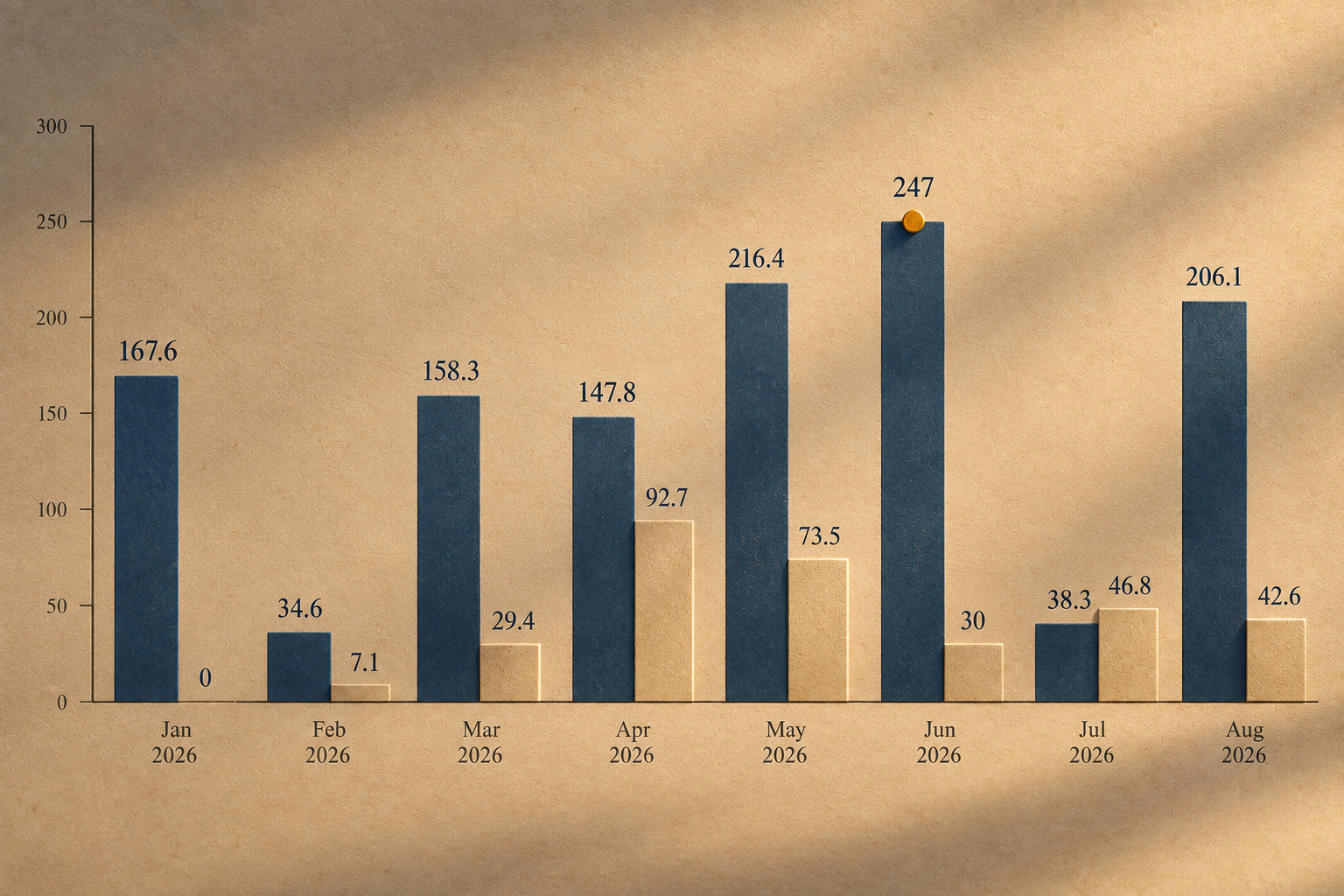
Uzbekistan imported $1.21 billion of gas in 8 months and sold $322 million
Uzbekistan’s gas imports were worth $1.21 billion in January to August, 15.2% more than a year earlier, while its gas exports fell 34.8% to $322.3 million, by National Statistics Committee figures published on 1 October. The bill is almost 4 times the receipts, and on Thursday the US Trade Representative faces its first deadline under the act aimed at the 5 largest importers of Russian gas.
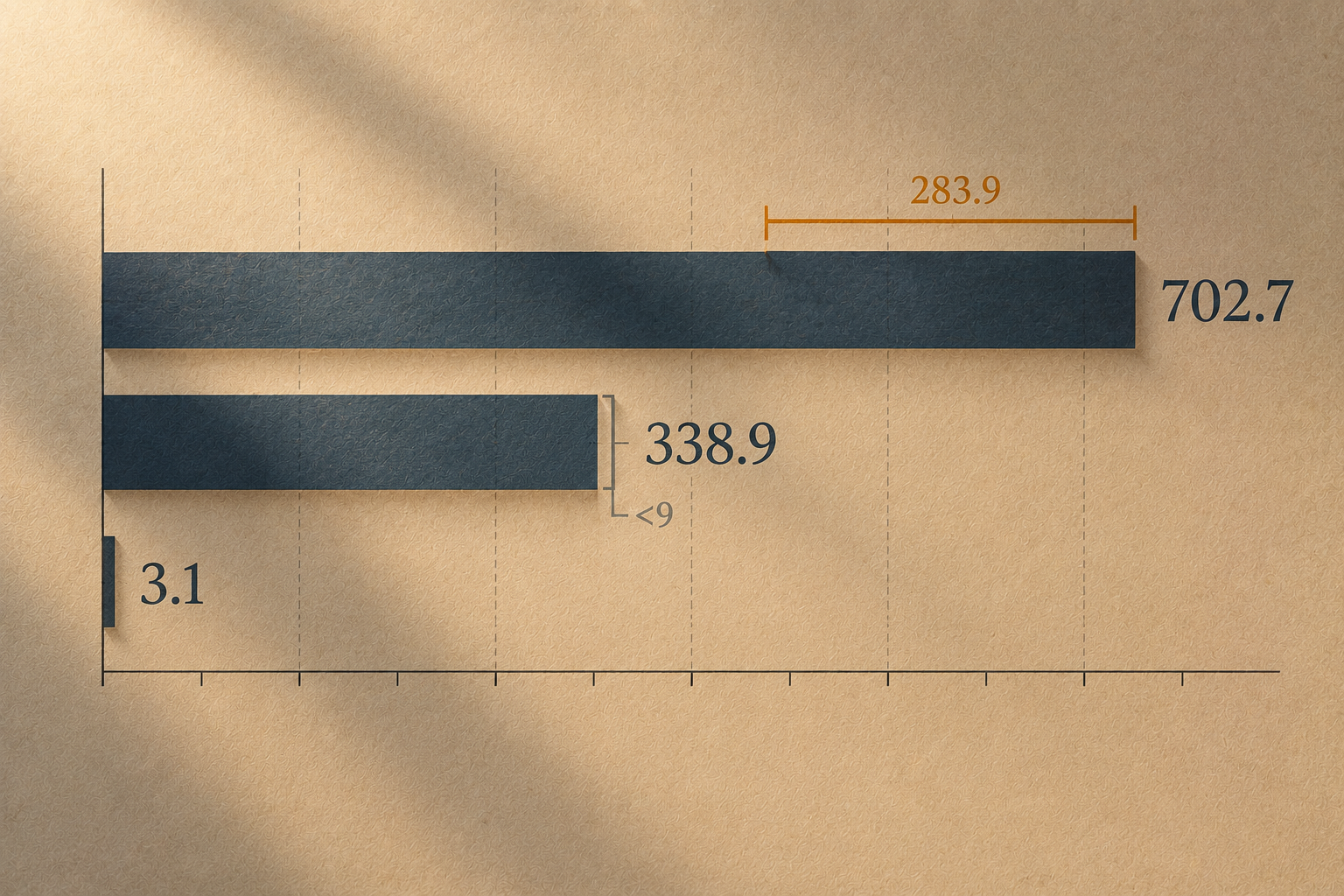
Afghanistan takes two thirds of Tajik power exports before CASA-1000’s last link is built
Barqi Tojik told Afghanistan’s grid company in Dushanbe that it plans a 500 kV line and will consider sending more power, the Afghan side said. The energy ministry’s half-year figures show why Kabul is the one asking for more: of 1,045 million kWh exported from January to June, 702.7 million went to Afghanistan, for 283.9 million somoni. CASA-1000’s Afghan section is due by spring 2027.
China's refiners halt fuel exports for October, and Mongolia has 18,000 tonnes on order
Chinese refiners have halted exports of petrol, diesel and jet fuel for October to every destination but Hong Kong and Macau, Reuters reported on Thursday, citing 4 sources. Mongolia has ordered 8,000 tonnes of petrol and more than 10,000 of diesel from China for the month, Kyrgyzstan thanked Beijing last week for stable supplies, and Russia's producers' diesel export ban runs to 31 October.
Drivers circle Sukhbaatar Square as Mongolia's opposition moves on the cabinet
Cars circled Ulaanbaatar's central square on 1 October in protest at a petrol shortage that began in July. In parliament, a Democratic Party MP read out the loan ledger behind a ₮500 billion fuel-storage programme and said the whole cabinet must answer, while his party collects signatures to bring down the government. The fuel headquarters and the Khural plenary sit at 14:00 Ulaanbaatar time.
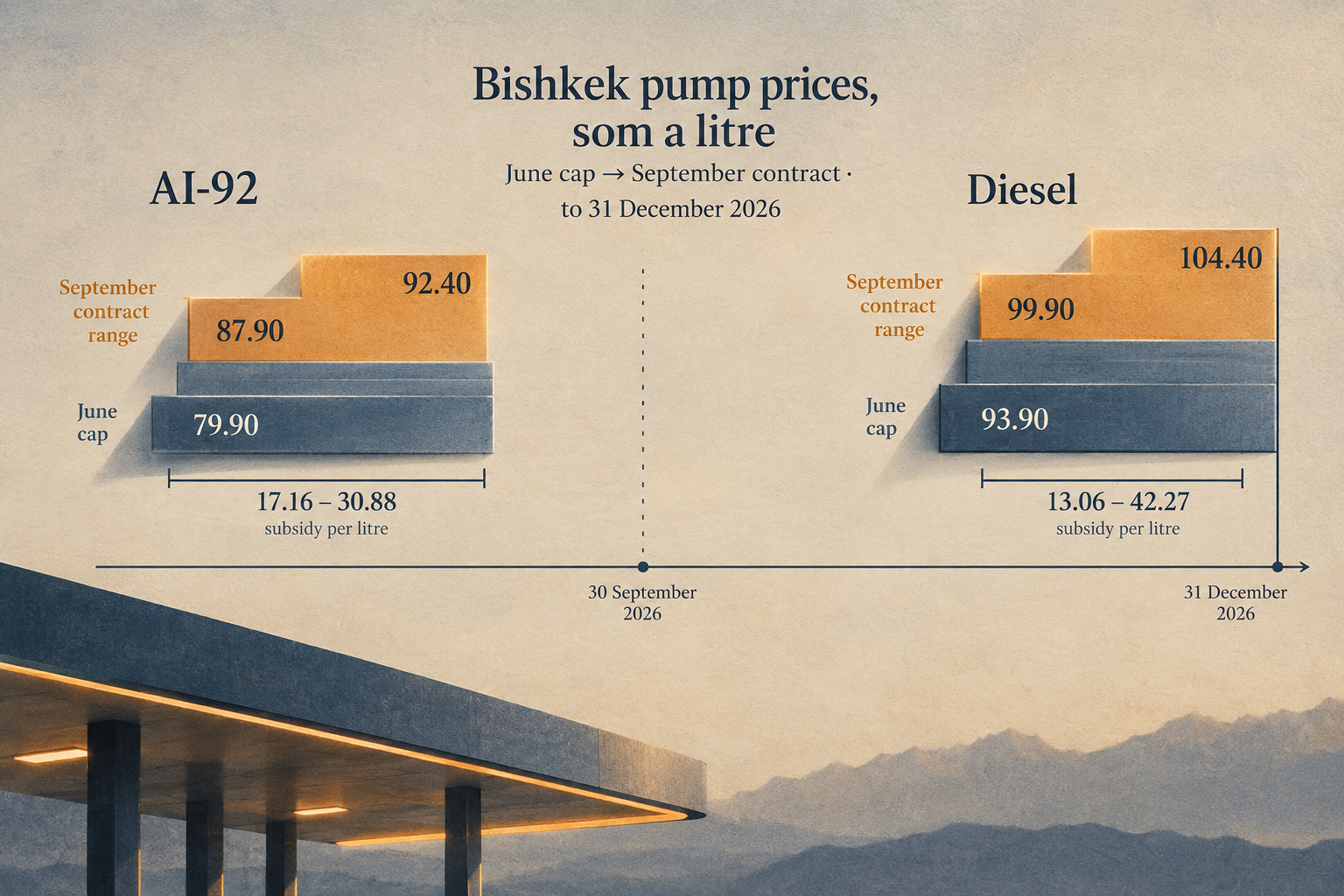
Kyrgyzstan’s fuel cap expires tonight while its subsidised price agreements run to 31 December
The cap on fuel prices that the cabinet set in May runs out tonight, and nothing changes at the pump on Thursday. A second resolution of 7 July moved price-setting to agreements between the antimonopoly service and the sellers, the service printed the agreed ranges on 11 September, and the subsidy that holds them runs to 31 December, the economy ministry says. The cap stopped setting prices 12 weeks ago.
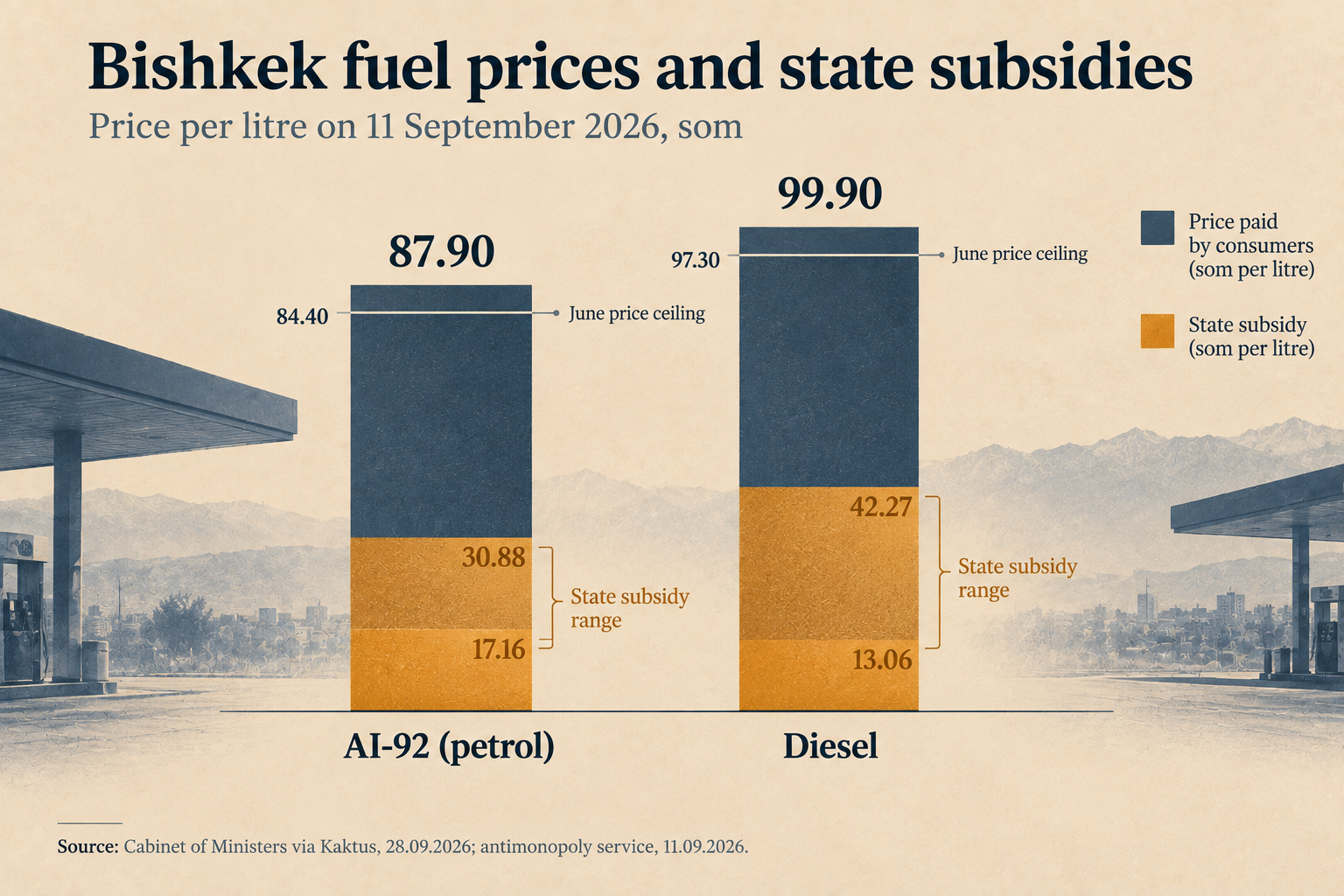
Bishkek's diesel subsidy reaches 42 som a litre with 2 days left on its fuel price ceilings
The Kyrgyz cabinet's readout of Monday's fuel meeting gives the subsidy paid to importers per litre in ranges set by contract: 17.16 to 30.88 som on AI-92 petrol, 13.06 to 42.27 som on diesel, 0.46 to 1.40 som on autogas. The antimonopoly service's price ceilings, in force since 25 May, run to 30 September. It does not mention them.
Russia locks away its fuel export data, and the region loses the numbers behind its diesel
Decree 686, published on Monday, bars anyone in Russia from publishing what its fuel exporters ship, to whom, at what price and through which port, plus refinery output and exchange sales of petrol and diesel. Companies may disclose their own figures; the government has 10 days to list the goods covered. Kazakhstan, Kyrgyzstan, Tajikistan and Mongolia, whose Russian diesel intake doubled in August, lose the exporter's side of the count.
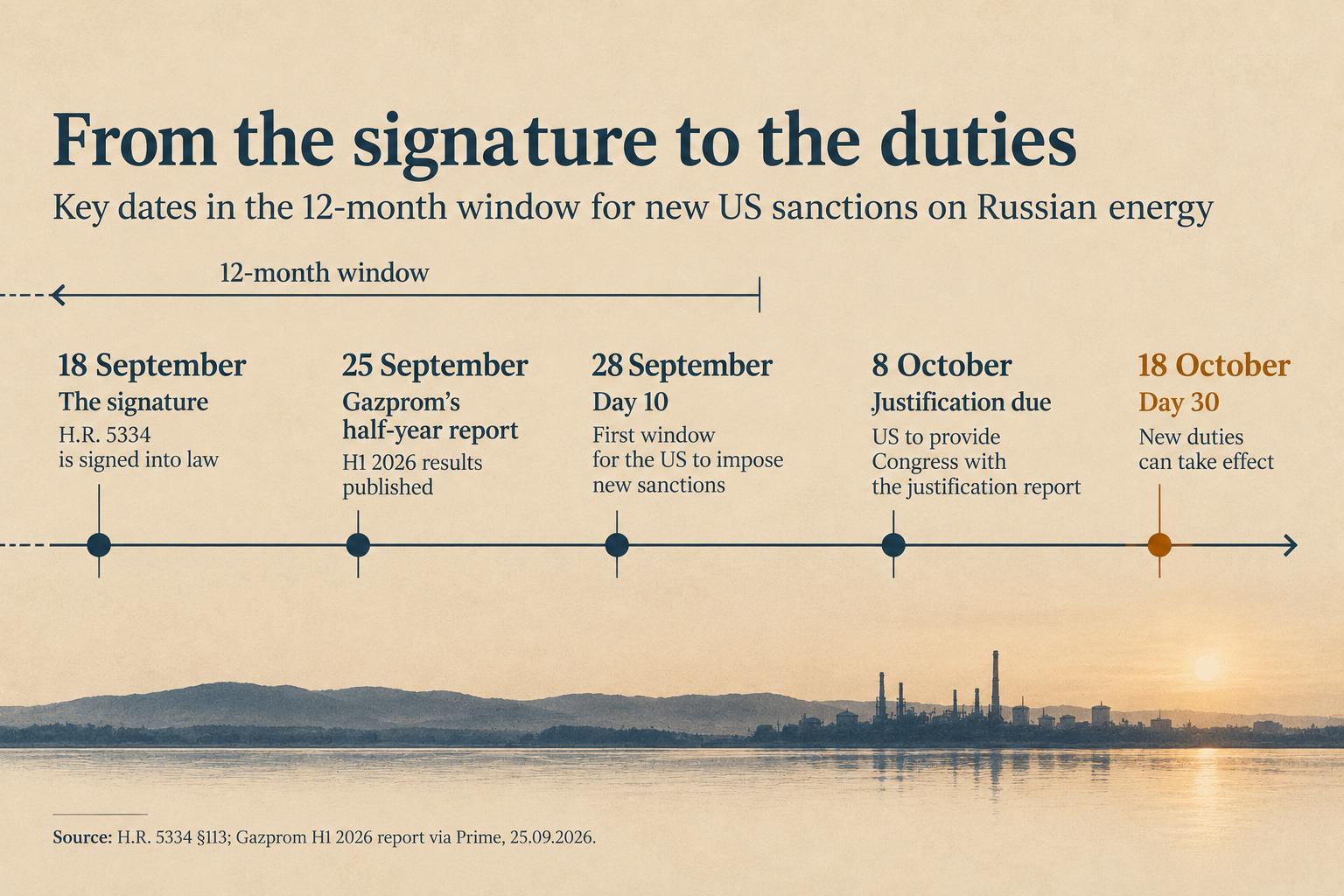
Gazprom says its growth is Kazakhstan, and the USTR has 10 days to show its count
Gazprom’s half-year report, as Prime quoted it on Friday afternoon, says its pipeline sales to the near abroad rose 29% in the first half of 2026 mainly because of Kazakhstan, and prints no volume. Monday is day 10 of the law that ranks Russia’s gas buyers; the US Trade Representative’s written justification is due by 8 October, and its press page through 27 September carries nothing on it.

A dawn test at the new Syrdarya plant knocks 1,600 MW off Uzbekistan’s grid, splits Kazakhstan’s north-south transit and sheds 962 MW in the south for 41 minutes
At 05:05 on Friday, during commissioning tests at the new 1,573 MW thermal plant in Bayavut district of Syrdarya region, built by the consortium of France’s EDF, Qatar’s Nebras Power and Japan’s Sojitz and Kyuden, 1,600 MW of capacity dropped out of Uzbekistan’s grid and households and farm water pumps in several regions lost power, the energy ministry said through its Telegram channel; reserves at other plants and the storage systems were brought in, every consumer was back by 07:27, and the ministry apologised, Spot reported at 07:54. Kazakhstan’s grid operator KEGOC put the loss at 1,516 MW at 05:02, said the surge of power flow split its north-south transit, restricted 962 MW of consumption, and restored the southern zone’s parallel operation with the Central Asian systems at 05:43, Forbes.kz reported.
Tashkent plans 57.2 GW by 2035 with 26 storage projects and nearly 5,000 km of new lines behind a grid it says will now be built from demand
President Shavkat Mirziyoyev reviewed a plan on Tuesday that takes Uzbekistan’s generating capacity to 46.1 GW by 2030, for about 129 billion kWh a year, and to 57.2 GW by 2035, for 154.7 billion, the presidential press service reported. The plan counts 6.3 GW of solar and wind already built, more than 100 hydro plants at close to 2.5 GW, 26 storage projects of 4.2 GW with 17 under way, and, by 2030, 9 new 220 kV substations, 7 at 500 kV and almost 5,000 km of new transmission lines. Its stated method is new: demand is set first, then the plants and the wires.

Trump signs the Graham act without a word, and the gas list's clock now runs to 18 October
The White House recorded the signature of H.R. 5334 on Friday 18 September in a single sentence. Under the law the president has 30 days to raise duties to as much as 100% on the 5 largest buyers of Russian oil or gas, and on CAW's count Kazakhstan and Uzbekistan sit at the edge of that 5.
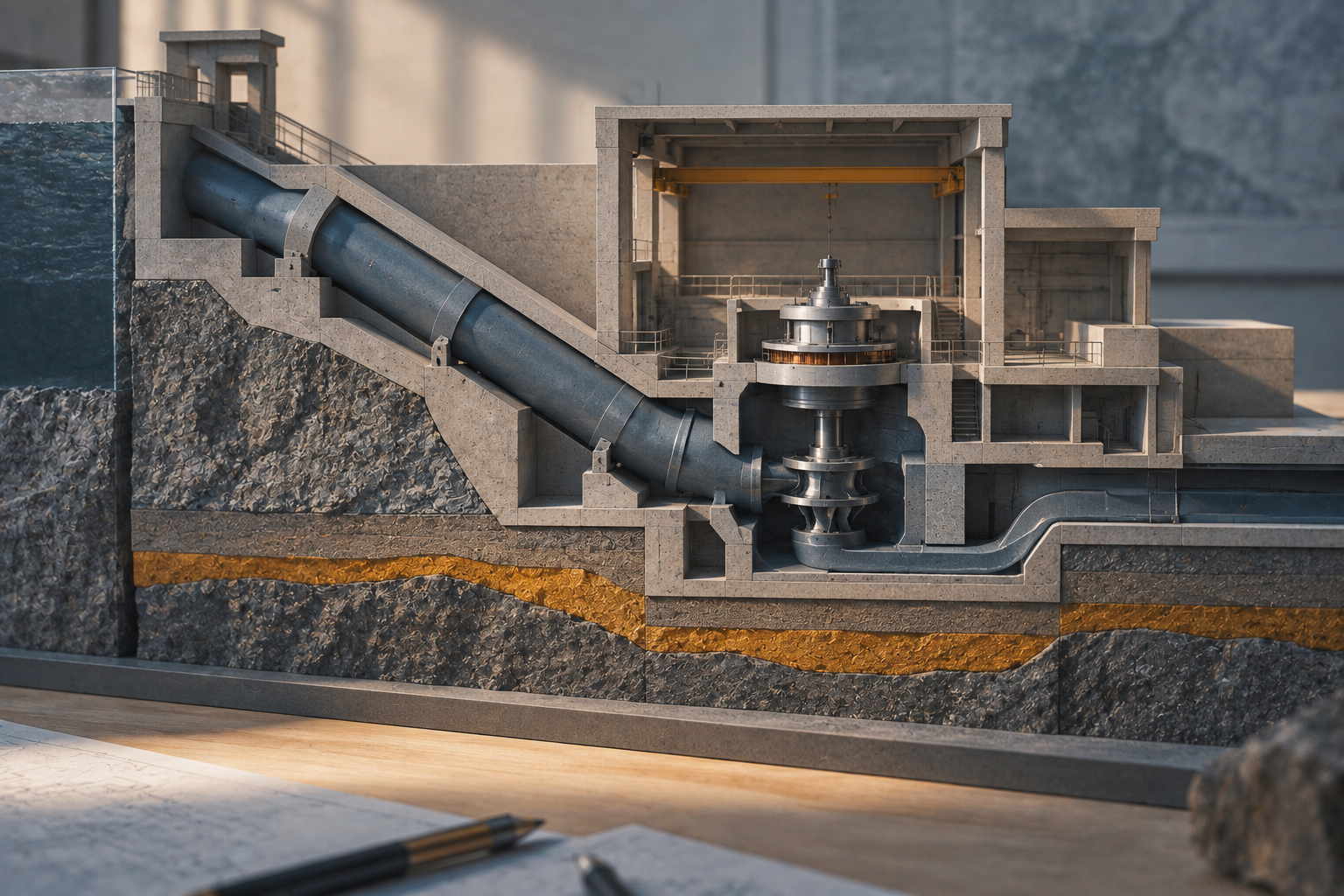
Nurek’s second phase would put $220 million of AIIB debt on Dushanbe’s books as the World Bank’s grants give way to credits
The Asian Infrastructure Investment Bank’s project list carries a proposed $220 million sovereign loan for the second phase of the Nurek plant’s rehabilitation, with a concept review dated 3 July and the World Bank and the Eurasian Fund for Stabilization and Development as co-financiers, Asia-Plus reported on Wednesday. The World Bank has paid for the second phase so far with grants, $50 million in 2020 and $65 million in 2021, and its new country framework turned grants into credits on 1 July.
A $1 billion contract for Rogun's right bank appears in the World Bank's procurement plan, with 13 August in the signing column and no contractor named
The Bank's updated procurement plan for the Sustainable Financing for Rogun project, published on 6 September, lists Lot 3A, the remaining right-bank structures, at an estimated $1 billion, Asia-Plus reported on Tuesday. The package it replaces was priced at $1.385 billion and cancelled. A day earlier, in London, the finance minister signed an EBRD investment roadmap to 2030.

Who sets the price of petrol: six machines between one Russian exchange and the pump
Central Asia and Mongolia buy most of their fuel from Russia and price it six different ways. A tour of the machinery, from Bishkek's dollar wall to Ashgabat's two price tags, and what each one does when the exchange in St Petersburg moves.