The bank’s release, as Interfax carried it on Thursday morning, points two ways. Inflation expectations are falling and price growth has stabilised, it says, while strong domestic demand and external risks “require the preservation of a tight monetary policy”.
Inflation ran at 6.4% year on year in September, a small rise on August on fruit, vegetables, fuel and some services, and the share of goods and services dearer by more than 5% over the year grew. Households expected 8.7% inflation over the next 12 months in September, businesses 9.2%, both lower than before.
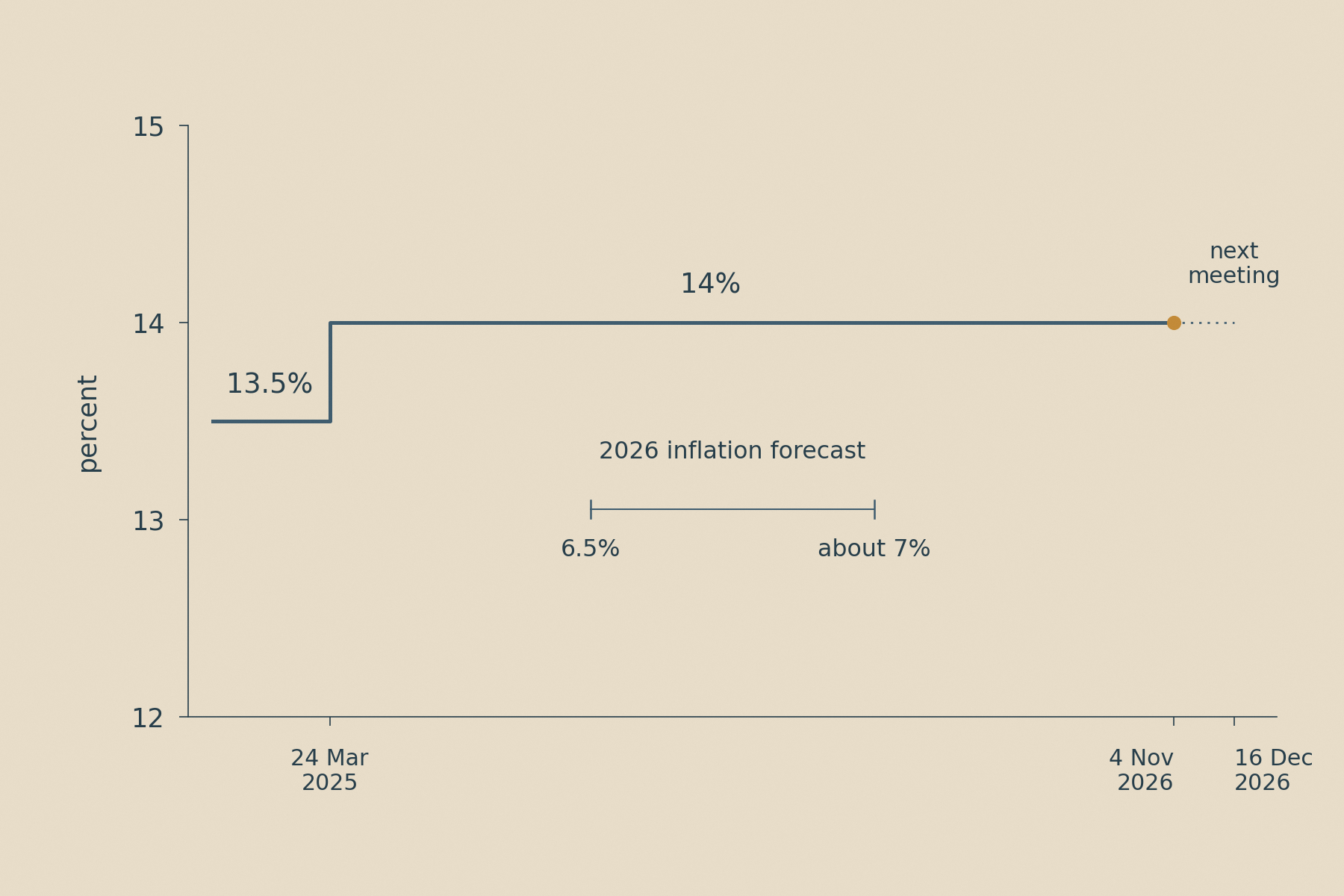
The bank raised its growth call and its inflation call together. GDP grew 8.3% in January to September, on industry, construction and services, and the full-year forecast moved up to 8% from 7.5 to 8%. The inflation forecast for 2026 went from 6.5% to about 7%, on domestic demand, the risk of dearer energy on world markets and planned rises in regulated prices.
Nodirbek Achilov, the deputy chairman, said the board considered two options on 4 November, holding at 14% or cutting to 13.5%, and that lower expectations and a stabilising core rate argued for the second. The question “requires further discussion”, he said. Spot quoted him on the tariff rises as one reason to hold, to contain their second-round effects, and on the 2027 target of 5%.
The 14% rate dates from 24 March 2025, when the bank raised it from 13.5%. The next board meeting on the rate is set for 16 December.