A third grade, K2, stood at 14.73 million soums. On so small a volume the ordinary grade moves sharply: over the previous two weeks it ranged from 12.35 million soums to 15.5 million, sometimes from one day to the next, Spot’s reading of the data shows. K2-L, which now accounts for most petrol sold on the exchange, touched a low of 13.68 million on 6 November and has risen steadily since.
Wholesale prices first approached 14 million soums a tonne at the end of June and held near 13.3 million from mid-August. Sharp swings in the ordinary grade began in mid-September, and for most of October a tonne cost more than 14 million.
Petrol prices to consumers rose 1% on average in October and 19.5% over twelve months, by the national statistics committee’s figures, with a litre of AI-92 up 0.5% in the month. In the central bank’s October survey of how people perceive inflation, 47% of respondents singled out fuel, second only to meat and dairy products at 52%.
Russia has had a full ban on exports of petrol and diesel in force since 1 April and extended it in July to the end of January 2027, Spot noted. Uzbekistan’s Energy Ministry has said repeatedly that the restriction does not cover supplies under intergovernmental agreements.
Spot links the summer’s price jump to a shortage on the Russian market itself, after unplanned refinery repairs that followed Ukrainian drone strikes. The Energy Ministry told the outlet that Uzbekistan is working on imports from Azerbaijan, Turkmenistan and Belarus.
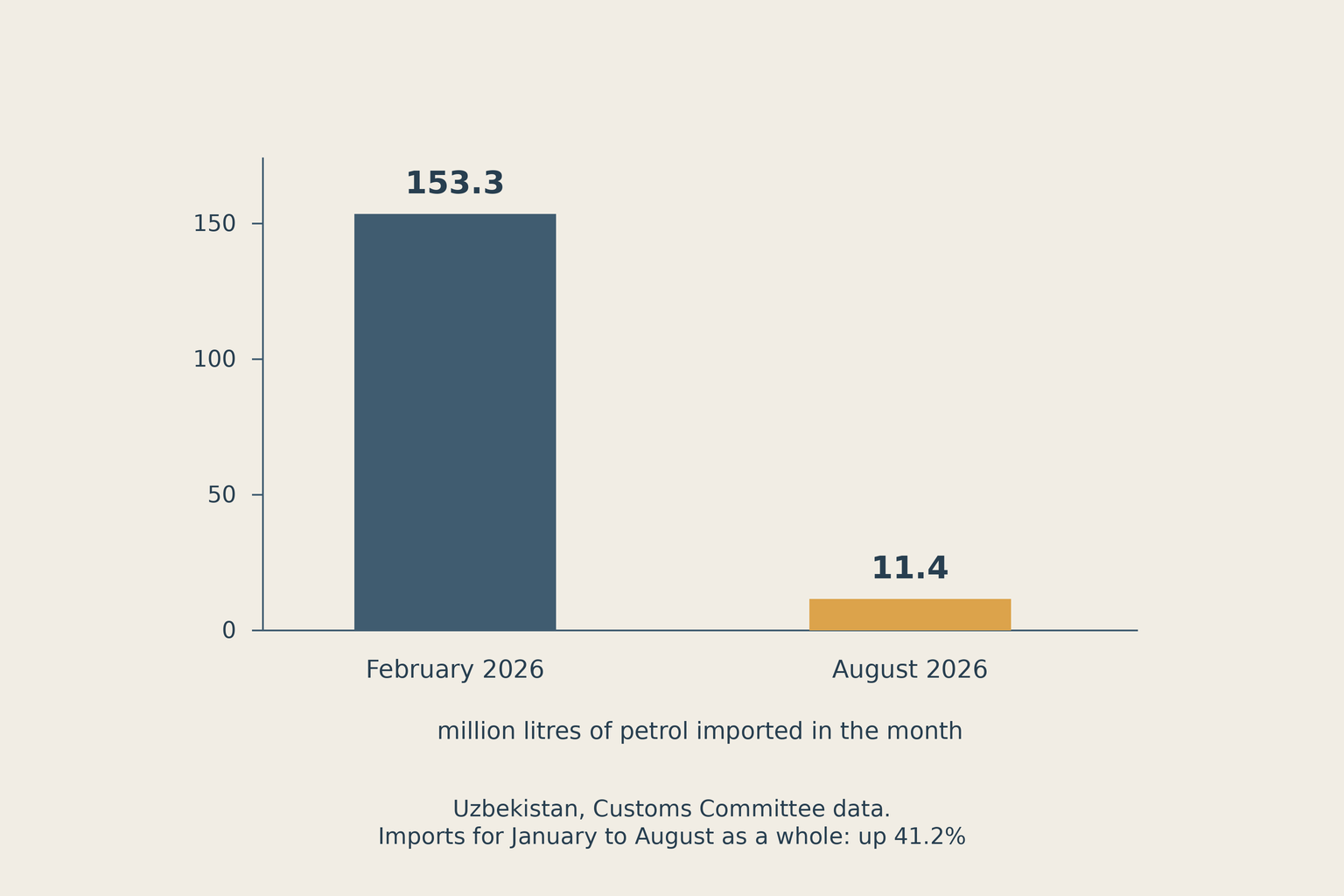
Monthly petrol imports fell from 153.3 million litres in February to 11.4 million in August, less than a thirteenth, by Customs Committee data. The total for the first eight months of 2026 was still 41.2% up, at 721.5 million litres, Spot reported in September.