Uzbekistan’s records held almost 2.3 million cattle that the farm census could not find. They lacked 298 million square metres of housing that the population census did find. The National Statistics Committee put both corrections into one recount, and on Friday 13 November it reported the sum: the economy of 2025 was 15% larger than first published.
Gross domestic product for 2025 is now 2,126.8 trillion soums where it had been 1,849.7 trillion, the business news site Spot reported, or $169 billion where it had been $147 billion. The difference is 277 trillion soums: 160.3 trillion from fuller reporting by enterprises, 80.4 trillion from the agricultural census and 36.4 trillion from the population census.
Output per head rose less, from $3,881 to $4,373, because the census also counted 810,600 more people than the running estimate. No one worked an extra hour for any of it. The work had been done and had gone uncounted.
The committee was careful about what it had found. An upward revision of 15%, it said, “does not mean the same economic growth in real terms”, and its figure for real growth in 2025 moved from 7.7% to 7.8%.
Nigeria made its own discovery in 2014, by a different method. On 6 April its National Bureau of Statistics moved the base year of the national accounts from 1990 to 2010, and the economy of 2013 went from 42.4 trillion naira to 80.2 trillion, a rise of 89%. Services, 29% of output on the old count, were 52% on the new one.
The finance minister, Ngozi Okonjo-Iweala, announced the world’s 26th-largest economy, AFP reported from Abuja. Income per head went from $1,555 to $2,688, and the country moved from 135th place to 121st. The bureau’s own slides carried the warning that GDP growth “isn’t synonymous with development”.
The denominators arrived three days later. Alex Cobham of the Center for Global Development worked through the accounts for 2012 and found that tax revenue came to no more than 3.45% of the new GDP. Revenue outside oil and gas, 6% or 7% of output on the old series, was 3.87% on the new one.
Public debt fell from 19% of GDP to 11% without a naira being repaid. The household surveys, Cobham noted, recorded the same incomes as before.
Ghana had gone first. On 5 November 2010 the government statistician, Grace Bediako, moved the base year from 1993 to 2006. Income per head went from $753 to $1,318 on the new accounts, which took the country, in her words, “into the middle income bracket”.
IMANI, a think tank in Accra, wrote within days that the bracket had a price. Above the World Bank’s line of $995 a head, it warned, Ghana could expect to move from concessional loans to a less concessional regime, and it expected the change in July 2011.
Italy did it for the ranking. In 1987 its statistics institute added the untaxed economy to the national accounts, and Italians had a word for the result, il sorpasso: the overtaking of Britain as the world’s fifth-largest economy, the Christian Science Monitor reported from Milan that May.
The total arrives first, with a ranking attached. In Abuja and in Accra the ratios came next, and they moved in both directions, the flattering and the unflattering alike.
The comfortable end shows first in the budget arithmetic. Uzbekistan’s 2027 budget assumes an economy of $232 billion, about 2,790 trillion soums at the current official rate, and keeps the overall deficit within 3% of it. That is a ceiling of about 84 trillion soums, and if the 15% revision carries into 2027 it sits some 11 trillion higher than the old series would have put it, as CAW reported on 16 November.
A rule written as a share of GDP loosens when the denominator grows, and nobody has to decide anything. The uncomfortable end is the same sum read backwards: every share measured against 2025 GDP, whether tax collected, money spent on schools or debt owed, is 13% smaller on the new total, by my arithmetic.
Some of the corrections went down. The farm census found 985,400 hectares of unrecorded land, and crop output was revised up by 19.6%, but with the missing cattle went 13.1% of recorded beef output and 19.2% of milk. Housing counts in GDP through the rent that owners are deemed to pay themselves, so more square metres meant more output.
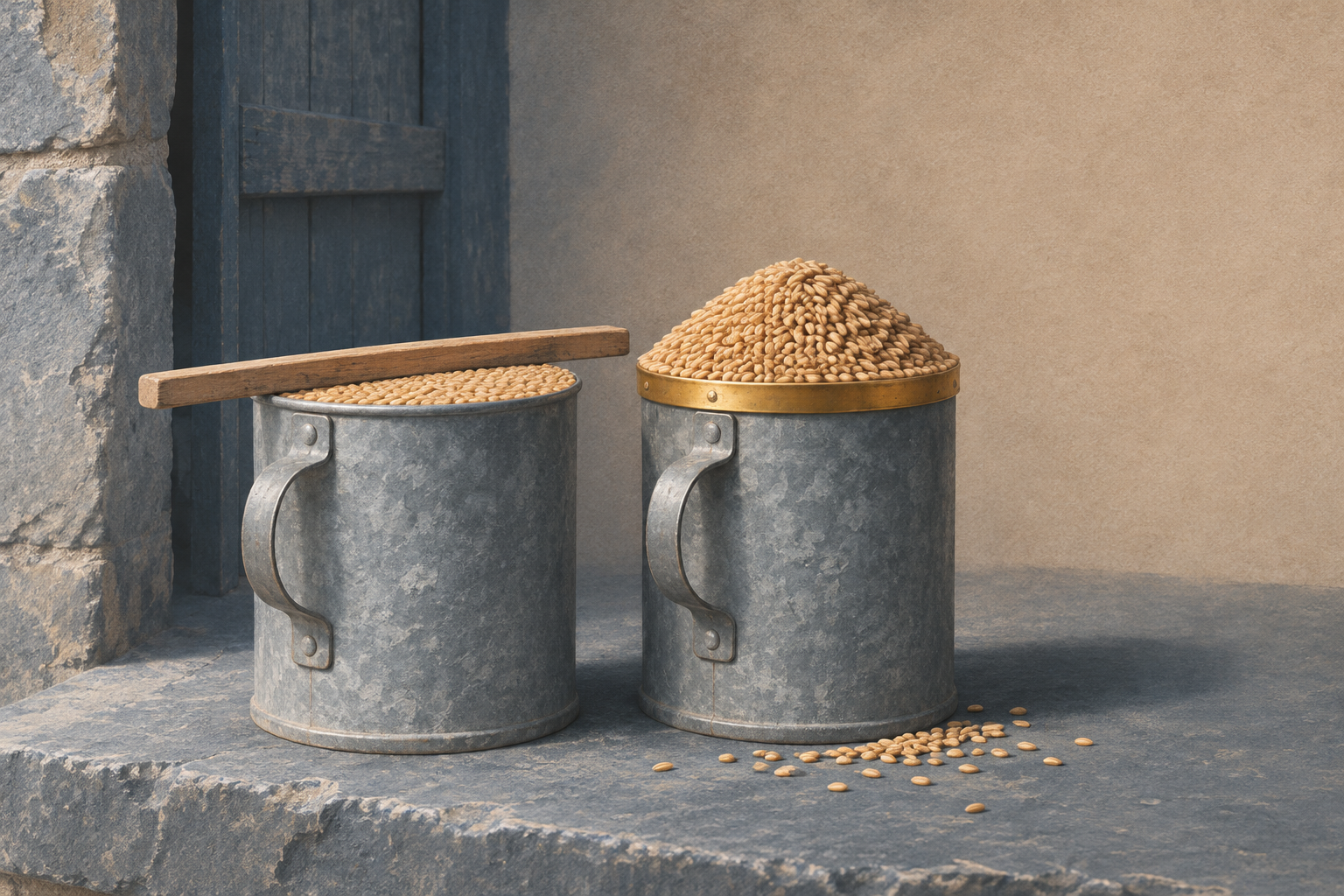
Grain markets once sold by two measures of the same size, one struck level and one heaped, and a careful contract said which was meant. The committee has been that careful: it printed the old figure beside the new one and carried the revision back to 2017. The 3% ceiling moved onto the larger measure without a word being changed.