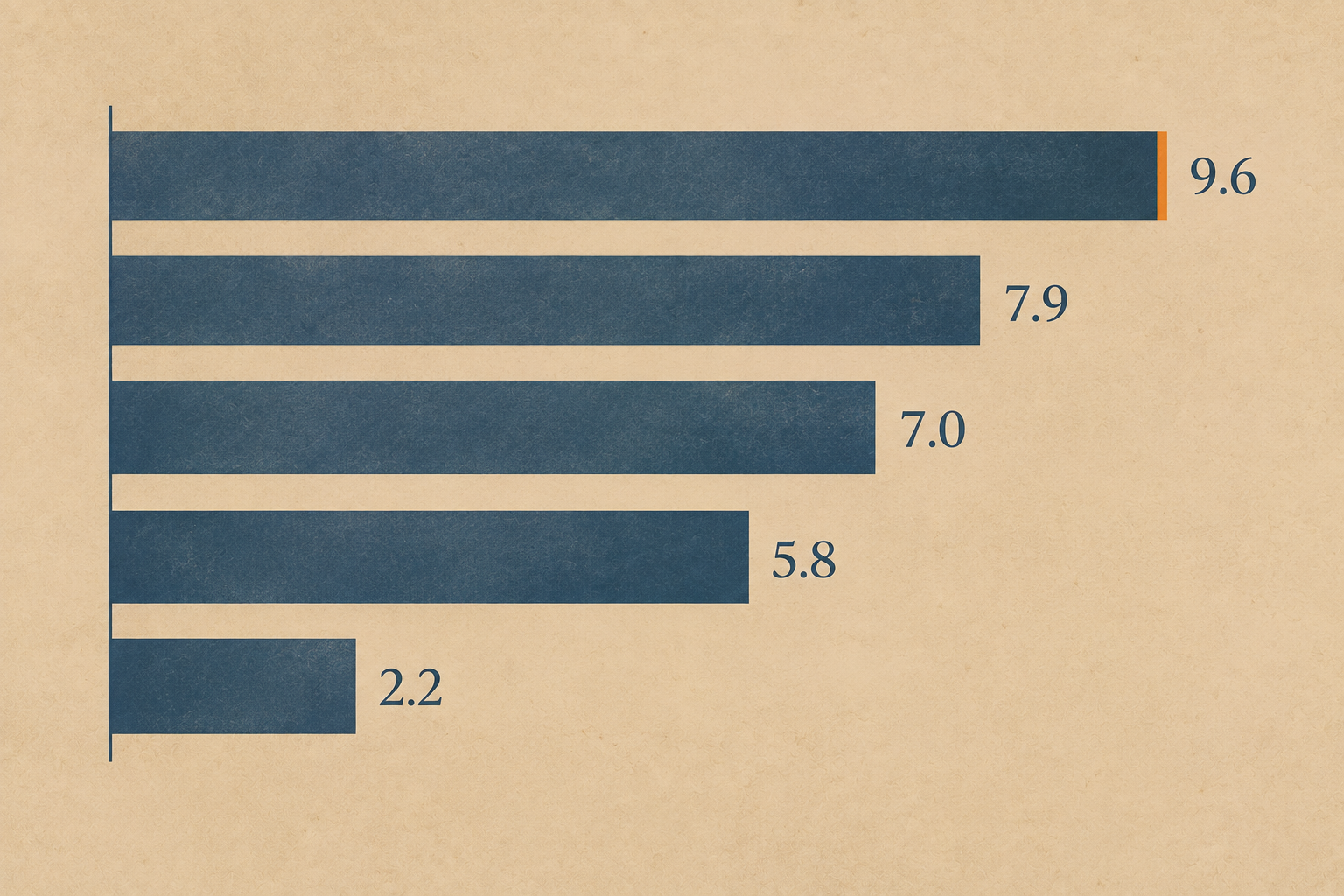
Excluding Russia, which accounts for about 40% of the region’s output, growth moderates to 3% in 2026 from 3.7% in 2025, the release says, with the Western Balkans strengthening to 3.1%, Poland holding at 3.6% and Ukraine slowing to 1.2% amid damage to infrastructure and disruptions to exports. Central Asia’s 5.8% is the region’s fastest, and Kyrgyzstan’s 9.6% is three and a half points above June’s forecast.
The Kyrgyz figure replaces the 6.1% of the Bank’s June Global Economic Prospects, Economist.kg noted on Tuesday. Georgia’s 7% replaces the 5% of the April update, by Newsgeorgia.ge’s account of Tuesday, which adds that Georgia grew 7.5% in 2025 and 7.6% in January to August and that the Bank names the Middle East conflict’s effect on tourism, with receipts from Israeli and Saudi visitors down 12% in the first half, and a fading car re-export effect among the brakes.
Central Asia’s 5.8% is the region’s fastest, and Kyrgyzstan’s 9.6% is three and a half points above June’s forecast.
The update’s theme is artificial intelligence: about one in five workers in the region hold jobs meaningfully exposed to AI and fewer than one in 10 firms use it, mostly for basic tasks, the Bank says. The release names no figure for Kazakhstan, Tajikistan, Turkmenistan, Azerbaijan or Armenia.