Central Asia Wire
Independent Central Asia Monitor
Breaking
Jensen Huang proposes Kazakhstan as a hub of physical AI and receives the Order of DostykUzbekistan summons Iran’s ambassador over posts calling the Registan Persian heritageNovak counts three diesel tankers at sea and a 500,000 tonne October export allowanceArmenia has effectively already withdrawn from the CSTO, Masadykov says
Energy

Japarov says Kambar-Ata-1 may start in 2027 or 2028 and take five to six years to build

Preparatory work on the Kambar-Ata-1 hydropower plant is complete and construction could begin in 2027 or 2028 and take five to six years, President Sadyr Japarov told residents of Tash-Kumyr and Kara-Kul in Jalal-Abad region, 24.kg reported on Saturday. The plant on the Naryn is a project of Kyrgyzstan, Kazakhstan and Uzbekistan, with three units totalling 1,860 megawatts and an estimated cost of $4.2 billion.

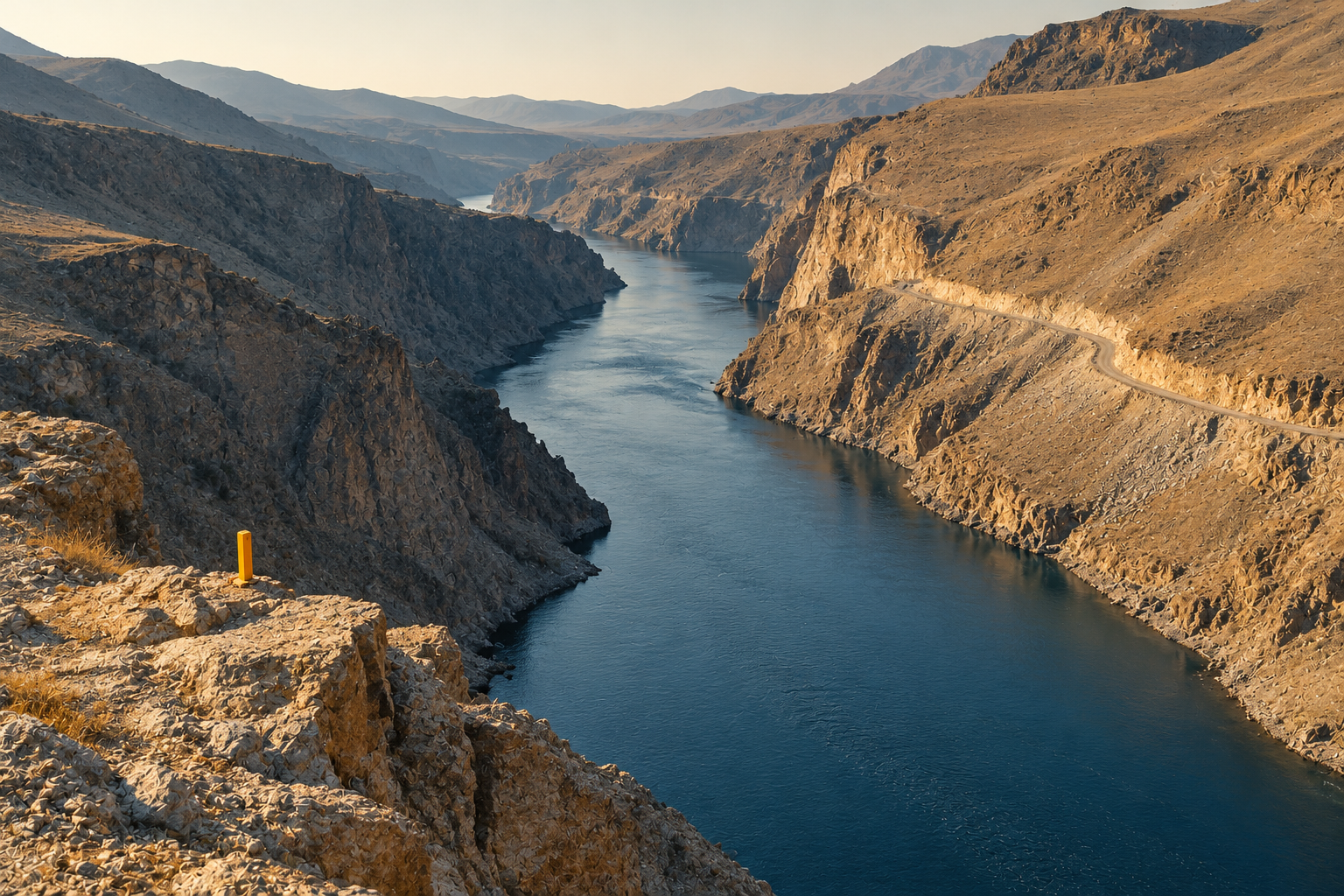
Seen from above, a slate blue river threads a narrow gorge between sand-coloured rock walls, with an access road on one slope and an amber survey marker on a ledge.

Japarov said the preparatory work on Kambar-Ata-1 is complete, 24.kg reported from the meeting. “God willing, next year, in 2027, or in 2028 we will begin construction, and in five to six years we will build it,” he said.

A resident of Kara-Kul had raised the state of the town’s heating and water networks and asked for the dam’s work to be sped up, saying he had himself worked on the construction of six hydropower plants, 24.kg wrote.

“God willing, next year, in 2027, or in 2028 we will begin construction, and in five to six years we will build it,” he said.

Kambar-Ata-1 is being built on the Naryn by Kyrgyzstan, Kazakhstan and Uzbekistan. The station is to have three units with a combined capacity of 1,860 megawatts and to generate about 6 billion kilowatt-hours a year, at an estimated cost of $4.2 billion.

Kyrgyzstan imports about 4 billion kilowatt-hours a year, the energy ministry told parliament last week, and plans to lift its peak-hour limits only after the Kara-Keche power plant starts in 2029, as CAW reported on 22 October.