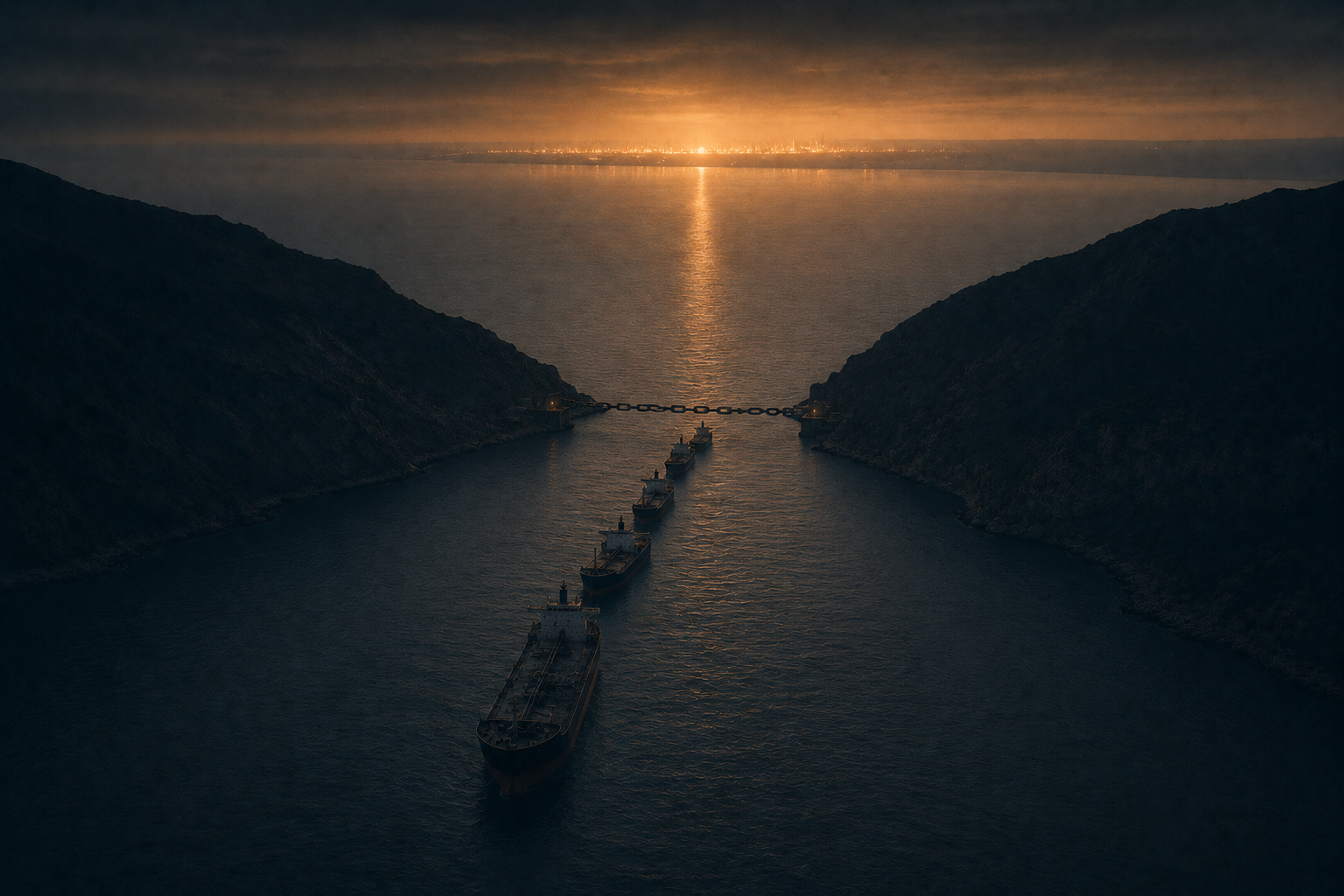
The 2026 Iran war escalated sharply on 10 and 11 June. The United States launched new strikes on Iran, and Iran’s Revolutionary Guard Corps said it hit 18 targets at US bases in Kuwait, Bahrain and Jordan and declared the Strait of Hormuz closed to all vessels, warning ships not to approach and saying it had struck two that tried to transit. President Trump said the United States would hit Iran very hard and threatened to take control of its oil industry. Higher energy prices have pushed US inflation above 4 percent.
The war began on 28 February with US and Israeli strikes that killed Iran’s supreme leader, Ali Khamenei. Iran first closed the strait in early March, sending Brent crude above 120 dollars at the peak and drawing a months-long US campaign to reopen the waterway. The latest exchange ends the most recent lull.
Kazakhstan’s oil leaves by the Black Sea, but the war shuts the southern routes the region uses to reach the Gulf.
For Central Asia the closure works mainly through prices and routes. It does not pass through Hormuz: Kazakhstan ships most of its oil west along the Caspian Pipeline Consortium line to the Black Sea. But the war chokes the International North-South Transport Corridor, the rail and sea route through Iran that gives landlocked Kazakhstan, Turkmenistan and Uzbekistan their shortest path to Gulf ports such as Bandar Abbas. Iran’s March ban on food exports has already pushed up prices in Kazakhstan, Tajikistan and Turkmenistan.
Astana has held to what it calls pragmatic neutrality, balancing Iran, Israel, the Gulf states and the West. That posture is easier to maintain in calm than in a week when the Gulf is again on fire.