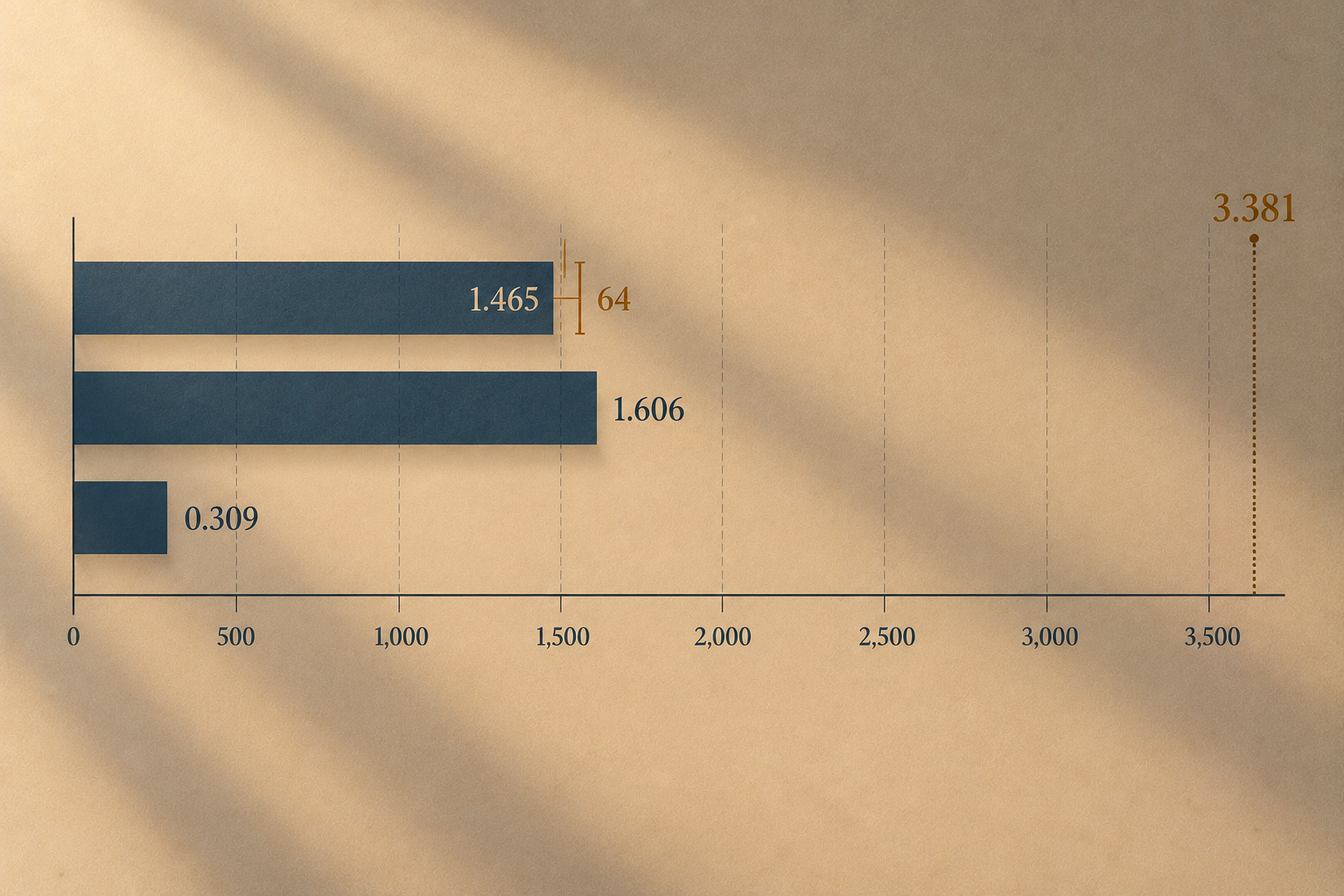
In the ministry’s books the free supply is a quasi-fiscal activity. The plant released 3.381 billion kWh to the grid in 2025, so the power sent to Abkhazia was 43% of its output, and its revenue fell to about 76 million lari, the lowest since 2021, according to the document as bm.ge quotes it. On CAW’s arithmetic the 64 million values the Abkhazian supply at about 4.4 tetri per kWh, close to the 4 tetri the plant averaged on the 1.915 billion kWh it sold and exported.
“Had it not been for the energy supplied free to Abkhazia, the company’s profit at the end of 2025 would have been 61 million lari, whereas the company closed the reporting year with a loss of 3.7 million lari,” the document reads. Among the other causes of the loss the analysis names a currency loss from the lari’s depreciation against the euro, with no figure for it in bm.ge’s account.
In the ministry’s books the free supply is a quasi-fiscal activity.
The same annex, as CAW reported on Thursday, puts 8 pending arbitration claims against Georgia at $4.8 billion. The budget it accompanies plans 32 billion lari of spending and 25.2 billion of tax revenue for 2027, and the finance ministry has published the analysis as a PDF dated 30 September on its site. bm.ge’s account does not say under what arrangement Enguri supplies Abkhazia or at what tariff the ministry valued the power.
Enguri’s 2026 figures come with the next annex, a year from now. Before that the budget goes through parliament, with the free supply counted as a quasi-fiscal activity outside it and not as a line of its own.