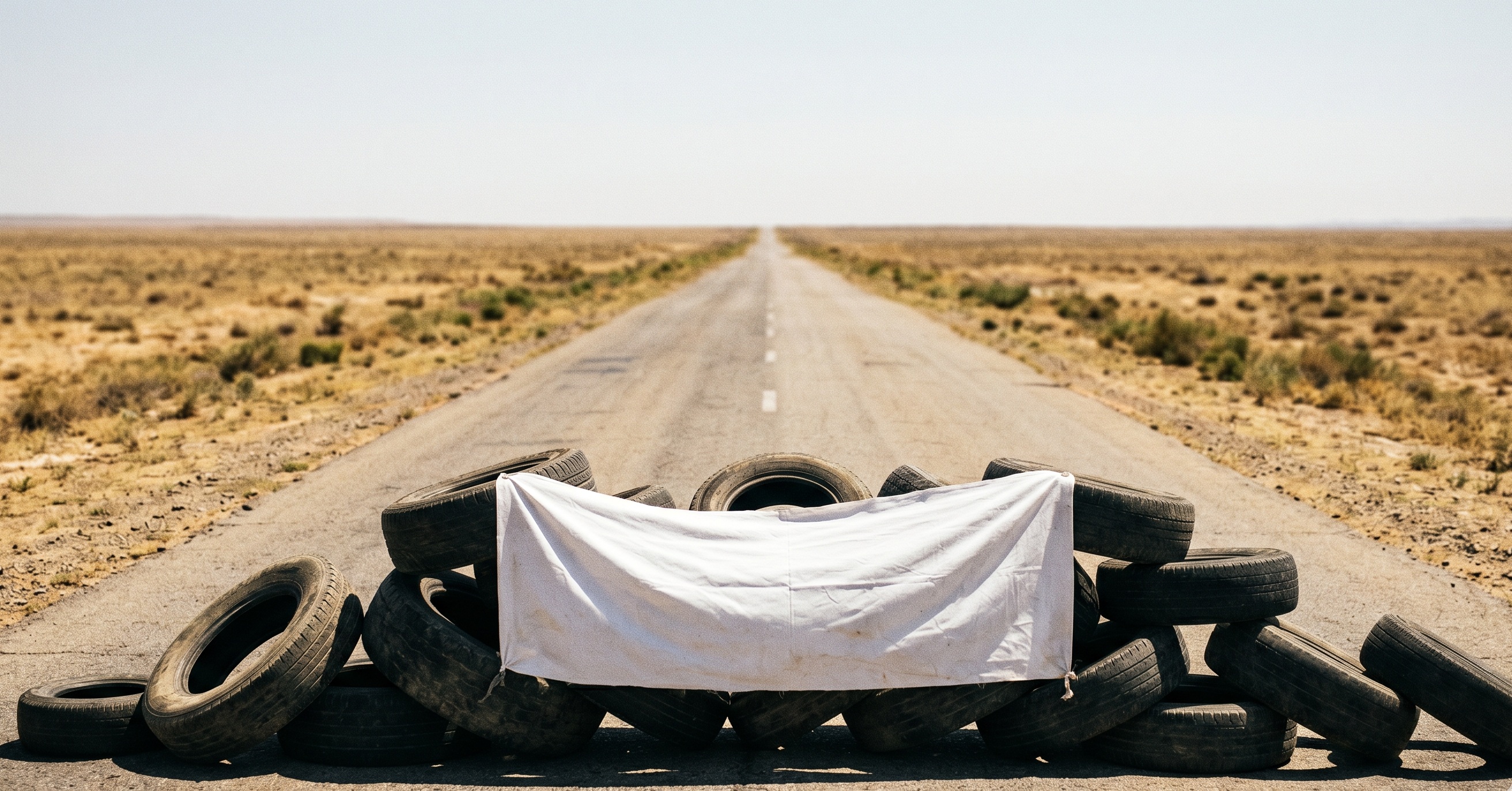
Protesters organised by Mongolia's Radical Reform movement erected a barrier on the two-lane highway used to haul copper concentrate from the Oyu Tolgoi mine to the Chinese border, blocking the road from 09:00 local time on 17 June. Videos posted by the group on Facebook showed a small gathering of demonstrators and a white banner reading 'Stop Rio Tinto' draped across a tree branch above the road, with a wall of tyres underneath. Rio Tinto's local subsidiary warned on its Facebook page of 'a risk of not fulfilling contractual duties' and said the disruption could inflict 'significant disruptions to the State budget and tarnish the reputation of Mongolia and the Mongolian mining sector.' Rio declined to comment further. Its shares were 1.6% lower in London by mid-morning.
Radical Reform is demanding a larger share of mining revenues for Mongolians, a demand that has gained political weight as copper prices hover near record levels and national elections approach next year. The Mongolian government already holds a 34% stake in Oyu Tolgoi through state-owned Erdenes Mongol and since March has formally sought to reopen the project's commercial terms, pushing to accelerate dividend payments and lift Mongolia's share of returns toward 60%. A separate legal dispute over alleged tax underpayments of about $450 million for 2021 and 2022 is before the courts.
Rio wrote off $2.4 billion in Mongolian debt in 2022, calling it a reset. Three years later, the government wants the terms reopened.
The history of the relationship traces a familiar arc. Rio waived $2.4 billion in debt owed by Mongolia in 2022, describing it as a reset of the partnership and clearing the way for underground development. Open-pit mining at Oyu Tolgoi began in 2011; underground production started last year. The mine is ramping toward becoming the world's fourth-largest copper producer by 2030 and is central to Rio's long-term copper strategy: the same copper strategy its chief commercial officer Bold Baatar was outlining in Singapore the day before the blockade, telling the Singapore International Ferrous Week conference that India and ASEAN demand would offset China's structural slowdown in steel.
The timing adds a layer. On 16 June, Baatar was projecting growth and resilience for Rio's portfolio. On 17 June, the mine that anchors that copper growth was blocked by protesters in the Gobi Desert. Oyu Tolgoi's concentrate moves almost entirely to China, which makes any sustained disruption a supply-chain event as well as a political one. Whether the blockade is a one-day pressure tactic or the start of a longer campaign is not yet clear.
The broader pattern is. Mongolia is not the first resource-rich country to revisit terms signed when commodity prices were lower and political pressure was weaker. It will not be the last. The question the Radical Reform movement is putting on the road in the Gobi is the same one running through every major mining jurisdiction in the region: how much of the ground belongs to the company that digs it up, and how much stays where it came from.