The Budget Standing Committee was debating the bills submitted with the 2027 budget, ikon.mn reported at 12:41 Ulaanbaatar time, and the question of the day was the dividend the government expects from the Oyu Tolgoi copper mine next year, ₮3 trillion, about $830 million at the day’s rate. Deputy B. Jargalan asked how the government had entered ₮2 trillion of it on the spending side without applying the National Wealth Fund law in force, and said a one-page one-off law does not override that law’s article 11.2, which he cited without the report giving its text.
The minister answered that the government had decided to take the dividend regardless, that ₮1 trillion would be paid into the savings fund under the National Wealth Fund law, which has to keep accumulating until 2030, and that windfall mining revenue goes to the stabilisation fund and stays out of the budget. Taking the ₮2 trillion for the government’s own use was not the proposal, he said, since the Oyu Tolgoi money is to finish the thermal power plants in ten provinces, and the sixth thermal power plant, CHP-6, would be built as a public-private partnership with citizens receiving shares in proportion to the state’s stake. He did not take up article 11.2 itself in the report’s account.
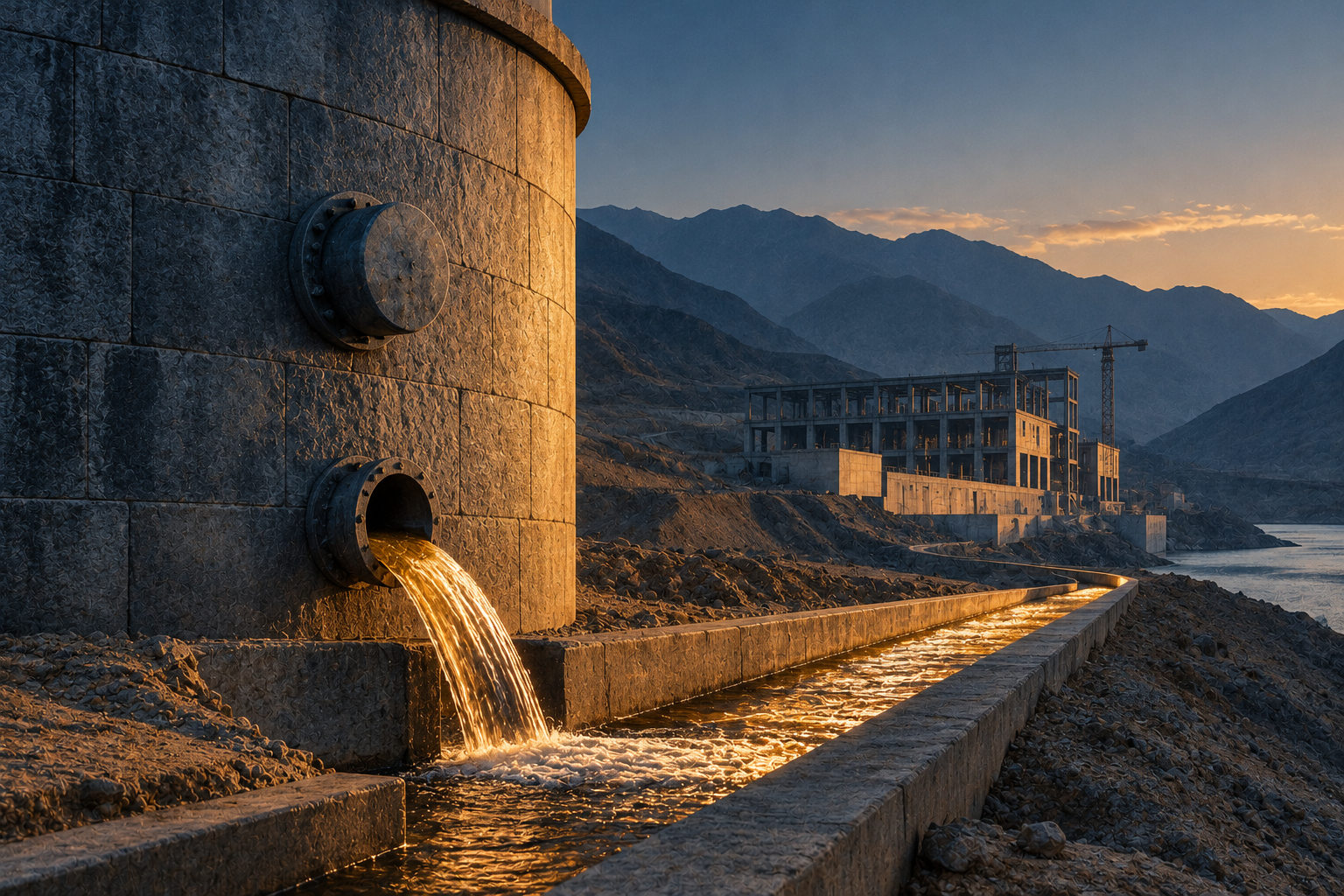
“Finishing it on the Korean loan would double its budget cost,” he said of the ten-province project, which is 40% complete: the cost to the budget of completing the plants, against finishing them with the dividend. Mongolian citizens should not suffer for the mistakes of the Korean contractor, he said, and the choice was to leave the plants as ruins or to finish them and supply the provinces’ electricity, with the dividend regulated by a one-off law so that the plants are finished.
Taking the ₮2 trillion for the government’s own use was not the proposal, he said, since the Oyu Tolgoi money is to finish the thermal power plants in ten provinces, and the sixth thermal power plant, CHP-6, would be built as a public-private partnership with citizens receiving shares in proportion to the state’s stake.
The 2027 budget bill, submitted to speaker Byambatsogt on 31 August, carries revenue of ₮41.3 trillion, spending of ₮43.6 trillion and a deficit of ₮2.306 trillion, with the fiscal stability law’s requirements suspended for the year and the dividend counted among its revenues. The committee recorded no decision on the dividend in ikon.mn’s report, and the Québec class action against Rio Tinto, the mine’s operator and 66% owner, has a court hearing on Tuesday.