The numbers came out of a tour. Uchral visited the National Dispatching Center and thermal power plants 3 and 4 in Ulaanbaatar, and Montsame carried the figures at 11:40 local time on Sunday. Baljinnyam G, the center’s executive director, reported 92.5% of the spring repair programme complete, 1,905 MW of installed capacity nationwide, 1,797 MW of it in the Central Energy System, and shortages covered by imports from Russia.
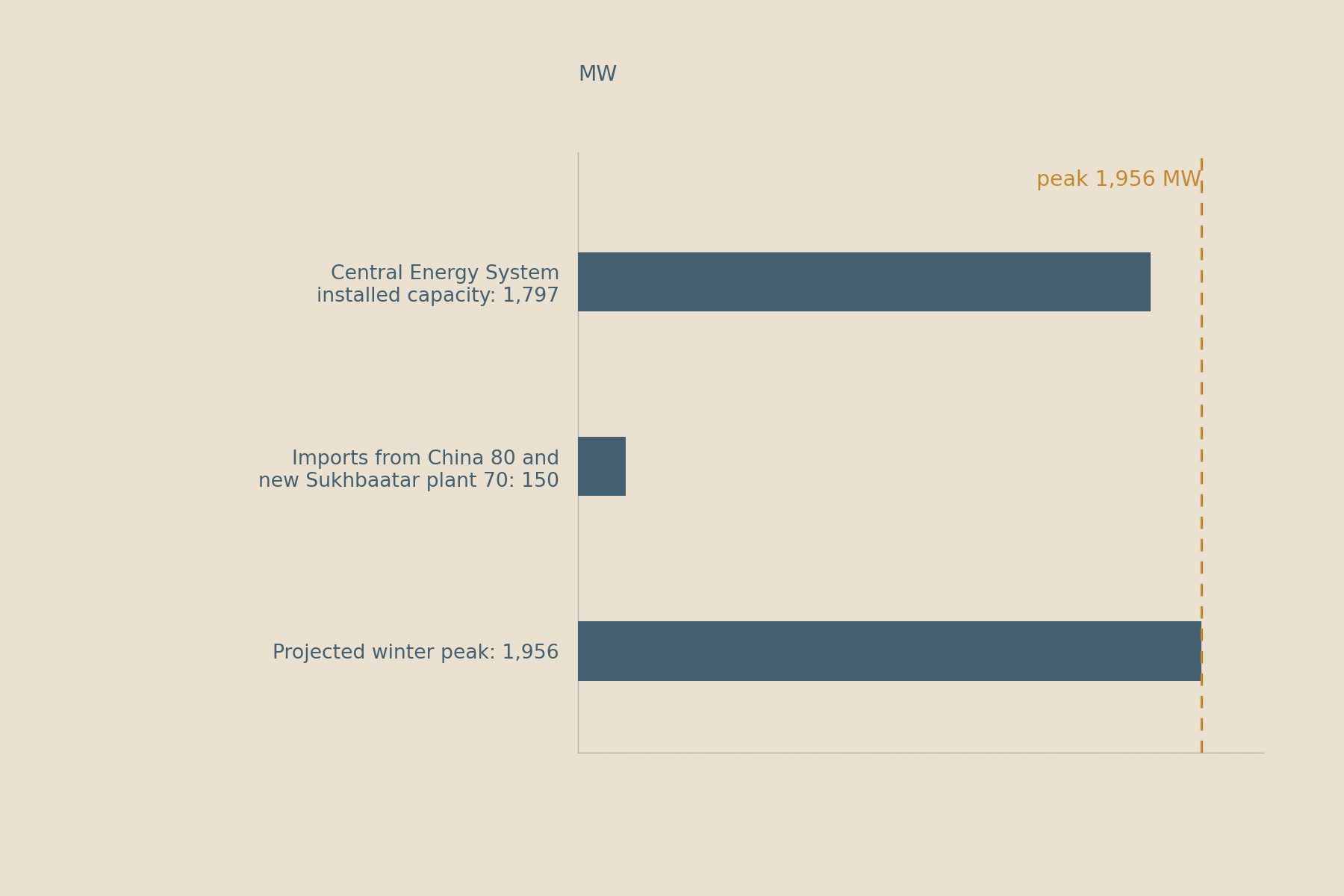
Subtract and the reserve disappears. The projected central peak of 1,956 MW exceeds the central system’s installed capacity by 159 MW. Russia covers the running shortfall today, by the dispatcher’s account. The stated cover for the winter peak is 150 MW: 80 MW of imports from China and a new 70 MW plant in Sukhbaatar aimag.
Uchral said demand could rise by 120 to 150 MW this winter, leaving the system with almost no reserve capacity, and asked for contingency plans. Last winter the system logged 158 equipment failures and disruptions.
The repair budgets are small next to the size of the fleet. The Reserve Fund gave MNT 5.45 billion for urgent works. At TPP-3, MNT 90 billion is going into turbogenerators 7 and 9, with No 7 due by December 2026 and No 9 in the first quarter of 2027, and MNT 2.1 billion renovated the heating surfaces of boilers 4 and 8.
The draft 2027 budget holds MNT 37.3 billion for turbogenerator 5. At TPP-4, boiler 3’s surfaces were replaced for MNT 1.8 billion, and the plant carries a MNT 253 billion Development Bank loan for its 89 MW expansion, on which it has asked to extend repayment.
The structural answer is TPP-6, a 300 MW plant whose site the prime minister visited on the same tour. It would supply electricity to 60,000 households and heat to 52,000, and it is scheduled to operate in 2030, three winters from now. The draft 2027 budget sets MNT 1.041 trillion for energy investment including TPP-6, and MNT 16.2 billion for equipment modernisation.
Then the political line. The government has announced that electricity and heating tariffs will not be increased this winter. The 2026 revised budget supplies MNT 186.2 billion to the sector: MNT 107.3 billion to subsidise the cost of imported electricity and domestic generation tariffs, and MNT 78.9 billion for maintenance and modernisation.
Read together, the freeze and the subsidy are one decision. MNT 107.3 billion is what the state pays so that imported power and domestic generation reach consumers at last year’s tariff. For scale, the same budget amendment found MNT 170.1 billion for public-sector pay rises from 1 November, and the energy subsidy is two-thirds of that line.
What Sunday’s figures do not contain matters as much. Montsame’s text of 11:40 Ulaanbaatar time gives no volume or price for the Russian imports that cover the shortage, does not say whether the 80 MW from China is contracted or planned, and prints no reserve margin from the dispatcher itself. The 120 to 150 MW of extra demand is the prime minister’s range.
The plants doing the work are old. TPP-3 and TPP-4 are coal stations of the Soviet period, and last winter’s 158 failures across the system are the measure of the fleet’s condition. A single rebuilt turbogenerator at TPP-3 in December is the only capacity added inside the city before the cold peaks in January.
Two dates to watch. Turbogenerator 7 at TPP-3 in December, which the plant and its contractors control. Parliament’s vote on the 2027 budget, which carries the MNT 1.041 trillion for energy and TPP-6, the only item on Sunday’s list that adds new capacity.