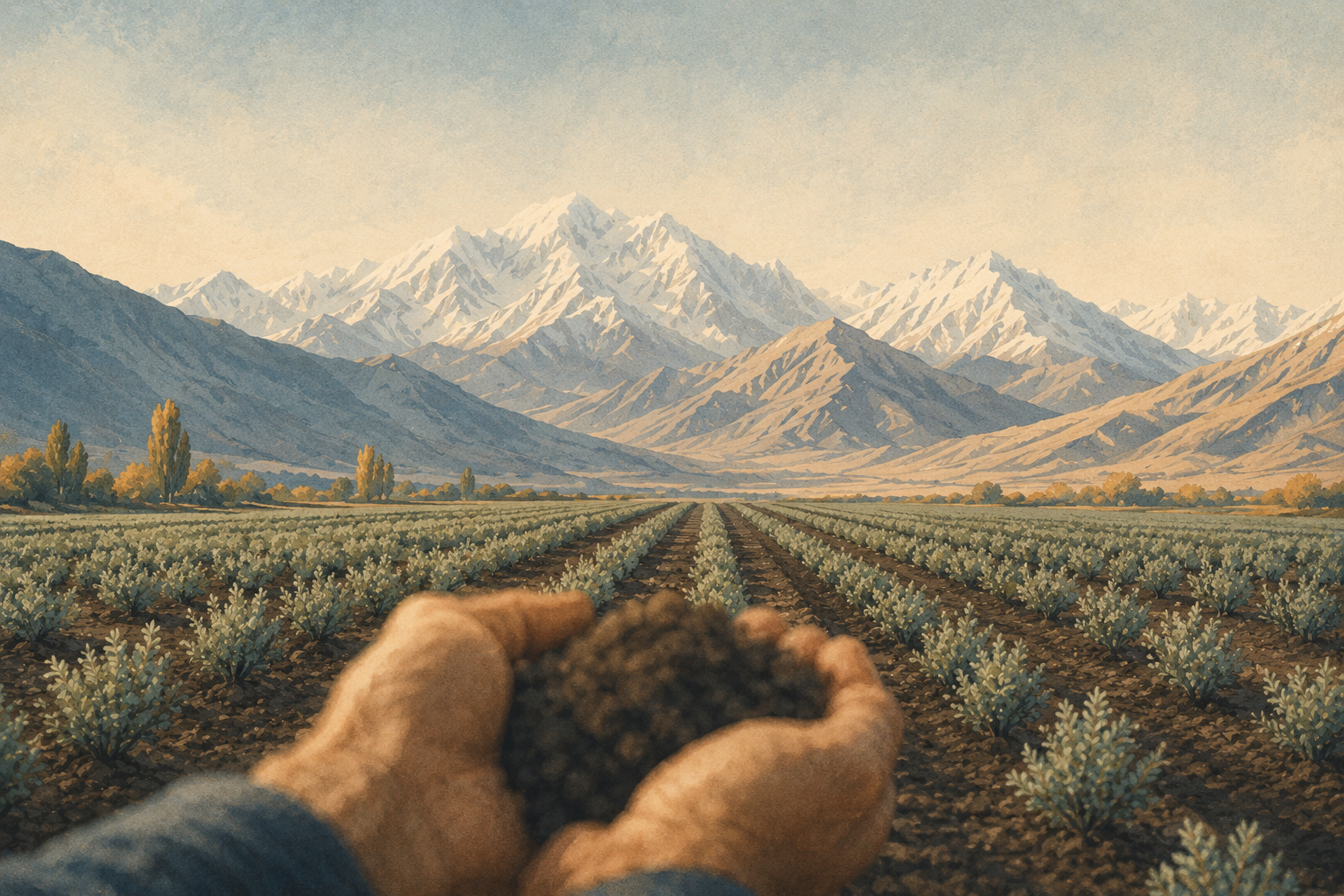
Kyrgyzstan has converted roughly 66,000 hectares of farmland to organic production as part of a nationwide programme, the government announced on 22 June. The drive aims to build a certified organic sector that can command premium prices abroad, particularly for the cotton, beans, herbs and dried fruit the country already exports. Organic certification is one of the few routes by which a landlocked producer with modest output can lift the value of what it grows.
The economic logic is straightforward for a country of Kyrgyzstan's size. It cannot compete with Kazakhstan or Russia on agricultural volume, so margin matters more than tonnage. A certified organic label, recognised in the EU and other premium markets, turns a small harvest into a higher-value one. The same week, official figures noted 271,000 visitors to the country's nature parks in 2025, part of a parallel effort to monetise Kyrgyzstan's clean-environment image through tourism.
A small producer cannot win on tonnage. Organic certification is a bet on price instead.
The pressure behind the pivot is real. Kyrgyzstan faces EU scrutiny over re-exports to Russia and the threat of restrictions on some imports, which sharpens the case for building export lines that are clean, traceable and Western-facing. Whether 66,000 hectares translates into actual certified export volume depends on the certification and logistics that come next, the same follow-through problem that shadows every development announcement in the region. The land-use shift is real; the export premium has to be earned in the paperwork and the supply chain.