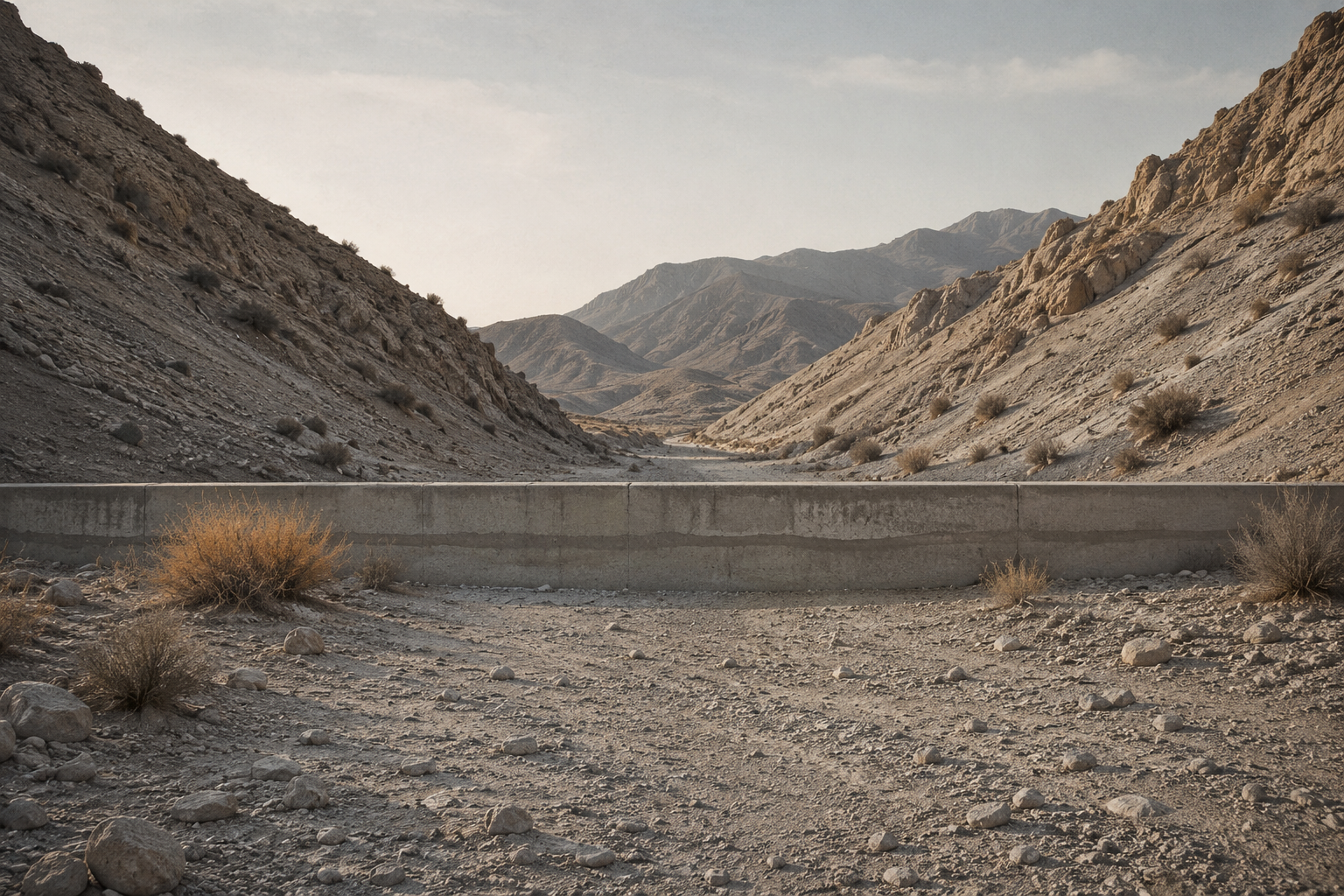
The June damage was concrete. Between 19 and 21 June, 66 mudflow and flood events hit Batken, Osh, Jalal-Abad and Talas, damaging over 300 homes and forcing about 50 evacuations. On 24 June a mudflow swept a car off the Osh-Alay highway and killed six people. The reported 2026 toll stands at least at eight.
Deaths are down even as incidents climb: 25 people died in 2024 against at least eight so far this year. Officials credit faster response and new protective works. The casualty count and the incident count are moving in opposite directions, and only one of them is under the state’s control.
The state can lower the death toll faster than it can lower the number of disasters. One depends on response. The other depends on the climate.
The physical exposure is structural. Roughly 95% of Kyrgyz settlements sit near riverbeds, alluvial fans or watercourses, and the same valleys carry the roads, irrigation channels and small hydropower that the economy runs on. Hydromet has warned of near +40C heat that overflows moraine lakes, and a fresh storm warning covers 1 to 5 July. Each event clears riverbeds and repairs protective structures, then the next rain arrives.
The money is external. Mudflow defence in Kyrgyzstan runs largely on a World Bank-backed regional program, RESILAND CA+, a $52 million line covering 21 to 22 high-risk sites, most of it loan rather than grant. A state that finances its climate defence on credit is buying protection today against a bill that keeps growing, and adding debt while it does.
What to watch: whether the July rains push the incident count higher, how much of the damage falls on transport and irrigation rather than housing, and whether the regional programs move from pilot sites to national coverage. Climate adaptation is turning into an infrastructure and fiscal question, and Kyrgyzstan is where the region will see it first.